
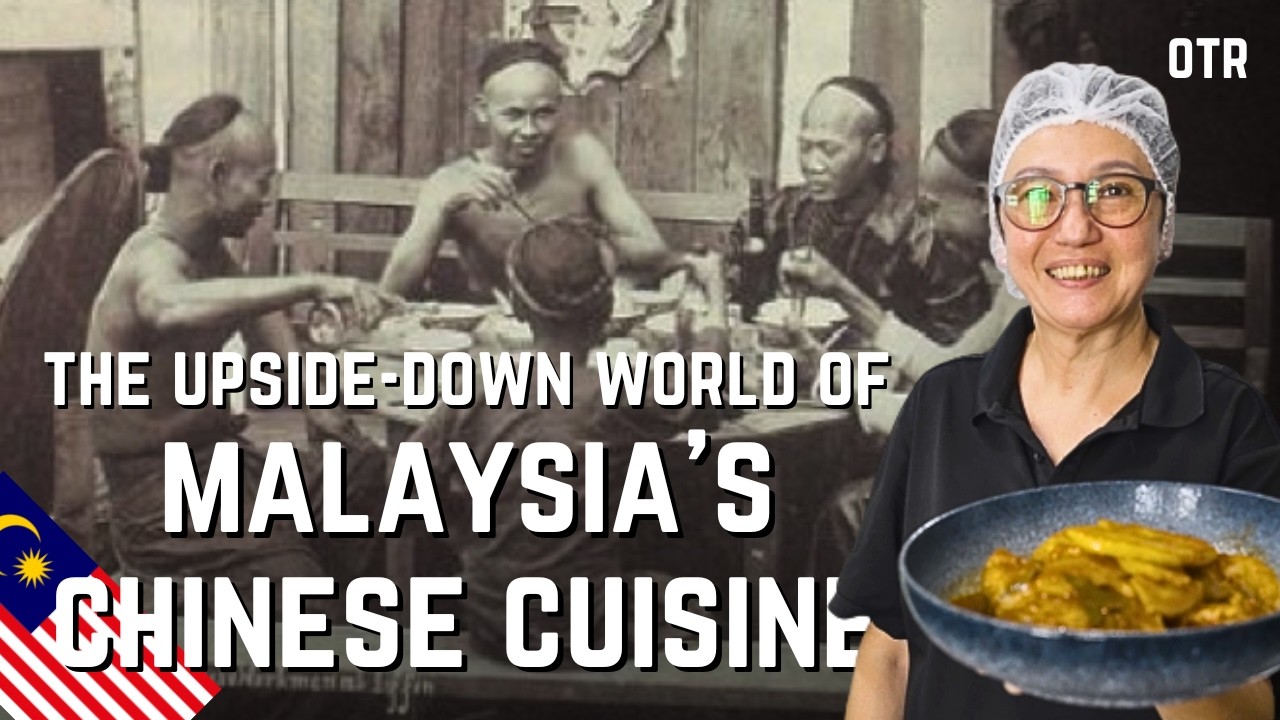
Please “Like” if you enjoy the video, subscribe to the channel, and turn on notifications!
–
Between 1876 and 1902, six different groups of Chinese immigrants- all arriving for their own reasons and following their own paths- blended in Malaysia, creating an entire culinary culture that would sweep across the continent and change food forever. Ever since a chance encounter with a bizarre culinary culture, on a trip to Phuket in 2024, OTR has been descending down a rabbit hole unlike any other in food history. This is that story.
–
Please consider supporting OTR on Patreon and thanks so much to anyone who does; your support truly keeps us going. http://www.patreon.com/OTRontheroad
Website: http://www.OTRontheroad.com
Instagram: https://www.instagram.com/otr.offtherails/?igshid=YmMyMTA2M2Y%3D
–
0:00 – Introduction
1:11 – Tin
4:27 – The Kopitiam
11:31 – End of an Era
15:44 – Total Culinary Chaos
19:26 – Phuket
21:38 – Hokkien Mee-ish
25:33 – Laksa
31:59 – The Meeting
34:05 – Baba Nyonya
37:41 – The Peranakan
44:19 – A Nyonya Feast
48:50 – Lor Bak and Ngo Hiang
52:02 – The Cult Leader
53:30 – Hakka, Hokkien, Cantonese, and Teochew
57:14 – Kuih
1:01:46 – Malaysia’s Best Young Chef
1:06:07 – Evolution
1:08:58 – Tastes and Palates
1:11:38 – Identity
1:14:37 – Credits and Post-Credits
–
Video Credits:
34 Comments
Location pins:
Kuala Lumpur:
1) Foo Hwa Kopitiam: https://maps.app.goo.gl/zkd1ZZoj3LK4ry8D8
2) Asam Laksa: https://maps.app.goo.gl/zq44Edw8oiKgKyzU9
3) The Peranakan: https://maps.app.goo.gl/oyAnGy3bHqWEHdcy5
4) Kuih: https://maps.app.goo.gl/Bp6J37iyvpQjZf2K8
5) Shu: https://maps.app.goo.gl/hvj1xkG6KQrbL64b8
Phuket:
1) Heng Heng Dim Sum: https://maps.app.goo.gl/PewNRFQNa5mibYwP8
2) Crispy Pork Ji Hong: https://maps.app.goo.gl/MHBeZSbRsJg8EiFj9
3) Lok Tien Food Court (the location we visited on this shoot has since closed, I believe this is the new location) https://maps.app.goo.gl/zxPHirUCmyRbmeNt8
4) Lor Bak: https://maps.app.goo.gl/rf7SuVxX2tnDfPmU6
5) Hokkien Mee: https://maps.app.goo.gl/Lypsufob4kPZiPCP7
Allow me to add on : kopitiam (hokkien) basically means coffeeshop in english
Bro, the chilli paste goes into the curry noodles, not the Assam laksa
No wonder you see so many similar dishes on different menus! So much cross pollination across the borders
Hometown food! I'm hoping to see a Nasi ULAM recipe
Thank you for this documentary.
Tourist won't goes wrong eating all CHINESE FOOD. Best Malaysia states. 1. Penang. 2. PERAK-Ipoh. 3. Cameron Highlands (steamboat) 4. KL. 5. Johor/Singapore
Liked early forl the algorithm, now I can watch in peace…
Chinese Food!
❤❤❤
There are still many third generation immigrants from mainland China who do not believe they are Malaysians but they want the rights of Malaysians
WTF
I am happy to share this video to any foreigners!
if you ever have the opportunity to go down to Johor Bahru, you can try one of my favourite Malaysian-Chinese dishes: Kuay Teow Kia. There's also a lineage tied to Teochew culture: Singapore has Kway Chap, and Phuket has its own variant. It's also served with Lor Bak (actual braised meats, not the roll) and some places with braised duck.
Da Ma KTK is my preferred place, Woon Kiang is popular among Singaporeans crossing the border.
You Should try Bak Kut Teh at Port Klang
My grandfather was a hainanese who worked for British soldiers. Now I drink tea at killiney and other hainan style kopitiams all the time.
The children goes to college and search for a better life. Chinese migrants anywhere started as labourers, then opened up restaurants and other businesses. Their children would go on and get a better education and settle into white collar society
Man! thanks for the history that i never learn in school
ngl nyonya sound like a word made up by a furry xD
Lovely stuff on this Hainan food culture history, for Malaysia's other food culture/ethnic proprietorship, to be explored & highlighted are :-
• Western Sumatera Minang "Nasi Padang" restaurant chains
• South Indian Muslim "mamak" restaurants
• Southern Thai Muslim Malay "Kedai Tomyam" restaurants
Thank you for sharing such a deep information for malaysian chinese food, really appreciated that❤. I am malaysian chinese from terengganu.
This is compulsary viewing for many young folks
Great episode! I learned so much!
if I hadn't found your channel I'm not sure I would have known any of this but I do now and I'm fascinated and invested
Well researched….well done!!!
While I’m proud of Peranakans who have, to some extent, assimilated into local culture, I think many people overlook that there were actually two broad groups of traders in the past. Peranakans are mostly descendants of non-Muslim traders who retained elements of their original language, culture, and cuisine. Not to say there are no Muslim peranakan, but it was much easier for Muslim traders (even from China) to adapt; and over time, they set aside much of their original culture and blended into the Malay world.
This is quite evident in the northern parts of Malaysia, where many Malays have features reflecting mixed ancestry—Arab, Chinese, or Indian—yet identify simply as Malay. If we look more closely at Malay cuisine, we can also see clear influences from various other cultures, often without people even realizing it.
Apa lagi?
Jom fight. Penang laksa best laksa.
Pleased to find your channel. Couple of things. It's important to know who the Peranakan are and how their culture developed. These were children of early Chinese migrants who married local indigenous women, typically the Malay. They over time developed a mixed culture reflected in traditional dress that feature non-chinese elements and remains to this day a major part of their culture. Over time they became wealthier and gravitated towards service of the English occupiers of the region. This lead to many crossover elements from English food and cooking styles and also borrowed from Malay cuisine and even some Dutch and Portuguese influences. They learnt English as a major task and parents often sent their children to English speaking schools. Many became wealthy and ensured traditions remained strong. To this day the women will still wear on special occasions the kebaya and beaded shoes with decorative hair jewellery. A visit to Melaka is one of the best ways to observe the Peranakan culture. It can also be found in Singapore. The food is often referenced as Nonya. Their sweet snacks called Kueh are popular everywhere in South East Asia.
Penangite will be offended you call it Asam Laksa when it's known as Penang Laksa or Laksa in Penang 😂😂😂
Your best
Malaysian Chinese is so interesting compared to mainlanders because it's so many different Chinese that lives in a small island, the clash of intense flavour and style of cooking really just intensifies the ridiculousness of some Chinese food in the area
small correction 55:50 Bah Kut Teh is not brought over by Hokkien. It is invented by Chinese most likely hokkien port worker when they were in this country, where it's easy to source the Cantonese spices and Hokkien stew.
This dish itself has a deep lore and variety of versions from north Malaysia to southern Singapore. And one of the iconic versions are not even a pork stew it was the stir fried versions with intense soy flavour
Just like the French community in southern US called Cajun French people.
Something simple like hamburger, are all hamburgers going to be the same. The base is there, but there are going to be changes not just regionally, but restaurant to restaurant. And so too will Chinese food change. Otherwise there's no need to try different restaurants if they are all the same.
When Chinese diaspora open Chinese restaurant in different countries back in the day, they weren't cooks and there weren't any documented recipes. Most opened a restaurant because that was the default method of earning a living abroad. Due to the lack of documented recipes, regional tastes, regional ingredients and the "cook/owner" learning as he went, there will be experimentation. Now, is Chinese food abroad Chinese? Yes! Is hamburger American even though it's made in China and it tastes different? Yes!
19:20 This is exactly why we should never call diaspora food inauthentic.
becase e lied in othe people country repect you r host