With new operators and a sympathetic reinvigoration, Fiorini’s Osteria Italiana has reclaimed a place as one of the Central West’s essential dining destinations.
 Save
Save
You have reached your maximum number of saved items.
Remove items from your saved list to add more.
AAA
Good Food hat15/20Critics’ PickHow we scoreFiorini’s
Italian$$$$
The grill outside is smouldering. Smoke curls into the air. Over the road, a cow grazes in a meadow. If you stumbled on Fiorini’s for the first time right here and now, you’d be forgiven for thinking this property, 10 minutes outside Orange, was little more than a barn, the walls and roof clad in corrugated iron.
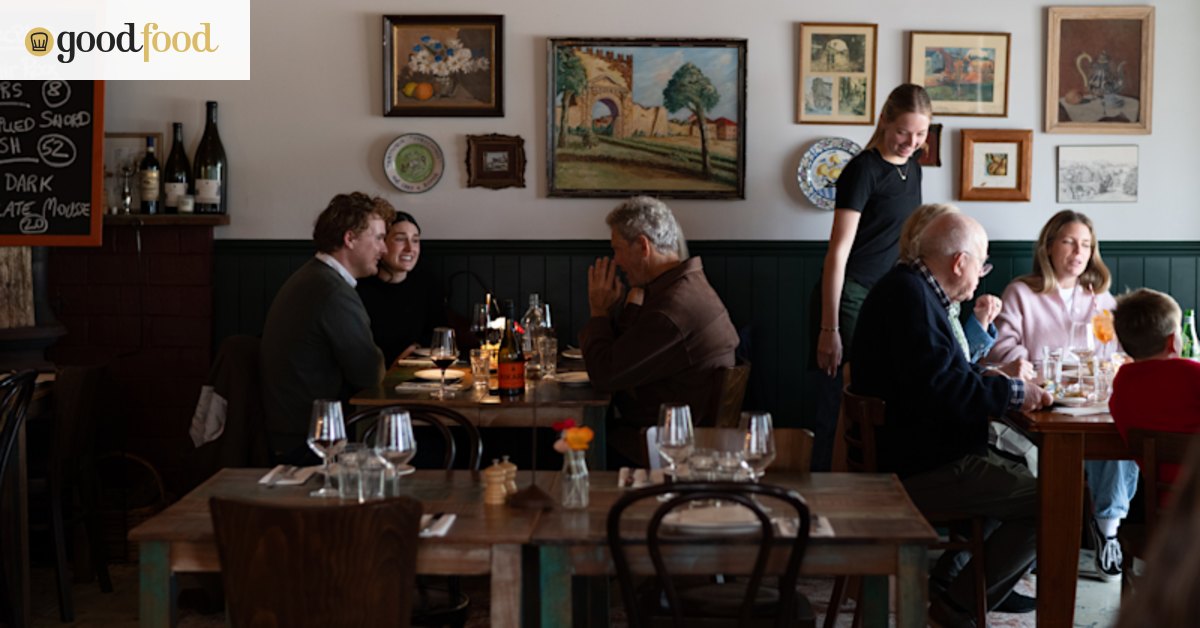
Look harder, though, and there’s a glow behind the windows that, once you swing open the brick-red door (the colour of sugo?), transforms into a steady hum. Families fill antique tables. Waiters float around the room, checking vases, updating specials on the blackboard. It’s rustic, but refreshed, a Tuscan villa in a tin-shed, right down to the landscapes on the walls and the hunk of marbled beef tempering on the countertop.
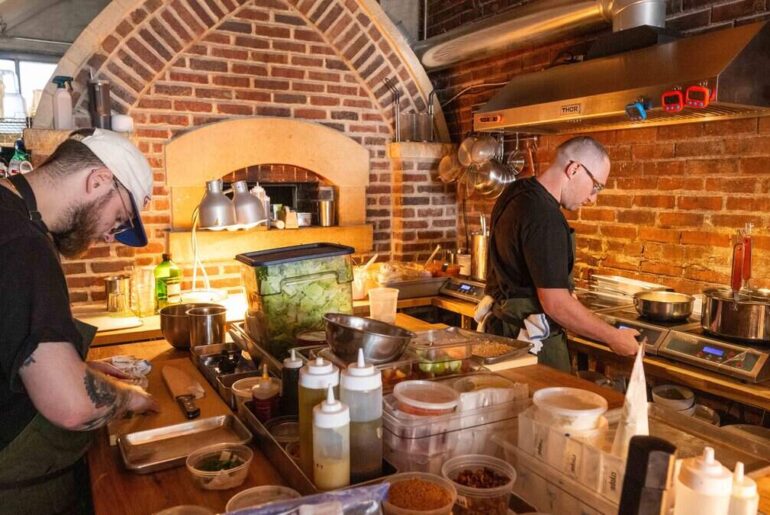
 From left: Owner Kelly Fedeli, head chef Simonn Hawke, sous-chefs Aline de Freitas and Mirko Panciroli.Pip Farquharson
Plenty of restaurants feel lived-in, but not many manage to maintain that feeling when they gain a new lease on life. Fiorini’s is one of the rare few, and in doing so has reclaimed a place as one of the Central West’s essential destinations.
Opened in 2007 by Patrizia Fiorini and Marina Fedeli, the restaurant ended its original run after 17 years in 2024. Rather than close, though, it was sold to Marina’s niece Kelly Fedeli, who in 2020 had teamed up with her brother to relaunch Il Baretto in Paddington, based on the Italian diner their mother founded in Surry Hills in 1999. The siblings have since opened a second Il Baretto in Newtown, but not before Fedeli moved to Orange to reinvigorate her aunt’s old restaurant.
Restaurant reviews, news and the hottest openings served to your inbox.
She ground down the floor, installed a commercial kitchen and painted. Fedeli then changed the tagline from “ristorante” to “osteria”. “I wanted to imply that there was a change, because it is very different to what my aunty was doing before,” Fedeli says. “It was literally like a farmhouse restaurant in the countryside in Italy – no menu, like, really really cool. I really wanted to keep that, but just elevate it a little bit.”
 Mezze maniche with wild boar, taggiasche olives and rosemary ragu.Pip Farquharson
The grounding element of that is a farm-to-table concept; another is how it’s realised. Raw local venison is diced, dressed heavily with capers and chives, then served with onion cups piped full of smoked eel and garlic whip. Moonlight oysters are plated on upturned shells, then finished with a curl of pickled octopus.
This is classic cooking, but there’s clearly inspiration in this kitchen. It’s helmed by Simonn Hawke – former chef-owner of local institution Lolli Redini – but the signing of Aline de Freitas (Shell House; Bar Vincent) seems to have sharpened the edges.
Dressings are bright, greens are just wilted, and sirloin – finished with truffle mustard – has heft and chew. I ate a lot of pasta in Orange, each plate getting progressively better until I came to Fiorini’s, and it suddenly levelled up. Here, short tubes of mezze maniche were coated in rubbly, rust-coloured wild-boar ragu that was herbal, rich and deeply integrated.
Tables turn, waiters smile and pour wines from a one-pager that gives time to both classic and less-classic locals. You swipe a spoon through a tiramisu, tinted green with pistachio. The sun starts to peek through the window. Something’s clicked.
The low-down
Atmosphere: Rustic Italian farmhouse with crockery stacked on the hutch, art on the walls and scratchings on the tabletops
Go-to dishes: Venison tartare ($34); mezze maniche with wild-boar ragu ($46)
Drinks: A single page of local wines with a lean to the next-wave, plus classic aperitivi and digestivi
Cost: About $200 for two, excluding drinks
This review was originally published in Good Weekend magazine
Good Food reviews are booked anonymously and paid independently. A restaurant can’t pay for a review or inclusion in the Good Food Guide.
Save
You have reached your maximum number of saved items.
Remove items from your saved list to add more.
 David Matthews is a food writer and editor, and co-editor of The Sydney Morning Herald Good Food Guide 2025.From our partners