
 5 min read
I am a chili crisp fanatic. I currently have three different jars in my kitchen, and I use them on everything from avocado toast in the morning to peanut noodles and grain bowls for dinner. I even keep a jar of Mama Teav’s Hot Garlic chili crisp by my office computer to make my sad desk lunches more exciting.
So when Carbone announced it was launching Italian chili crisps, I was the embodiment of the eyes emoji 👀. The brand is an extension of the eponymous New York City restaurant, the red-sauce destination famous for its tuxedoed servers, celebrity clientele (including Beyoncé and Rihanna), and spicy rigatoni alla vodka—the dish that launched a thousand TikTok recreations. Carbone first expanded into retail with jarred pasta sauces, but these chili crisps mark the brand’s first real entry into the condiment category.
I was curious to try the jars—and I had a lot of questions. Namely: What exactly makes a chili crisp Italian? And would it be as good as the Asian condiments that have already earned permanent real estate in my pantry?
Chili crisp goes global
Traditional chili crisp is a Chinese condiment made with oil, chiles, and crispy bits like garlic, onion, and shallots. It has become a full-blown pantry phenomenon in the U.S., thanks in part to brands including Lao Gan Ma, Fly By Jing, and Momofuku. Together, they’ve helped turn the once-niche condiment into an everyday topping.
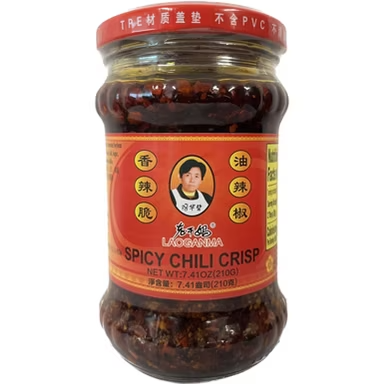 Laoganma
 SOMOS
SOMOS Bombay Chili Crunch
As chili crisp’s popularity has soared in the U.S., the format has become a canvas for brands to showcase flavors from their own culinary traditions. I’ve seen on shelves more jars of salsa macha, the Mexican chile oil that gets its signature crunch from ingredients like pepitas, peanuts, and sesame seeds, along with smoky dried chiles. I’ve also spotted more brands of South Asian chili crisp made with ingredients like curry leaves, mustard seeds, garlic, and fried lentils.
Carbone’s take follows that same blueprint, but swaps in Italian flavors: garlic, peppers, onion, parsley, and olive oil. It’s also interesting that the brand is using the name “chili crisp” for something that isn’t Asian. That feels less like a random rebrand and more like an acknowledgment that the format has become a global language for describing spicy, crunchy condiments—though the original cultural context still matters.
How do the Carbone chili crisps taste?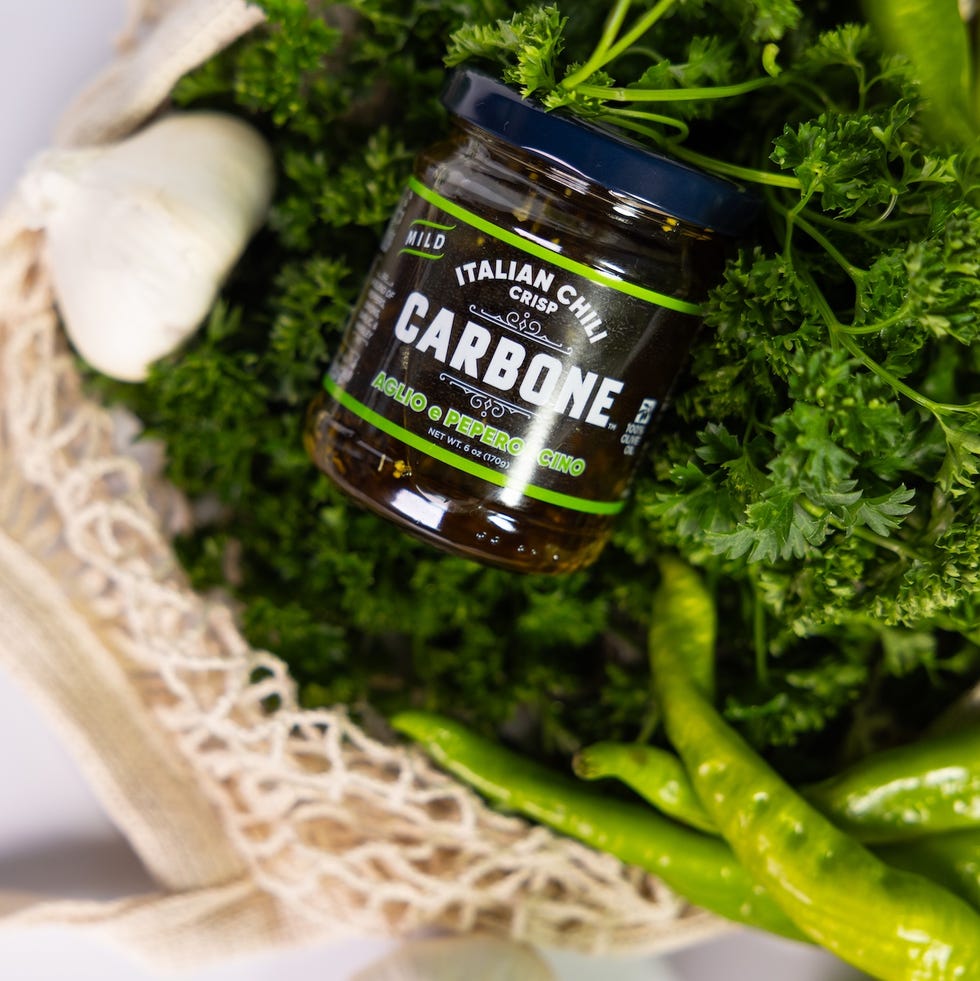
Courtesy of Carbone Fine Food
Courtesy of Carbone Fine Food
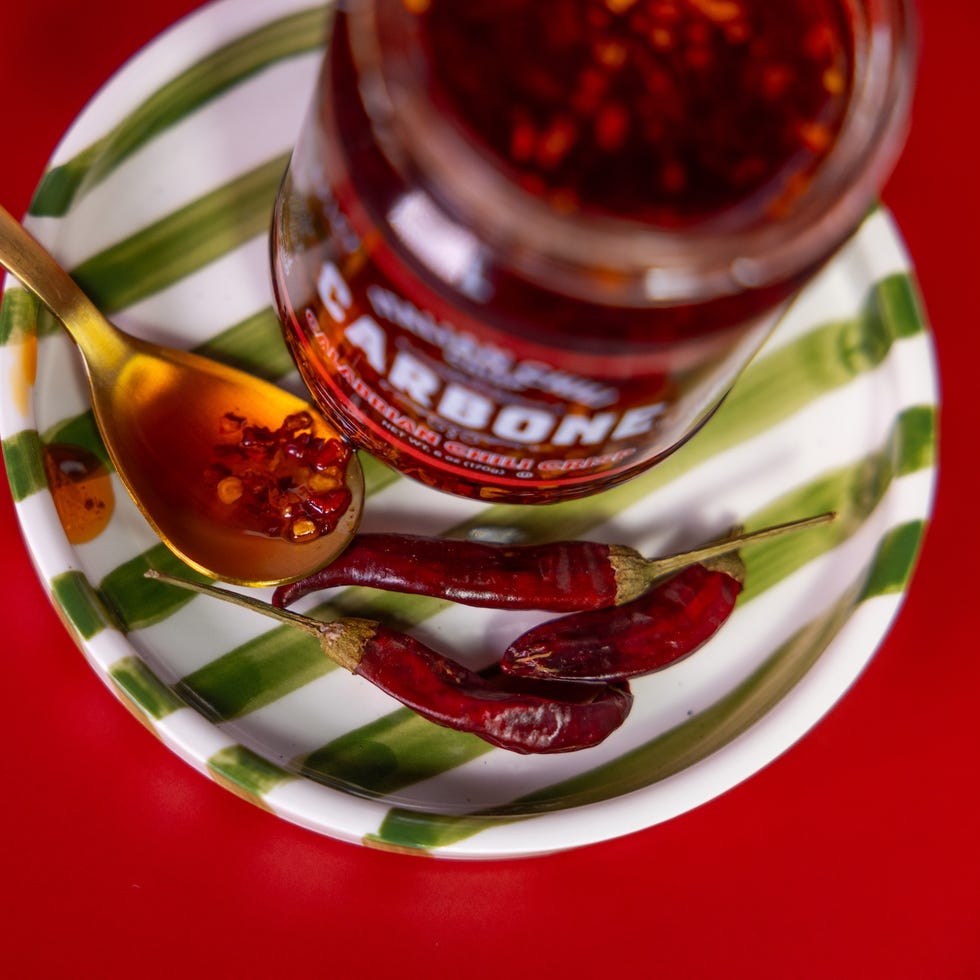
Carbone’s Italian chili crisps come in two varieties: the mild, green Aglio e Peperoncino and the bolder red Calabrian Chili Crisp. Both are made with crispy bits suspended in 100% olive oil, but they have very different personalities.
The green jar
Aglio e Peperoncino is bright, herbaceous, and mild, with green bell pepper, garlic, onion, parsley, and green chile flakes. Think of it as the green salsa to the Calabrian crisp’s red salsa: fresher, sunnier, and a little more delicate.
The red jar
The Calabrian Chili Crisp is deeper and more dramatic, with a richer pepper flavor and more noticeable heat. It’s the sultrier of the two—less “fresh herb garden” and more “red sauce after dark.”

Good Housekeeping / Susan Choung

Good Housekeeping / Susan Choung
I tried both on pizza. These do so much more than the crushed red pepper I usually sprinkle on top. You still get heat, but you also get garlicky flavor, savory pepper, and actual crunch. The olive oil does a lot to carry the flavor, giving the chili crisp extra dimension and layers.
So, how do they compare to Asian chili crisps?
The ones from Carbone are not better—just different, and absolutely good enough to make room for. These don’t taste like traditional Asian chili crisps, nor are they trying to; they’re brighter, more Italian, and especially good when you want garlicky flavor and crunch without the deeper umami notes of soy, sesame, or Sichuan pepper.
About the ingredients
“What I love about the ingredient lists on both varieties are how recognizable they are. These are all ingredients I’d find in my kitchen—olive oil, peppers, onion, garlic, salt, parsley, and spices,” says Stefani Sassos, M.S., R.D.N., NASM-CPT, Good Housekeeping nutrition lab director. “ I also like that olive oil is the main oil here, since a lot of chili crisps use less premium oils as their base.”
Sassos emphasizes that chili crisp is a condiment—not a health food—and its job is to deliver a lot of flavor in a small amount. A little really does go a long way. “That said, the ingredients still matter, especially if it’s something you’re reaching for regularly. Things like the type of oil and how much sodium it contains can add up over time.”
Where to buy the chili crisps
Each jar of chili crisp is priced at $13.99 and available at Whole Foods as well as online at Amazon and the Carbone Fine Food website.
What to serve with Italian chili crispAglio e Peperoncino Chili Crisp
This is the one to reach for when you want brightness and texture without overpowering the rest of the dish.
Try it on: Pizza, especially white pizza or margherita. Pasta with pesto, lemon, or a simple garlic-and-oil sauce. Grilled fish or shrimp. A white bean salad or an Italian tuna salad.
It would also be excellent stirred into mayonnaise for a sandwich spread or spooned over some cheese on toast when you need a five-minute lunch that feels slightly less bleak.
Calabrian Chili Crisp
The Calabrian version can stand up to bigger, bolder flavors. This is the one I’d use when the dish already has tomato, meat, cheese, or a little bit of swagger.
Try it on: Pepperoni pizza or sausage pizza. Pasta with a heartier sauce, like Bolognese or vodka sauce, or a lasagna. Steak, grilled chicken, or pork. Roasted potatoes.
Like the green version, this would be great on sandwiches, but think more robust handhelds, like a meatball sub or Italian deli hero.
The bottom line
Carbone’s Italian chili crisps are not trying to replace the chili crisp already in your fridge. They’re more like cousins: same crunchy, spicy format, completely different accents.
The Aglio e Peperoncino is bright and garlicky with mild heat, while the Calabrian version is richer, deeper, and better suited to red sauce, meat, and cheese. I’d happily keep both on hand—and if you’re the kind of person who puts crushed red pepper on everything, these are a major upgrade.