
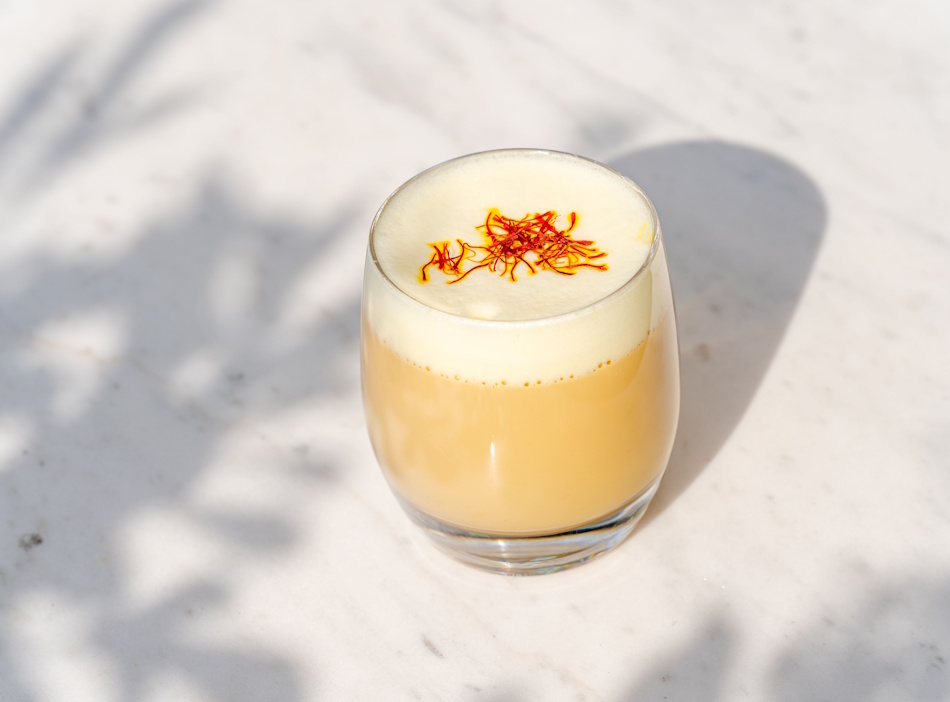
If there is one spice I know inside and out, it is saffron. My family is from Iran, which means saffron was added to almost every dish in our home, from rice to desserts. When I moved out, I was given a supply of saffron that lasted me for years. Just a pinch is enough to give a dish that distinctive flavor many describe as floral, earthy or slightly bitter. To me, it simply tastes like home.
Between 200 and 400 tons of saffron are produced worldwide each year, around 90 percent of which comes from Iran. Besides being ubiquitous in Persian cuisine, saffron is also frequently used in Spanish, Italian and Moroccan cooking.
In the rest of the world, saffron was long considered an exclusively niche ingredient, but that appears to be changing. From saffron tea and lattes to supplements in capsule form, the spice is suddenly appearing in chic cafés and on wellness shelves around the world. (I recently even spotted a saffron latte on the menu of a café in Cologne, Germany.)
Given saffron’s growing popularity, I decided to take a closer look at the health benefits of my favorite childhood spice. Here is what I discovered.
The health benefits of saffron
Saffron is widely known as the ultimate mood booster, and not only because of the sunny, golden hue it gives food. Numerous clinical studies have examined its uplifting properties and confirmed that it can indeed have a mood-enhancing effect in cases of mild to moderate depression.
“For centuries, people in different parts of the world, primarily Central Asia, Iran, China, India, Turkey, Algeria and Europe, have favored the dried stigmas of the Crocus sativus flower, or saffron, for medicinal and culinary purposes,” states one study examining saffron’s antidepressant effects. “The most active biological compounds include crocetin, crocin, picrocrocin and safranal, which are respectively responsible for its color, taste and aroma. They play a key role in the central nervous system in relation to anxiety and depression. These bioactive compounds also have neuroprotective and anxiolytic effects and may help with memory and learning impairments.”
Additionally, some smaller studies have found that the spice may possess analgesic, diuretic and antispasmodic properties, making it an excellent ally in the fight against menstrual cramps. “Existing evidence suggests that saffron has the potential to effectively alleviate symptoms of depression across a range of conditions, from premenstrual syndrome to the postpartum period,” the aforementioned study notes.
Although nutritionist Astrid Donalies points out that most clinical studies on saffron have been small in scale and that further research is needed to fully understand its benefits, the spice is certainly worth incorporating into your diet. “If you eat with pleasure and enjoy a varied diet, you have already done a great deal for your health,” she notes.
There is, however, one small catch. Most research on spices shows that their effects are usually minimal when they are used in the home. After all, we rarely add more than half a teaspoon of a spice to our food, so the amount we actually consume is very small. “Saffron is also extremely expensive, so it is generally used only in small quantities, just enough to give a dish a light, pleasant aroma and a beautiful yellow color,” Donalies explains. However, she emphasizes that using any spice in cooking can “help reduce salt intake,” because less salt is needed to make food taste good.
Although this may seem like a minor detail, it has significant health benefits, as excessive salt consumption can be harmful to the body. “Most of us consume around 10 to 12 grams of salt a day, instead of the recommended maximum of 6 grams,” Donalies warns.
The beauty benefits of saffron
Interestingly, saffron is also playing an increasingly important role in the world of beauty. Thanks to its antioxidant and anti-inflammatory properties, it is now being used more frequently in anti-aging skincare products. It is thought to have a preventive effect, helping the skin remain healthy, resilient and radiant for longer.
Studies also show that safranal, saffron’s active ingredient, has a natural sun protection factor of SPF 6.6. Although an effective SPF of 15 is considered the minimum standard for sun protection, and saffron is not among the 27 UV filters approved by the EU, it is remarkably interesting that adding saffron extract to SPF 20 sun care products increases protection by an incredible 43 percent. So, even if saffron does not provide sufficient sun protection on its own, it certainly shows potential as a powerful booster in existing formulas.
How to cook with saffron
Saffron comes from a flower, specifically a species known as Crocus sativus. The flower’s red stigmas, which look like fine threads, are dried and used as a spice that gives food a golden color when cooked, much like turmeric, as well as a rich, fragrant touch. “Saffron captivates with its intensely yellow color and delicately bitter, musky aroma, which is warm and slightly earthy,” Donalies says.
Saffron’s pigments are water-soluble and its aromas evaporate very quickly, so it is recommended to grind the threads into a powder and then soak them in lukewarm water or milk for a few minutes.
Saffron should be added to food only toward the very end of cooking, a technique used in dishes such as paella, bouillabaisse and risotto alla milanese. It is also often added to couscous, cauliflower or potatoes. “Desserts such as rice pudding, golden milk and sponge cakes also benefit from that beautiful yellow hue and pleasant aroma,” says Donalies. “When it comes to flavors, saffron pairs particularly well with vanilla, cinnamon and citrus zest.”
How to make Persian tahdig (my grandmother’s recipe)
Personally, I believe that saffron’s beautiful aroma alone offers a wealth of wellness benefits. That is why I love sharing my favorite simple saffron recipe, one that is incredibly delicious and will make your entire home smell divine. This is my grandmother’s authentic recipe.
Anyone even slightly familiar with Persian cuisine will know tahdig, a traditional Iranian dish whose star attraction is its crispy, golden layer of rice. To make tahdig especially delicious, potatoes and saffron are an absolute must.
First, cook your desired amount of basmati rice as usual, then drain it and set it aside.
While the rice is cooking, peel one potato and slice it very thinly. Soak a few saffron threads, or a little saffron powder, in a small amount of warm water to release the color and aroma.
Melt a little butter in the bottom of a nonstick pan. Arrange the potato slices evenly across the bottom, as they will later create that perfectly golden, crispy crust.
Carefully spread the cooked rice over the potatoes and drizzle everything with the saffron-infused water.
Place a clean kitchen towel or a piece of paper towel between the pan and the lid to trap the steam, then slowly steam the rice over low to medium heat until a fragrant, golden-brown crust forms.