
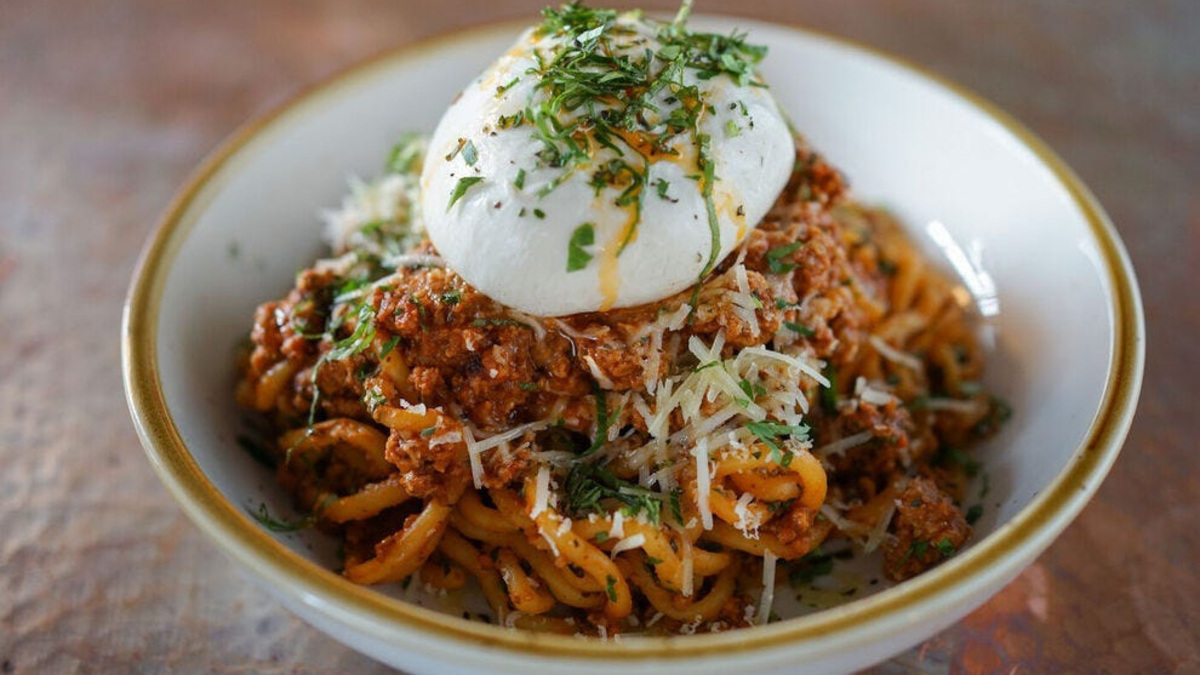
Spaghetti Bolognese + Burrata from Fire & The Feast, an Italian Restaurant located in Edmonds, WA.
Feedme Hospitality & Restaurant
USA TODAY Network, Reuters
There are two types of people in the pasta aisle: the connoisseurs with a penchant for good penne, and the budget shoppers just reaching for the cheapest pasta box they can find (it’s me, hi).
Don’t get me wrong, I love pasta – but I’ve always questioned whether the big-name pasta brands warrant their equally big prices. And more importantly, whether or not you can really taste the difference between the two.
So, for National Pasta Day (Oct. 17), I asked chefs and Italian pasta pros the big question: is expensive pasta actually worth it? The short answer was: mostly yes. But the longer one comes with a few caveats, including the key label terms that genuinely matter, and the others that are purely marketing.
Settle in with a big bowl of bolognese and see my findings below:
►Related: 9 pizza pros share the secrets to making a restaurant-quality pie at home
What’s the difference between cheap and expensive pasta?
Believe it or not, the difference is much bigger than just some fancy logo or bag. In fact, Matt Harding, chief culinary officer at Piada Italian Street Food, says three things separate “the Ferraris from the Fiats of the pasta world”: the quality of the wheat, how it’s dried, and how it’s cut. And drying might be the biggest one.
“Mass-produced pasta is often dried at high temperatures in just a few hours, while premium pasta may be slowly dried at lower temperatures over 24 to 60 hours,” Harding tells 10BEST. “Slow drying can help preserve the wheat’s natural flavor and contribute to a firmer texture.”
Giorgia Sinatra – one of the sisters behind LA’s cult-favorite restaurant Pasta Sisters – echoes Harding’s sentiment, noting that you “do taste a difference” between slow, low-temperature pasta drying, and faster processes.
Per Flavia Garzia, a representative for Pasta Garofalo, great pasta is “also forgiving” – maybe not on your stomach after a big dinner, but during the cooking process, it most definitely should be.
“Even if you accidentally cook it a minute or two longer than planned, it should maintain its structure rather than quickly turning soft or mushy,” explains Garzia.
The pasta label terms that actually matter – and why
Beware of the pasta label buzzwords, of which there are many. While most don’t mean anything, Sinatra argues that home cooks should keep an eye out for “bronze-cut” in particular. “This means the pasta was cut in a way that lends a slightly rougher surface, and it will grab sauce and flavor much better,” she says.
Cheaper pasta is usually cut with Teflon dies instead, which can leave it shinier and smoother. Harding says once you notice this difference, “you can’t unsee it.”
Beyond the labels, you’ll also want to carefully inspect the ingredients. Shubert Ho, head chef and owner of Feed Me Hospitality Group, believes the less ingredients, the better.
“If there are more than just a few ingredients on the back of the box/bag, I usually put it back on the shelf, especially if the only descriptor of the labeling is ‘Artisan,'” Ho says.
The most seasoned pasta chefs can spot a suspect bag, box, or brand from a mile away. How? According to Chef Chris Curtiss, senior director of culinary and R&D at North Italia, the pasta’s color is often a dead giveaway. “Look for a more natural, pale golden color rather than an overly bright yellow, which can be a sign of mass-produced pasta.,” Curtiss advises.
Or, as Harding puts it: “Don’t buy the packaging. Buy the process.”
Chefs swear by these pasta brands
And no, before you roll your eyes, they aren’t all stuffy, specially-ordered buys; in fact, one chef’s favorite pantry brand is even shoppable at Costco.
“…You’ll almost always find Garofalo Organic Bronze Die Pasta from Costco. It’s just easy, affordable, and almost always available when we need it,” says Ho. Budget shoppers, rejoice!
Alternatively, if you want to venture beyond the big-box aisle, Ho notes that his local natural foods store is a great destination for finding more variety.
“A few of my favorites are Montebello for Dried Rigatoni, Seggiano for Dried Tagliatelle, and Brami when I want some extra high protein pasta!” he explains.
The best pasta brands to shop, according to chefs:
Pasta Garofalo: For rigata.Montebello: For dried rigatoni.Seggiano: For dried tagliatelle.Brami: For high-protein pasta.Rummo: For everything.Pasta Sisters: For flash-frozen, fresh pasta.
►Related: I asked chefs what grocery items are worth the splurge — and what they’d never buy premium
The verdict: Is expensive pasta actually worth it?
Ultimately, yes – but that doesn’t mean you need to splurge on a $12 bag every time you’re craving a homemade carbonara.
“Paying a little more for your pasta is worth it, yes. But, that doesn’t mean you have to buy the most premium priced product on the shelf,” says Sinatra.
Why? Well, the price tag often doesn’t tell the whole story. As Harding points out, many grocery store pasta brands come from a small handful of manufacturers, and brands often often pay for prime shelf placement.
“Price alone isn’t necessarily an indicator of quality,” he says.
How to make cheap pasta taste better
In my experience, what I want is not always what I can afford – and that’s true of the pasta I buy, as well. But don’t worry, chefs assured me that the trick to still-delicious pasta isn’t necessarily a pricy penne.
“You don’t need a $9 bag of pasta to make an incredible dinner. You just need to cook it correctly,” says Harding.
He recommends one non-negotiable for the cooking: pull the pasta early and let it finish cooking in the sauce, with just a splash of pasta water. “That one technique can completely transform an inexpensive box of pasta,” he says.
From there, pick just one part of your dish to splurge on; spoiler: it doesn’t have to be the pasta.
“…if you’re going to splurge on one ingredient, make it count,” Garzia says. “A drizzle of excellent extra-virgin olive oil, freshly grated Parmigiano Reggiano, or fresh herbs can make all the difference.”
Sinatra swears by a big batch of homemade sauce in particular – none of that jarred nonsense. “You can whip together a homemade marinara sauce using a quality canned tomato brand like Mutti, make a large batch one day, and freeze it to have on hand when you need it.”
But most important of all, per Ho: “Don’t overcook it and DROWN IT IN SAWCE!” Words to live by, indeed!
This article originally appeared on 10Best.com: Is expensive pasta worth it? Chefs say yes, but one buys his at Costco
Our editors independently choose our recommendations. Some content is produced with paid support from a third party, however our editorial decisions remain independent. If you buy through our links, the USA TODAY Network may earn a commission. Prices and availability may change.
Reporting by Kyley Warren, Special to USA TODAY 10BEST / 10Best.com
USA TODAY Network via Reuters Connect
 Man reading a packaged food label while shopping in a grocery store aisle The Motley Fool USA TODAY Network, Reuters
  Paola de Re of Pasta Sisters making gnocchi. Stefania Rosini USA TODAY Network, Reuters
Copyright Reuters or USA Today Network via Reuters Connect
This story was originally published October 17, 2026 at 12:16 PM.