
For over a decade, the original Osteria Morini was a treasured fixture in New York’s Northern Italian dining landscape. Launched in 2010 by chef Michael White, it quickly became a must-visit in Soho, contributing significantly to the city’s culinary sphere. But the announcement from the Altamarea Group that its final service would be Jun. 1, 2024, surprised many. Their promise to reopen with a fresh twist has now materialized as Piccolo Morini.
The Culinary Scene Revitalized
Located just steps from its predecessor, Piccolo Morini opened in June, embracing a vibrant, less formal style with a focus on handmade pasta, martinis, and shared plates. Designer Alsun Keogh of Nusla Design, who spearheaded the renovation, describes it as layering a new generation over the old. The inspiration was an Italian grandmother’s living room reimagined by her stylish grandchild, a true nod to the evolving food scene.
 A curved booth with a set table sits against a wall covered in colorful, floral-patterned wallpaper at Piccolo Morini, illuminated by hanging and wall-mounted lights.
The redesign blends existing elements like hardwood butcher-block tables and restored trattoria chairs with bold oxblood walls, dark ceilings, and modern art. Vintage mirrors and Il Fanale Murano lighting add an elegant touch, while creative textures and patterns disrupt the traditional flow. This innovative design reflects the dynamic nature of the culinary environment.
For those interested in innovative design blending tradition and modernity, Rabih Geha Architects’ cultural fusion is a must-read to see how dynamic space concepts are redefining hospitality.
 Cozy restaurant interior at Piccolo Morini, with set tables, cushioned bench seating, framed art on maroon walls, and soft lighting from table lamps and a floor lamp by curtained windows.
“Piccolo feels like the younger generation embracing and redefining a space they cherish,” Keogh explains. The eclectic furnishings mix inherited items with pieces sourced from auctions, flea markets, and personal collections.
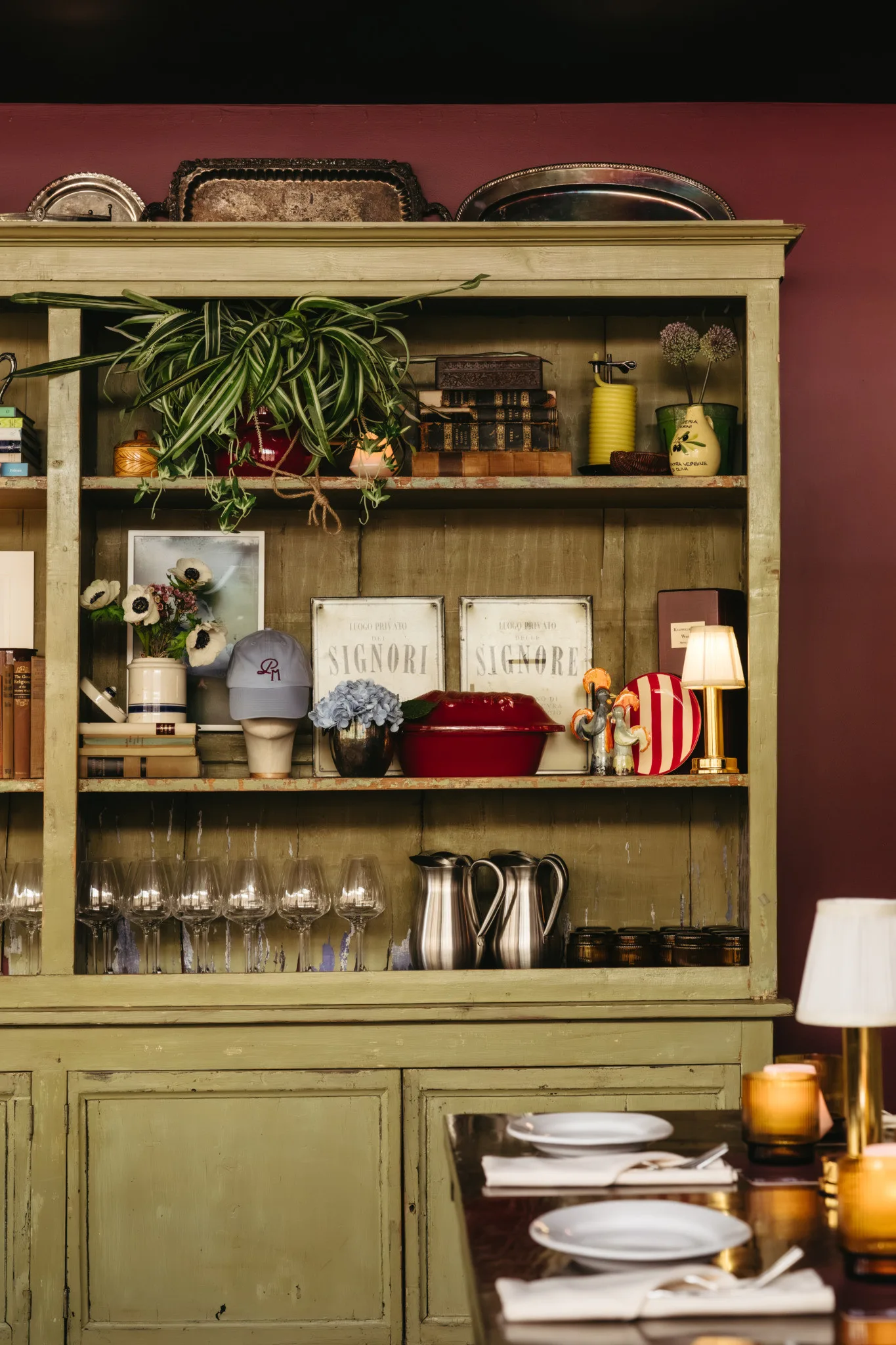 A green wooden cabinet by Piccolo Morini with shelves displaying dishes, glassware, plants, books, framed prints, and decorative items. A set dining table is partially visible in the foreground.
The dining room’s hutch exemplifies this mix with an old Morini cork bucket flanked by antique books, vintage signs, and a modern lamp, all interspersed with personal mementos. A gallery wall breaks formality with its random but harmonious arrangement of frames and decor. This reflects how traditional and innovative elements continue to blend seamlessly.
 A wooden shelf filled with plates, glassware, books, pitchers, a lamp, a plant, and decorative items arranged neatly brings to mind the charming style of Piccolo Morini.
Color plays a vital role, as deep oxblood burgundies and forest greens meet vibrant ambers and corals, nodding to tradition but with contemporary vibrance.
To explore more on how traditional materials can transform modern spaces, Hariri’s Origami Cabins showcases how portable architecture can redefine living.
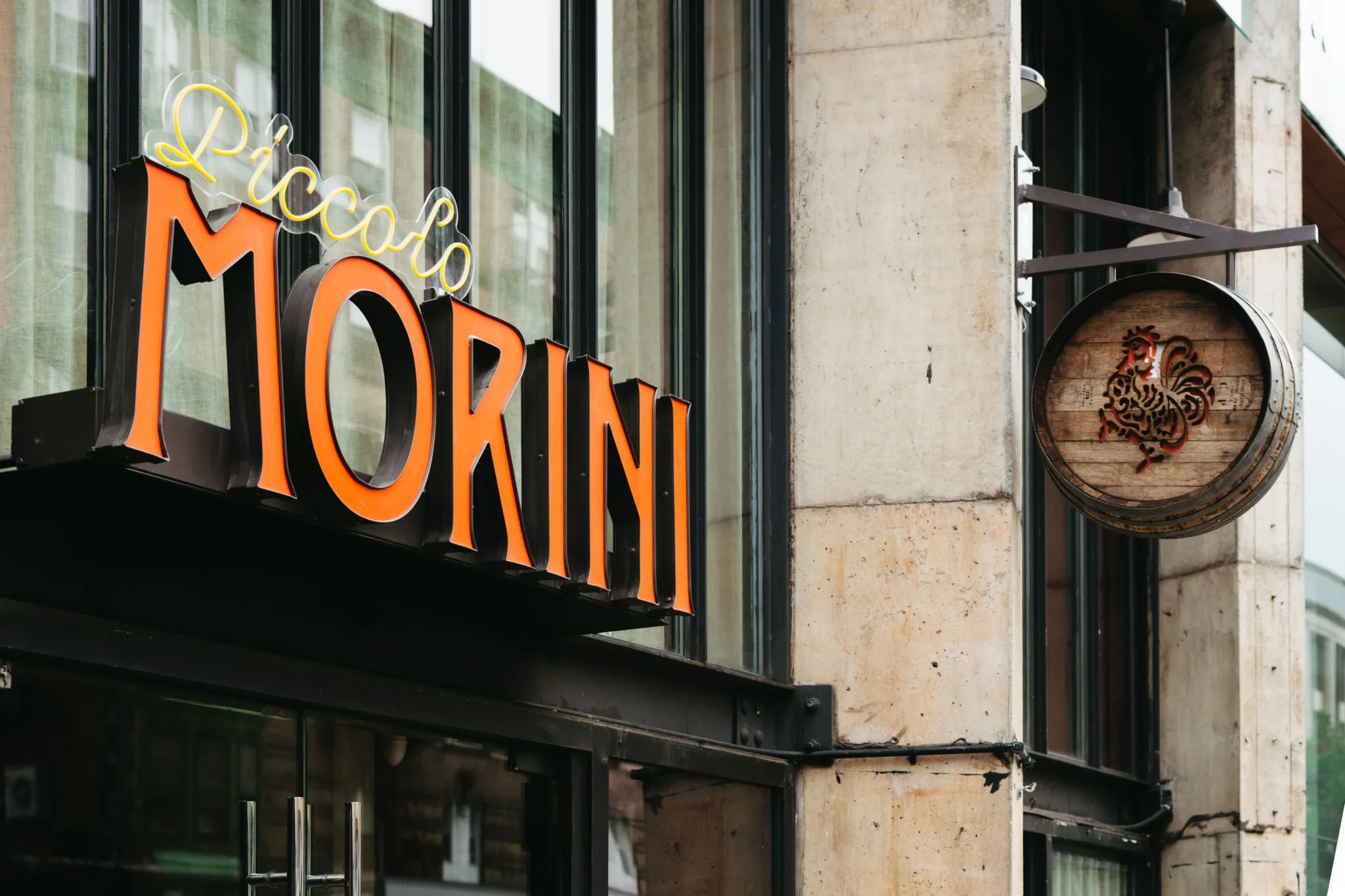 Exterior of a restaurant with a large orange “Piccolo Morini” sign and a round wooden sign featuring a rooster graphic, inviting guests to discover the unique charm of Piccolo Morini.
Outside, the signage visually narrates the restaurant’s evolution. The original “Morini” in bold orange is now underlined by “Piccolo” in playful yellow neon. “It’s a lively, personal touch,” says Keogh, symbolizing the project’s blend of old and new, much like the culinary movement itself.
 A set dining table with plates, glasses, napkins, and small lamps in the cozy ambiance of Piccolo Morini restaurant, complete with framed artwork on the walls.
Inside, Piccolo Morini offers dual atmospheres: a cozy dining room for intimate gatherings and a lively bar for more spirited encounters. Keogh envisions the dining room for family dinners with fine wine, while the bar offers youthful exuberance.
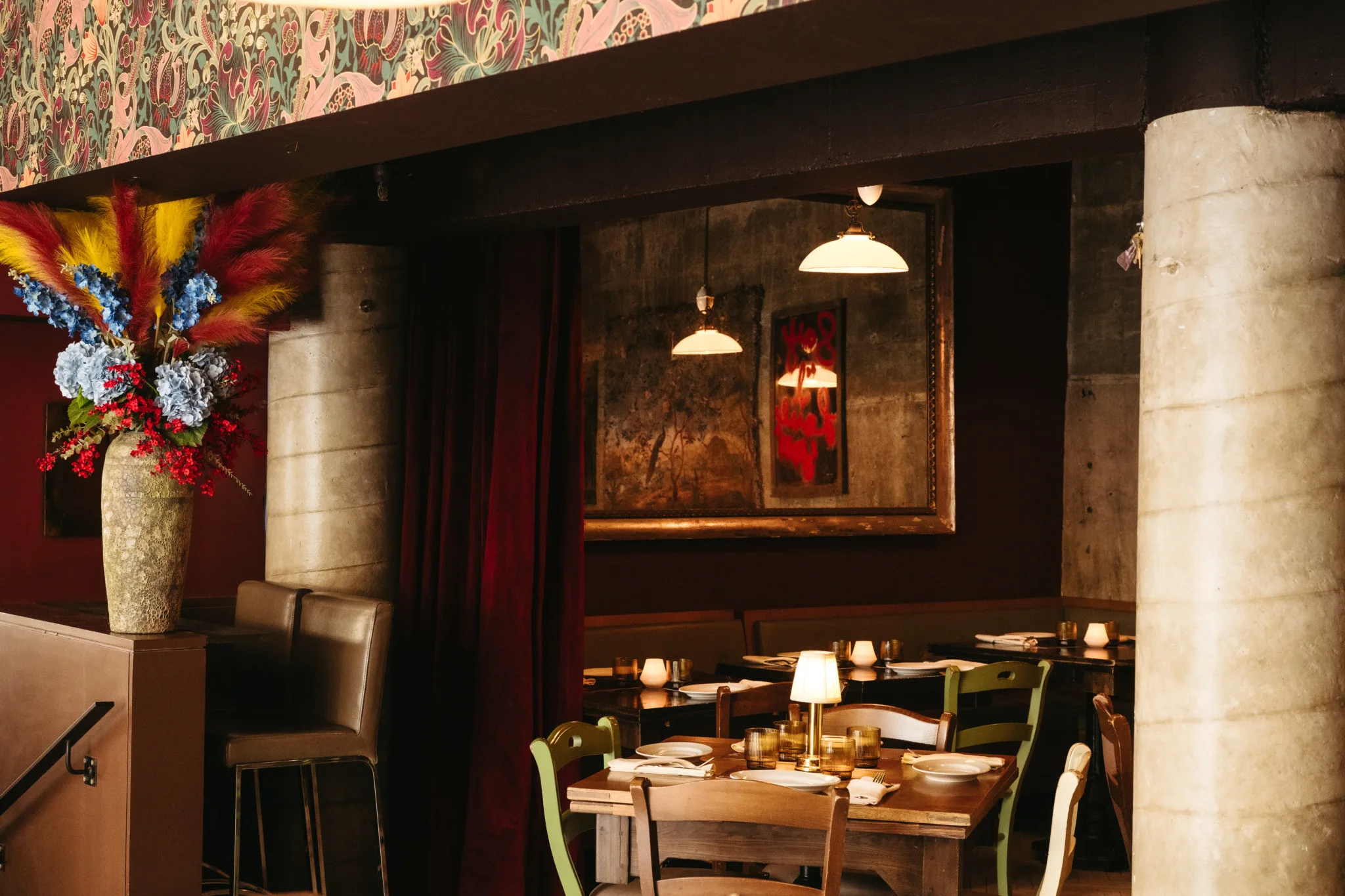 The cozy Piccolo Morini restaurant features a set dining table, soft lamp lighting, a large vase with colorful flowers, and a decorative wall with artwork above.
The challenge Keogh tackled was how to refresh a beloved restaurant without merely replicating it. At 40 Kenmare Street, Piccolo Morini stands as both a tribute and a new chapter, maintaining beloved elements while crafting an identity distinctly its own within the food scene.
Source: design-milk.com
Frequently asked questions What is Piccolo Morini’s design inspiration?
Piccolo Morini is inspired by an Italian grandmother’s living room reimagined by her stylish grandchild, reflecting the evolving food scene.
What type of dining experience does Piccolo Morini offer?
Piccolo Morini offers dual atmospheres: a cozy dining room for intimate gatherings and a lively bar for more spirited encounters.
When is the final service of Osteria Morini?
The final service of Osteria Morini is scheduled for June 1, 2024.