
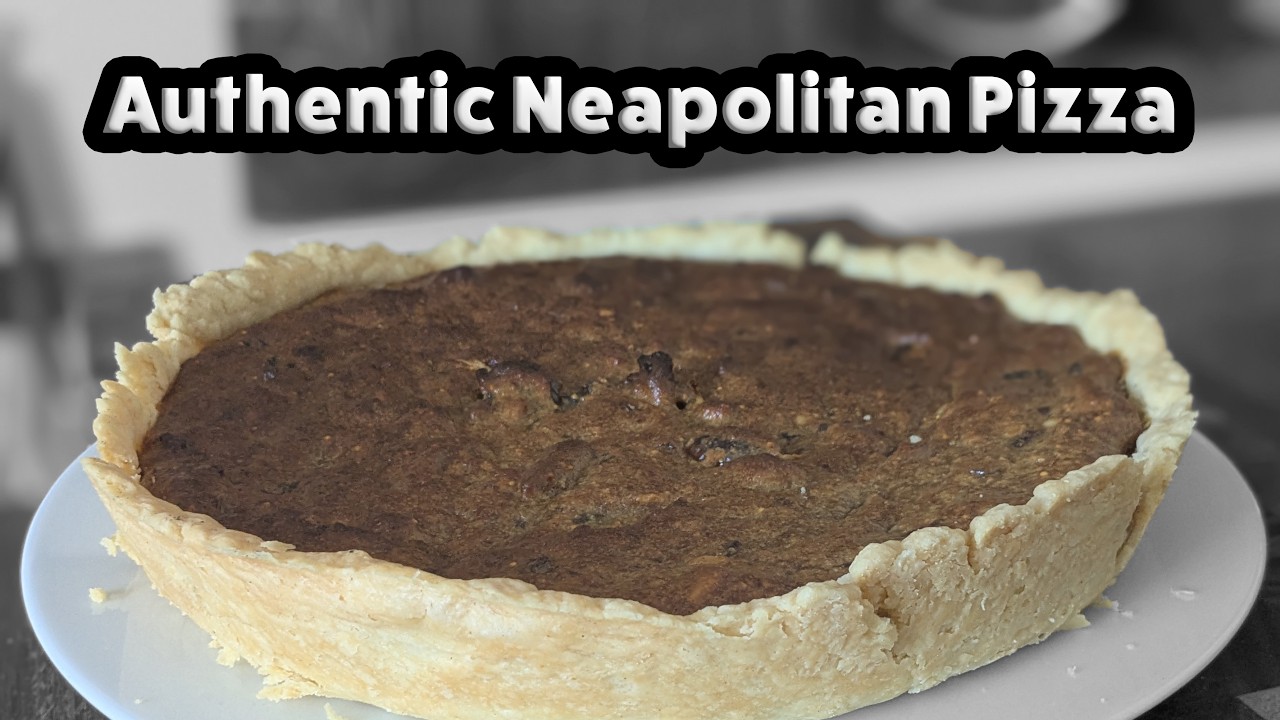
The pizza effect says that some foods are invented in their home country but only flourish when travelling abroad with diaspora. Is pizza actually a good example of this effect? Alberto Grandi seems to think so, but not everyone agrees. We have our usual comedic look at the situation in a new food and cooking history story.
Links to the videos of cherished colleagues:
@HistoricalItalianCooking – https://www.youtube.com/watch?v=4hFVvDOlznE&ab
@TastingHistory – https://www.youtube.com/watch?v=h6XvMKdD2tY&t=1024s&ab
Website: www.intaberna.co.uk
Bluesky: @intaberna.bsky.social
Instagram: instagram.com/in.taberna.qs/
Twitter: https://twitter.com/in_taberna (not really using this anymore)
Interviews with Grandi
https://www.derstandard.at/story/3000000232054/historiker-die-italienische-kueche-ist-nichts-anderes-als-marketing
https://www.ft.com/content/6ac009d5-dbfd-4a86-839e-28bb44b2b64c
https://www.ft.com/content/e668042e-1e58-45cc-8793-8f273a037390
Literature and sources relied upon within:
Helstosky, C. (2008). Pizza: A Global History. Reaktion Books.
Scappi, Bartolomeo. The Opera of Bartolomeo Scappi (1570): L’arte et prudenza d’un maestro cuoco (The Art and Craft of a Master Cook). Translated by Terence Scully. Toronto: University of Toronto Press, 2008. (Lorenzo Da Ponte Italian Library)
Dumas, Alexandre. Le Corricolo (1841) via https://www.gutenberg.org/ebooks/9262
De Bourcard, Francesco. Customs and Traditions of Naples and Surrounding Areas Described and Painted, Volume 2 (1866) – consulted via translated extracts.
https://www.lacucinaitaliana.com/italian-food/italian-dishes/the-true-story-of-pizza-margherita-a-food-fit-for-a-queen?refresh_ce=
https://www.nationalgeographic.com/history/history-magazine/article/pizza-margherita-may-be-fit-for-a-queen-but-was-it-named-after-one#:~:text=One%20theory%20is%20that%20the,food%20were%20widespread%20in%20Italy.
https://artofeating.substack.com/p/italian-food-really-is-italian-with
https://pizzanapoletanismo.wordpress.com/
Chapters
00:00 – Intro
01:15 – The Pizza Effect
02:20 – The (very complicated) history of pizza -Early days
03:45 – First pizza recipes in the Renaissance
07:00 – Scappi’s (sweet) Neapolitan Pizza
10:30 – Lazzaroni Pizza
15:20 – Artusi Pizza
18:20 – Pizza goes International!
19:20 – Conclusion
21:38 – Special Announcement and Thanks!
#foodhistory #pizza #naples
45 Comments
Hello, I speak kabyle (a Berber language) and we thank this way: Tanemirt (pronounced tah-n'meert)
but what about argentine pizza.
Do not get mixed up with Pizza di Pasqua/Pizza Rustica/ Pizzacaina…
Are you telling me that a pizza with Canadian bacon and pineapple isn't Italian?😉
Dawg you look like Slavoj Zizek
Yes…
I live in a small country town in the north of Italy (Orzinuovi), the father of a peer of mine, who is now 85 years old and still works in his pizzeria with his son, finished compulsory school at 13 years old and did not want to work in the countryside and so he went to learn to be a baker. In the early 60s of the twentieth century he got married and took over a pizzeria for sale from 2 elderly spouses who wanted to retire. The pizzeria was already several decades old, the elders were not Neapolitans, my friend's father is not Neapolitan but from northern Italy, no Neapolitan had come to live in our town until 5 or 6 years after he bought the pizzeria, no foreign tourist still visits our small country town today, no New Yorker has ever come to teach us how to make pizzas but the basic pizzas (marinara, margherita, stuffed calzone, capricciosa, quattro stagioni, mushrooms and ham) that we eat today in that pizzeria are the ones that my friend's father made 60 years ago and that the previous couple of owners made before him a century ago. Then today in Italian pizzerias you can find pizzas with steamed dough with raw Sicilian red shrimp on a bed of burrata but that's another story… I think Alberto Grandi is someone who took advantage of the credulity of ignorant people to make money through sensationalistic books full of inaccuracies.
Alberto Grandi is a professor of Marxist economics. Not exactly a world renown food historian.
please read the Aeneid where it says that "they were so hungry that they even ate the table" clearly the sailors did not eat at a dinner table, not having plates they all ate on discs of dough on which the food was placed. they were the pizzas par excellence. See the findings in Pompeii of pizza discs! Dearest, I think that America had not been founded… think twice Many greetings.
Thank you mr Roosevelt! I salute you mr president!
I live in the city of São Paulo (Brazil) and I saw in a newspaper edition from 1919 a restaurant in the city advertising, among other Neapolitan specialties, "Maccheroni alla napoletana", "Bife alla pizzaiuola" (sic) and "Vere Pizze alla napoletana" (sic). The three dishes are made with tomato-based sauces today and there is no reason to believe that they would not have been in 1919. Italian immigrants were the ones who introduced tomatoes, cucumbers, asparagus, eggplant and melon to the city of São Paulo. In 1878 there was already a pasta factory in São Paulo, and historians point out that in 1907 dozens of tons of canned tomatoes (?!) were imported into the city from Sicily. Perhaps "pizza alla napoletana" was somewhat improved in New York, São Paulo, Paris, Buenos Aires, etc. and it became popular in those countries before it became popular in Milan and Rome, but that doesn't mean it isn't an Italian invention.
Is a toasted sandwich a type of pizza. How long as a piece of string.
Uh oh, the Italians will be raging because they insist they have the best food and everything they do is the best and neopolitan pizza is the only real pizza blah blah boo hoo
Yes, I would like to see a video on American pizza. I want to know what the origin of true pizza is, ie tomato sauce and cheese overtop the entire pizza.
Authentic is overrated.
In my view, you need 3 things to call it a pizza: tomato sauce, cheese and crust.
Murica!! Do eeet!
Not gonna lie, there's multiple American regional varieties of pizza I'd take over any variety of Italian pizza any day.
So in conclusion, the pizza is an American invention with Italian origins, and the same pizzas with dough, tomato sauce, and melted cheese started in America and was brought to Italy decades later. Thanks.
So an early Pizza was a mince pie?
4 and 20 blackbirds baked in a pie♪
Carino il video ma come molti altri connazionali italiani, voglio dire la mia. L'Italia moderna (quindi con annessa la Sardegna e Sicilia), è probabilmente il paese che ha le tracce storiche e consequenziali documentate più antiche riguardo la preparazione di pane piatto e lievitato con sopra ingredienti.
Ci sono, certo, moltissimi altri paesi, non collegati all'impero romano, che possono vantare esempi di un antico pane piatto rotondo, come l'Egitto, la Turchia, la Grecia o l'Etiopia ma l'Italia è quello dove viene menzionato più spesso (abbiamo prove in Sardegna vecchie di 3000 anni).
Quindi, perdonateci, ma la pizza la considereremo senpre "nostra" 😅. Voi, americani e non solo, tenetevi le vostre pies, pitte, flatbread, njera, pane naan, o come volete chiamarle (non "pizza" per favore).
8:34 I'm not above that.
I'm curious what your notion of "American pizza" is. I used to think it was like New York versus Chicago deep dish, but I have discovered that there are a lot more types of pizza as well. There is Detroit style pizza, which I find quite tasty. There are also other pizzas with ingredients which seem to be inspired by getting drunk and raiding the fridge to see what your roommate had in there, tossing it onto some kind of bread and putting it into the oven and taking it out eventually after you sober up just enough to remember that there was something burning in the oven. Somehow, these half remembered recipes corroded by a semi-blacked-out stupor get recalled and reconstructed into a pizza recipe.
At least that is the only excuse I could find for some of the variations in pizzas I have heard about.
Pizza was never really Italian. It was Iranian first, then Greek, then Italian, and the kind of pizza the world enjoys today is American.
In Pompeii they found a fresco depicting something like a pizza. It only didn't have the tomatoes of course. But then tomatoes are not what define a pizza, as there a many, like 4 cheeses, that don't have any tomatoes. The idea of putting stuff on bread and shoving it into an oven is probably one of the oldest dishes around. Only they weren't called pizza, which is likely just a commercial invention to make it more saleable. It 'mouths' good.
And on another note, when I came to the Netherlands in 1965 on an Italian passenger boat from Australia, we also docked in Genoa, which lies in Northern Italy. We had pizza's on board, but also in Northern Italy pizzeria's were all over the place. Even in smaller towns along the coast. So I think the timelines is a bit off on that and it became a more common culture earlier than the 1960s.
I rode with an older Italian driver guide through the entire Almafi Coast…so we had time to talk…he absolutely insisted the Italian Ppl in America were the ones that made the Pizza we know of now….and brought it back when the Americans landed in Slareno IT (where he was from) in WW2. I argued that they did…but he absolutely insisted the New York Pizza was first.
If Italian cuisine were completely authentic and traditional it would be much poorer. No tomatoes, no squash, no peppers, no maize, no chocolate, no coffee, no vanilla, so on and so forth. And that's just New World foods.
Have you considered the Judeo-Roman baked good Pizza Ebraica? It's a delicious cookie with nuts and candied fruits.
Do one on American pizza history! I'd be very interested.
definitely not. My greatmother was a 14 yo girl in 1914. She and her father went to buy pizza in 1914. It was not margherita pizza, it was just oregano and tomatoes with some garlic. So in 1914 there were pizzeria and pizza for sure. And it was not Napoli, but another city, at 30 km from Napoli. The same pizzeria survived until 1990 and I was there many times personally. It was a pizzeria take away, no tables and chairs, just a big oven and people took pizzas to bring home for eat them.
So. Flat breads with toppings. Cooked as fast as possible in an enclosed wood fired oven, in order to minimise fuel and maximise production. As old as time.
This one happened to use tomatoes and also happened to go global under a generic 'trademark', like the kebab or the curry.
If I were a genealogist, never mind an expert in DNA ancestry, I'd class the modern pizza as a subspecies. A universally popular one for all sorts of reasons, but a minor branch of a large family tree. I admire your valuable scholarship, but am hesitant to make an icon out of a cheese and tomato sandwich. Let alone a pigeon and almond pie. Tongue firmly in cheek.
More seriously, parallels abound, and we should be wary of singling out one appealing species over another.
That said, Subscribed, and thank you very much. Today I Learned.
honestly man, the evidence here for pizza (as we know it today) being invented in naples is very weak. the only written documents basically talking abt it as if the tomatoes are whole (raw?) and also the crusts in all these recipes having absolutely nothing to do with what we would see as a modern crust?
the evidence is WEAK!!!!!
I prefer to believe my Neapolitan ancestors weren't stupid. If it was a common food, it wouldn't taste awful, otherwise they would have eaten something better tasting.
"A commentary on the evolution of Pizza, made by an Austrian-born Hindu monk."
Huh? 🫨
Ευχαριστώ Πολύ
We had tomato from 1500 all over Italy and Spain…..
America didnt improve pizza in any way. Pizza improved Americans poor food history.
I didn't know Slavoj Zizek had a cooking channel
Ce qui est intéressant à propos de l'histoire de la pizza, c'est que juste en France, il existe deux traditions très proches qui proposent une sorte de pizza. La première d'origine italienne bien sûr est la pissaladière de Nice, où l'on place des oignons finement coupées sur un pain plat. L'autre tradition, d'origine germanique celle-là, est la flamenkuche, où l'on recouvre le pain de crème fraîche et l'on garnit de jambon coupé en dé et de lardon. Dans les deux cas, elles sont évidemment cuites au four..
USA USA USA!!! 🦅
Video on American pizza, please.
I would love a second video on American Pizza, thank you
Pizza may have roots in Italy and italians brought it to america but it transformed wildly while in america and did indeed come back to change pizza in italy. Unless you can find records of tomato sauce with cheese from before the 1900s in Italy. I have never seen someone substantiate the claim. Americans pioneered grinding tomatos up into a paste, mixing with an oil, herbs, and other spices then putting it on with cheese. And when you go italy that is the basic template you'll find. Also saying that there were sliced or chunks of tomatos on pizza in Italy and therefore had the same ingredients so modern day pizza is italian makes no sense. Having a sliced tomato on the top of the pizza is nowhere near the same as having a tomato sauce with like 10 ingredients inside. The modern pizza is an american invention but its still italian in origin and i have no problem with people saying pizza is american. Just like with hamburgers, the modern Hamburger is an american invention. Give ANY european a hamburg steak when they asked for a hamburger and they're going to be confused or upset.
There are something like 40 different American pizza styles with either fairly plain lore or really cool and interesting stuff like Detroit style. There's always room for a video on American Pizza and how she got that way. Including the stuff that's not American but is blamed on America! Looking at you Canada, with your Hawaiian (Which BTW is delicious).
didn't watch this. Answer: YES. Euro pizza sucks. "pepperoni" means an egg and a single pepperoni in Europe. Roman restaurants have hours in 45:00 minute segments. UNITED STATES BUSINESS MODEL IS KING. U.S. Pizz is best on earth.