
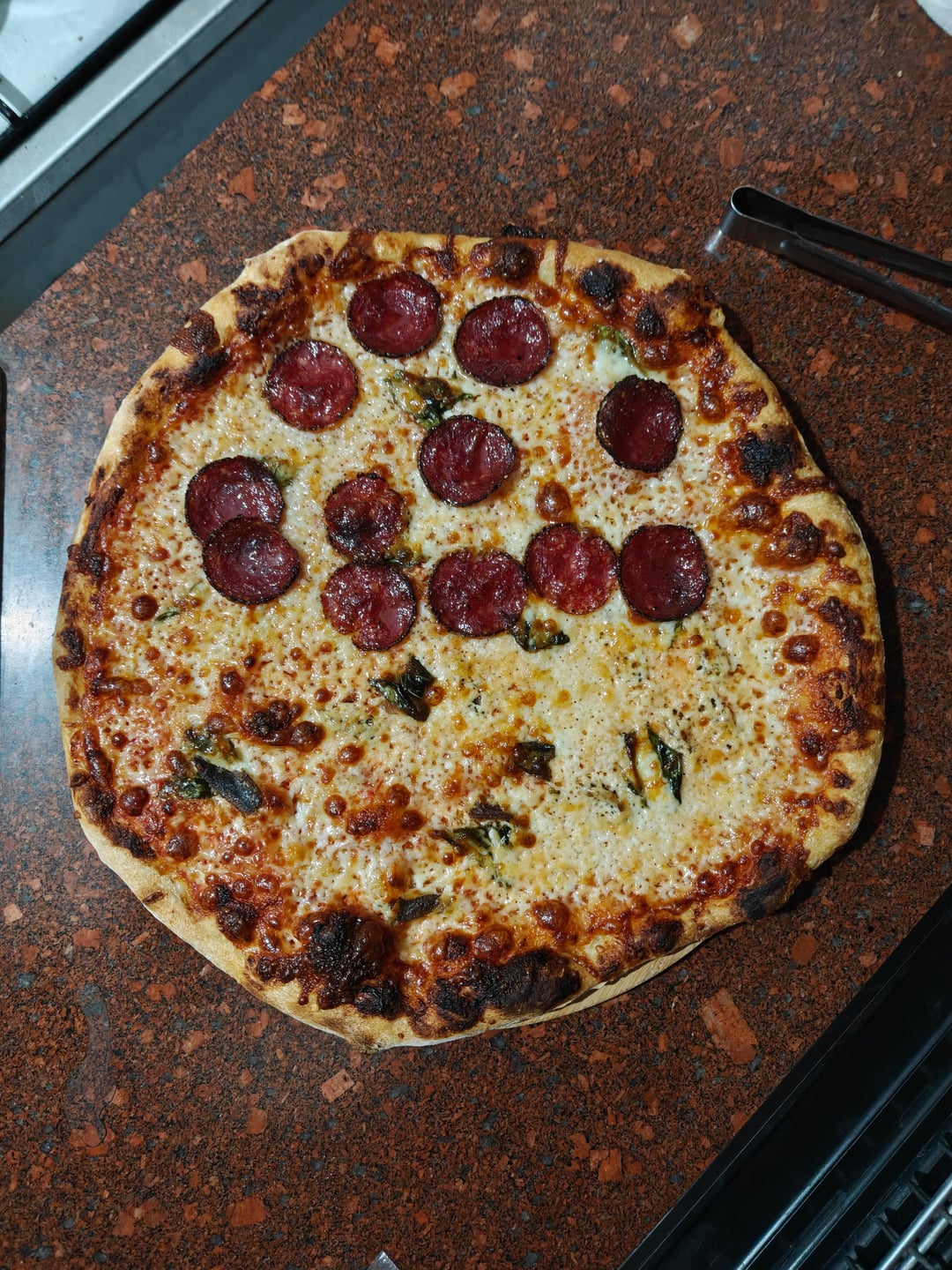
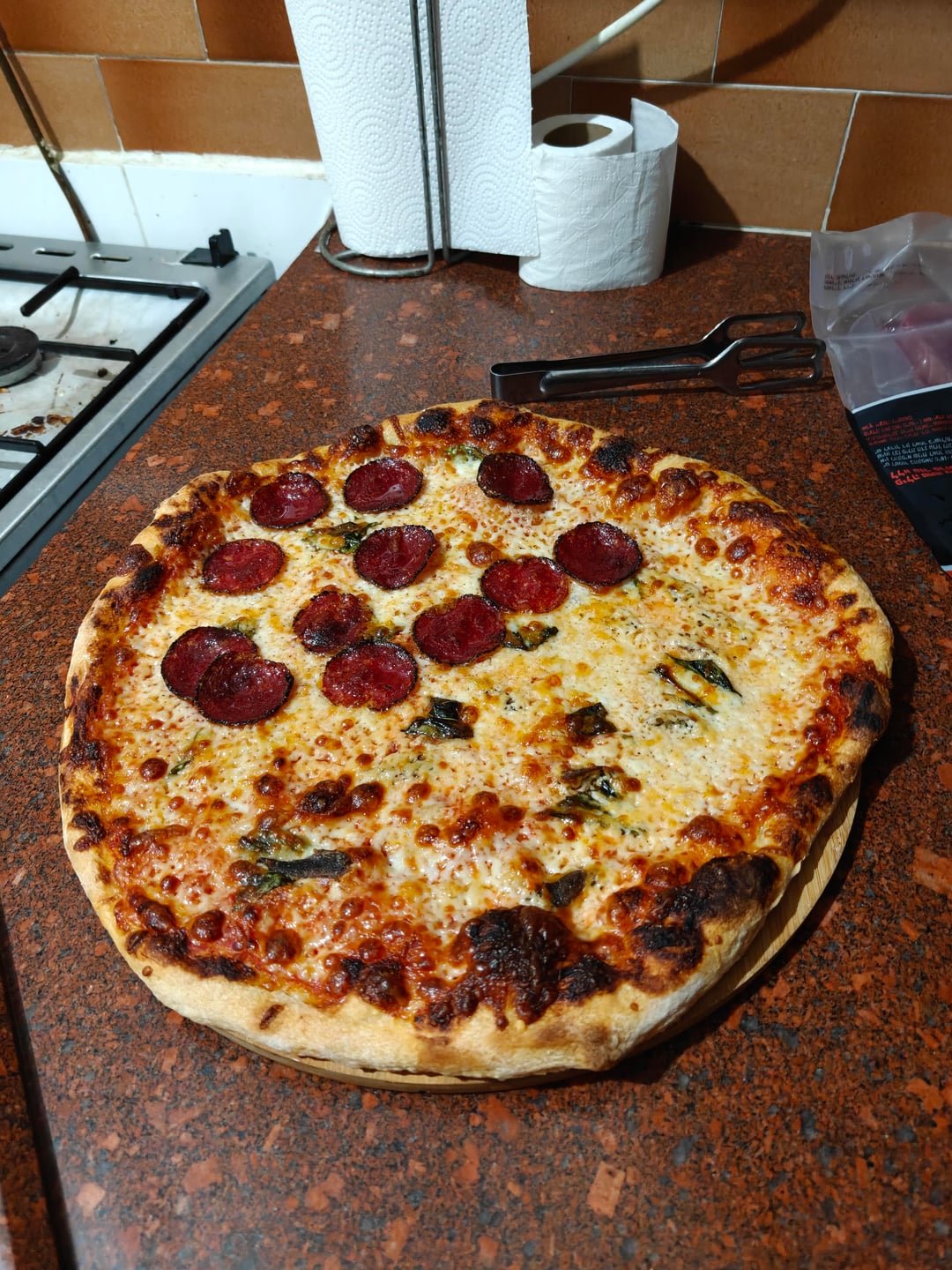
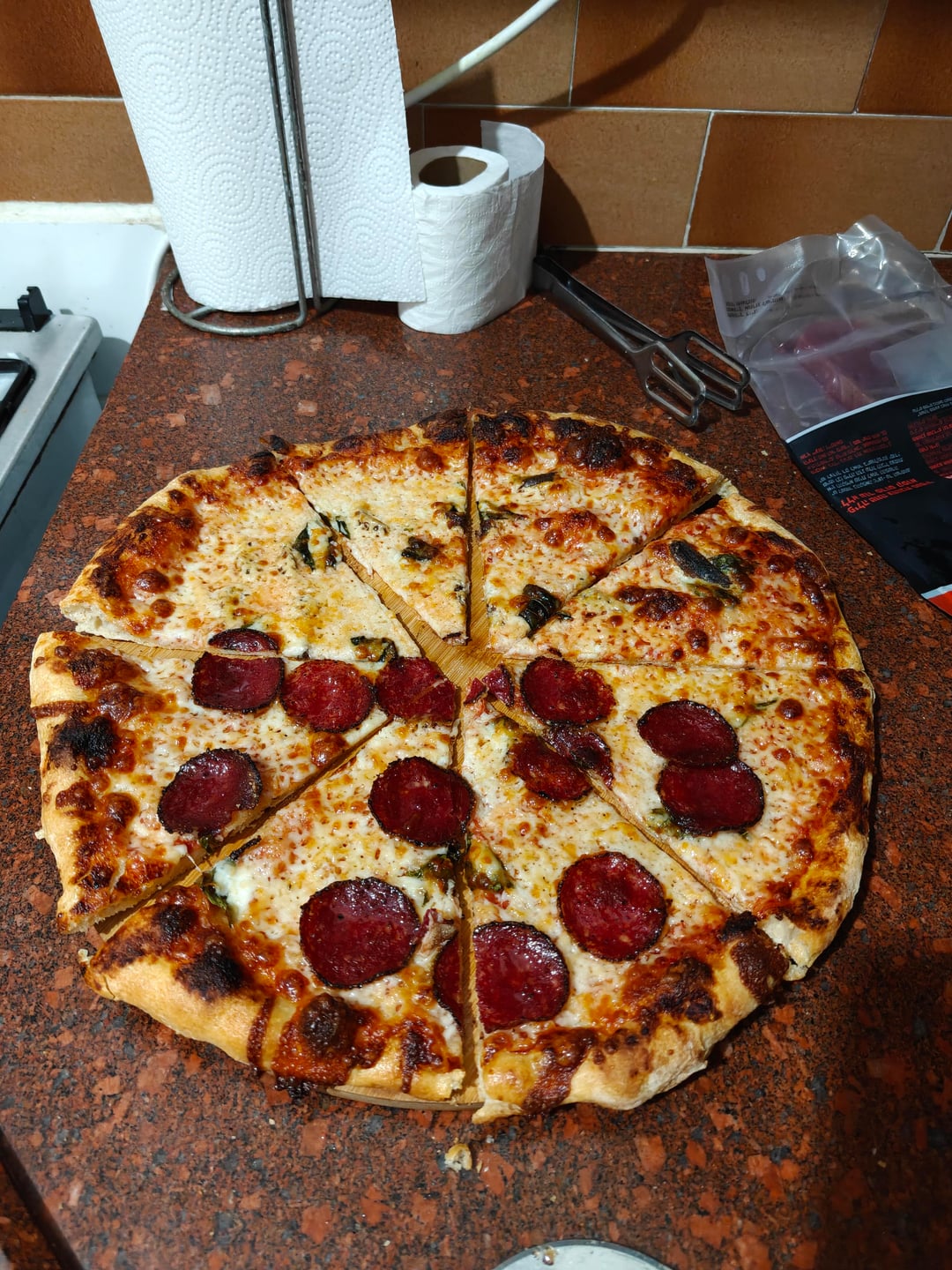
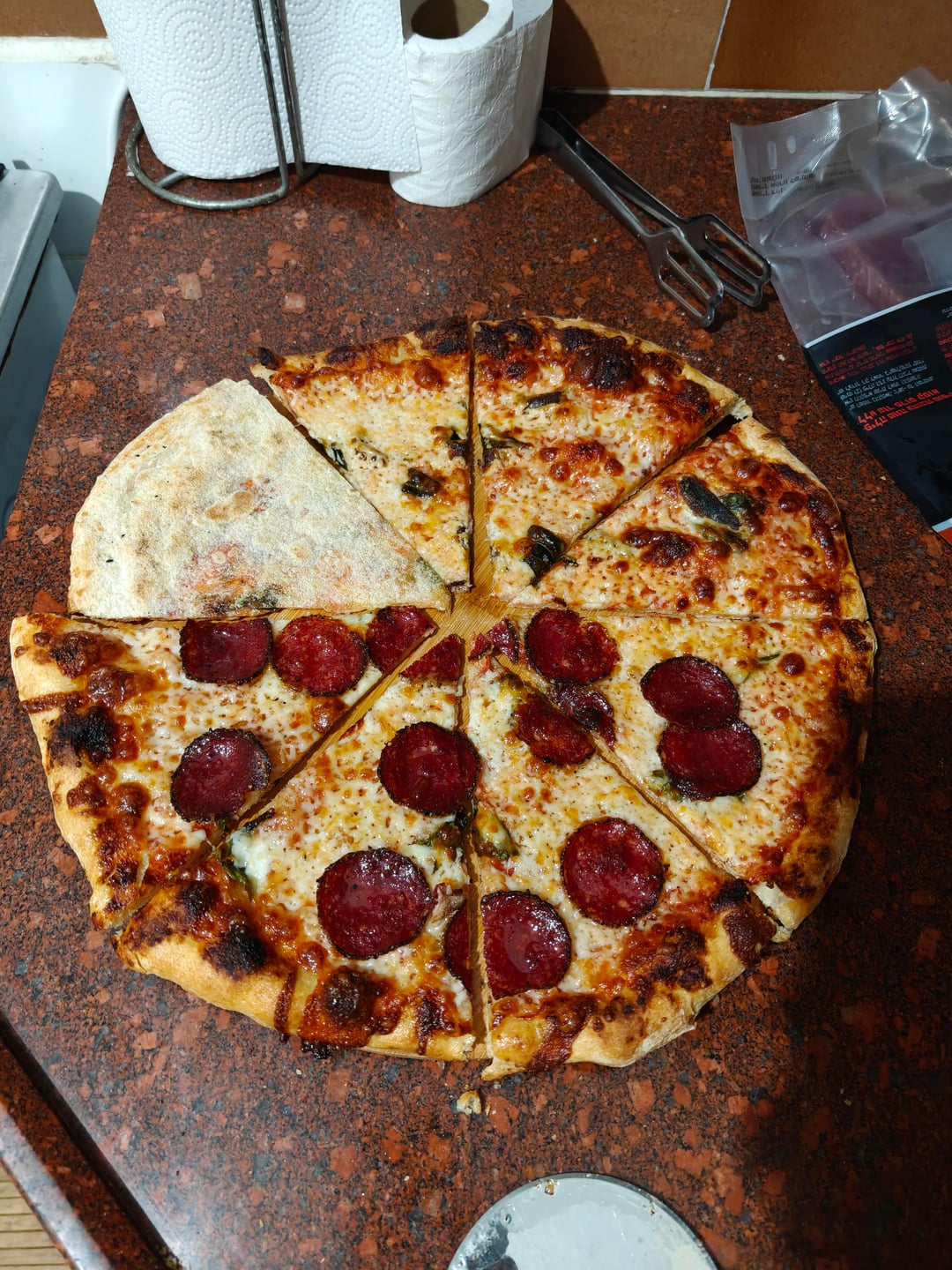
First post on the sub!
TL;DR – Tips/Ideas for getting the leopard undercrust!
Obsessed with New York style Pizzas and am trying to make one at home. After making a couple dozen times I believe I mastered 99% of what I want: Taste, correct ingredients, crunch and chew, ratio of sauce and cheese, truly everything… everything but one.
No matter what I do, I cannot for the life of me get that leoparded under crust that I see SO MANY people manage to get…
I tried using different types of flour, AP/Bread, tipo "0" or tipo "00", different placements of the rack in the oven, convection/regular/grill, longer/shorter fermentations, hot/cold fermentations, different hydration levels, using steel instead of stone and probably other methods that I'm forgetting.
This is my recipe:
4 Large Pizzas
- 1000g Caputo Nuvola – https://www.mulinocaputo.it/en/products/nuvola/
- 650ml water (65%)
- 22 g salt (1.5 Tbsp)
- 5–7 g yeast (same-day) – 2 tsp
- 25 g olive oil – 2 Tbsp
- 12 g sugar – 1 Tbsp
10 minute knead, twice stretch and fold until it passes the Window Pane test, non-fridge fermentation, left at room temp of about 18C for 20 hours, divided into 4 dough balls 3-4 hours before baking. Measured the pizza steel and it reaches about 310C before baking.
I'm ruling out buying a new oven/new pizza steel, although they can definitely be the problem, I'm trying to find other adjustments to try. I'm also ruling out Starters/Biga/Poolish since I've seen enough people get the under crust without it.
Again, super satisfied with the taste and texture, that's definitely not the issue, I just really want to char and leopard spots on the bottom, would appreciate any tips or ideas or something I'm doing wrong!
by ariel1k2
1 Comment
Some things I do is:
use bread flour, 00 doesn’t work well in home ovens, unsure about 0.
Par bake for 2 minutes then add toppings and bake for another 7.
Don’t over knead, I get it just smooth then fridge ferment for 48-72 hrs.
Semolina flour for stretching and launching, less is better. Yours looks very floury on the bottom which prevents browning.