
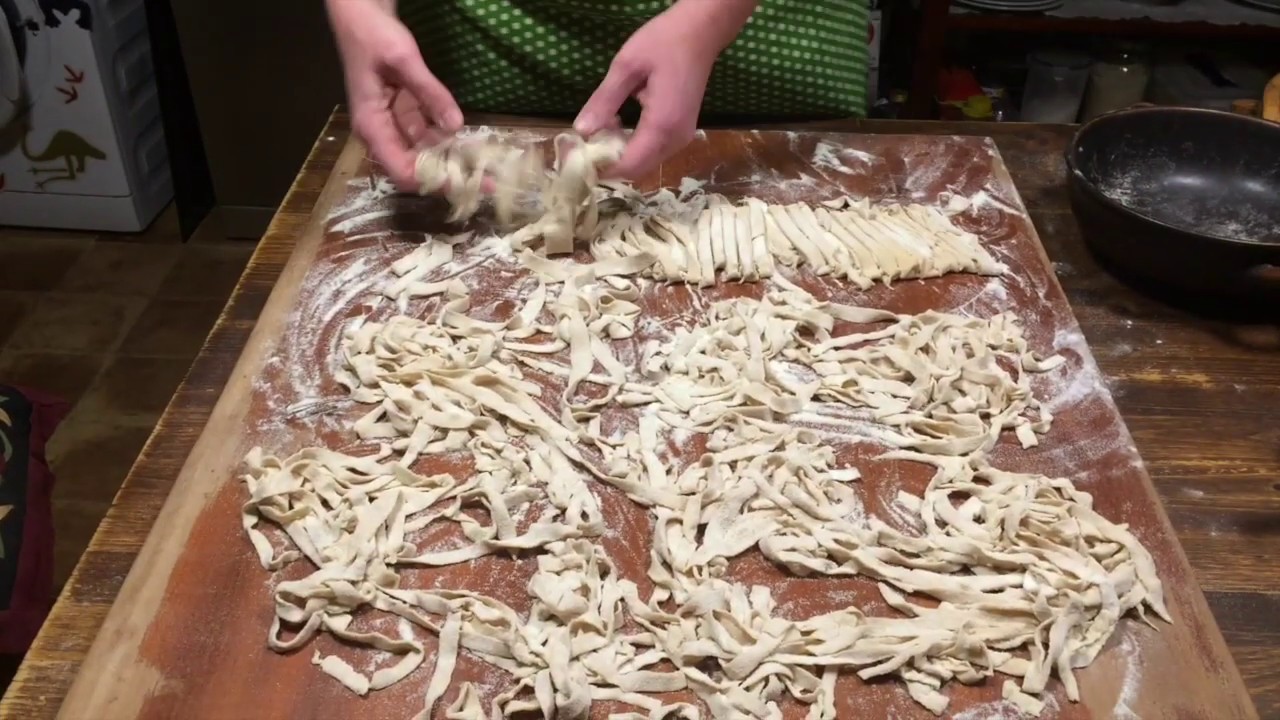
Pasta is commonly associated with Italy, and indeed there are more than 300 types of pasta to be found here on the peninsula. Already the ancient Romans ate some kind of pasta – laganum – which might have been a kind of lasagne, or maybe an unleavened pie crust – that is not entirely clear. But the noodle as we know it probably came to Italy during the early Middle Ages with the Arab invasion of Sicily in the 9th century. (And not with Marco Polo from China: he stated, in fact, that Chinese noodles were as good as the ones he knew from home.) During the time of the Emirate of Sicily and the following Arabo-Norman era, the island was famous for exporting dried noodles called Itriyya to mainland Italy and other Mediterranean neighbours. In the Salento, the southern part of Puglia, “tria“, deriving from the word itriyya, is still a common pasta, usually eaten together with chickpeas. The term Itriyya is also known from medieval Middle Eastern and North African sources such as the 14th century cookbook named Kanz, or by the Jewish physician Isaac ben Solomon (in Arabic Ishaq ibn Suleiman) in Kairouan, now Tunisia, who lived approximately from 832 to 932 (yes, he apparently got really old). The recipe I am going to show you in this video is from his collection: he recommends it as a dish that is easy to digest and will help the sick regain their strength.
This migration of recipes is another nice example of how the Mediterranean in the past used to be a uniting, and not a dividing geographical entity. You can read more about that in the article I wrote for National Geographic Italy a few years ago:
By the way, the word “Itriyya“ has nothing to do with the name of the Valle d’Itria in Puglia, Italy, where I am lucky enough to live, although the idea would be nice.
For the pasta you need: semolina, salt and water. For the sauce you need chicken breast, olive oil, pepper and parsley.
Stay tuned – there are much more historical recipes to come on this culinary archaeology channel. In these little videos I focus on easy-to-reproduce recipes (“try this at home“). For complex historical dishes and cooking techniques or a full feast visit me for one of my historical cooking workshops in Puglia. And if you like, visit my website at