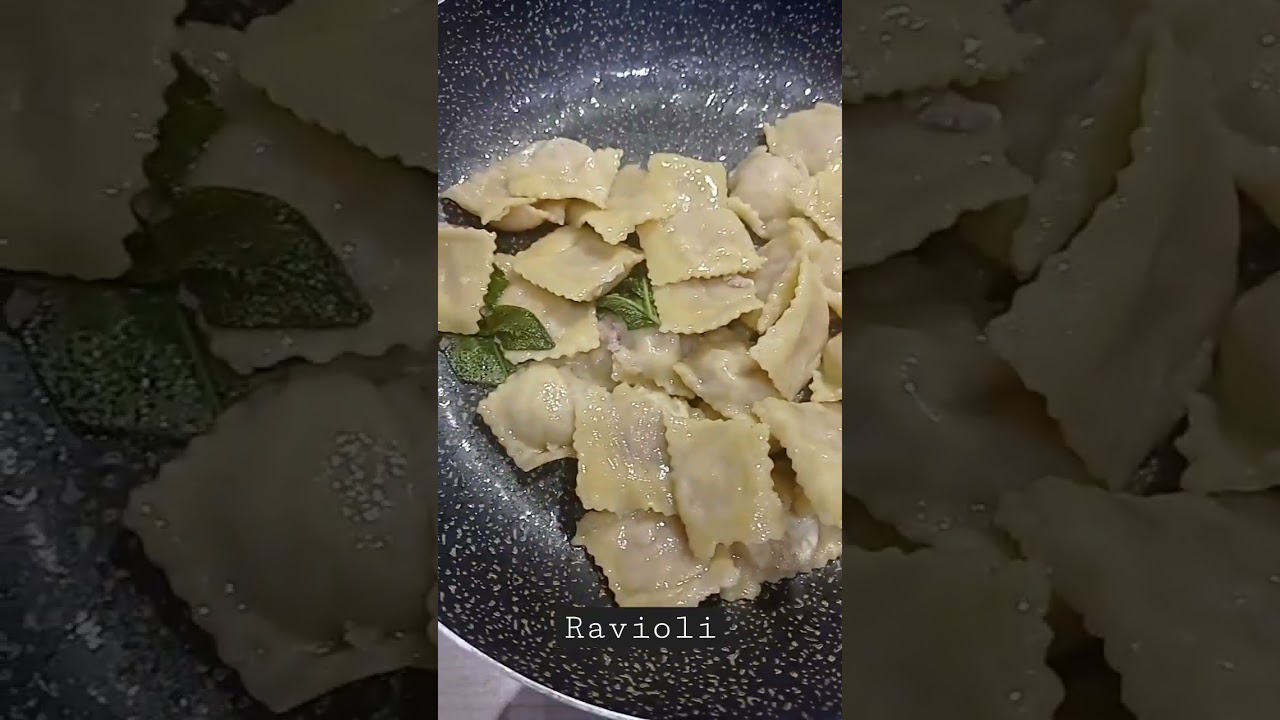
Pellegrino Artusi traces the origin of the name raviolo to the Latin word rabiola, small turnip. However, the culinary critic specifies in his note that the genesis of this term is very complex. A second theory traces the name back to the word rovigliolo, which stands for tangle. The third and most accredited way to establish the origin of ravioli leads us to Gavi Ligure, where a cook called Ravioli (a still familiar name in those parts) was the first to cook the stuffed pasta bundles. According to what we read in the Agricultural Landscape in Liguria, in a contract from the end of the 13th century, a Savona settler undertook to provide the owner with a meal for three people, at the harvest, consisting of bread, wine, meat and ravioli. In the 12th century, thanks to the village fairs, ravioli arrived in Emilia Romagna, to be precise in Parma. From there, they were consigned to history thanks to Giovanni Boccacio, who wrote in his Decameron: “… there were people who did nothing else but make macaroni and ravioli and cook them in capon broth …”.