
Baker's %: flour 60, semolina 40, water 60, EVOO 6, salt 2.4, sugar 3, IDY 1. Total: 172.4.
Recipe for a 30 x 40 cm baking sheet. Yield: ~685 g of dough (0.57 g per square cm of the baking sheet).
For the dough:
Type 00 wheat flour – 238 g.
Semolina – 159 g.
Water – 238 g.
Extra Virgin olive oil – 24 g.
Sugar – 12 g.
Salt – 9.5 g.
Dry yeast – 4 g.
For the bread crumbs:
White bread (Italian-style) – half a loaf.
Extra Virgin olive oil – 60 ml (1/4 cup).
Caciocavallo cheese or another semi-hard sheep’s milk cheese, or Parmesan/Pecorino – 60 g.
For the sauce:
Extra Virgin olive oil – 4 tbsp.
Onions – 2 large bulbs.
Peeled tomatoes in tomato juice – 800 g.
Salt – 2 tsp (to taste).
For the rest of the dish:
Freshly ground black pepper.
Anchovy fillets in oil – 45 g (weight without oil).
Sliced Caciocavallo or another semi-hard sheep’s milk cheese, or Parmesan/Pecorino – 60 g or more.
Grated Caciocavallo or another semi-hard sheep’s milk cheese, or Parmesan/Pecorino – 60 g or more.
Dried oregano – to taste.
Extra Virgin olive oil – 60 g. For greasing the baking sheet.
Preparation.
Make the dough:
In a deep bowl, mix all the flour, sugar, yeast, and salt using a wooden spoon. Mix thoroughly. Add the oil and water. Mix thoroughly until no dry flour remains.
Place the dough on the counter and knead for 15 minutes, adjusting the amount of water and flour as needed (add a little water to dry dough, and flour to sticky dough). Cover with plastic wrap and let rest for 10 minutes. Then knead the dough for another 2 minutes.
Place the covered bowl with the dough ball in the refrigerator for 12 to 72 hours (depending on your flour).
Prepare the sauce (it can be stored for up to 1 week in the refrigerator, in a covered bowl): Finely chop the onion. Heat the olive oil and onion in a saucepan over medium-high heat until sizzling. Continue cooking, stirring frequently, until the onion turns a deep golden brown, about 20 minutes total. Tear the tomatoes into large pieces with your hands. Add them to the saucepan with the onions (along with half of the juice) and stir. Bring to a boil, then reduce the heat to low and cook, stirring occasionally, until the sauce is a deep red and thick, about 30 minutes. Season with salt to taste and set aside. Any sauce left over after making the pizza can be frozen in a sealed container. Make bread crumbs (they can be stored for up to 3 days in a covered container at room temperature): Slice the bread into pieces about 1.25 cm thick. Place the oven rack in the middle position and preheat the oven to 150 °C. Spread the bread slices on a rimmed baking sheet and bake until completely dry, about 30 minutes (you can flip the bread slices halfway through baking). You can also toast the bread in a toaster on low heat (but don’t brown it—the bread should just become dry). Break the bread into large pieces with your hands, then transfer to a food processor. Add the olive oil and the cheese grated on a coarse grater, and process until finely crumbled. Any crumbs left over after making the pizza can be transferred to a zip-top bag and stored in the freezer.
On baking day:
Remove the bowl of dough from the refrigerator and let it sit at room temperature until it reaches 10–12 °C. This should take 1 to 2 hours.
Pour the oil into the center of a steel baking sheet.
Turn the bowl of dough upside down over the baking sheet and use a bowl scraper to loosen the dough, allowing it to fall onto the sheet.
Using the bowl scraper, flip the dough over to coat both sides with oil.
Using the straight fingers of both hands, like flat spatulas, press the dough outward in all directions, stretching it toward the corners to form an even layer.
The dough can be stretched to the corners. If you work carefully, the dough should stretch without tearing. Even if the dough doesn’t reach the corners, place it, uncovered, in a warm spot and let it rest for 30 minutes.
After resting, the dough is ready to be shaped a second time. It will not have deflated, so use a light touch to nudge the dough rather than stretch it, moving it around the baking sheet as needed to achieve an even thickness and reach the corners.
Let the dough rest again (uncovered) for 1.5–2 hours, until it rises almost to the edge of the baking sheet. The time will depend on the room temperature. At this stage, do not touch the dough or press down on it again, even if it has pulled away from the edges, otherwise it may not rise properly.
40 minutes before baking, place a baking stone directly on the bottom of the oven (or on the lowest rack) and preheat the oven to 230 °C.
Coarsely chop the anchovies and slice the cheese (or grate it using a coarse grater).
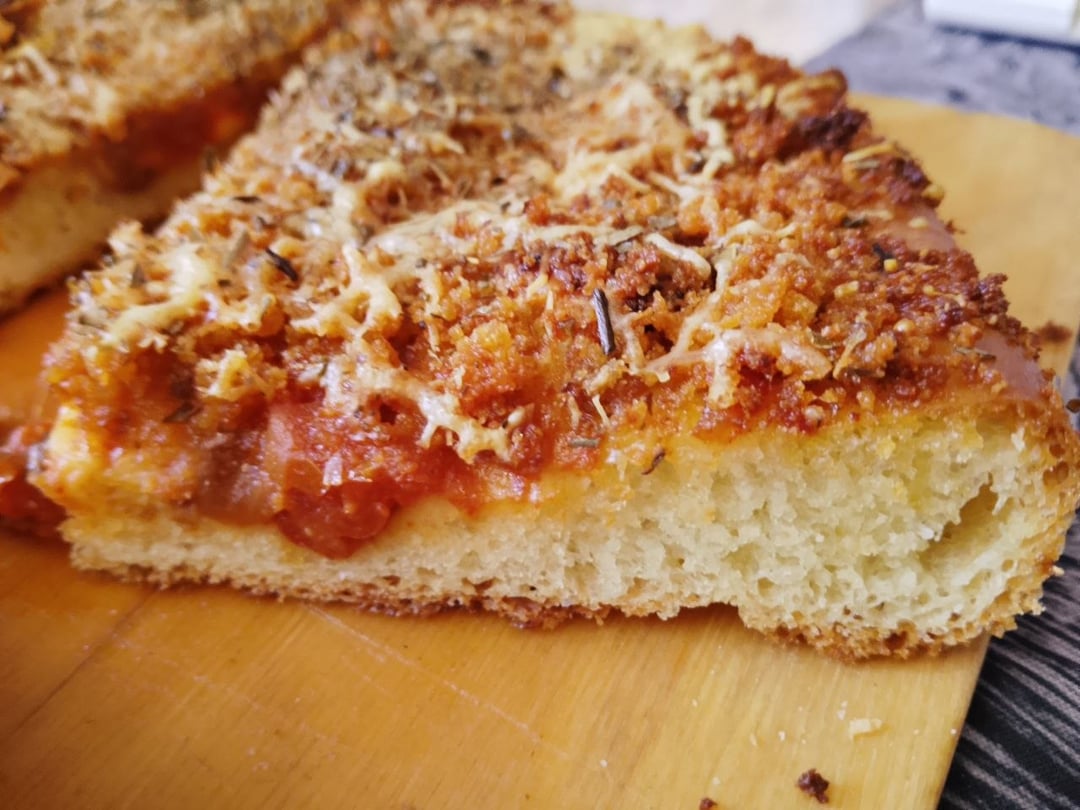
Spread the chopped anchovies and cheese evenly over the dough. Then carefully spread a thick layer of tomato sauce on top, trying not to deflate the dough (you may have some sauce left over).
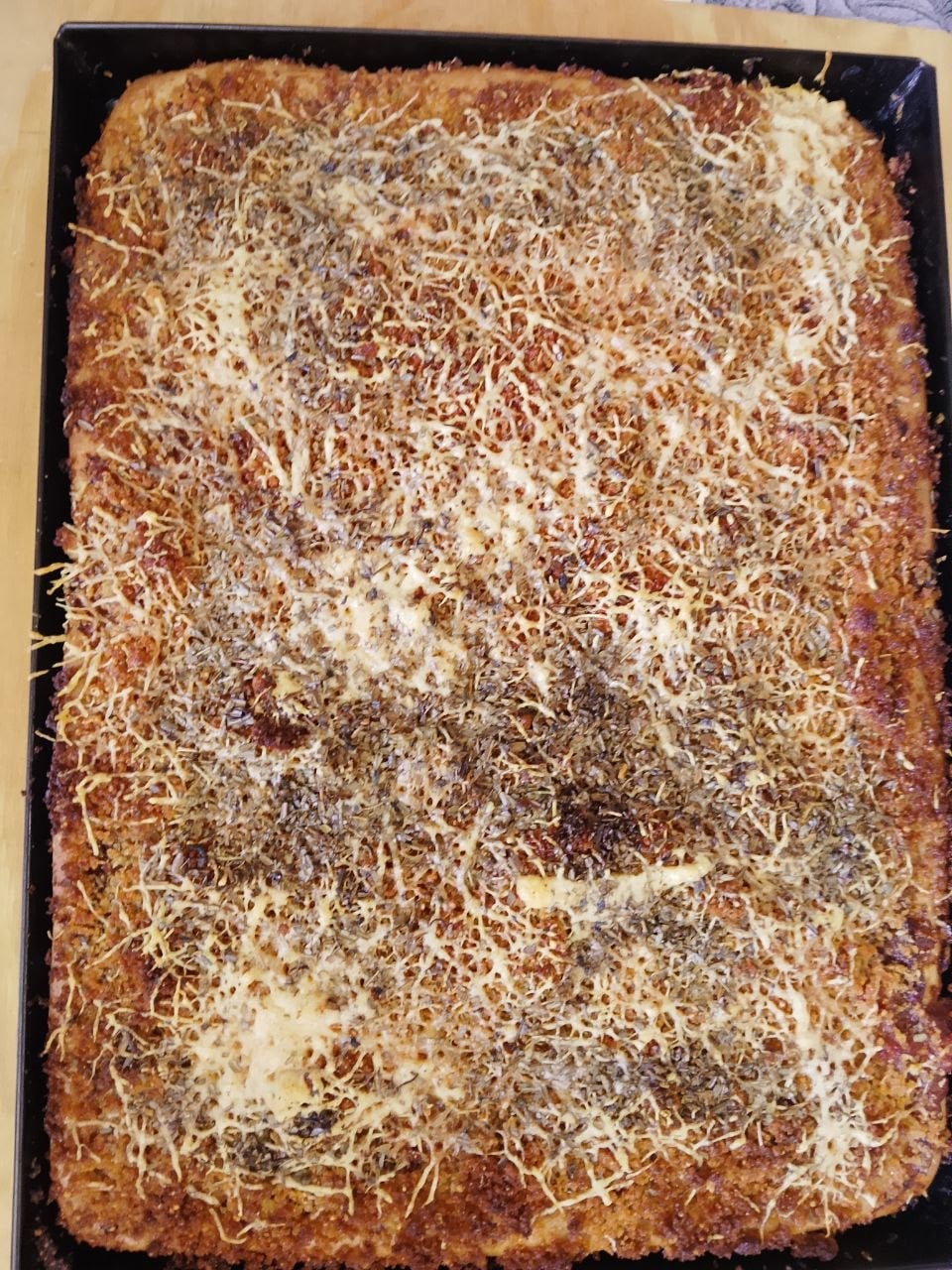
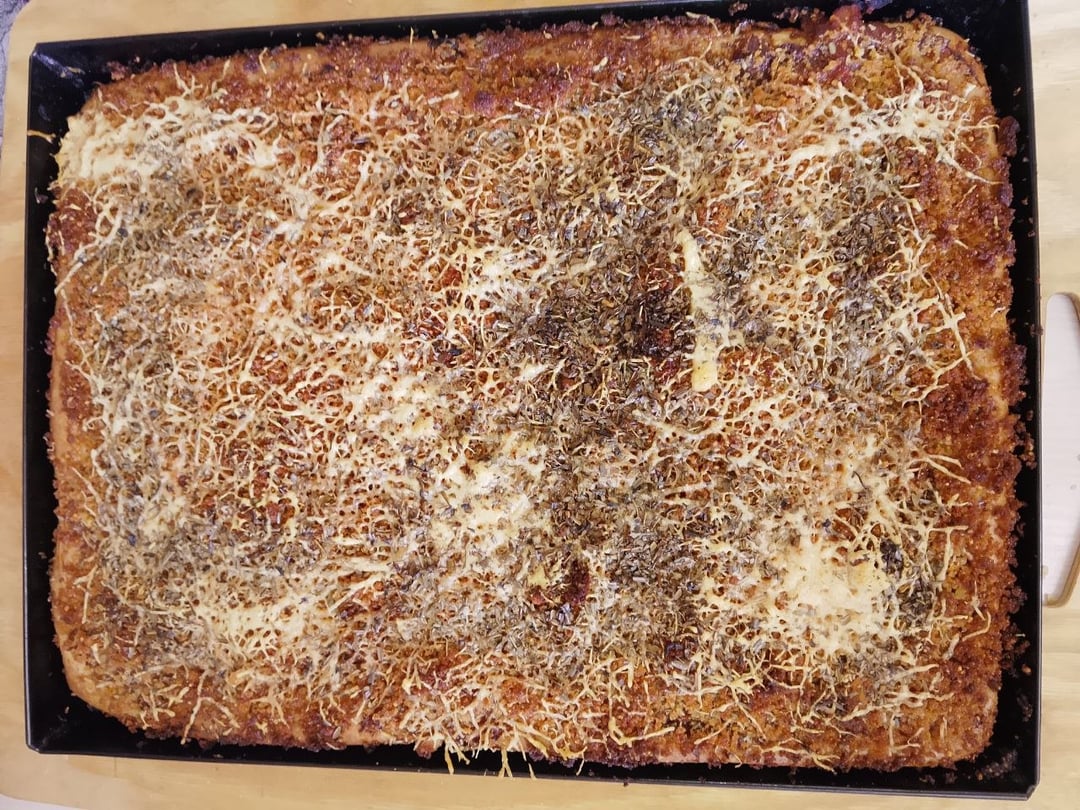
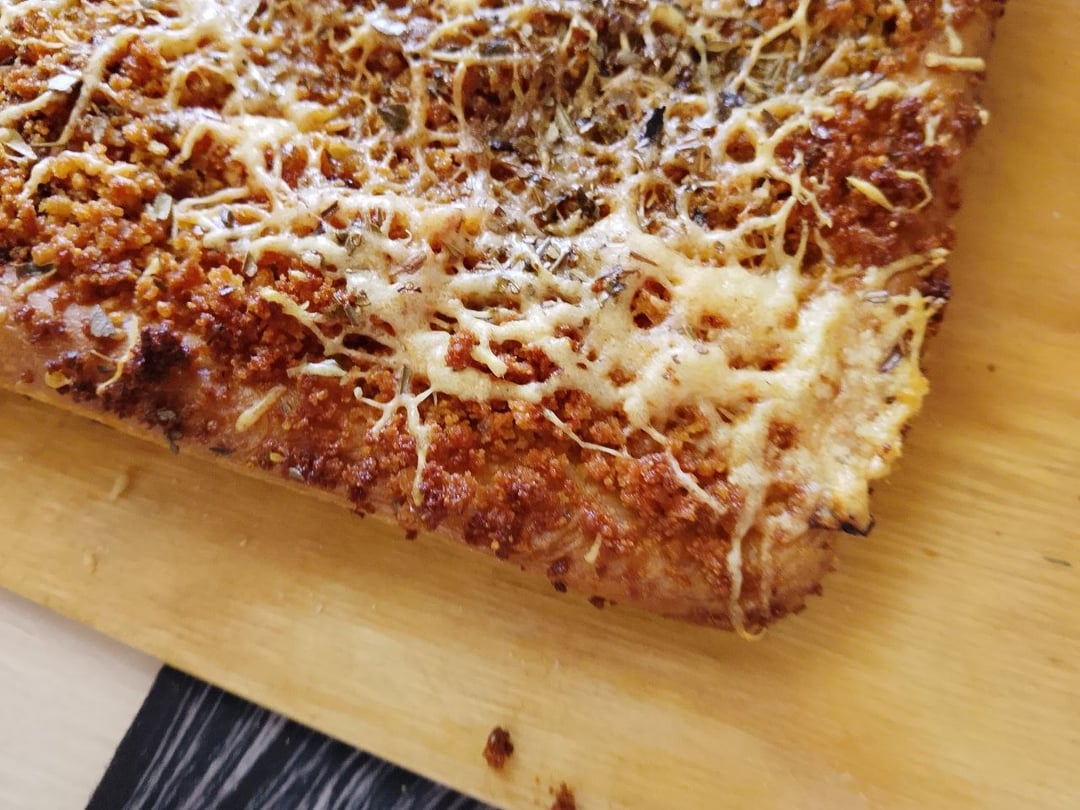
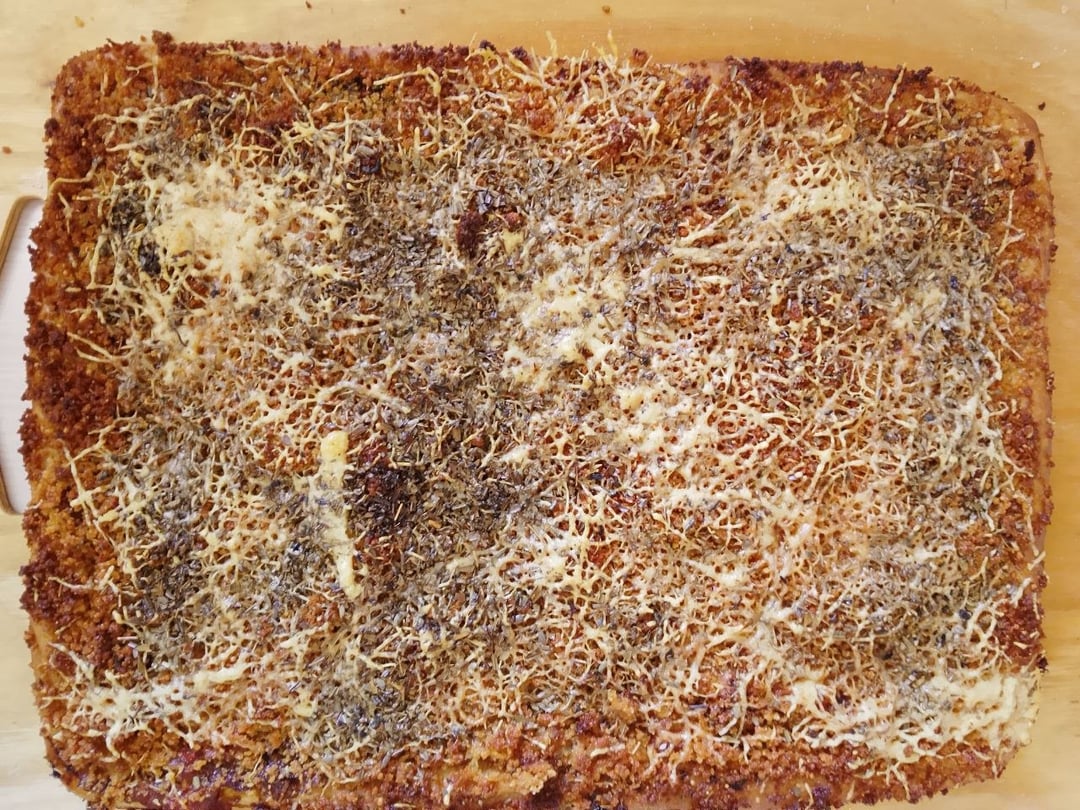
Sprinkle the pizza with breadcrumbs (you may have some crumbs left over), grate cheese on top, and add dried oregano. You can also drizzle the pizza with olive oil.
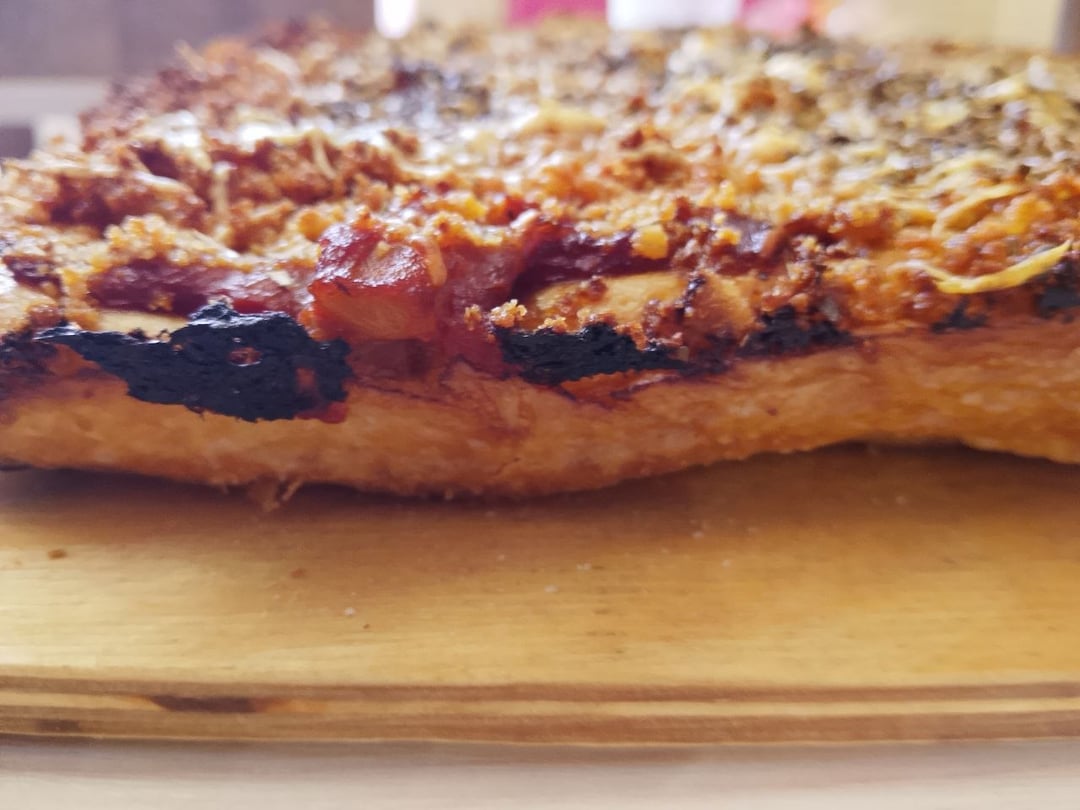
Place the pizza in the oven and bake it directly on the stone in the baking sheet until the top is golden brown and the bottom is crispy and begins to bubble when touched with a metal spatula; about 25 minutes total, rotating the baking sheet once halfway through cooking.
Remove the pizza from the oven, lift it off the baking sheet with a thin metal spatula, and transfer it to a wire rack. Let it cool for 5 minutes.
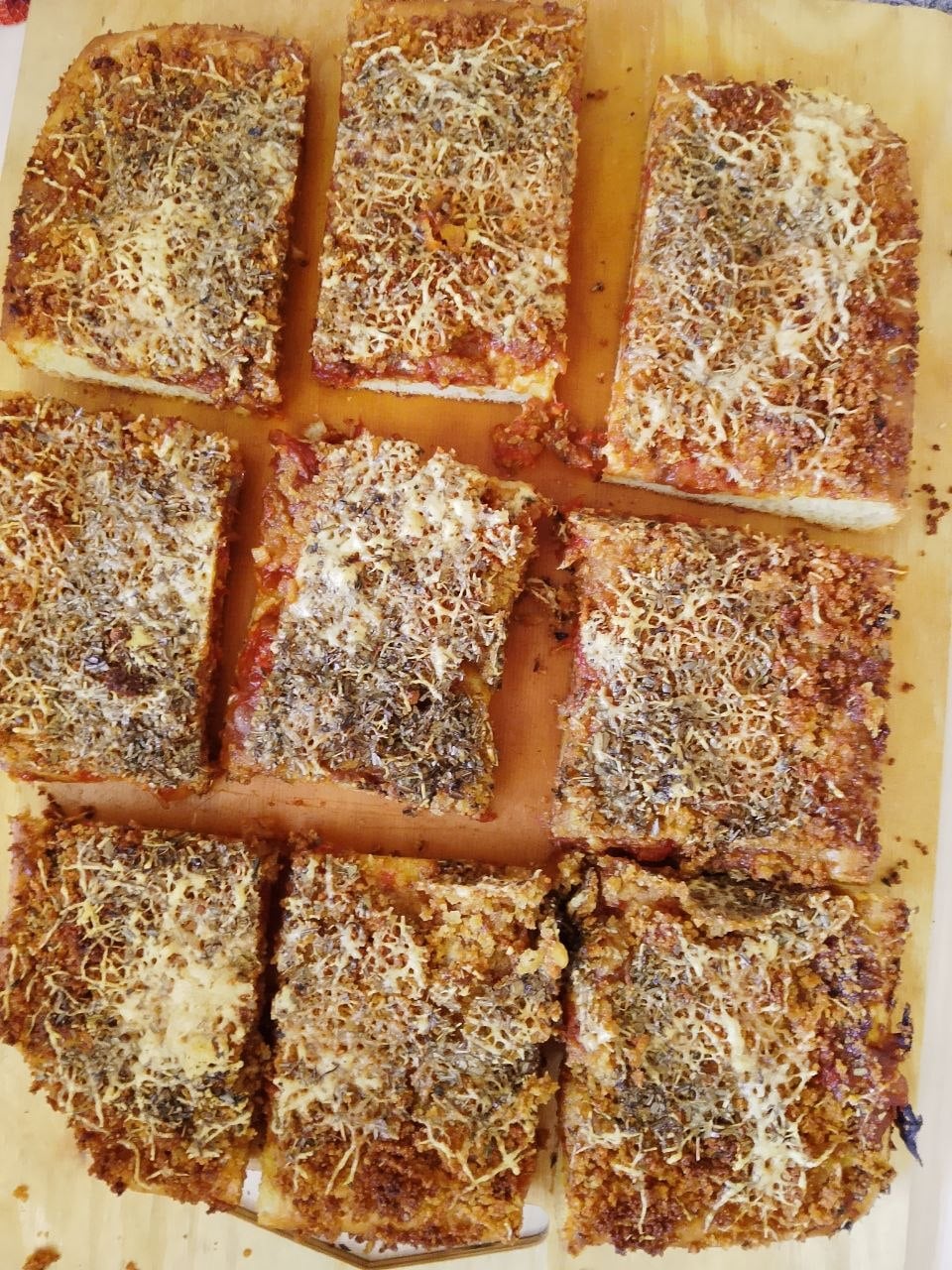
Transfer the pizza to a cutting board. Slice and serve.
Notes on the recipe.
To make the dish less greasy, pat the anchovies dry with a paper towel and use as little oil as possible.
You can replace all the semolina with regular flour.
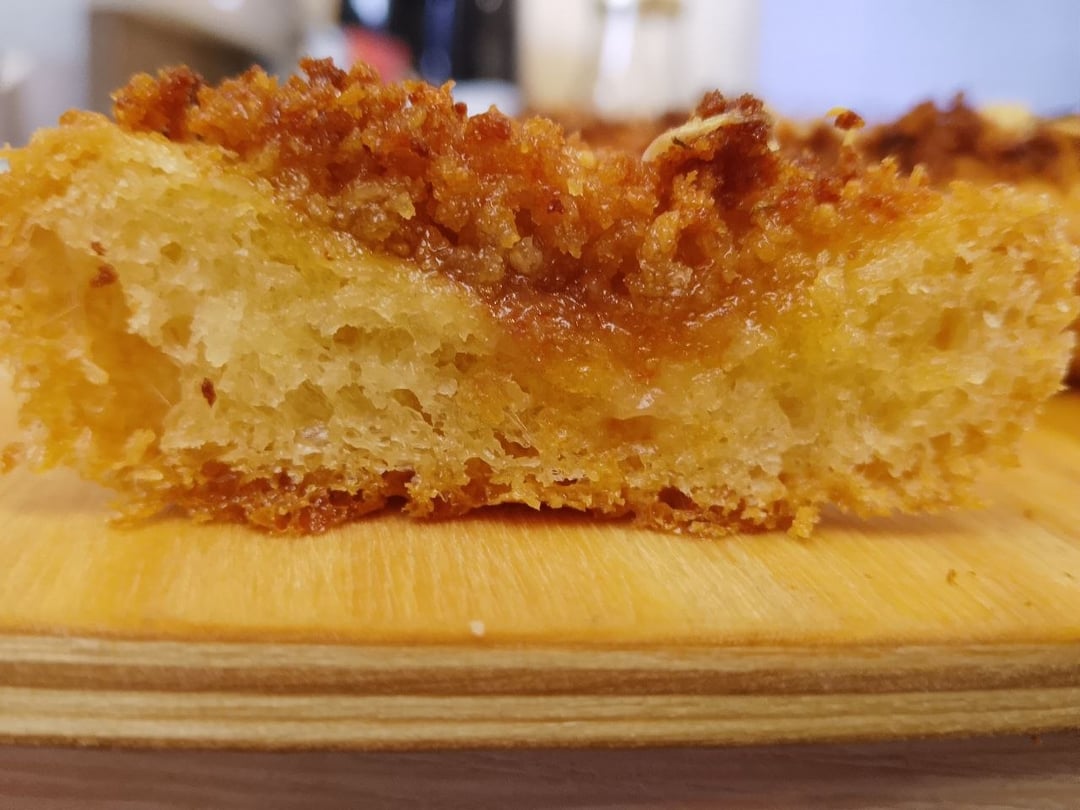
You can bake the crust at 180°C for 5–7 minutes, then let it cool for 30 minutes on a rack and finish baking the pizza with the toppings. This way, the toppings won’t push through the dough, and the pizza will have a firmer texture.
The result: outstanding if to be honest. Easy and fantastic rustic dish.
by AdHistorical3169