
Hi,
I've been trying to make pizza dough for weeks.
Basically, I want to make a Neapolitan pizza.
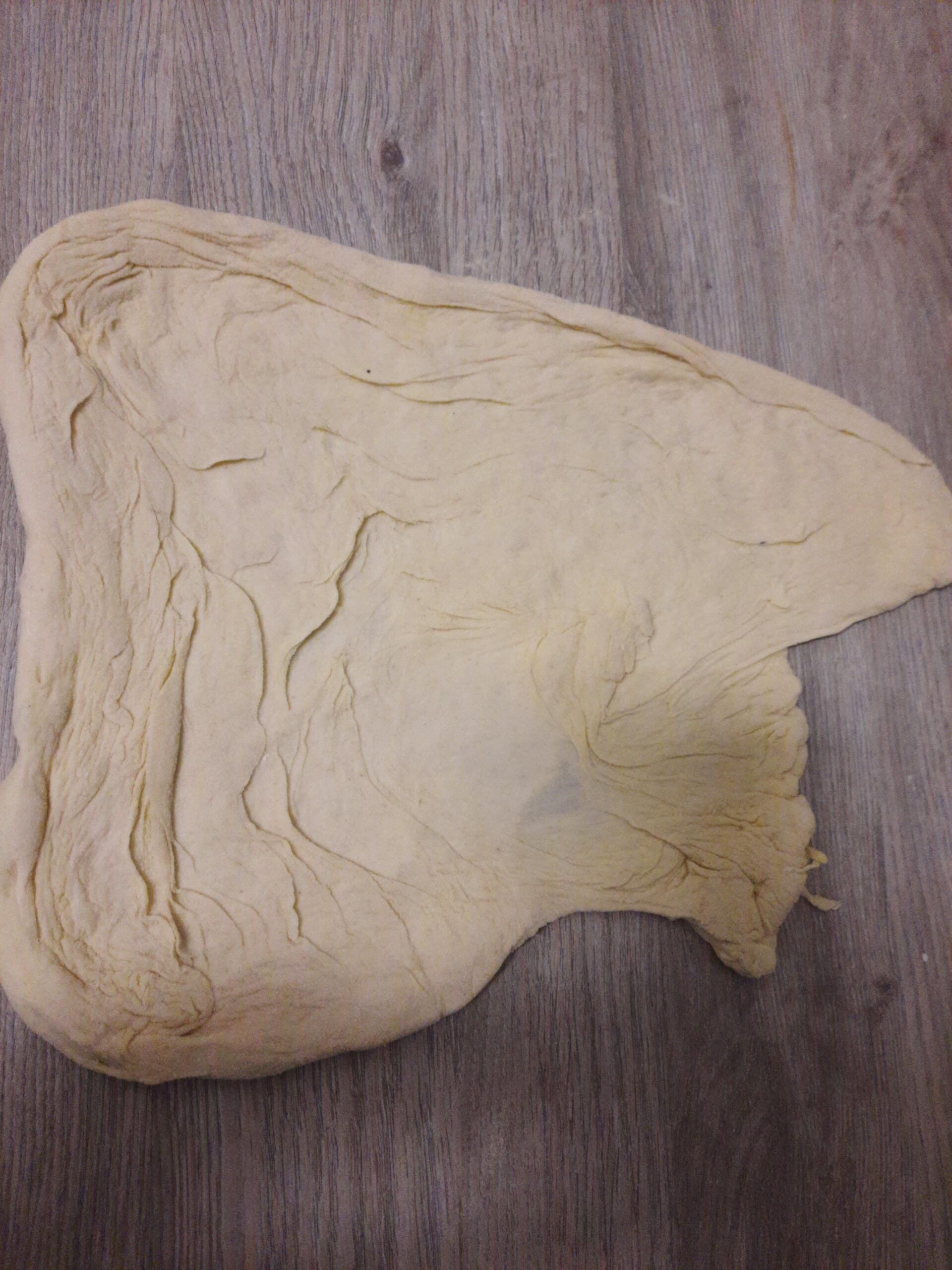
The problem is that the underside of the dough always has ‘layers’, as you can see in the photo.
The dough rested for 48 hours, but I have the same problem even when I leave it for a different amount of time (24 hours).
The hydration here is 65%.
It starts when I see the pizza in the pizza dough box; it is completely melted and full of bubbles. When I then tip it into the semolina bed, it is misshapen and it is no longer possible to shape it into a ‘round’ because there is much more dough on one side of the dough ball.
Does anyone have any idea what could be causing this?
by ConfidenceIcy982
4 Comments
How much yeast and at what temp is the proof?
I would start by making a same-day dough and work from there. Get good and successful at those steps well before moving to multiday stuff.
Your flour might have a weak w rating and unable to withstand longer proofs without losing shape and experiencing some gluten degeneration.
Then when you dump it out, it has no gluten scaffolding and the semolina gets into the dough ripples (for lack of a better word) and now you have some dusted dough not sticking and also undusted dough sticking together which is causing that sort of pseudo-lamination look.
That’s my best approximation for this limited amount of information.
Really I’d need to know more about your flour choice and process of dough creation (mix time, knead, rests, folds, etc) to be able to help more specifically. There’s something going wrong early in the process and you’re only experiencing it late in the game.
– Too much yeast
– Too long proofing period
– Too high temperature
Wrong combination of the factors above if i had to guess.
Easiest way to check: Get an application named PizzApp, insert variables and check if you’re far away from recommended. Or some other one where you can add your process variables.
Hydration Is too high maybe? What you are describing sounds like the problem I encounter when I overproof my dough. It gets too loose and stretchy. I can always work with it with minimal stretching and lots of flour when handling It. I do King Arthur bread flour 60% hydration. 3% oil 3% salt. I do a poolish 16-24 hour cold ferment. Incorporate it with the other half o he recipe, te salt oil flour and remaining water. Another 16-24 hours ferment then let the dough balls sit for at least 4 hours at room temperature before baking. Any longer than 4 and the dough can overproof and lose its structure.