
Our books
“Early Italian Recipes. Cereals, Bread, Pasta, and Pies”
English https://www.amazon.com/dp/B0CMKBXSV1
Italiano https://www.amazon.it/dp/B0CMKM4H5D
“Early Italian Recipes. Vegetables, fruit, herbs, and flowers”
English https://www.amazon.com/dp/B0B4T8VPFQ
Italiano https://www.amazon.it/dp/B0B4V32FHR
“Ancient Roman Cooking”
English https://www.amazon.com/dp/B08LHG6RR5
Italiano https://www.amazon.it/dp/B08LHF72ZR
“Libro de la Cocina. Medieval Tuscan Recipes”
English https://www.amazon.com/dp/B0BMQQ6SFY
Italiano https://www.amazon.it/dp/B0BNG5J9MF
“Registrum Coquine. A Medieval Cookbook”
English https://www.amazon.com/dp/B0953XLBS3
Italiano https://www.amazon.it/dp/B0953YCJSJ
“De Observatione Ciborum. Early-medieval recipes at the court of the Franks”
English https://www.amazon.com/dp/B09K83NMXJ
Italiano https://www.amazon.it/dp/B09K821LYC
Check out our Patreon page
https://www.patreon.com/historicalitaliancooking
or just buy us a beer
https://www.buymeacoffee.com/historyandfood
Check out our merchandise
https://teespring.com/stores/historical-italian-cooking
Today we prepare ancient Greek mattyes by Artemidorus of Tarsus, a chicken stew reported in Athenaeus’ Deipnosophists, using a recipe found in De Re Coquinaria.
Ingredients:
chicken
catillum ornatum
vinegar
olive oil
garum
spices (black pepper, parsley seeds asafoetida)
chives
Catillum ornatum https://youtu.be/XI0HvGoy7vQ
Lagana https://youtu.be/UPfoPmIxD5M
Garum https://youtu.be/qWg6R43iRj8
Mustacei https://youtu.be/THvI6tE1lBY
Lixula Sabina https://youtu.be/zNHgVkHwmeA
Puls https://youtu.be/USvIR13oQ_Q
Medieval Chicken with unripe grapes https://youtu.be/jVRnJGCxKiQ
For more info about this recipe check out our blog: http://historicalitaliancooking.home.blog/english/recipes/ancient-greek-mattyes-chicken-stew-with-fried-pasta/
If you liked the music on this video check our music and art channel: https://www.youtube.com/user/LiliumAeris
__
Music by Lilium Aeris
Andrea Tuffanelli – tympanum
Serena Fiandro – flute
Kalliopeia Sopha – Mesomedes of Crete 2nd century
#ancientgreece #ancientrome #ancientromanrecipe #ancientromanfood
Welcome to our kitchen. Today we prepare ancient Greek mattyes by Artemidorus of Tarsus, a chicken stew reported in Athenaeus’ Deipnosophists, using a recipe found in De Re Coquinaria.
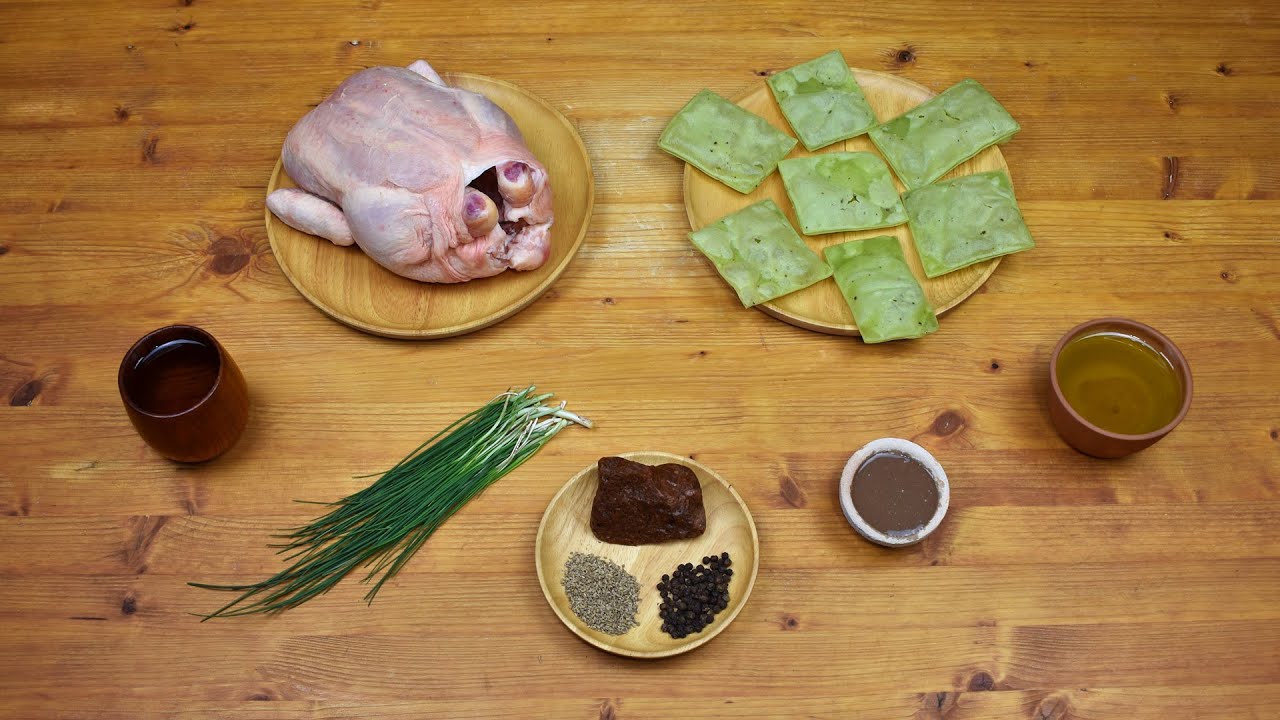
We start with the ingredients. We need a chicken, vinegar, olive oil, garum, the spices: black pepper, parsley seeds, and asafoetida, and then chives and catillum ornatum.
We replaced the leeks, harvested very young and tied in a bundle, with chives, but you can use leeks according to your taste. Instead of parsley seeds, you can also use the leaves.
Catillum ornatum is an ancient Roman pasta that we recently prepared, made with lettuce juice, wine, lard, and pepper, rolled into a sheet, cut into square or rectangular shapes, and deep-fried in olive oil.
Artemidorus doesn’t specify to use catillum ornatum and only writes to use lagana, a term that refers to ancient Greek fried pasta.
You can use catillum ornatum, which is a specific type of lagana, or just plain lagana for this dish. You can find the links to both recipes in the description below.
We grind the spices, grate the asafoetida, and cut the chicken into pieces.
The term mattye is explained in a passage of the Deipnosophists: it is a Thessalian luxury dish very popular in Athens made with fish, poultry, vegetables, or meat.
Mattyes, which derives from mattye, is mentioned by Artemidorus, but the recipe is incomplete,
since he only writes that free-range chickens and cockerels must be cooked with unripe grapes in summer and vinegar in winter with a sauce and then served on lagana.
The description of the ingredients of the sauce is missing in the text, so we used a recipe from De Re Coquinaria, whose title is written in Greek, as is often the case in this Roman source.
The recipe is called pullus oxyzomus, which means chicken with a vinegar-based sauce, which seemed appropriate to complete the mattyes.
The use of either unripe grapes or vinegar will continue throughout the Middle Ages in Italy in the same way. You can find an example of medieval chicken cooked with unripe grapes in the description below.
We pour olive oil, vinegar, and garum in a pot and stew the chicken with the spices and a bundle of chives.
The ingredients for this sauce are used in both ancient Roman and Greek cuisine, where silphium, called laser in Latin, is very popular.
We used asafoetida which, according to the description of Theophrastus, is the cheapest type of silphium and is called silphium Parthicum in ancient sources.
To learn more about ancient food, read our book Ancient Roman Cooking,
where you’ll find information about the ingredients, agriculture, animal breeding, food preservation, and meals in the Antiquity, as well as several recipes translated from the original sources.
If you are interested in the history of pasta, read Early Italian Recipes. Cereals, bread, pasta, and pies,
the second volume in a series about historical cooking between the Antiquity and the end of the Renaissance, with the first dedicated to vegetables, fruit, herbs, and flowers.
The translation of De Re Coquinaria and the recipes from Cato’s De Agri Cultura are available on our Patreon page,
where you can also find several translations of historical sources and articles about ancient and medieval food.
All the links are in the description below, along with a list of our books on historical food and the links to purchase our merchandise and buy us a beer to support our work.
This chicken was delicious, with a complex flavor from the mixture of spices that gave the chicken a distinctive Mediterranean taste and intense spiciness.
The acidity of the sauce was balanced by the fried pasta and chicken, creating an incredible flavor that made this dish very appetizing.
A dish worth trying with lagana, but also with puls or another type of bread, to experience the refined culinary art of our ancestors with a chicken recipe that is very easy to prepare.
You’ll find links to the recipes for puls and ancient bread in the description below.
If you’re interested in ancient foods and flavors, subscribe our channel and consider supporting us on Patreon.
4 Comments
I’m excited to try this out. Thank you ❤
Amazing!!
Wow😮
Is this something the Ancient Romans would have eaten as well?