
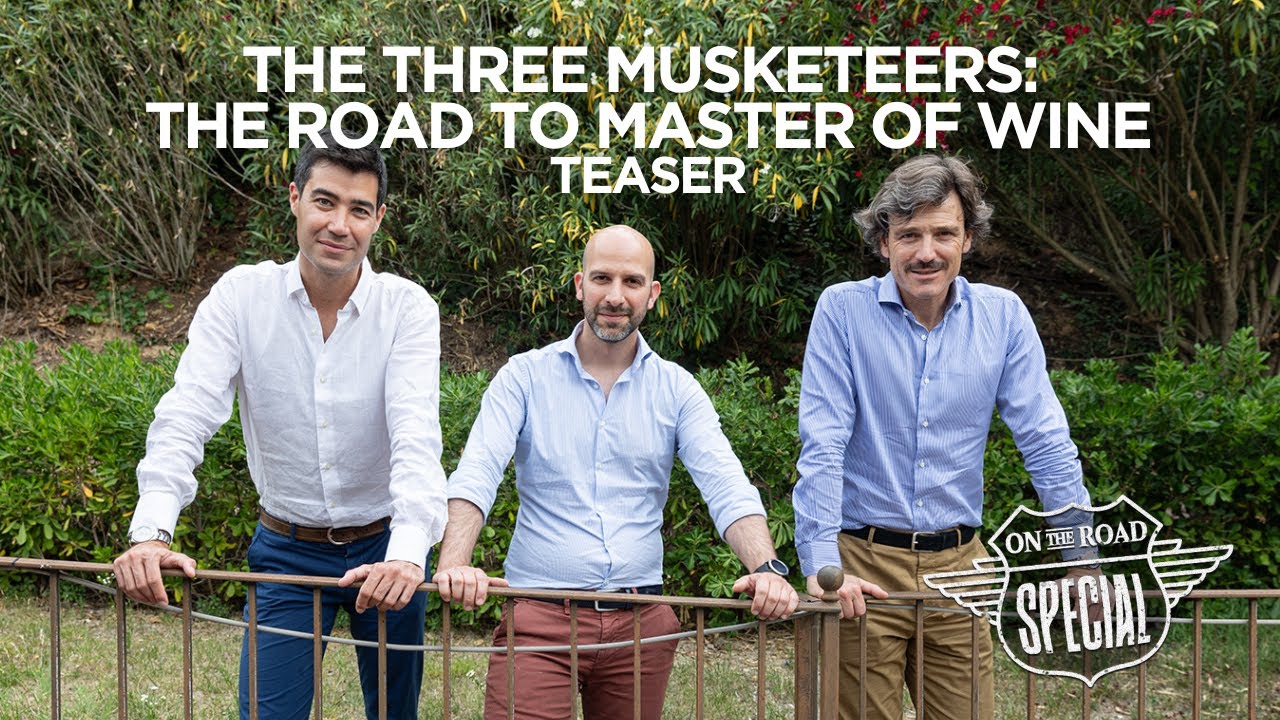
In this On The Road Special Edition, Stevie Kim sits down with Andrea Lonardi MW, Gabriele Gorelli MW and Pietro Russo, experts in the field of Italian wine who embarked on the difficult and grueling journey to achieve the prestigious title of Master of Wine.
They discuss the physical, mental and practical demands of becoming a Master of Wine, the areas of competence, and the importance of collaboration and teamwork. They also consider the particular challenges of the MW exam compared to other wine qualifications, and the satisfaction of achieving such a prestigious award. Describing their story can be of inspiration not only for other professionals engaged in the study of wine, but also for anyone who has an ambitious goal and is looking for an effective approach to achieve it. What matters in this story is not so much the goal, but how the protagonists chose to approach the journey. These same choices earned the three protagonists the nickname “The Three Musketeers of wine”: let us discover together the meaning of their personal “One for all, all for one.”
The Institute of Masters of Wine (IMW) is a membership organisation with an exceptional international reputation. For 70 years, its members – the Masters of Wine (MWs) – have been at the forefront of leadership and expertise in the world of wine. MWs must prove their comprehensive understanding of wine by passing the MW exam, recognised worldwide for its rigour and exacting standards. Today, there are 413 Masters of Wine based in 31 countries. The membership encompasses winemakers, sommeliers, buyers, journalists, shippers, consultants, academics, educators and more.
P.S.: these interviews have been recorder on June 2022.
ITA
In questa edizione speciale di On The Road, Stevie Kim intervista Andrea Lonardi MW, Gabriele Gorelli MW e Pietro Russo, esperti nel campo del vino italiano che hanno deciso di intraprendere il difficile ed estenuante percorso per conseguire il prestigioso titolo di Master of Wine.
Insieme, discutono delle esigenze fisiche, mentali e pratiche per diventare Master of Wine, delle competenza richieste e dell’importanza del lavoro di squadra. Considerano anche le particolari sfide che l’esame MW porta con sé rispetto ad altre qualifiche enologiche, e la soddisfazione di ottenere un riconoscimento così prestigioso. Descrivere la loro storia può essere d’ispirazione non solo per altri professionisti impegnati nello studio del vino, ma anche per chiunque abbia davanti a sé un obiettivo ambizioso e stia cercando un metodo per raggiungerlo. Quello che conta in questo racconto, infatti, non è tanto la meta, bensì il come i protagonisti abbiano scelto di affrontare il tragitto. Queste stesse scelte hanno valso ai tre protagonisti il soprannome di “I tre moschettieri del vino”: scopriamo allora insieme il significato del loro personale “Uno per tutti, tutti per uno”.
L’Institute of Masters of Wine (IMW) è un’organizzazione associativa con un’eccezionale reputazione internazionale. Da 70 anni, i suoi membri – i Master of Wine (MW) – sono all’avanguardia per leadership e competenza nel mondo del vino. Chi intende diventare MW deve dimostrare di avere una conoscenza completa del vino superando l’esame MW, riconosciuto in tutto il mondo per il suo rigore e i suoi standard esigenti. Oggi ci sono 413 Masters of Wine in 31 paesi. I membri comprendono enologi, sommelier, buyer, giornalisti, importatori, consulenti, accademici, educatori e altri ancora.
P.S.: queste interviste sono state registrate in giugno 2022.
——————————————–
MammaJumboShrimp is a podcast, a book and a wine school – and so much more!!
We love to eat, drink and travel, seeking out the very best that Italy has to offer!
Check out our “On the Road Special Editions” hosted by Stevie Kim, as well as our regular conversations with some of Italy’s most interesting wine personalities and producers.
Find out more at:
www.italianwinepodcast.com
https://www.italianwineacademy.org/
https://justdothework.it/
This titanic masterpiece, The Lord of the Rings, a boundless story, could be easily compared with the Master of Wine journey, if you will. That’s a great one! You definitely need a group, a team and you discover it’s a restless journey to discovery and you keep on growing also. In London we realized also
How important other aspects were for the MW. We undestood the importance of being prepared, studying, being organized, and team work as I remember laughing all the time making examples, which he brought from around the world for the preparation of the theoretical papers. We used to say: “As… says…” and he quoted producers,
Like Hubert Lamy, and quotes from other producers. We then understood how important physical preparation was. In London, we started doing yoga on a daily basis. We went almost everyday to do yoga. We understood how important meal planning was. We then realized how important mental preparation was to do the exam.
The sharing of skills was there, but skills did not meet right away. The day we met, from Masi to the introductory masterclass of The Institute of Masters of Wine, we organized ourselves and worked together. No. We did the first year, stage one, the first exam, as lone wolves. We got to the point
Where we understood that each of us owned a part and that we needed to set a highly structured system. Otherwise, we wouldn’t have made it. We would have made a part of it but not all. The difficulty of the program as opposed to other programs like the Master of Sommeliers or WSET
Is that there are no actual guidelines or textbooks to study. We had to come up with some guidelines, and roadmaps to follow to organize this work which may seem titanic. In reality, everything is connected both for theory and practical parts. This is the result of our “patchwork” of works and collaborations
In order to find the key to this program. Fun fact, in 2014 I purchased at an incredibly high price the “Sotheby’s Wine Encyclopedia”, 6th edition, a used copy, because it was not available. Five years later, the three of us wrote the Italian part of that same book. That is a great achievement.
Yes, it is. It’s not bad. And this was a journey for us Italians who did not know the regions who did not mentally have that culture, that way of thinking to approach this world. And this was a step we had to do. Today, this step could become a study method. An opportunity
Also for other students who want to approach this system to follow a study technique. It could be “The Italian Way on How to Study”. This is what happens in your life when you’re trying to become a Master of Wine.