
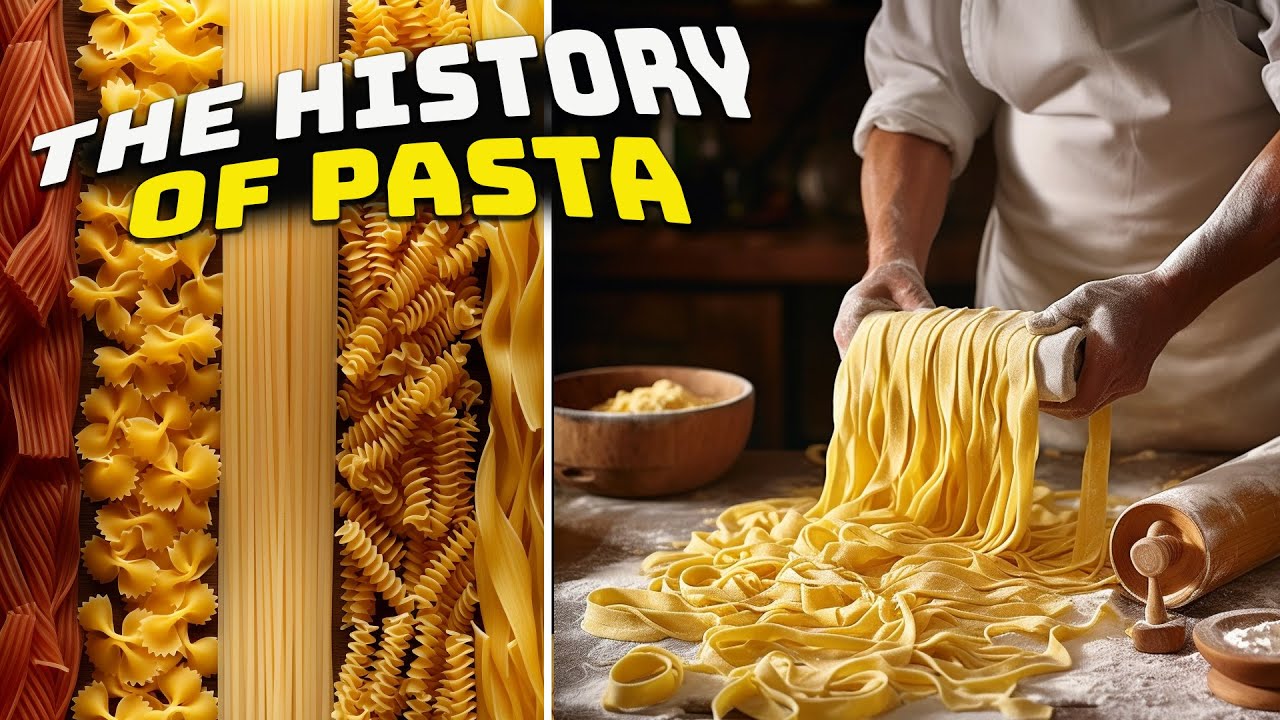
Pasta is one of the most popular foods in the world, and in this video, we will explore the emergence and history of one of the most well-known and beloved foods in the world.
See U in History
#SeeUinHistory #History
Do you ever wonder why pasta is such an irresistible dish and why it is found in homes and restaurants all over the world pasta is more than just a food it’s a delicious treat that appeals to people everywhere be it a quick weekday dinner or a special dish in high-end
Restaurants pasta is all over the place pleasing almost everyone’s tastes from children to adults but have you ever wondered where it came from and how it spread across the globe to eventually become one of the world’s most popular foods today we are going to plunge into a fascinating gastronomic Adventure as
We explore pasta’s incredible history from its unassuming Origins to becoming one of the most beloved Foods pasta has a backstory as varied as a magnificent truffled Linguini with seafood and as tasty as Grandma’s unbeatable bolog noodles if you are a pasta Enthusiast like me don’t miss this delicious and
Surprising Journey this story will make Ure mouth waterer when people think of pasta they often associate it with Italian cuisine but its history extends far beyond Italy and Europe the origins of pasta date back to very ancient times archaeological findings in China show that pasta dates back more than 4,000
Years these first forms of pasta unlike the Durham wheat variants we know today were made from corn and other grains native to Asia this strongly indicates that pasta in its many forms was a dietary Staple in Asia long before it became popular in the West in the Mediterranean World there are references
To foods like pasta in the diet of the ancient Greeks and Romans these were probably simpler versions made of mashed grains blended with water and boiled much like the Lasagna we know today back in the Middle Ages pasta had a key role in the cuisine of the Islamic World a
Region that stretched from the Iberian Peninsula to Southeast Asia the popularization of pasta in this wide area was significantly influenced by the trade routes and conquests of the Islamic peoples leading not only to the trading of goods but also to the spread of culinary ideas and traditions pasta in the Islamic world
Was known by different names and took many forms one of the most famous is itria a dry pasta resembling modern spaghetti this kind featured frequently an Arab medical and cooking texts standing out not only as a tasty food but also for its nutritional qualities the regional variations in the Islamic
World not only mirrored local preferences and ingredients but also displayed the skill of cooks in adapting and turning pasta into singular dishes this spreading and adaptation of pasta in the Islamic World paved the way for its ultimate introduction to Europe where it would become a central element in the cuisine of numerous countries
Countes trading routes played a role in introducing pasta to Europe when Arab and Persian Traders sailed across the Mediterranean they brought with them assorted products including pasta to European markets Italian port cities such as Venice and Genoa served as vital nodes on these trade routes helping to
Introduce it to the local cuisine as well as trade conquests and population shifts also influenced the spread of pasta throughout the expansion of the Arab Empire many cooking techniques and Foods including pasta were introduced to new territories the Arab foot pulled on the Iberian Peninsula was key to familiarizing Europeans with pasta and
Other gastronomic Novelties pasta was initially a luxury delicacy in Europe mainly consumed by the nobility and Wealthy classes But as time went by it became more accessible and started to be adopted by different social strata its long-term storage capacity without spoiling made it a practical food particularly for the working
Classes with its climate and soil suited to Growing Durham wheat Italy emerged as an important Pasta Production hotbed not only did Italian cities adopted as a staple food but they also went on to develop their own varieties and production techniques laying the groundwork for the intimate connection that exists today between pasta and
Italian cuisine Italy during this period was not one unified country as we know it today but a patchwork of city states and kingdoms this geographical and political split led to Regional differences in pasta production and consumption every region began to develop its own version with shapes and preparation methods that
Mirrored the local ingredients and culinary traditions for instance in Northern Italy with its colder climate and livestock farming pasta was often served with Hardy meat and cream sauces whereas in the South with its warmer climate and proximity to the Sea sauces based on tomatoes vegetables and seafood became increasingly popular a milestone
In Italian pasta history was the development of drying techniques this allowed pasta to be stored for extended periods making it easier to transport and trade Seaside towns especially in regions such as Sicily and Naples became hubs for the production and export of pasta spreading its popularity throughout Europe medieval Italian
Documents also started a document a variety of pasta recipes indicating its integration into everyday life and culture celebrations and banquets often featured elaborate pasta dishes proving its status not only as a staple food but also as a token of Celebration and finesse Marco Polo’s connection with introducing pasta to Italy gathered
Momentum mainly in the 19th and early 20th centuries through cultural Publications and representations but it lacks backing in primary historical sources his famous book ilon also known as the travels of Marco Polo depicts Many Wonders and aspects of life in Asia including the cuisine however there is no straightforward assertion that he
Brought pasta from China to Italy but there are historical records and references to Pasta in Italy that date Back to Before Marco Polo’s travels historical doc doents and pasta recipes can be traced back to Italian sources that predate his journey to Asia between the Renaissance in the 18th century
Pasta became an essential food in Europe finding its home both on the nobleman’s table and in the working classes kitchens this period was notable for a significant diversification in Cuisine with pasta being cooked in increasingly elaborate ways adding ingredients such as fine cheeses lavish sauces and a range of different Meats this Innovation
Was often seen in the cookbooks of the time which presented pasta in sophisticated and Vari dishes pasta was a display of sophistication and affluence in Social and cultural circles especially during Renaissance Banquets and parties it was also present on the tables of monasteries praised for its Simplicity and sustenance especially in Italy Pasta
Production saw substantial growth with Naples and Sicily emerging as important centers the pasta made in these regions began to be exported throughout Europe earning a claim for its premium quality cantens emerged in Italy particularly from the 16th to the 17th century signaling a significant transition in the way pasta was produced and consumed
These cantens also known as BGA di vermilia were basically establishments or restaurants specialized in making and selling pasta the word vermilia stems from vermell a type of thin pasta implying that these stores were mainly geared to producing long thin pasta the rise in popularity of these cantens can
Be attributed to several factors for one thing it reflected the ever growing demand for pasta which had already established itself as a staple of the Italian Diet also these establishments capacity to make pasta on a larger scale meant that more people had access to this food which had previously been more
Restricted due to its labor intensive handmade production despite this the boom and Pasta Production also resulted in conflicts there were quarrels between canteen owners and Bakers as both competed for the same primary resources especially wheat flour these clashes reached a point where the authorities had to intervene regulating wheat
Production to make sure there was enough supply for both sectors cities like n Naes which in the 18th century was a leader in producing and consuming pasta experienced an exponential growth in the number of canteens reflecting the popularity and importance of pasta in local culture and diet these canteens
Rise also reflected Urban Development and population growth with pasta meeting the needs of an increasingly large and urban demographic the 19th century was a time of significant transformation for pasta punctuated by Tech technological breakthroughs that revolutionized its production and consumption industrial pasta making reached a turning point with pasta machines moving away from
Purely artisanal manufacturing and into the era of industrial processing until the 19th century pasta was predominantly handmade a task that required skill time and effort modern Technologies came along with the onset of the Industrial Revolution making it possible to mechanize Pasta Production these developments not only sped up the
Manufacturing process but also allowed for a more homogeneous consistency and quality in the final product the first pasta machines appeared in Italy these were designed to mix the dough roll it and cut it into different shapes dramatically increasing the process’s efficiency mechanization also made it possible to experiment with new pasta
Shapes and sizes resulting in a wider variety industrialization of pasta making had a significant impact on this food’s trade and availability pasta started to be mass produced making it more accessible and cheaper for the average consumer this not only broadened the market for pasta but also cemented its position as
A staple food in many European households and eventually throughout the world the huge influx of Italian immigrants to the United States Brazil Argentina and other Latin American countries carried with them a unique culinary tradition in which pasta had a significant role to play as these immigrants established in new homes they
Attempted to emulate the flavors of their native land and pasta was a familiar and comforting element in this as pasta grew in popularity it started to be adapted to the taste and ingredients available in America already popular in southern Italian cuisine tomato sauce found a foothold in American Renditions of pasta dishes with
Changes that included meats and other local ingredients such tailored dishes like spaghetti with meatballs became Italian-American culinary landmarks as the first world war broke out many countries were faced with the daunting task of feeding their populations and troops because of its long shelf life ease of transportation and preparation and its high nutritional
Value pasta became an ideal Choice both governments and the military encouraged its consumption and it frequently appeared as a ration item for soldiers and civilians pasta’s Simplicity also allowed it to be paired with a range of ingredients many of which were restricted during the rationing season the second world war witnessed an even
Larger increase in dependence on foods such as pasta many countries instituted stricter rationing systems during this period and pasta continued to be a staple food its making was seen as essential and pasta factories in numerous countries were working at full capacity to meet demand pasta was sometimes fortified with additional
Vitamins and minerals to boost its nutritional value the global scenario significantly changed following the second world war and pasta emerged as one of the top winners becoming a staple food in many areas of the world that it had previously not reached globalization during the 20th century led to a surge
In cultural exchanges solidifying the popularity of pasta far beyond its year European and Asian roots from its primitive origins in ancient China and the Mediterranean to becoming a staple in global Cuisine pasta has shown an amazing ability to adapt and innovate its Evolution reflects cultural social and technological shifts throughout
History pasta is not just a food but a symbol of human Ingenuity and the connection between diverse cultures as we go forward pasta keeps Reinventing itself holding out the promise of a future with new flavors shapes and cooking possibilities I hope you’ve enjoyed this first video in our new series on the
History behind the things we eat please share your suggestions for Foods whose Origins you’d like to see told on the channel in the comments and see you in the next Video
32 Comments
Wow, I'm second to like this 😜🤪
And first to comment
As a pasta eating person I approve this video.
The oldest known pasta on record hails from Arab nations
Fun fact: pasta is actually older then the Islamic religion
The AI thumbnails are cringey
Pasta is my favorite food. I always love to eat it with chopsticks and sisscors.
Corn was native to Asia? Wat? "Corn" was probably not the best choice of modern words for the grains native to Asia used in making pasta.
Before the video starts:
Let me guess, it originally came from Arab nations and China…..
I would trust the academic community on that one, if the current day nations of the Middle East and China didn’t have bug money on state colleges in the west.
Whoever does the narration on this channel (or at least this video), you have one of the most pleasing voices to listen to. It makes me want to hear whatever you have to say.
Skibidi
Corn is not native to China. The early Chinese pasta was not made with corn. That's such an obvious mistake that I don't know how you justify it on a professionally produced video.
I see pasta, I click. Puttanesca, aglio e olio, lasagna…
and china may claim pasta as theirs.
Please get stock photos for the thumbnails. Or take a picture of your lunch or something. This makes your work look cheap, which it really isn't.
Very interesting. And here I thought that pasta was imported from China to the Italian area. Also interesting is the fact, it seems, that the same type of food originated in a couple of different countries/areas around the same time. Makes me want to think that there was a lot more trading and cultural exchange than we comprehend today.😊😊😊
Now for the people that didn't know pasta came from the Chinese culture they do now. However everyone all over the world can enjoy it in their own way
So aowmeme
My favorite food
My favorite
This is peak mythology
Corn is, and always was an American grain!!!
Learn your terminology!
Noodle!! Not pasta!!😂
Oh yum! I love pasta ❤🍝❤🍝❤️🍝❤️🍝❤️🍝❤️🍝❤️🍝❤️🍝❤️🍝❤️🍝❤️🍝❤️
Can you please do a video that talks about the differences between Helios and Apollo?
Ah yes, The heart of all Italians.
Corn is not native to Asia – it’s from the Americas.
Biltong , Please tell the History of this Boer food.
Pasta was Brought By Chinese Merchant Through Silk road By an Chinese merchant
And later Italian Tries to make it From their native resources
nice!
the best food along with pizza
Italians are punching the air right now 😂
I've never understood the difference between spaghetti and pasta… 😕 😐 🤔
I just had mafalda for lunch. Is Italian pasta 😂popular in China? 🤯🤯never knew there was Islamic pasta. Wonder which restaurants serve it here 😅