
#ItalianWinePodcast #Ontheroad #Podcast #Italy
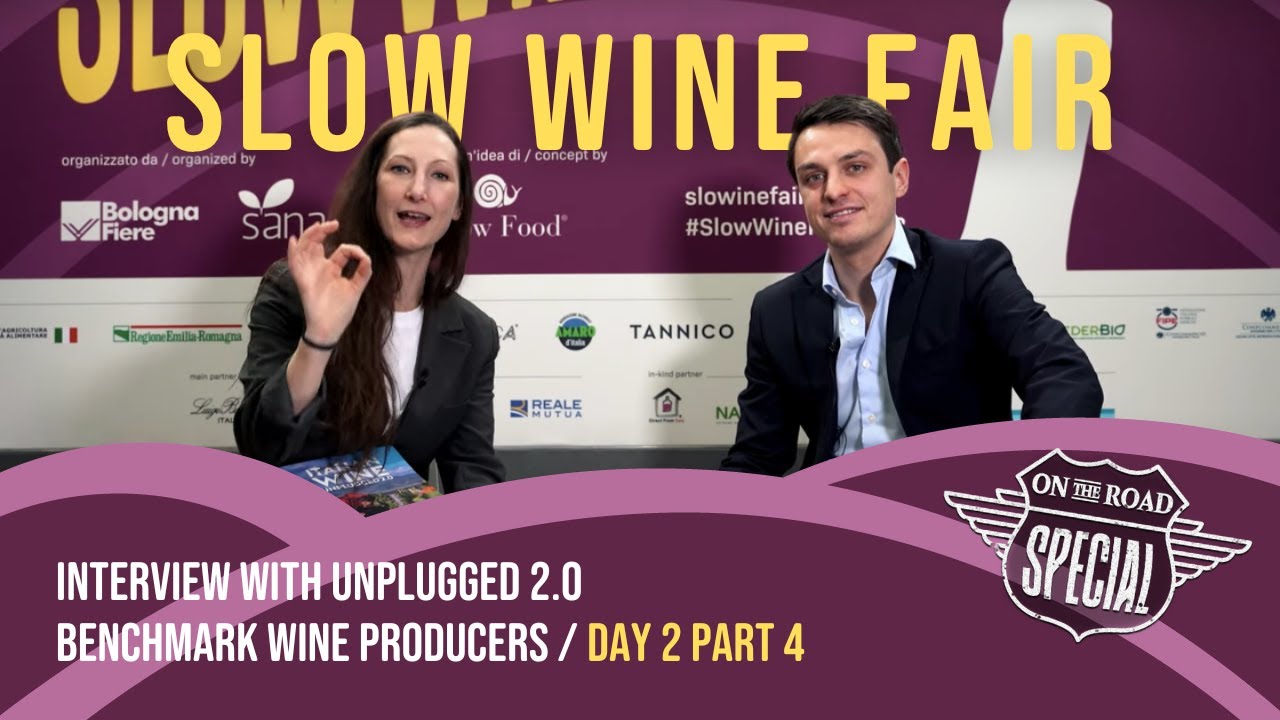
Slow Food, Slow Wine Bologna. Conversations with Small Italian Wine Producers (DAY 2 – Part 4).
This is a Behind the Scenes Special from the Slow Wine Fair 2023 in Bologna, Italy.
Today, Stevie and the Italian Wine Podcast crew interview a variety of guests and exhibitors at the Slow Wine Fair in Bologna.
In today’s episode Stevie and the team talk to some of Italy’s leading slow wine producers about the concept of slow wine, biodiversity, sustainability, the importance of wine provenance, the role of women in wine and appealing to the next generation of wine consumers.
You can find out more about these producers in Italian Wine Unplugged 2.0, the Italian wine textbook released earlier this year.
——————————————–
Find out more about the wineries at:
https://www.chiarli.it/en/
http://www.edikeber.it/
https://vinilastaffa.it/
——————————————–
MammaJumboShrimp is a podcast, a book and a wine school – and so much more!!
We love to eat, drink and travel, seeking out the very best that Italy has to offer!
Check out our “On the Road Special Editions” hosted by Stevie Kim, as well as our regular conversations with some of Italy’s most interesting wine personalities and producers.
Find out more at:
www.italianwinepodcast.com
https://www.italianwineacademy.org/
https://justdothework.it/
00:00 – 00:42 Intro
00:43 – 05:58 Interview TOMMASO CHIARLI
05:59 – 11:05 Interview KRISTIAN KEBER
11:06 – 16:28 Interview GIUSEPPE SPERI
16:29 – 21:54 Interview RICCARDO BALDI
Welcome to behind the scenes at slow wine Fair 2023 in Bologna Stevia and the podcast crew interview a variety of Italian exhibitors who attended the fair and took the opportunity to chat with many of The Benchmark producers selected for our new book Italian wine Unplugged 2.0 check out the big Buffet of guests
And get ready to be hungry and thirsty as exhibitors and producers talk about their signature products and give us top tips for food wine and fun in their regions here we are again with another fantastic producer from yay where are you from I’m from clito Winery and my name is tomazo
I’m part of the family the Kelly family I’m the fifth generation in the winemaking company fantastic so we are actually we we brought you here as well because our benchmark careers in the Italian wine unplugged book 2.0 which is our second edition it’s for All Wine lovers
But we have a lot of students that are very interested in learning more about different grapes different Vine different wines your Winery produces a Lambrusco Di sarvara and a grasparossa variety exactly so these are two varieties from Lambrusco world they’re two specific clones and they grow in different areas in the province of
Modena and in our Winery we produce both of these varietos where is exactly your Winery is located in Castle veto di Modena which is a small village in the South part of the province of modern so between Modena and bologna that’s the exact name of the winery was
Born in 2001 but the Kelly family has been producing Lambrusco since 1860. so therefore we represent the oldest Winery in Emilia Romania the entire region so it’s a very historical company winemaking family since five generations so you are the son a grandson no no so in fact we go back five
Generations so you are the youngest yeah yeah okay wow it’s the Romantic part of the Italian culture like the wine culture it’s like we have all these Generations so um actually let’s talk about your wines outside of Italy to you guys how much how many how many labels do you make so
The the clitorial winery works from uh only with 100 of our grapes and we reach a production last year a record production of just a little um below a million bottles so we have been growing a lot since 2001 with specific production we export roughly 40
Of the total production USA of course is the biggest market for us the Scandinavian countries are also embracing this this new type of Lambrusco which is not new it is the traditional Lambrusco but how many how many labels labels in total we have in the core range around seven so it is not
A master so it’s just but it’s a lot it’s a lot it’s a lot it’s a lot but you have to think about the labrusco world La Brusco is is characterized by different varietos different clothes that are extremely different from each other so from from each clone you can
Scatter different styles okay so now you’re getting into the science stuff I want to know if I was a student of uh Italian wine and I wanted to go a little bit deeper and I wanted to learn about lambusco Di sorbara and grasparossa like tell me something a student would want
To know that’s interesting that’s useful in general one of the most I’ll talk to us it’s been produced in this era for a long time romantic Etruscan times specifically I would like to put a focus on that it’s a very interesting grape for many reasons firstly it is extremely wild it
Has some difficulties in pollination therefore you need another variety of to kind of cross-pollinate the lambrus the salamino varato yeah another lombust the shape of the grape bunch is quite funny so you got of course 10 15 of the berries that do not write in the season so they remain white
Within the red grapevine so quite a funny funny type of of grave bunch and because of this very ancient archaic characteristics the wine is extremely unusual and and new it is a red wine that has the body of a white wine especially a white one from let’s say
Higher altitudes despite the fact that grows in a very low land humid and not like that you’ve got a lot of acidity in this type of wine and so for for wine students it is quite a unique Ray variety yeah and so with that I’m going to ask you something totally different
That ties in what’s your favorite food my favorite food your favorite food on the planet ah I like pizza basic but nice it is it is very good what kind of pizza pizza with the spicy salami oh wow okay yes okay okay does it pair with Lambrusco de sorbare yours is
A deeper red lambruscos are interesting because they’ve got this this bold body they’ve got tannins they’ve got acidity they are sparkling and all of the balance of all of these characteristics is really nice with anything savory most of the time fat with fat food but also spicy food
Spicy food is hard to pair with wine and Lambrusco wise are are also Parable with with spicy food thank you so much it was really lovely thank you very much thank you thank you very much Winery everybody perfect bye bye we are at slow wine and we are in
Bologna and I’m talking to Christian quebe right okay from the uh Eddie Kevin Winery uh we got you here because you are one of the Benchmark producers uh mentioned in this new edition of Italian wine unplugged it’s 2.0 and um we have you uh your ribola Jala so
The grapes so we want to we want to talk about that later but first I want to hear about you who are you and where is your Winery the winery is uh between collio and berda then between the two states Italy and Slovenia okay that I’m
Exactly on the border I have I am double Citizen and I have two wineries I have two honors not because I bought some Vineyard there in zurino Italy but because I had from the grandfathers one grandfather is Slovenian one is Italian speaking of History tell me about the
Winery like tell me the winery it’s a very old Winery we start with the wine growing but not just wine growing because it was a classic farm with the animals with the fruit trees and this my grandfather start to make the first labels after the second world war my
Father became made the winery more famous especially in Italy uh we’ve been growing uh two wines till 10 years ago that was a collio and one mono varietal with Tokai and now basically we produce just one wine and this is a blend of this mentioned variety that was ribola malvasia but
Also Tokai fulano okay okay that is not a pure variety of wine but the blend of this of this wines you export some of it or yeah export but the the measure market for us it’s Italy my idea is selling closer comb it’s possible because I really look on natural I am by
Dynamic producer but this is also that this is what I grow in this but also selling it for me is important that to don’t bring this wine too much far away that is a strange idea for one thing but the other thing is that if you drink a
Water why you have to drink an Italian water if you are from grass right right you have the water exactly and and also in wine I think that it’s better that we come back with some more a natural approach on this and for this reason I
Prefer to sell my wines truly than Italy and then Europe and then or by Dynamic I start when I finish school I classically by Dynamic that I use just copper and call for copper and I help with some nettle and the preparates 500 to 101 oh really love it I love it but
My idea is just a very basic going to Old Times it’s More permacultural Concept that means not just wine but now in the vineyard I have also animals that eat my grass and make the compost I plant more fruit trees like was that tradition in our place the vineyard is
Also a garden with vegetables yeah I love it and that something like like I always saw nothing special 100 years ago my grandfather was making the same okay so tell me a little bit about the foods because you said that you are half in Slovenia and half in Italy when you are
In a place for this reason I don’t think that I’m really or just Italian or just Slovenia because when you are leaving a place you eat and you are the place where you are yes the nationality is something that usually comes outside you it’s not the local park right basically
It’s our fruit from colion birthday area that in this time you can eat something because it’s colder time you can eat like a Yota what’s that it’s like a a soup of that a lot of times people also the sausage inside that is a Little Bit Stronger uh
With the wrap and this and uh with the beans it’s a strong yeah yeah but you can also a classic orzoto which vegetables that is very good also with the color wine and that goes with the ribola yeah it’s also good for Ebola ribola um depend how the producer also make
Ribola Jala for my opinion ribola Jala is a great variety with the maceration because ribola has a lot on the skins with my opinion not making commiseration on Ebola is like you have an abiola and you make on white yes it has no sense everything is on that skin the tannins
The complexity everything is on this and for the for my opinion this is the way the classic way that was made and the a good way a natural way to to to to to to work with this variety thank you so much thank you for coming to speak to me and
I wish you all the best in the rest of this so much thank you thank you foreign festival and I’m here with the lovely Giuseppe Sperry from the Sperry Winery and you are the enologist analogist yes winemaker actually we’re talking today specifically I wanted to dive a little
Bit deeper about your Corvina and corbinone because you guys are a benchmark producer mentioned in our book Italian wine Unplugged 2.0 we we’re going to talk about that in a minute but can you tell me a little bit about you I am the technologist I’m graduating when
In viticultural energy and uh yes I work inside the company and they follow the production as I said together with my father in last 10 years was really very important because I mixed the theory that I improve of course at University together with the practice daily with my
Your father that was not easy but at the same time wonderful to understand everything that he learned from his father about about the company yes we are an historical as you understand the family reality and yes we produce a very classical wines from the region and in total only
Five wines that are the police how many bottles a year do you from the 60 hectares we reach the equilibrium at 400 000 450 or some of it as well of course we sell together with the shop 25 percent to Italy and 75 to foreign countries like U.S yes we are we are
Present in 60 worth countries in the world if I was a student and I wanted to be knowing something a little bit deeper I how would you how what would you tell me like how would you teach me about it that’s a little bit more first of all these are the two uh
Most important grape varieties of our wine region by policella they made the the most important part of the blend of our entire wines not only the policella also and rachotto for sure in the case of amarone they give their best with the apachimento with the drying process they
Are perfect for drying because they have a very big skin especially with maker weather that we have in vipulation La clasica where we have a negative temperature variation from the day to the night especially in the mo in the month of August and September about the growing of these grape varieties is a
Late grape variety it starts the the green season in the in may not before about the wine as I said really very important because it made the the most important part of the blend corbinone as the name say in Italian the final words on means the bigger is the
Bigger version of Corvina okay so the the the the bubble is very big compared to the one of Corvina so they Works uh different in on in the wine Corvina Works more on the staff tour of course we known him more on the quantity right but both are really interesting on the
Stamp that they give in the flavors so you use that for your Valpolicella and your amarone yes and so like what are the percentages in my wines we use it for 70 percent of both okay yes and for example in the case of a policella the
Blend and with 20 percent and 10 Molina actually I want to bring this also because we’re at slow food slow wine I in Verona yes okay there are so many dishes that I’ve tried like with amarone sauce it’s so oh my God it’s so good I’m like salivating thinking about it like
Meats with this like beautiful sauce what is your favorite food to eat or either to make with amarone or to drink amarone with your food what what is what do you like if I need to choose one okay oh two yes we say the two most famous One probably here in Verona
Is the risotto yeah okay you know about yes they made a wonderful uh beef chick with an amarone sauce really I’ve got a shot that is uh it’s a really nice yeah well thank you so much for coming to talk to me I love it it was so much fun thank you thank
You to you my pleasure thank you thank you and we are here with Ricardo valdi of the lastafa winery and we have brought you here to talk about your wines but we also have uh this new book Italian wine and plant you are one of the Benchmark producers mentioned in the book because
You produce verdictions exactly and but can you I mean I want ask you you know who you are and about your Winery but can you first tell me the difference between the verdico castellidies and the metallic normally I think there are three different three important difference between yes and material the first one
Is the climber matelica is inside two chain of mountain is a completely continental climate and the end of castellesi is very close to the seaside even if we are in a hilly area but we see we we feel the influence of the sea where where in Italy is your central
Part of Italy so in the market area opposite side from Tuscany okay second the soil India of Metallica we have a little bit more poor soil because it’s a valley inside the two chain of mountains so we have more Rocky because of during the century all day waiter put down to
The Valley of the rocks from the top of the mountains in the air of castelledies we have more powerful soil so normally vertical from years they are a little bit more full body and verdico from Metallica are a little bit more skin and fresh and the last the last one is that
The area of castelligence is very spread out it’s very big but the area of Metallica is very little so normally it’s very difficult to compare verdictions because in the AC is important to choose the correct one two pair with Metallica One because in the year of Metallica we have more linear
Style in the denomination in the area of the AC we have plenty of different style but not only for the wine maker but for the micro climber in the same composition your Winery give me a bit of a idea my one is a little artisanal
Winery we made I start to make wine when I was 20 in 2010 so 12 13 years ago my father made one like his Hobby in the past I felt low with the idea to make my own wine when I finished the high school so I start with a very few knowledge
With only a lot of passion about the winemaking for sure I start in one of the most important place of the nomination staff follow is a little place with only 2000 people that live in staff follow but with 20 companies that makes verdictions so he’s like burgundy now everyone May spine the most
Important characteristic of the the soil in the staff follow is to have a lot of calcium carbonate in the clay Limestone soil so the wine and stuff follow are really fresh but really citric and with a lot of saltiness because of this particular soil composition I start in
2010 with only a couple of vectors of Vineyard then I every year increase a little bit the the production now I have 12 hectare over Detroit we have a Vineyard between 1972 And 2010. so a lot of pioneer from the 70s the 80s and the beginning of the 90s and in my opinion
This is very important to make very high level quality wine because you know 30 40 years old 50 years old Vineyard makes wine like had no other one and and how many how much do you produce a year how many bottles and normally between 45 and
55 000 here it depends a lot about the yeah in 12 days there is a very low number still it’s pretty good yeah and and do you are you exporting yet or not yet or how yeah um we sell 50 55 of our wine outside from Italy a third of the entire
Production go to the U.S a third in Italy and a third in Le Marque region in my region slow food and wine they talk a lot of a lot about yeah we work since the beginning in organic and at the at the beginning was was the first step I I
Moved when I started the company because in my opinion it’s very important for the environment and for myself because at the beginning I was alone to work the cell and then after a few years I understand that the changing the way we work in this in in the vineyard change
Along the quality of the wine increased a lot a lot the quality of the wine in my opinion water Polito juicer is important for the environment and important in my opinion also for the tradition so we made verdict in a very traditional way in the way to make a
Wine that below a lot to the terroir and to the tradition of the area so after DQ in my in my opinion that taste a lot like the terroir where yeah absolutely thank you so much you are very welcome Ricardo Baldi everybody thank you