Tagliatelle al ragù alla bolognese is perhaps the most famous recipe of Bolognese cuisine from Italian Romagna region, the eastern part of the Emilia-Romagna. Bologna is also called “la grassa”, the fat one, in Italian, and not without reason so. Many hearty, world-famous dishes of Italian cuisine come from this city. Tortellini, lasagna, mortadella and of course “ragù alla bolognese” (Bolognese ragout), which is the subject of today’s post, all come from here.
The ragù alla bolognese is a meat-based sauce that requires one thing above all: time. The explosion of flavor comes only from the slow, long boiling down of the meat in a lightly tomatized broth (purists actually use only a small amount of tomato paste here). Here, too, lies an important difference from the variants known abroad. The ragù is a meat sauce with some tomato, and not a tomato sauce with meat. My recipe, which I present here, is not the classic recipe for purists. While I largely stick to the corner stones of the original recipe, I use herbs and meats that do not appear in the original recipe.
# Ingredients
The ragù is a relatively thankful recipe. The quantities do not have to be weighed to the gram, and spices can also be added according to your own preferences. The ingredients are for about 6 people (150 grams of pasta as the main course). By the way, the ragù can also be frozen very well and thus pre-cooked in advance.
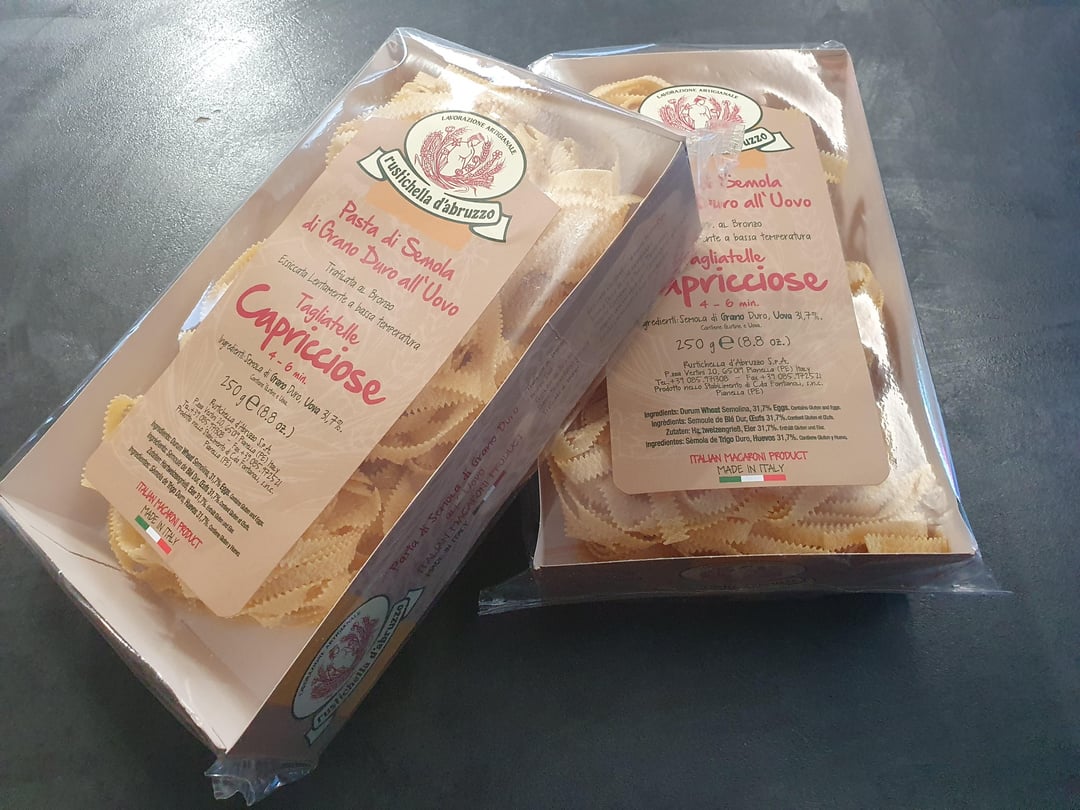
I use high quality, more expensive ingredients in the following. If you do it alike, I would also advise not to save on the pasta brand chosen. Important and essential for a good ragù is pasta with a rough surface, to which the sauce adheres well. This is especially true for pasta where the manufacturer uses bronze molds to press the pasta. Making it yourself and using fresh pasta is of course also possible.
* 850-900 grams of tagliatelle (egg pasta) preferably pressed in a bronze mold. * Parmesan cheese (Parmigiano Reggiano) * 600 grams of beef (shoulder, rump, high rib/roast beef, or other cuts suitable for braising; medium fat) * 500 grams of veal (the same parts as for beef are suitable) * 150 grams of pancetta (Italian smoked pork belly) * 2-3 carrots * 2 medium white onions * 2-3 stalks of celery * 600-700 grams of canned tomatoes (“pelati” i.e. peeled, whole tomatoes or coarsely chopped, not blended ones) * 200 ml white wine * 150 ml milk * 200 ml vegetable broth * tomato paste * a few leaves of sage * a small bunch of parsley * bay leaves * rosemary * some butter and olive oil * some flour
# Preparation
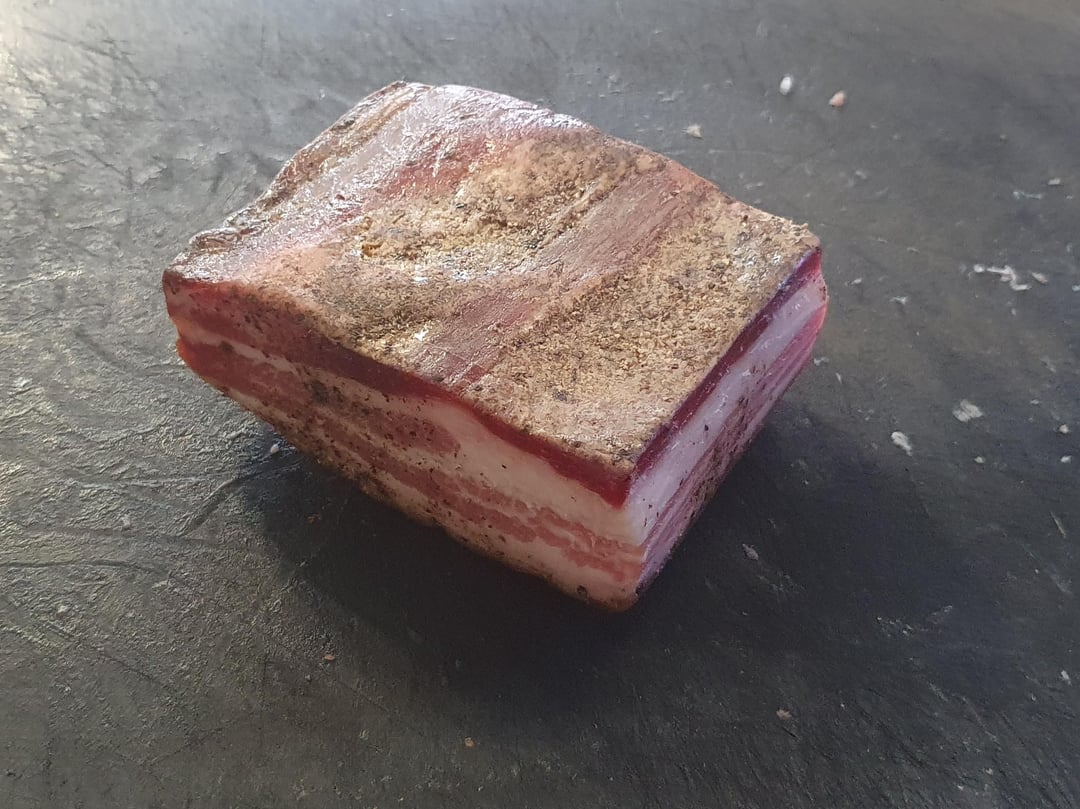
Italian meat dishes are predominantly braised in a “sofritto”. Sofritto is a vegetable base used as a sauce base for braised dishes and consists of equal parts of diced onions, celery and carrots. Therefore, cut the vegetable chowder into small cubes and set them aside for now – this will form the sofritto used later. Cut the pancetta into small cubes and add to the sofritto.
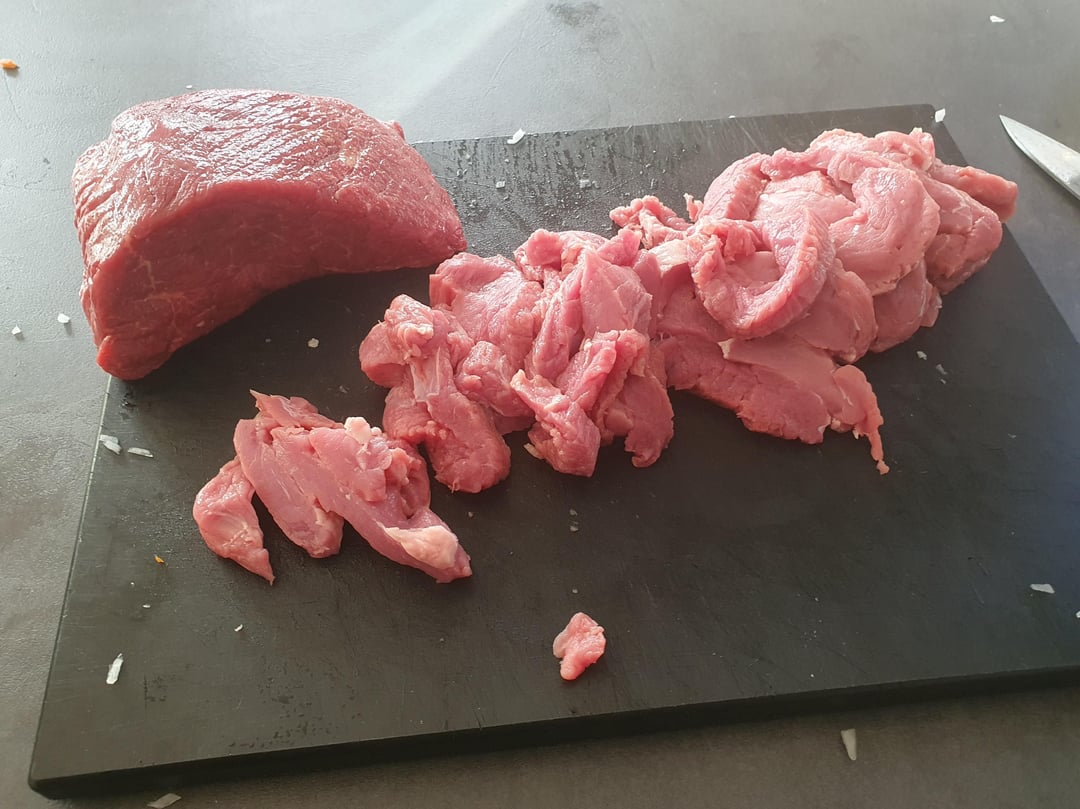
For the meat, I don’t use ground meat. I buy the meat in one piece and cut it into 2 x 2 cm cubes. These I flour lightly and finally fry the cubes in a large roaster sheep in olive oil and a little butter. Once the meat is roasted on the outside, remove it from the roaster and set aside briefly.
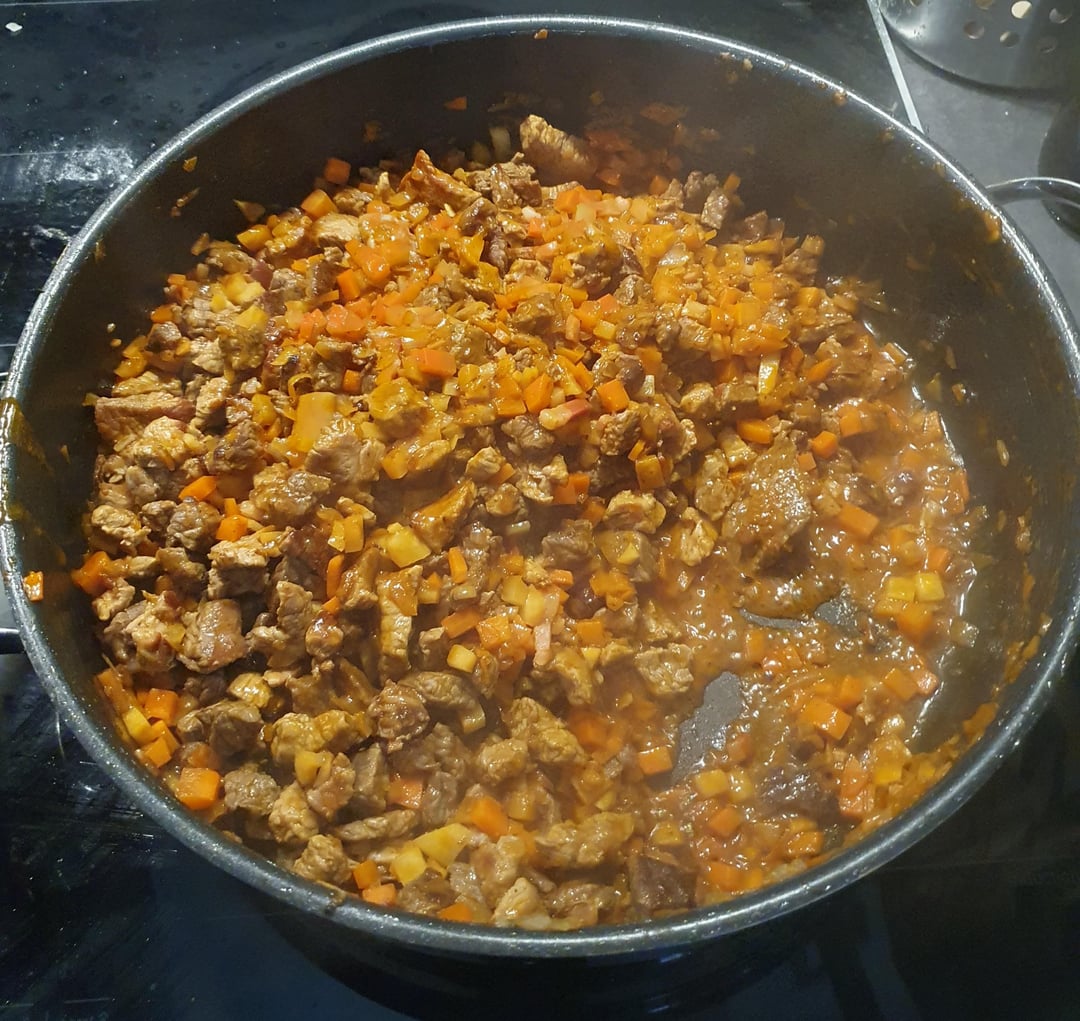
Then, in olive oil and tomato paste, fry the prepared sofritto and pancetta until they’re flavored. Once the vegetables are looking glossy and lightly browned, the desired roasted flavors are released. Then add the meat again, mix well and then bring it back up to temperature. Then gradually pour in the wine, reducing it to a viscous liquid. What should remain is a viscous sweetish mass that binds the roasting substances and forms the flavor base.
If you don’t want to use wine, you can use grape juice (or basically any other fruit juice) as a substitute. In either case, the caramelizing sugar in the juice or wine will bind the flavors released by the Maillard reaction and thus do the trick. If juice is used as a substitute, however, I would use less liquid, as it is naturally much sweeter. Taste-wise, this will not give the same flavor as if wine had been used, but that should be desired in that case anyway.
Once the wine is reduced, add the vegetable broth and gradually the tomato sauce (the tomatized broth should completely cover the softritto and meat). Season with salt, pepper, rosemary and the bay leaves and bring to a boil once. Then simmer over medium-low heat for about two and a half hours. The tomatoized broth should be reduced by at least half at the end of the cooking time.
Turn the ragù from time to time. About 30 minutes before the end of the cooking time, add the sage and parsley. Just before the end of the cooking time, thicken the ragù with the milk and a little butter. Meanwhile, in a second large pot, boil the pasta water. Cook the tagliatelle in salted water according to the instructions on the box (the cooking time should be within a few minutes).
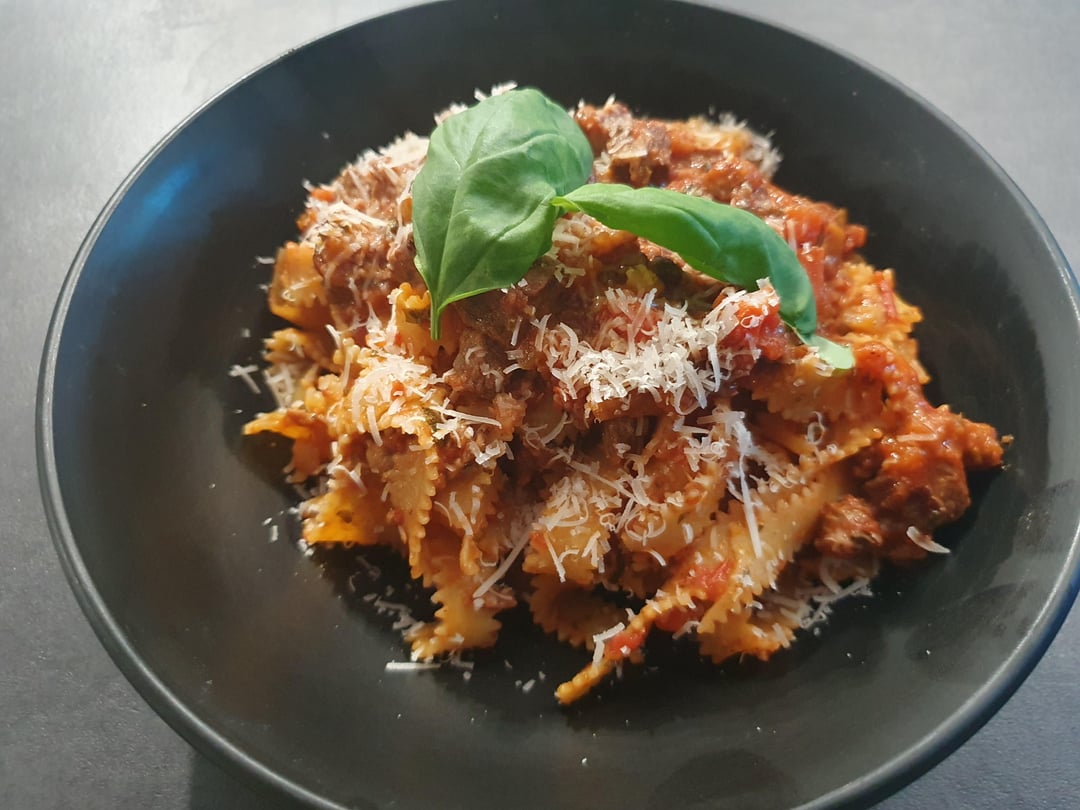
Finally, drain the tagliatelle, drain and mix well with the ragù. Immediately after, sprinkle with Parmesan cheese and serve. Buon appetito. 🙂
nickreadit
I’m too cheap to do this with veal. I’m a pound and fry guy. Looks great though.
mural030
Looks really good, just a few things: In a Ragù from Bologna there aren‘t really any herbs used. No sage, no rosemary, no parsley, no basil. The only thing used is Bayleaf and maybe a pinch of nutmeg. The meat is not cut by knife, but by a meat grinder. The meat can be definitely on the coarse side and shouldn’t be too fine. If it‘s cut by Hand it‘s a bit too big/has a different bite. Just wanted to throw in this info in case that‘s interesting for you! Looks delicious.
PS: just edited my comment, i wrote no herbs, but completely forgot about bayleaf and nutmeg!

3 Comments
Tagliatelle al Ragù alla Bolognese
# About the ragù alla bolognese
Tagliatelle al ragù alla bolognese is perhaps the most famous recipe of Bolognese cuisine from Italian Romagna region, the eastern part of the Emilia-Romagna. Bologna is also called “la grassa”, the fat one, in Italian, and not without reason so. Many hearty, world-famous dishes of Italian cuisine come from this city. Tortellini, lasagna, mortadella and of course “ragù alla bolognese” (Bolognese ragout), which is the subject of today’s post, all come from here.
The ragù alla bolognese is a meat-based sauce that requires one thing above all: time. The explosion of flavor comes only from the slow, long boiling down of the meat in a lightly tomatized broth (purists actually use only a small amount of tomato paste here). Here, too, lies an important difference from the variants known abroad. The ragù is a meat sauce with some tomato, and not a tomato sauce with meat. My recipe, which I present here, is not the classic recipe for purists. While I largely stick to the corner stones of the original recipe, I use herbs and meats that do not appear in the original recipe.
# Ingredients
The ragù is a relatively thankful recipe. The quantities do not have to be weighed to the gram, and spices can also be added according to your own preferences. The ingredients are for about 6 people (150 grams of pasta as the main course). By the way, the ragù can also be frozen very well and thus pre-cooked in advance.
I use high quality, more expensive ingredients in the following. If you do it alike, I would also advise not to save on the pasta brand chosen. Important and essential for a good ragù is pasta with a rough surface, to which the sauce adheres well. This is especially true for pasta where the manufacturer uses bronze molds to press the pasta. Making it yourself and using fresh pasta is of course also possible.
Preparation time: approx. 3 hours (pre-processing time: 30 minutes)
* 850-900 grams of tagliatelle (egg pasta) preferably pressed in a bronze mold.
* Parmesan cheese (Parmigiano Reggiano)
* 600 grams of beef (shoulder, rump, high rib/roast beef, or other cuts suitable for braising; medium fat)
* 500 grams of veal (the same parts as for beef are suitable)
* 150 grams of pancetta (Italian smoked pork belly)
* 2-3 carrots
* 2 medium white onions
* 2-3 stalks of celery
* 600-700 grams of canned tomatoes (“pelati” i.e. peeled, whole tomatoes or coarsely chopped, not blended ones)
* 200 ml white wine
* 150 ml milk
* 200 ml vegetable broth
* tomato paste
* a few leaves of sage
* a small bunch of parsley
* bay leaves
* rosemary
* some butter and olive oil
* some flour
# Preparation
Italian meat dishes are predominantly braised in a “sofritto”. Sofritto is a vegetable base used as a sauce base for braised dishes and consists of equal parts of diced onions, celery and carrots. Therefore, cut the vegetable chowder into small cubes and set them aside for now – this will form the sofritto used later. Cut the pancetta into small cubes and add to the sofritto.
For the meat, I don’t use ground meat. I buy the meat in one piece and cut it into 2 x 2 cm cubes. These I flour lightly and finally fry the cubes in a large roaster sheep in olive oil and a little butter. Once the meat is roasted on the outside, remove it from the roaster and set aside briefly.
Then, in olive oil and tomato paste, fry the prepared sofritto and pancetta until they’re flavored. Once the vegetables are looking glossy and lightly browned, the desired roasted flavors are released. Then add the meat again, mix well and then bring it back up to temperature. Then gradually pour in the wine, reducing it to a viscous liquid. What should remain is a viscous sweetish mass that binds the roasting substances and forms the flavor base.
If you don’t want to use wine, you can use grape juice (or basically any other fruit juice) as a substitute. In either case, the caramelizing sugar in the juice or wine will bind the flavors released by the Maillard reaction and thus do the trick. If juice is used as a substitute, however, I would use less liquid, as it is naturally much sweeter. Taste-wise, this will not give the same flavor as if wine had been used, but that should be desired in that case anyway.
Once the wine is reduced, add the vegetable broth and gradually the tomato sauce (the tomatized broth should completely cover the softritto and meat). Season with salt, pepper, rosemary and the bay leaves and bring to a boil once. Then simmer over medium-low heat for about two and a half hours. The tomatoized broth should be reduced by at least half at the end of the cooking time.
Turn the ragù from time to time. About 30 minutes before the end of the cooking time, add the sage and parsley. Just before the end of the cooking time, thicken the ragù with the milk and a little butter. Meanwhile, in a second large pot, boil the pasta water. Cook the tagliatelle in salted water according to the instructions on the box (the cooking time should be within a few minutes).
Finally, drain the tagliatelle, drain and mix well with the ragù. Immediately after, sprinkle with Parmesan cheese and serve. Buon appetito. 🙂
I’m too cheap to do this with veal. I’m a pound and fry guy. Looks great though.
Looks really good, just a few things: In a Ragù from Bologna there aren‘t really any herbs used. No sage, no rosemary, no parsley, no basil. The only thing used is Bayleaf and maybe a pinch of nutmeg. The meat is not cut by knife, but by a meat grinder. The meat can be definitely on the coarse side and shouldn’t be too fine. If it‘s cut by Hand it‘s a bit too big/has a different bite. Just wanted to throw in this info in case that‘s interesting for you! Looks delicious.
PS: just edited my comment, i wrote no herbs, but completely forgot about bayleaf and nutmeg!