
Recipe: https://bakewith.us/CiabattaYT
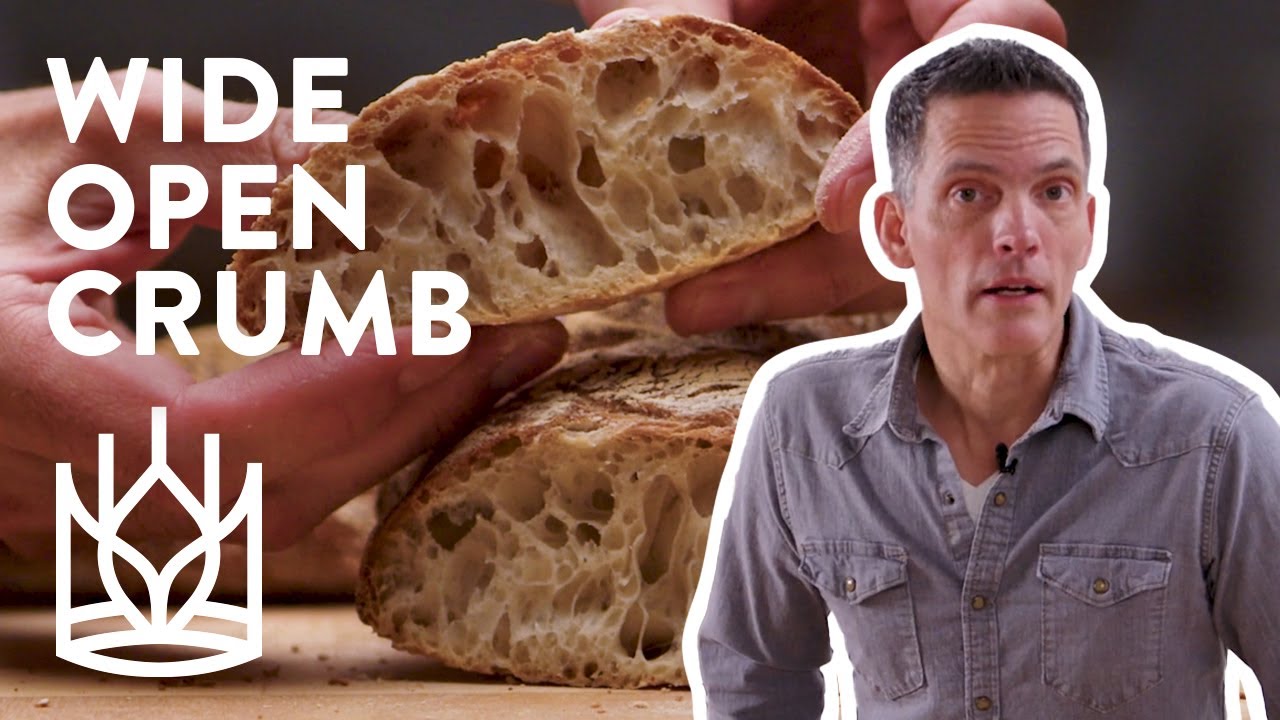
Do you love bread with an open, airy crumb that gives you a huge crunch on the outside and a tender fluffiness on the inside? Look no further than Rustic Italian Ciabatta. Using King Arthur’s Bread Flour (link below), Martin starts off by making a biga, a type of preferment used in many popular Italian breads. Once water is added and it’s agitated (kind of like kneading), the dough is folded, proofed, and divided. Pop them onto a sheet tray with our beloved parchment paper, and they’re ready to bake and enjoy! Savor that first slice of the knife as you reveal the gorgeous crumb structure inside.
Bread Flour: https://bakewith.us/BreadFlourCiabattaYT
Cookie Sheet Pan: https://bakewith.us/CookieSheetPanYT
Parchment Paper Sheets: https://bakewith.us/HalfParchmentPaperYTciabatta
Credits
Host: Martin Philip
Producer: Tucker Adams
Chapters
0:00-0:15: Intro
0:16-1:42: Creating the biga
1:43-2:53: Making bread dough with the biga
2:54-4:15: Agitate (knead) dough and rest
4:16-6:08: First fold to encourage elasticity and extensibility
6:09-9:04: Proof and divide the dough into loaves, then cover
9:05-9:49: Load the ciabatta loaves onto a sheet tray with parchment
9:50-10:28: Bake the ciabatta loaves on a preheated stone
10:29: Slice the ciabatta and enjoy that airy open crumb interior
27 Comments
Since ciabatta is my favorite, I’m going to try this although I have tried enough in recent years to know the title proclaiming ciabatta is “simple to make” is false.
Love your videos, Martin! Question: can a stand mixer with dough hook be used for kneading? Or Swedish dough hook? I have arthritis and have difficulty doing it in the method you use.
Hi Martin- I love your videos, thanks for sharing your knowledge. A couple questions- why not proof the dough right on the parchment? What does the flip over onto the parchment after proofing add to the process? TIA for helping out a beginner 😀
Martin!! Another that I will make. Have made Pan De Cristal 4 times. So awesome!
Thank you Martin! I enjoy your teaching and learn so much!!
QUESTION : why not let the loaves rise directly on parchment paper, in order to avoid a "messy" transfer 😁 ? Also, why invert them before baking ?? thanks!
(I learn a lot from your videos, thank you)
I tried this recipe today, it looked good until it went into the oven, preheated to 500, hot water on cast iron pan steam, baked at 425, my bread came out kind of flat😢 I hope it will still taste good. I will let you know later. Thanks for the recipe in any case.
I know you said that you donhave to score the bread… but is it okay if you do?
Can i refrigerate the dough after the first knead/ fold, and leave it several hours or overnight to develop flavour, and allow me to do other things?
Can we make a glutem free ciabatta?
Why do you invert the loaves before baking?? Thx
It's mostly just a habit! Loaves with more structured shapes will have a seam on the top as they rest, so you flip that over to the bottom when they're baked. These don't, but Martin's working from muscle memory here. 😊 -👩🍳Kat
In just a few well-chosen words you explained "biga" in a way that no other video I've found has done. Thanks!
You dust as much flour as you put in to the dough😊but wow that is some kind of flour 😊
Josh
Can you discuss what might make the inside of this bread "gummy"? It always looks good, seems fully baked, but the interior texture is not dry — it is wet and gummy.
love these videos!! thanks guys
A couple of questions.
How much water and flour are used in the big?
How long are the ciabatta in the oven?
Neither of these are mentioned in the video.
Thanks.
500 degree oven? Mine doesn’t get that hot
I dont have a hot stone
Hi Martin! Been Baking a lot of ciabattas lately and was wondering how I could change the fermentation process so it fits my schedule Better? If I were to work with the dough for like an hour and give it one fold and then finish the process in the morning. Should I then leave it out at room temp over night or in the fridge?
What's dough hydration for this recipe?
How is this different from your Spanish Glass Bread?
If anyone wants more details on how he's kneading the high hydration dough, it's called the Rubaud method
"Leave it overnight" in the refrigerator or on the counter?
Great video, thanks
Seeee, son geniales los videos con Martin horneando, muchas gracias y saludos desde Argentina!!!
TY very much for making all this content. 🙂