
Unique things to do in Italy that most travelers overlook — Calabria’s coastline rivals the Amalfi Coast at a fraction of the price, and the window to experience it this way is closing fast.
Calabria sits at the toe of Italy’s boot, stretching between the Tyrrhenian and Ionian seas, and remains one of southern Europe’s last underpriced coastlines. While tourists crowd Positano and Cinque Terre, Calabria delivers turquoise water, medieval villages, and some of the best seafood in the Mediterranean — often for under fifteen euros a plate.
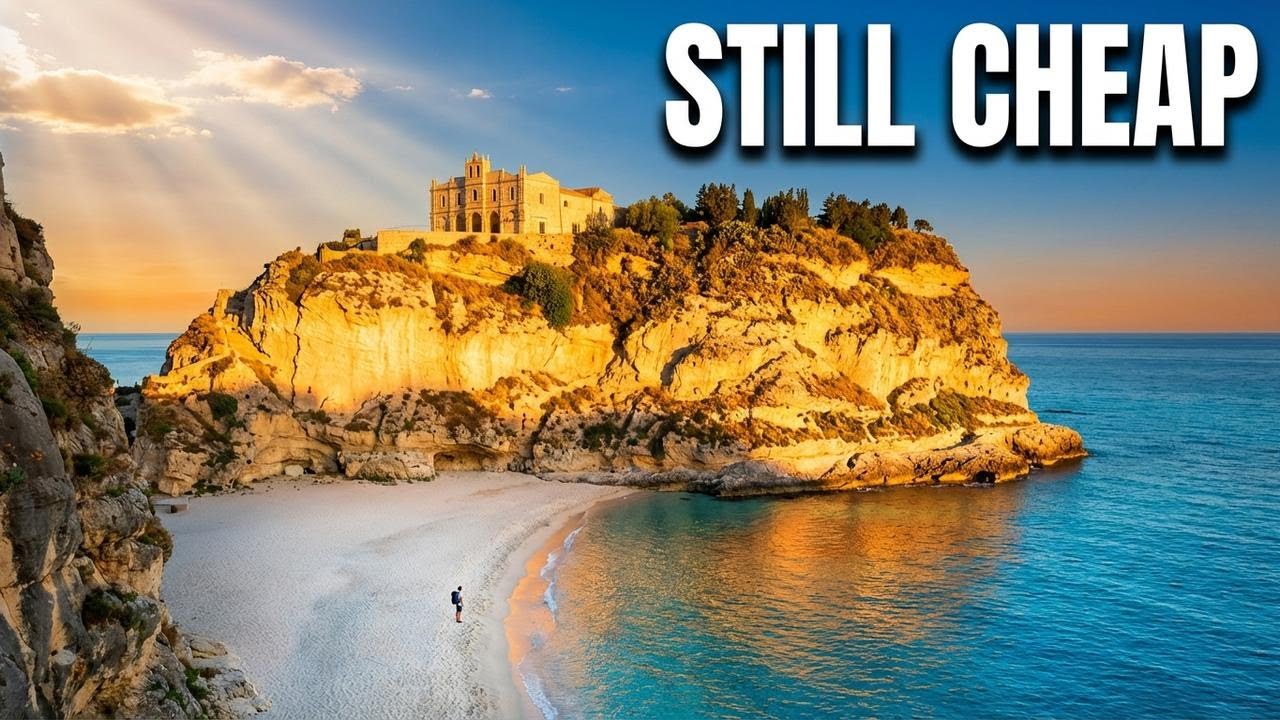
This guide covers a complete loop through Calabria’s highlights: the white limestone cliffs of Tropea and its famous red onion cuisine, the secluded coves of Capo Vaticano with thirty-meter snorkeling visibility, the Homeric fishing village of Scilla where swordfish is still caught by traditional harpoon, and the world-class Riace Bronzes in Reggio Calabria. Inland, the abandoned hand-shaped village of Pentedattilo is slowly being reborn by artists, while the Giants of Sila — five-hundred-year-old pines — tower over empty mountain trails. The Aragonese fortress at Le Castella rises from shallow turquoise water, the Albanian village of Civita features chimney pots sculpted as human faces, and the loop closes at Pizzo, birthplace of the original tartufo gelato.
Best visited late May through June or September to avoid August crowds. A week covers the full loop comfortably by car. Lamezia Terme is the main airport, with budget flights from across Europe. Accommodation averages around fifty euros per night for cliffside apartments. Most meals with wine run ten to twenty euros.
#calabriaitaly #uniquethingstodoinitaly #italytravel #southernitaly #hiddengems
0:00 Why Visit Calabria Now
1:00 Tropea — Italy’s White Limestone Cliff Town
1:52 Capo Vaticano — Secluded Coves and Snorkeling
3:51 Scilla and Chianalea — Swordfish on the Strait of Messina
4:21 Reggio Calabria and the Riace Bronzes
6:17 Pentedattilo Ghost Village and Gerace
8:19 Le Castella Fortress and Sila National Park
10:06 Civita, Pizzo, and the Original Tartufo