
It's funny to me that the author waited until the end of his article for his big reveal, but here it is:
Considering the documents and recipes collected so far , it seems fairly clear that carbonara originated in the 1940s in Rome or its immediate vicinity. The pasta topped with cheese and egg described in Francesco Palma's 1881 Neapolitan cookbook can be considered a precedent, but only in the broadest sense of the term, a phenomenon that paved the way for carbonara's birth, nothing more. It's quite obvious that no recipe can be born without a suitable background, but attributing carbonara's origins to 19th-century Naples would be a foolish stretch…
…In short, the name attributed to this recipe, by which it is known throughout the world today, remains a great mystery .
In reality, there are a couple of more realistic, but less well-known, hypotheses than those mentioned so far.
The first derives from a previous use of the term “alla carbonara” to identify a polenta-based recipe in Giulia Lazzari-Turco’s Manuale pratico di cucina from 1904. “ Polenta alla carbonara ” includes the addition of butter, beans, parmesan cheese as well as diced cheese and salami or ham.
There is no doubt that there are some similarities between the two recipes, particularly the diced ingredients (cured meat and cheese). Perhaps, as Alberto Capatti argues, "it's likely that the Carbonari cuisine harks back to a hodgepodge of ingredients varying in quantity and type, of modest cost, but also to the natural and genuine values of those who eat outdoors." The hypothesis is that this recipe, or similar ones, triggered an association between the two preparations that extended the name from polenta to the newly born spaghetti dish. What is certain is that the term "alla carbonara" must not have been widespread and could hardly have indicated a class of condiments, so much so that this is the only known precedent. A clue to the accuracy of this correlation, albeit tenuous, comes from the first Italian version of the recipe, published by La Cucina Italiana in 1954. This version calls for the use of diced Gruyère cheese in the carbonara, just as indicated in the polenta recipe. It's possible that the magazine's anonymous editor wasn't entirely familiar with spaghetti alla carbonara and suggested the inclusion of Gruyère due to its similarity to the preparation of polenta, which was perhaps more familiar to him. This would also explain why this ingredient was never used again in the recipe. While the association may be tenuous, this explanation remains, in my opinion, the most convincing.
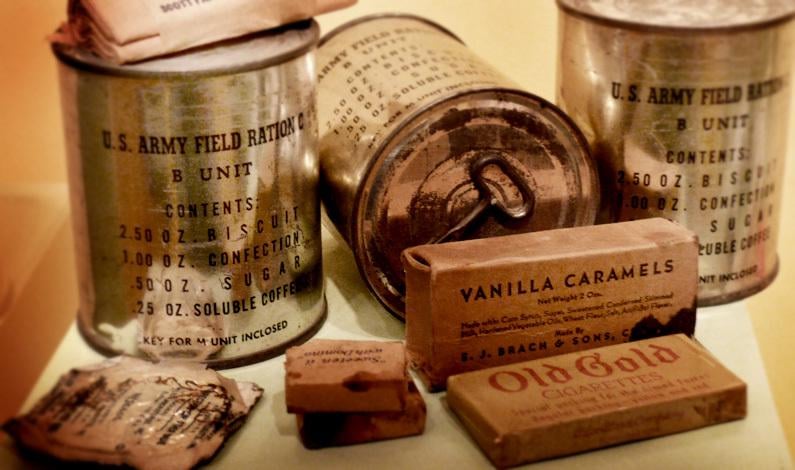
The second hypothesis is based on the assumption that the recipe was created in Rome at the end of World War II, using powdered egg and bacon from American army rations. Obviously, these two products, or their fresh counterparts, were not easily available, given food rationing and the extreme difficulty of obtaining even the bare minimum for survival. Moreover, the troops who had liberated the city had plenty of them, and as often happens in these cases, a black market arose in which some otherwise unobtainable food products circulated. As often happens in these cases, in typical Italian spirit, those who illegally traded the products were called " borsaro nero ," an obvious (and amusing) reference to Salgari's Black Corsair. Similarly, " carbonara " could be a way of describing a dish whose ingredients had been procured illegally, therefore not a reference to the color of the preparation, but to that of the market from which the ingredients came.
The search for the meaning of the name "carbonara" has sometimes overlapped with the search for its origins, as if the name could explain the circumstances of the recipe's birth. This has prompted rivers of ink to spill, but, as is often the case, many have ignored the more obvious, if less "romantic," explanation. The fact is, there is direct and authoritative testimony from the chef who claims to have invented carbonara, cooking it for the first time on September 22, 1944 .
This undisputed story recounts the encounter between the British Eighth Army and the American Fifth Army at the newly liberated Riccione . The high command consisted of Generals Harold Alexander (Field Marshal and Supreme Commander of the Allied Forces in the Mediterranean) and Sir Oliver Leese (Montgomery's successor as commander of the British Eighth Army), accompanied by Harold MacMillan (High Commissioner in the Allied Military Government in Italy). Renato Gualandi, a young chef of Bolognese origin who was in the city after joining his future wife, originally from Misano, was asked to prepare the banquet. Gualandi himself, in an interview with Corriere della Sera, explains how things went: "The Americans had fantastic bacon , delicious cream , cheese , and powdered egg yolk . I put it all together and served this pasta to the generals and officers for dinner. At the last minute, I decided to add black pepper, which released a wonderful flavor. I cooked them quite 'slobbery' and they were won over by the pasta." The same 2009 interview also reports the original recipe.
Online, you can find several interviews and recipes by Renato Gualandi, now in his nineties, who explains or demonstrates how to prepare carbonara, sometimes with small differences, even if the substance remains the same….
This explanation of the birth of carbonara, as banal as it may seem, manages to fit all the pieces of the story seen so far into place.The timing of its birth in 1944 accords with the first mention in 1951. This seven-year period, although short, was necessary to provide a minimum of notoriety and give the preparation a name.
The first two citations are Italian, coming from Roman circles , where the recipe had found a way to prosper, and have as their protagonists two figures deeply linked to the Capital such as Trilussa and Aldo Fabrizi.
In the years immediately following, references to and recipes for carbonara were evenly divided between Italy and the United States . This was due to the immediate approval granted by the Anglo-American liberation troops present in Rome. If we consider publications between 1951 and 1955, we find that in Italy, four references and two recipes appear , exactly as in the United States. At the same time, the first English recipe was published in London (the data and references can be found in the second chapter ).
The ingredients used by Renato Gualandi are the same as those used in the earliest versions of carbonara: pancetta (bacon in this case), parmesan/soft cheese, and egg. There's no trace of guanciale or pecorino, which would only appear years later in the recipe.
In the history of gastronomy, it's extremely rare to precisely identify the inventor of a recipe, but every now and then it happens. This is one of those rare, fortunate cases in which a chef publicly declares the authorship of a dish and is never contradicted by anyone, at least until now. This is enough, in my opinion, to consider him an extremely reliable source.
Nonetheless, if you try to check online, the most widespread and accredited versions of carbonara's origins remain the fanciful ones mentioned above. The reasons for the failure of the most realistic explanation, which links carbonara's name to its inventor, Renato Gualandi, lie in the complete lack of a mythical narrative justifying its antiquity and connection to the region. Obviously, the tale of carbonara being invented by a Bolognese chef in Riccione using American army rations in 1944 doesn't quite square with the origins of the most famous Roman dish, but that doesn't make the story any less truthful or plausible. It certainly undermines the aspirations of those who claim an authentic and original recipe, instead portraying a more prosaic and multicultural dimension, like the society that gave birth to it. There will certainly always be some who, regardless of historical sources, wish to find a more fitting origin for this magnificent dish, although, in my opinion, there's absolutely no need. It's enough for me to think that carbonara is a product of the mid-twentieth century, born during a troubled period in Italian history, almost by chance in an emergency situation, and brought to fame thanks to the shared appreciation of both Italy and America. Personally, I don't perceive the imminent danger of the collapse of the Western system because carbonara doesn't have origins lost in the mists of time. Likewise, I don't feel compelled to justify to anyone why I use pancetta instead of guanciale. Instead, I think carbonara is the fruit of the great, uniquely Italian capacity for culinary (and other) improvisation, which manages to create a masterpiece in the most difficult moments of its history.
by Lubberworts