
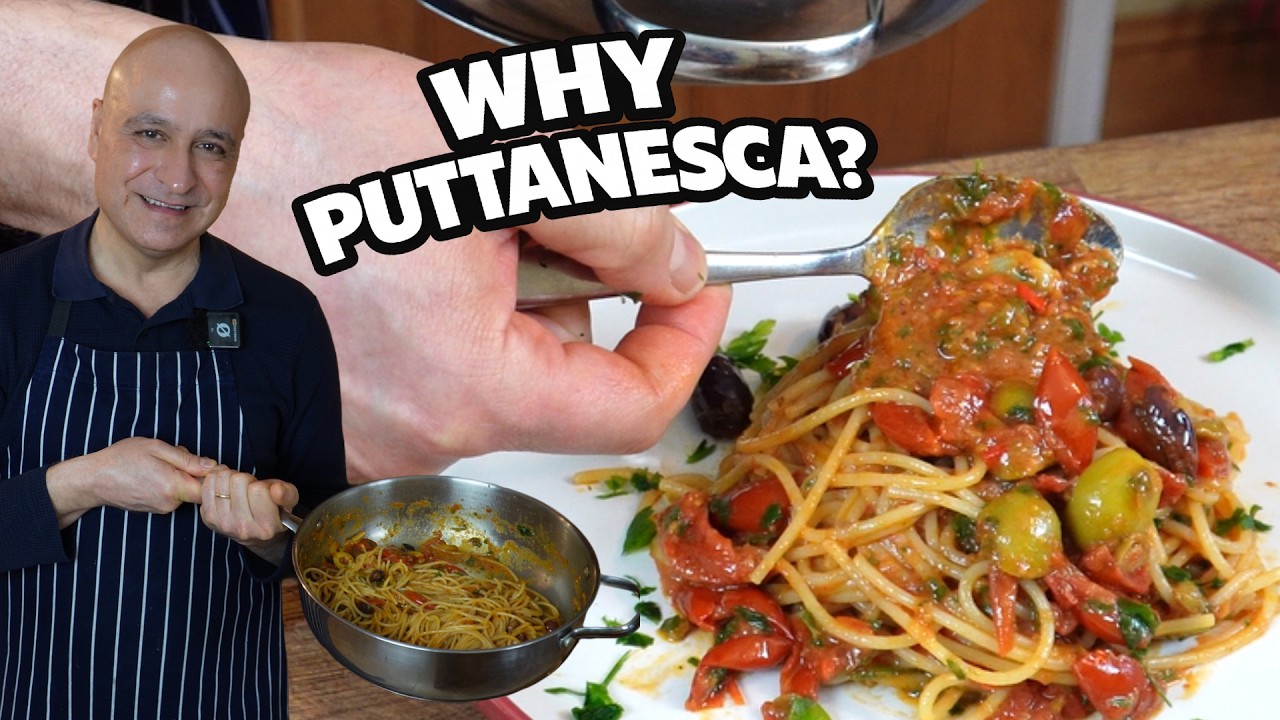
Pasta Puttanesca Has Nothing To Do With What You Think. In this video I cook a traditional Southern Italian pasta while explaining the real meaning of the word puttanesca. Many people believe the name comes from prostitution, but the origin is actually linguistic and cultural. The word evolved from the Latin putta meaning girl, later becoming puttana, and eventually puttanata, describing an impulsive act done without planning.
Pasta alla puttanesca therefore describes a way of cooking, not a person. It is food prepared quickly with what is available, a perfect example of Southern Italian intelligence in the kitchen, where necessity created flavour.
While we cook together I explain how language changes through society, why names matter in cooking, and how simple pantry ingredients can produce one of the most satisfying pasta dishes.
This recipe is for two people and follows the exact method used in the video.
Ingredients (2 people)
200 g spaghetti
4 anchovies (alici)
Good handful mixed black and green olives
2 heaped teaspoons capers soaked in dry white wine
125 ml dry white wine
400 g tin cherry tomatoes (or fresh tomatoes)
2 cloves garlic
Fresh chilli or chilli flakes to taste
Abundant extra virgin olive oil
Fresh parsley
Salt and black pepper
Method
Add olive oil, garlic, anchovies and chilli to a cold pan.
Add olives and crushed capers.
Turn heat to medium and allow everything to slowly begin sizzling for about 3 to 4 minutes.
Add the cherry tomatoes and gently crush them.
Add the white wine and cover with a lid.
Simmer approximately 20 minutes so the flavours blend together.
Cook spaghetti in salted water until just before al dente.
Transfer pasta into the sauce and finish cooking inside the pan.
Add parsley and a final drizzle of olive oil.
Mix thoroughly and serve immediately.
00:00 Ingredients overview
01:26 What does “puttanesca” mean
02:18 From Latin putta
03:44 Language changes in English too
04:36 Back to cooking and preparation begins
07:18 The seaside example explained
08:59 How puttanata becomes puttanesca
10:08 Southern Italy and cooking on the spur of the moment
11:19 Tomatoes, wine and simmering the sauce
12:52 Cooking the pasta in the sauce
13:36 Language humour and cultural differences
14:15 Finishing with olive oil and parsley
14:53 Tasting and final thoughts
#tortellinotime #tortellino #puttanesca #pastaputtanesca #italiancooking #italianfood #naplescuisine #southernitaly #pastarecipe #simplepasta #pastalovers #mediterraneandiet #traditionalrecipes #homecooking #authenticitalian
11 Comments
Ciao. The name of this pasta often creates curiosity. The dish is simple but the story behind the word is even richer. If you try it, let me know how it turned out for you and what you think the name means to you.
Soaking capers in wine.
Interesting thought, although I love capers anyway.
Quite the conversation today 🤭 Language differences.
Thank you for sharing your recipe. Ciao, Francesco and Julie
Very interesting explanation for this recipe Francesco lol, Milla grazie!
Quick meal between customers is one reason the dish got its name. The other indiscreet reason is related to anchovies .
One of my favourites. Fun to learn the real origin. TY😀
I saw a video about the liberation of Napoli, during the allied invasion of Southern Italy. Hunger was common in the chaos following the liberation of the city. The desperation among women, particularly those with dependent children and the elderly in the city. It is alleged that many of them fed themselves and their children by consorting with the arrived troops in exchange for the essentials. https://youtu.be/rLOUHhA18MI?si=q4reczRgX6m4kX5p
Thank you Francesco for the yummy recipe. I love any types of olive. I think olives go very well any type of pasta.
When you watch Tortellino Time you not only learn cooking, you learn language, culture and history! Great channel!
Love your channel. So great to watch you cook and listen to stories
Hello my friends!
This IS my favorite pasta. I make it often. What an interesting story about the word origin(s). I've heard several versions, but regardless it is delicious. I don't think I finish mine with oil. I will have to try that next time if I remember. If I didn't have something ready for dinner tonight I just might have made it for dinner.
I do enjoy your stories.
I make something very similar with tinned sardines.