
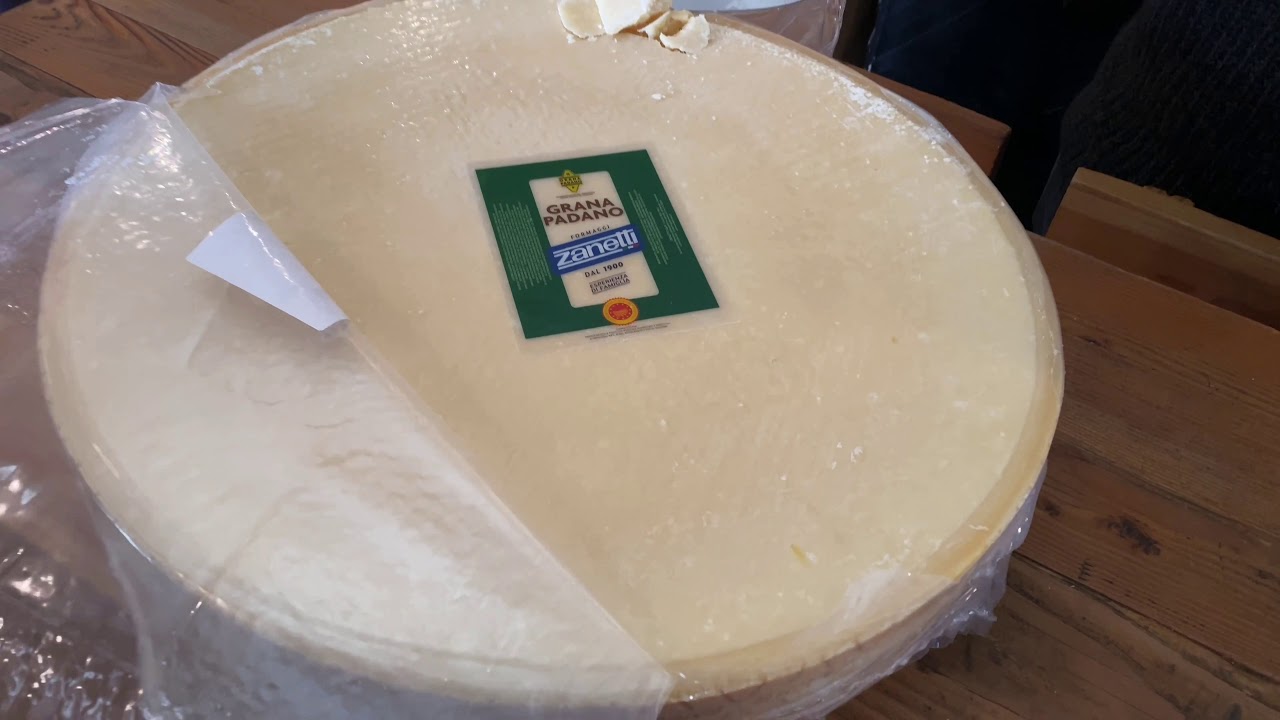
We know that you’ve probably heard of Parmesean, but have you heard about it’s cousin, Grana Padano? This cheese is in the category of DOP (Denominazione di Origine Protetta), which means it has to qualify according to the laws of that region to be produced under that name.
How to know if a cheese is an actual Grana Padano?
Each one of its wheels is characterised by its marks of origin, printed around the entire rind, covering the entire edge of the wheel, thus allowing to identify the cheese even when sold in portions.”Grana” due to its texture, means “grainy” in Italian. “Padano” from the production area in the “Pianura Padana” in northern Italy. This particular one is aged from 9 to 16 months, while the cheese itself can be aged up to 24 months, and be considered a “Riserva”.
Grano Padano Vs. Parmigiano-Reggiano.
Both northern Italian cheeses were originally made by monks, and both come in different lengths of aging. Grana Padano is made only with partially skimmed milk, while Parmigiano is made from a mix of whole and skimmed milk. They are made in the same basic part of Italy, but in different regions, so the cows graze on different pastures – meaning the milk tastes a little different (and also changes slightly in flavor throughout the year). Grana Padano can be made in five regions north of the Po River in a northern Italy – Padana basically means the Po River valley – while Parmigiano-Reggiano can only come from the cities of Parma, Reggio Emilia, Modena, Bologna and Mantua.
“Because the areas producing Grana Padano are bigger,” says DiPalo, “it’s cheaper than Parmigiano-Reggiano.”