
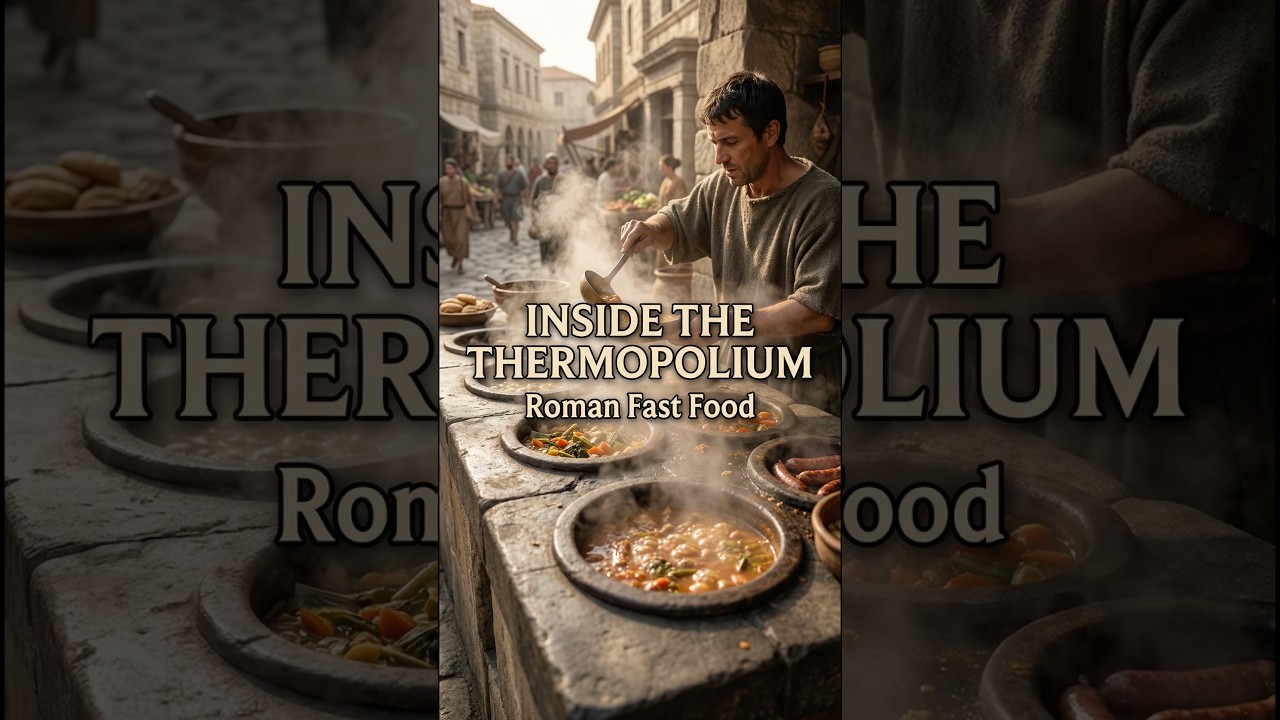
In Ancient Rome, cooking at home was a luxury most people did not have. Crowded apartment buildings, fire risks, and limited space meant that everyday meals were eaten outside. In this episode, we step inside the thermopolium, the Roman Empire’s answer to fast food and street dining.
Thermopolia were small street counters found across Roman cities, where hot meals and diluted wine were served directly to customers. Large clay jars embedded in stone counters kept stews, vegetables, legumes, sausages, and fish dishes warm throughout the day. Workers, travelers, and local residents stopped here to eat quickly, socialize, and continue their daily routines.
This episode explores what Romans actually ate, how thermopolia operated, who worked behind the counter, and why these establishments were essential to urban life. We also look at the social role of street food, from quick meals during the workday to lively conversations that filled Roman streets from morning until night.
With historically accurate visuals and realistic reconstructions, this episode reveals how food, speed, and community shaped everyday life in the Roman world—proving that fast food is far older than we imagine.