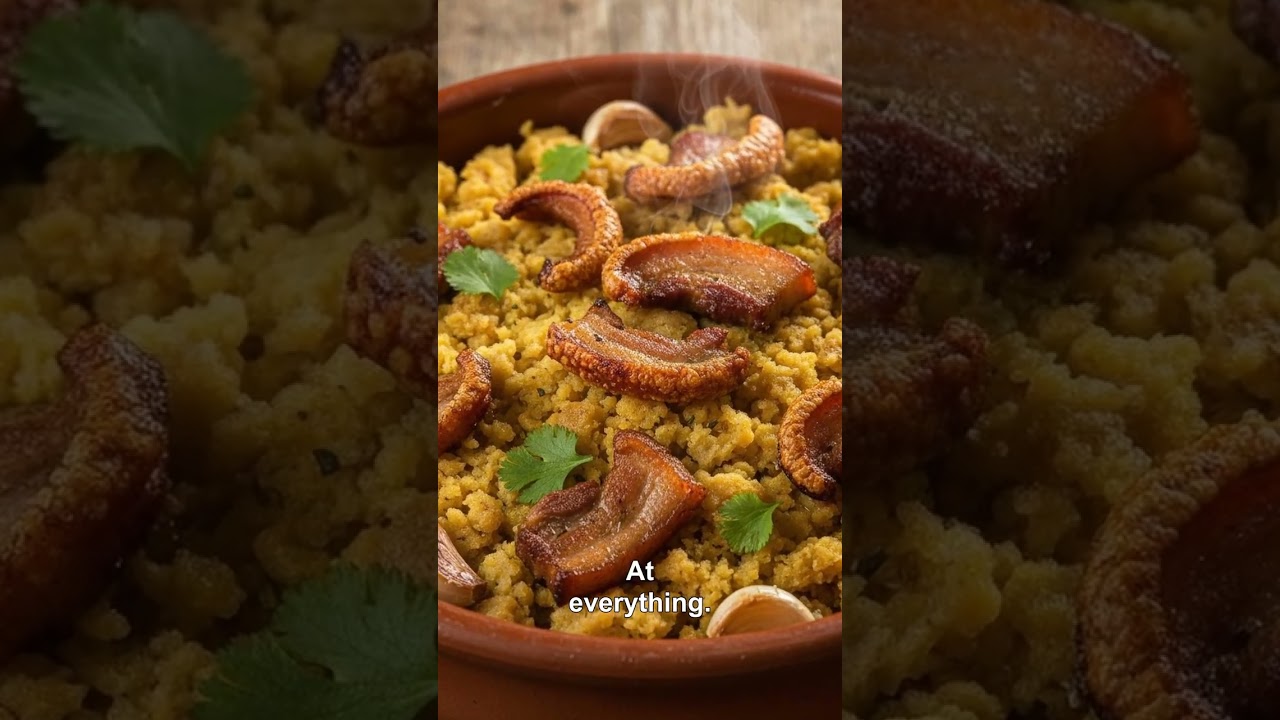
At a restaurant in Reguengos de Monsaraz—the kind without a website, where the menu is whatever the cook decided that morning—the ensopado de borrego arrives in a clay pot too hot to touch. Lamb stew thick enough to hold a spoon upright. Bread soaking in the broth at the bottom. The wine comes from across the street, literally, pressed from grapes grown within sight of the dining room. A bottle costs what you’d pay for a single glass in Lisbon. Alentejo cuisine isn’t delicate or complex. It’s substantial, designed for people who work physically and eat once, properly, at the end of the day. Migas exists because nothing gets wasted—stale bread becomes the foundation, pork fat provides richness, garlic and coriander season everything. The meal takes two hours not because service is slow, but because the pace itself is the experience. The food here reflects the same assumption built into every plaza and shuttered afternoon: people have time.