
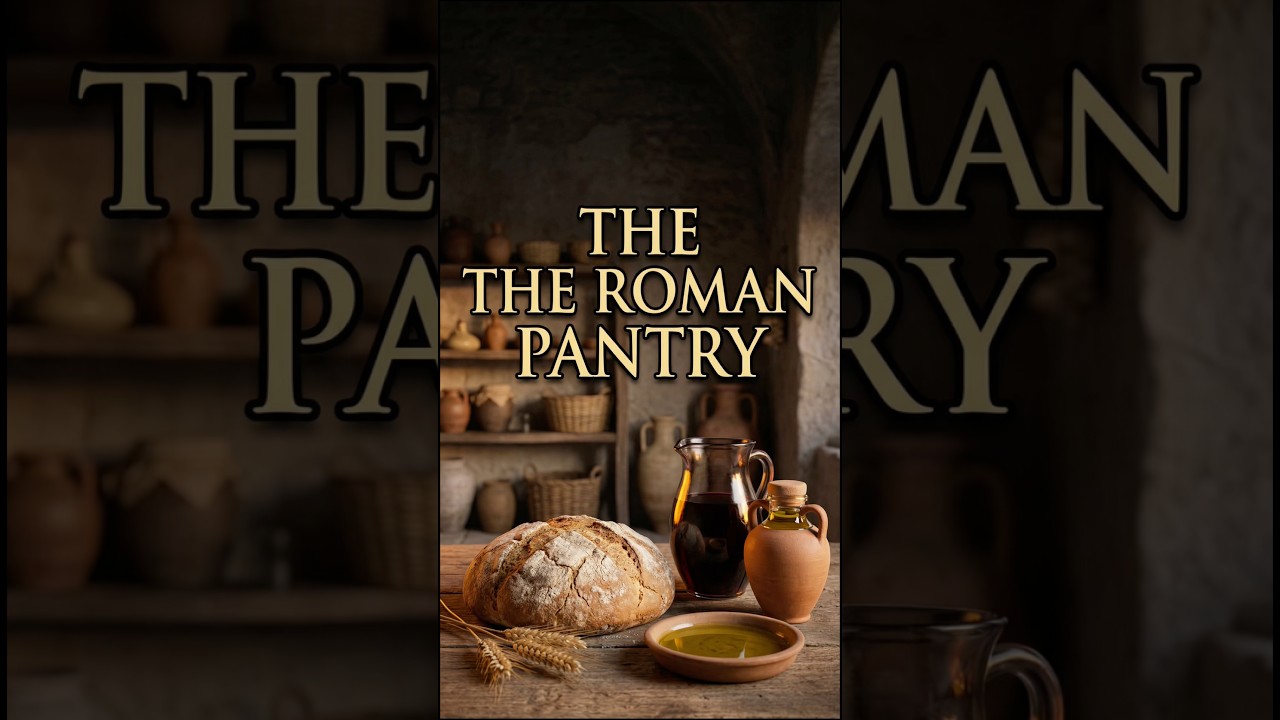
What truly fed ancient Rome?
Behind the legions, emperors, and marble cities stood three simple but essential staples: wheat, wine, and olive oil. Together, they formed the foundation of the Roman diet and the hidden engine that sustained one of the largest empires in history.
In this episode, we explore the Roman pantry by tracing these foods from farm to table, revealing how everyday meals depended on complex systems of agriculture, labor, transport, and organization. Wheat became bread through relentless daily work, powering both rural families and vast urban populations. Wine flowed across the empire, produced in vineyards from Italy to the provinces, consumed daily and woven into Roman social life. Olive oil, pressed slowly and carefully, flavored food, preserved health, and completed every Roman kitchen.
Through historically accurate reconstructions, we move through grain fields, bakeries, vineyards, oil presses, kitchens, and storerooms, showing Rome not as a city of ruins, but as a living, functioning society. This is the story of food as infrastructure—how controlling supply meant controlling stability, and how feeding the population was as important as military conquest.
This episode is part of Ancient Rome Archives, a series dedicated to uncovering how ordinary life worked in the Roman world, beyond battles and emperors. Ideal for viewers interested in ancient history, Roman daily life, archaeology, food history, and the systems that allowed civilizations to survive and grow.
Rome ruled the world with armies and laws—but it endured because it mastered something more essential: how to feed itself.
1 Comment
Very interesting video! Some things look the same today! The bread, olive oil, wine!