
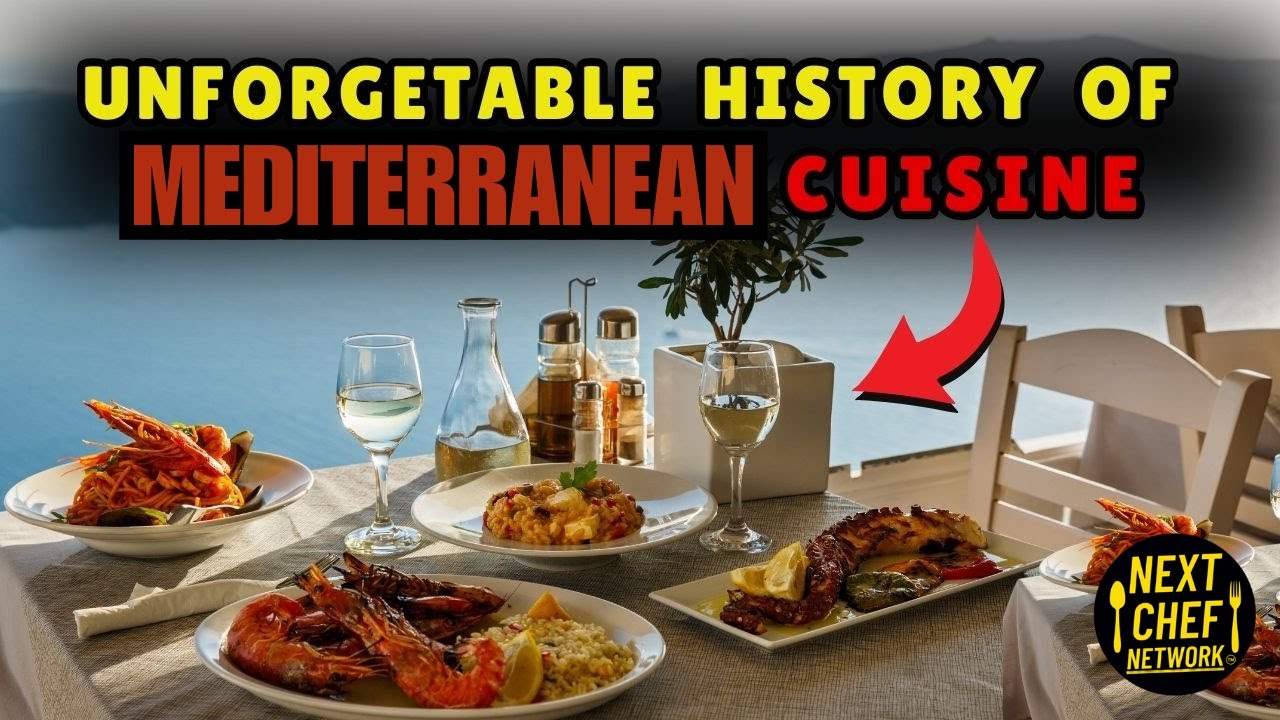
Mediterranean cuisine refers to the culinary traditions of countries bordering the Mediterranean Sea, including Italy, Greece, Spain, Turkey, Lebanon, and North Africa. Its history is a rich blend of influences from ancient civilizations, trade, conquest, and agricultural diversity. Here’s a brief overview:
1. Ancient Civilizations and Foundations (5000 BCE – 476 CE):
Mediterranean cuisine has its roots in the early agricultural societies of the Neolithic period. Early inhabitants of the Mediterranean basin cultivated grains, legumes, and olives and domesticated animals, forming the foundation of the Mediterranean diet.
The Egyptians, Phoenicians, and Greeks played important roles in the development of Mediterranean food. The Egyptians pioneered early bread-making techniques, while the Phoenicians introduced olive trees and grapes to regions like Spain and Italy.
The Greeks heavily influenced culinary culture, introducing wine, olive oil, and the communal dining experience called symposium. Greek colonies spread these culinary traditions to southern Italy, where they influenced Roman cuisine.
2. Roman Empire and Trade Routes (27 BCE – 476 CE):
The Roman Empire had a profound impact on Mediterranean cuisine. Rome’s extensive trade network allowed for the exchange of spices, grains, and produce. Roman banquets became famous for their indulgence, featuring dishes like roasted meats, seafood, bread, fruits, and cheeses, as well as imported spices like pepper from India.
The Romans refined wine production and perfected bread-baking. Garum, a fermented fish sauce, became a staple flavoring in Roman cooking, much like soy sauce in East Asian cuisine. Rome’s roads and sea routes spread ingredients and culinary techniques throughout the Mediterranean.
3. Arab Influence and the Middle Ages (7th – 15th Century):
Following the fall of the Roman Empire, the Arab expansion (7th century onward) brought significant changes to Mediterranean cuisine. The Arabs introduced rice, sugar, citrus fruits (like oranges and lemons), almonds, spices (such as saffron and cinnamon), and various vegetables, including spinach and eggplants, to Mediterranean countries, particularly Spain, Sicily, and North Africa.
4. The Renaissance and the Columbian Exchange (15th – 17th Century)
During the Renaissance, Mediterranean cuisine was further enriched by new ingredients brought from the New World through the Columbian Exchange. Tomatoes, potatoes, peppers, chocolate, and corn began to be incorporated into Mediterranean diets.
The tomato, in particular, transformed Italian cuisine, becoming central to dishes like pasta sauces and pizza. Peppers became staples in Spanish cooking, while potatoes and beans spread across the region.
5. Modern Mediterranean Cuisine (19th Century – Present):
In the 19th and 20th centuries, the countries around the Mediterranean developed distinct national cuisines, but they all share key features:
Olive oil as the primary fat.
A focus on fresh, seasonal vegetables.
Emphasis on grains, such as wheat and barley.
A high consumption of seafood, with meat typically eaten in smaller quantities.
Flavorings like herbs, garlic, and lemon.
The modern concept of the Mediterranean diet—emphasizing whole foods, olive oil, vegetables, and lean proteins—gained popularity in the mid-20th century, thanks in part to research showing its health benefits.
6. Cultural Fusion and Global Influence
In the modern era, Mediterranean cuisine has become popular worldwide, with dishes like hummus, pizza, pasta, tapas, and meze found globally. It continues to evolve, absorbing influences from international cuisine while maintaining its focus on fresh, simple ingredients and vibrant flavors.
______________________________________________________________________
Next Chef Network is an hospitality focused production company that develops, produces, and distributes unscripted and scripted culinary lifestyle tv shows, competitions, documentaries, and other innovative culinary programming. Next Chef Network showcases food, beverage, and emerging Chefs around the world.
(Our Place Affiliate Link)
https://glnk.io/r5y0n/nextchefnetwork
(Our Place) Our Place is the first cookware brand designed by and for home cooks. We create innovative, beautiful, better-for-you products that make cooking at home more accessible. (Use this link to gain another 15% off discount).
________________________________________
(LimeLite Affiliate Link)
https://mylimelite.com/?ref=ChefPrime
(LimeLite) Upgrade your backpack game with our LED-equipped digital backpack. Stand out in the crowd and express your unique style with a dazzling display that’s fully programmable. (Use this link for $40 off) and Coupon Code: ChefPrime, for and additional $20 off.
1 Comment
Useful information All in one video