
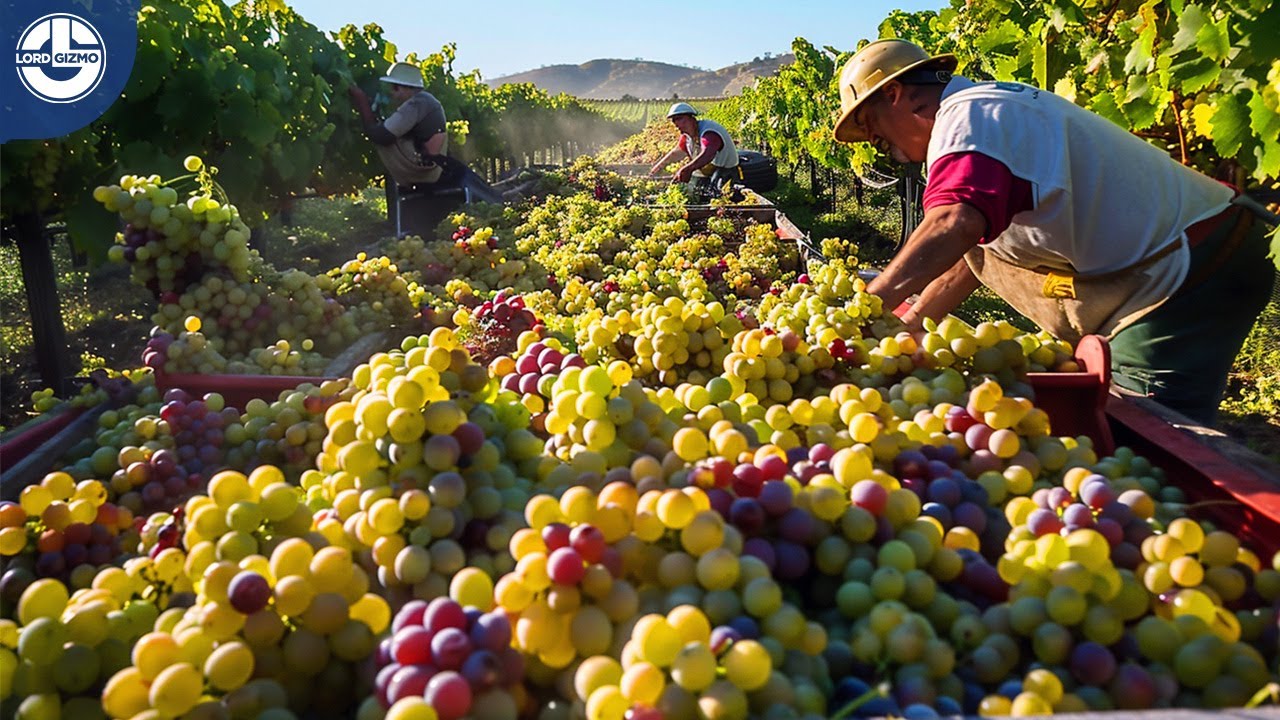
Harvesting MILLIONS Of Tons Of GRAPES And Olives To PRODUCE Superior Wine And Outstanding Olive Oil
🍇 Join us as we dive into the fascinating world of grape harvesting! From vineyards around the world, witness the meticulous process of harvesting millions of tons of grapes to produce superior wine. 🍷
Tags: #GrapeHarvest #WineProduction #VineyardLife #Winemaking #GrapeFarming #WineHarvest #VineyardTour #GrapeToGlass #SuperiorWine #winelovers
Subscribe Right Here
👉 https://tinyurl.com/Sub-LordGizmo
Watch Lord Gizmo Play List
👉 https://tinyurl.com/LordGizmo-Playlist
=================================
Visit and subscribe to our Spanish Gizmo channel
Link: https://bit.ly/3jFJ7Z7
=================================
If you would like to feature your video or reach out for business enquirers please feel free to contact us at contact@lordgizmo.com
#lordgizmo
#onanotherlevel
#powerfulmachines
#satisfyingvideo
grapes are one of the most in demand fruits in the world they are made into Juice drinks food additives and one of their famous end products are Wines in today’s Lord Gizmo video we will be looking at how these grapes are harvested and processed to become wine don’t forget to give this video a thumbs up and subscribe to our channel for more the whole process starts with harvesting The Grapes this process can be done with the help of both manual and mechanical means when grapes ripen they’re picked by hand or machine usually between August and October each type of grape requires its own optimal picking time some grapes can be left to hang longer than others for better flavor development this this process impacts the eventual taste and quality of wines first this vehicle goes through the multiple rows of grapes then the farmers place these baskets that will act as the collection bins of all harvested grapes then they will be transported to the processing facility these crates of grapes will be received by the workers and will be prepared for checking and weighing this is done to make sure that all of the grapes are of high quality and sufficient weight after that these workers will begin to open up this gigantic machine and slowly load the grapes inside they will fill it up with the grapes they have collected if you’re wondering where these grapes will go this machine actually leads them to this station where they will be collected and prepared for further processing [Music] these vehicles are programmed to wait at this spot and catch the grapes from the machine [Music] [Music] depending on which company these grapes fan be smashed in different ways although most of them use machines they still have different methods of doing so however the process always starts with cleaning the grapes then they need to destem or remove its stem and other unwanted particles to make sure that the juice collected will have a clean and consistent texture [Music] then they will be placed onto this machine that serves as the company’s Crusher once it is filled to the brim its top part will be locked and [Music] closed then the workers will slowly lower the crusher to extract the juice from The Grapes this machine is connected to the hose which leads all the grape juice into a specific collection bin one once done they will open it up again and shovel through the batches of grapes this is done to make sure that even The Grapes on the bottom of the surface are crushed properly then the process of crushing begins again it is important to take note that different presses or crushing exists too and it is all depending on what the juice will be used for did you know for white wines gentler pressing is often preferred to avoid extracting too many tannins and phenolics from the skins and seeds typically using pressures around 0.2 to 0.6 Bars 3 to 9 PSI for red wines where more extraction is desired higher pressures up to two bars may be applied traditional basket presses and modern pneumatic presses are commonly used with pneumatic presses allowing for more precise control over the pressure applied ensuring the optimal balance of juice extraction and quality this careful application of pressure is crucial for producing high quality wine as it affects the flavor Clarity and overall character of the finished product [Music] here is another interesting fact to produce one bottle of wine which is typically 750 ml about 25 o you generally need about 600 to 800 grapes this translates to roughly 2.5 lb 1.1 kg of grapes per bottle the exact number can vary based on factors like grape variety Vineyard yield and wine making techniques for instance larger grape varieties or those with higher juice content may require fewer grapes while smaller more intensely flavored grapes may require more to achieve the desired volume and flavor profile [Music] to gather the many stages of grape processing and extract the appropriate liquid components grape processing factories use a variety of techniques the principal aim is to achieve Superior wine quality while reducing expenses and guaranteeing effective production crushing and destemming grapes is the first step in the processing process at this critical point the fruits skins stems and seeds are removed releasing juice that will later turn into wine the grapes are broken down into little pieces by Crushers which makes it easier for D stemmers to remove undesired components and leave only pure pulp behind the next step is pressing in which the pulps are compressed to release more liquid using hydraulic presses press and freerun liquids are the two forms of liquids that are obtained freerun liquid pairs well with white wines since it is transparent and has less tannin components in contrast press liquid has a higher tanin content and is opaque making it perfect for red wines pneumatic bladder presses or gravity settling tanks are used by grape processing factories to remove particles from liquids guaranteeing the purity of the extracted liquids with the use of these Technologies producers can get Purity and Clarity in their finished goods without sacrificing flavor qualities cold stabilization follows pressing to remove excessive tartrates a natural component of grapes that can negatively affect the appearance and flavor of the resulting wine fermentation then begins converting sugars present in the grape must which are its juice skin and Seed mixture into ethanol through yeast activity aging completes this process by refining The Taste profile of the wine ultimately yielding an exceptional beverage ready for consumption depending on Grape variety and producer preferences grapes must undergo cold soak at around 50 fah or 10 celsi for several days pre fermentation following the fermentation process the wine is bottled in pristine glass containers natural corks are used to seal the neck of each bottle preventing oxidation and contamination of the wine the bottles are labeled with important details such as the producer name grape variety vintage year alcohol concentration and any appropriate cautions before they are filled with wine with sterile filler that assures less exposure to air wine is meticulously poured into bottles to preserve the Wine’s quality during the filing process this procedure also entails keeping an eye on the Wine’s pressure and temperature and there you have it your favorite wine is made this now ends our video on Grape harvesting and wine production but let’s not stop at grapes let’s dive deep into the harvesting process of Olives to produce am amazingly tasty olive oil olive farms and their workers are doing their best to produce High high quality olives that will supply the needs of the market hence the reason why they are extremely expensive in today’s Lord Gizmo video we will be taking a glimpse of how olives are produced this will also help us gain a perspective on what accounts for the high price of Olives so just sit back and get ready to learn as we start another Farm process video in any agricultural or farming process it always starts with preparing the land the farmers till the soil to make sure that the olives will be planted in an environment that can support its growth through the help of a machine or planter olive tree seedlings are planted in rows they make sure that a certain interval between the seedlings is followed to ensure that they will grow without affecting each other then a farmer will anchor these seedlings to a stick that will serve as its support while it grows once the soil is ready the olive tree seedlings are planted at Reg regular intervals this is usually done using a specialized planter that can handle multiple seedlings at [Music] once the seedlings will need around 3 to 5 years before they can produce their own fruit usually their flowers appear in early spring during their first production of fruits it will not be as productive as its growth in its eth or 10th year in this growth period they will benefit the most from early pruning and training to form a single trunk and a framework of three to four main branches when it comes to harvesting olives different Farms do it in different ways there are some who do it manually smallscale producers or those who prioritize quality control Harvest olives by hand and only pick out the ripe ones in today today’s video we will be looking more on large commercial operations that use machine harvesting methods most of the time they use harvesting Combs that go through the rows of olive trees these machines have large hair comb like parts that take the olives off of the tree branches [Music] [Music] the collected olives are then moved to a container through the help of a conveyor [Music] belt other Farms also employ the process of shaking from the name itself it’s either a machine or their own workers shake the olive trees so the ripe olives easily fall off did you know olive trees some of which are thousands of years old can still produce olives and high quality olive oil today olive trees are known for their remarkable longevity and some ancient Olive Groves in the Mediterranean region have been passed down through generations for centuries these ancient trees not only produce delicious olives but also contribute to the cultural and historical Heritage of the regions where they Thrive after the harvesting process the olives are then transferred to respect vehicles or containers this is in preparation for selling them usually olives are sold to Mills in bulp Mills either get it directly from Farmers or negotiate through intermediaries such as olive oil producers depending on the variety of olive the quality of the crop and the location where they are grown the price of the olives can also vary to check these factors olives are processed in these conveyor belts did you know olive oil production alone can range from 3 to 4 million tons per year Olive sales include not only table olives but also olive oil and various olive based products such as Olive Pit fire starters dry Olive pits are flammable and can be used as a natural fire starter for fireplaces wood burning stoves or campfires they catch fire easily and can help get a fire going quickly [Music] [Music] once they are sold they will be transported via these big conveyor belts at the same time their physical appearance will be checked in some facilities this is also where each of the olives will be sorted according to their ripeness size color and quality if they saw that there are unripe olives during this process they will be separating them and storing them for later use while the ripe ones will be ready for processing the olives must first be thoroughly cleaned using water to get rid of any dirt or other particles from their surface this keeps the products flavor constant and inhibits the formation of mold there are also other facilities that put olives through centrifuges which spin them quickly to remove any last bits of dirt such as pits or stems that might still be on the fruit’s surface after being pre-processed the olives are sent into Crushers which use pressure rollers with stainless steel surfaces to break up bigger pieces into smaller chunks so that no flavor residue from earlier manufacturing runs affects the output in the future additionally by releasing more oil from each Olive this technique improves the olives overall consistency once they are ground into a paste the olives are crushed and then run through high-speed Hammer Mills to compress them even further into a fine paste but retains some coarse particles for body when added to recipes like salad dressings or hummus the adjustable screens in these Hammer Mills enable modifications based on the needed particle size standards of global customers that import these items via bulk shipment containers when it comes to pressing olives most facilities follow a standardized method designed to extract maximum oil yield without compromising the final products sensory qualities like taste smell and appearance once reduced enough these particles move directly onto either traditional two-phase hydraulic press systems after that the refined Olive paste will be added to this white filter and arranged in a circle these will be made in batches by the workers who will then stack them on top of one another after that a press machine will be used to gather all of the oils from them the crushed olives are placed inside the press and compacted in a chamber this pressure causes pomix a solids Rich material to be left behind after the oil is removed from the olives after that the mixture they have gathered will be transferred to this apparatus called a centrifuge this will be spun at such high speeds so that the heavier olive oil will be moved towards the walls of the container this will now help with the separation of oil and water oil is the most important product in this process once they have acquired the oils it is now time to trans transer them to the packaging area it will be bottled to prepare them for a wider Market distribution that concludes our exploration into the world of extra virgin olive oil we really hope this video taught you something new and fascinating always remember to seek out premium cold pressed olive oils that were extracted through conventional procedures while selecting the ideal olive oil for your purposes come back soon for more entertaining stuff and don’t forget to tell your friends and family about this video
2 Comments
Love it. Keep up the good work
You can keep all the wine in the world. Never liked it. Olive oil on the other hand, I love it.