
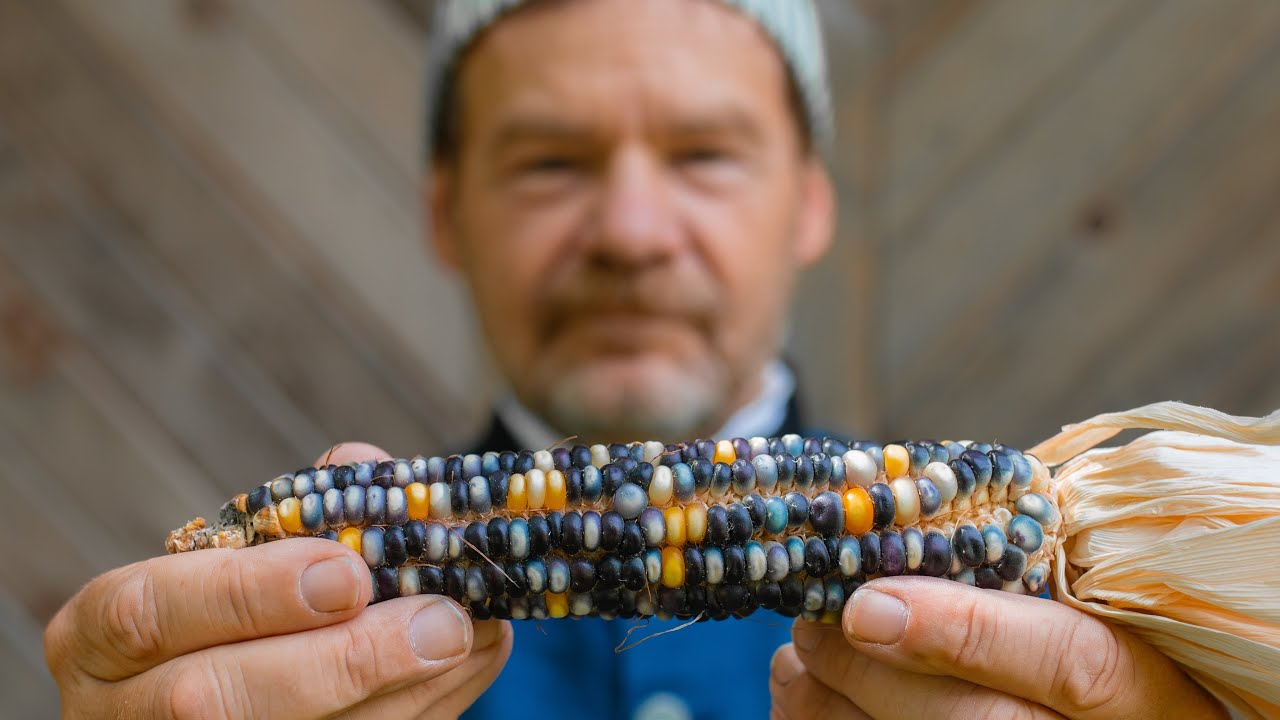
One has everything to do with life existing in the Americas, yet corn does not flourish without human interaction. Where did it come from? Why is corn so important? Did people like and accept it early on?
Barnes Family Farm https://www.barnesfarmsandmillingcompany.com/
Colonel James Smith Journal https://archive.org/details/accountofremarka00smit/page/n7/mode/2up
Our Brand New Viewing Experience ➧ https://townsendsplus.com/ ➧➧
Retail Website ➧ http://www.townsends.us/ ➧➧
Help support the channel with Patreon ➧ https://www.patreon.com/townsend ➧➧
Instagram ➧ townsends_official
Imagine a food source that’s so versatile so prolific so sustainable and so vital that it supports a continent. Now that sounds wonderful but the reality 4 and 500 years ago is as Europeans come into the new world they think of corn as a barbarous as a savage and primitive grain. Nothing could be further from the truth the history of corn goes back thousands and thousands of years in fact some people think that humans started to evolve or modify corn as many as 9,000 years ago. Turning this simple grain into something that was so incredibly versatile that it could grow in South America Central America and up North all the way to Canada. That it could grow in places that was very damp or very dry that they could make different varieties that they could use as popcorn or something they could eat green or something they could dry and save for years. All the evidence suggests that corn was developed in this Central American region that it was developed in such a way and so highly developed that it really couldn’t survive upon its own. It’s something that needs human intervention for it to continue to grow. Just leaving corn wild in a field it will just devolve and stop growing very very quickly. And yet when it is properly manipulated and developed by humans corn is so amazingly productive that it’s really hard to believe that one single kernel of corn can in one generation develop more than a thousand kernels. So a 1,000 fold increase of food. Let me share a word with you nixtamalization. What is the downfall of corn If corn is your major component of your diet then there’s a problem. There are not complete amino acids that are available for humans to digest and so the only way to make this corn a more rounded food product is to add some alkali component so that this makes it a more complete nutrition food stuffs. So how did they do this in the time period they would either soak and lye or they would add ashes to this food component. It’s very very interesting that even though this was a food that was developed for thousands of years that the societies that relied on corn for a large portion of their food input those are the places where the food processing or the kinds of ways they would cook their food would add in this alkali. So if one of these Societies in Central or South America didn’t need corn as a major component of their food they didn’t bother to add the alkali they would just eat corn in a different kind of way. But any place that really survived upon corn they would always add this alkali component to make a more complete nutrition package out of corn. In our 18th century context we see this chemistry taking place in how Native Americans process their corn both in the ashes going into their parched corn and in soaking corn and lye. I find it very interesting that as soon as Christopher Columbus comes back from America we see corn in Europe and in North Africa. It’s already starting to move it’s something that’s brought back almost immediately it grows in Northern Africa it grows in places like Turkey and Italy. Now some people call it and especially in Europe they call it Turkey corn because they had the mistaken impression that it actually came from Turkey when it was actually corn that was brought over from America. This is a description of exactly the way the Native Americans would have prepared their parched corn "this corn is first parboiled in water and then drained and well dried when it is perfectly dried it is then roasted in a plate made for the purpose ashes being mixed with it to hinder it from burning they are kept continually stirring that it may take only the red color that they want when it has taken that color they remove the ashes rub it well and then put it into a mortar with ashes of the dried stalks of kidney beans and a little water they then beat it gently which quickly breaks the husk and turns the whole into a meal this meal after being pounded is dried in the sun and after this last operation it may be carried anywhere and will keep 6 months". All of the recipes that we’re going to make today are coming straight out of historical journals these are foods that people were eating because they were in dire straits and there was nothing left to eat or because it impacted them because of how good it was or because of a ceremony it was involved with or maybe something that they hadn’t seen before. When Jon suggested this technique to me this was something that kind of took me back cuz I haven’t ever seen anything quite like this before I was really excited to give it a try to experiment with it hopefully we’re going to get it just right. We’re using corn obviously and all of these recipes this is dried corn it’s just simple dried yellow corn that’s what we’ve got to work with here. Now in this particular recipe what they’re talking about is taking this corn and Par boiling it and you’re going to basically get it to puff up and kind of loosen up a little bit this is corn that I have parboiled right here and as you can see it’s wet and it’s going to take a little while to dry out and they put a lot of emphasis on all of this needs to be dry before you continue on to the next stage in the process. Once you have parboiled your corn and you’ve given it a chance to swell up a little bit you’ll notice that it’s just kind of a little bit squishy to the touch you’re going to set this aside to dry and that’s going to take a while depending on where you are how hot it is the climate that sort of thing. But you want all the moisture to dry out it could take a couple of days it might even take a week I don’t know depending on where you are but I’ve already set some aside to dry for the next step but just make sure that you let it dry as much as you can it needs to be very dry and then we’re going to parch it. And when we parch it we’re going to put this into a skillet we’re going to turn that skillet up if you’re using the stove at home probably medium high heat if you’re over the fire you don’t want to get too hot you don’t want to burn it but you want to continue to draw out the remaining moisture even though it feels dry to the hand there’s still some moisture in there. And what happens when you parch corn is it it begins to swell as it heats up and it pops it’s not going to pop like popcorn but it’s driving that moisture out and the husk around the corn is going to crack it’s going to pop just a little bit you’re going to hear it audibly and you’ll even see some bouncing around going in the skillet if you’re doing it in your house you might want to have a lid close by just in case it pops a lot because it can sometimes. When we parch it A gets all the moisture out and B it softens it it kind of cracks that open and then you would be able to take something that you couldn’t just chew on and then you would be able to chew on that some people even take parched corn put some salt on and eat it like a snack. But what we’re going to do is we’re going to grind it down into meal. Our corn is parched is looking really great we did not use any wood ash in the parching process in this environment we don’t need to oftentimes over the campfire you don’t need to either but we do see that in a lot of historical context that they sometimes do sometimes don’t I don’t really know what all the reasoning there is but I knew that I didn’t need to for this because I’ve done it before. There is another ash that they talk about in this recipe and that is the ash from the stalks of kidney beans and I have that right here I’ve prepared that ahead of time so we’re going to get some corn in the mortar and we’re going to add a little bit of this ash it doesn’t give us any ratio so we’re just going to have to eye this. And I’m going to start grinding away our mixture is ready right here we have our cornmeal mixed with our ashes and we certainly it’s like a corn flour that’s what we’ve got going on here. In the reading what they say is that when you want to consume it you will mix 1/3 of the meal with 2/3 water and in time it will swell and it says in just a couple of minutes this is mixed up well it has definitely expanded it’s got a pudding consistency let’s give it a shot. Hmm it’s surprisingly gritty the corn doesn’t really come through it tastes really earthy um in a pinch this is going to keep you going I think it’s definitely survival food but it’s not gourmet. So what did Europeans think when they first came upon corn? What were their ideas? We have a writing from the late 16th century this is the 1590s and this is the first Englishman to come back and describe America from someone’s point of view that was actually there rather than from a thirdhand account. He writes about corn he says pagator it’s a kind of grain so called by the inhabitants the same in the West Indies is called maize English men call it Guinea wheat or Turkey wheat according to the names of the countries from whence it hath been brought now. He was wrong about that but that’s just what people thought the grain is about the bigness of our ordinary English peas and not much different in form or shape but of diverse colors some white some red some yellow some blue all of them yield a very white and sweet flour being used according to his kind making a very good bread. He goes on to describe how they also make it into corn beer and corn ale which I think is very interesting already in the 16th century they’re thinking about making beer out of corn. He goes on to describe the plant how tall it grows and he says how great an increase it has how prolific how much corn grows from a single grain he sees amazing potential for this but it’s not like he’s accepting this as a food source for Europeans right away. Fast forward 30 years we go up to the Massachusetts area where the Puritans first land on shore wanting to start the Plymouth Colony and they at very first land and find an Indian graveyard and a store of buried Indian corn they take some of this knowing that they might need it to plant the next year the reality is is when these Puritans come to the New World their old world grains do not grow well here it’s very difficult in a brand new location to get something like wheat or barley or rye to grow well. They survive upon corn they have to learn how to grow it from the Native Americans that are there and we have a writing from 1636 where somebody’s talking about these very first people how having to survive on corn alone. For the want of English grain wheat barley rye proves a sore affliction to some whose stomachs cannot live upon Indian bread but we’re compelled to it until the cattle increased and the plows could go. He talks about how this corn just it doesn’t eat well it doesn’t it doesn’t work for the people but they have to survive upon that because the other crops aren’t working. Talk about providence, imagine showing up in the new world and there are these Native Americans there and someone actually speaks English. No one’s been along the coast here nobody’s settled in North America and yet they run into someone Squanto who speaks English and can teach them how to plant corn how to fish how to survive in this new world. We can learn a lot about Native Americans and specifically how they use used corn by various writings in the middle part of the 18th century. Both Heckewelder who is a missionary to Native Americans and Colonel James Smith who’s taken captive by Native Americans and adopted into a tribe. He’s got this wonderful journal or Memoir talking about his entire life and he spends a lot of time with the years that he spends with the Native Americans and he has to learn and survive to live in the wilderness just like they do. Here’s a section of his book right after he’s adopted into the tribe he says after this ceremony was over I was introduced to my new kin and told that I was to attend a feast that evening which I did and as the custom was they gave me also a bowl and a wooden spoon which I carried with me to the place where there was a number of large brass kettles full of boiled venison and green corn everyone advanced with his bowl and a spoon and had his share given him and after this one of the chiefs made a short speech and we began to eat. I’ve been rereading the Journal of Colonel James Smith I love this journal it’s one of my favorite journals in history it’s just so chalk full of really interesting information he’s living with the natives for about 5 years and he’s learning so much from them this is my favorite reference to corn and corn is mentioned so many times in this thing but it’s kind of beautiful it’s after the ceremony and they’re getting ready to celebrate they sit down and it’s this really simple dish but it just feels so homey and I know that they were just the way that they were describing it they were really loving this and so it’s going to be really simple we’re going to take green corn and that’s still soft corn right here on the cob and we’re going to cut it off and we’re going to take our Venison and we’re going to cut this up into small pieces we’re going to put it with just a little bit of water and we’re going to boil it we’re not going to add any spices we’re not going to Salt and Pepper this thing because they didn’t in the book at least they didn’t mention it and I don’t believe that they had all of those things at that time to be able to spruce it up so we’re going to keep it as simple as possible we’re just going to let the sweetness of the corn shine through and let that venison be the meaty kind of stick to your ribs component. When they’re talking about green corn they’re talking about what we eat regularly like as a side dish fresh corn that is soft corn on the cob an ear corn from your garden corn out of a can frozen corn that you get the grocery store all of those are examples of green corn where it’s still soft it’s not dried it’s not something that’s been stored away but it is fresh it’s green corn. As important as corn was it’s interesting to see how it’s interpreted and thought about by the people living in North America even 150 years 160 years after they’ve started settling in the new world. So they’ve been using corn to survive upon but what are they thinking about it within themselves so here’s a very interesting reading this is from 1780 Joseph Plum Martin was an American Soldier and he was sustained upon a lot of corn products in fact sometimes it seems like cornmeal was the only thing the soldiers had to eat but at one point he’s talking about a time when they were in a house and Loyalists came into the house they fled the scene and the loyalists were searching their house they had left behind some of their food and here’s what happens. He says when they could find this is the loyalist when they could find none to wreak their vengeance upon they cut open the knapsacks of the guard and strew the Indian meal about the floor laughing at the poverty of the Yankee soldiery who had nothing but Hogs fodder as they turned it to eat. So these loyalists weren’t from England which I’m sure the English soldiers would have thought exactly the same thing so here are some people within the colonies thinking corn is is hey this is a staple and we’re going to survive upon it and then other people who are living here saying that’s nothing but Hogs fodder which is a generally a typical way of viewing it from the European sense. It is very interesting to me that yes we are 160 years or 180 years after the first introduction of corn into the diet of these European settlers and even after all this time we have conflicting ideas about what’s going going on with corn and how important it is to the colonies this is one of the most important food stuffs in all of the colonies it’s fed to animals it’s fed to people it’s used on all the different socioeconomic levels. We have a letter that Benjamin Franklin writes to people in France in the 1780s and they’re having a problem with growing enough wheat for the amount of people they have and he’s saying you need to adopt more corn you need to use corn and he goes into a great explanation of how it’s grown and how it’s eaten. He’s pointing to this because he thinks it’s important for the survival of even people in Europe and yet we have people in the United States that still are shunning the idea of eating a great quantity of corn and then other people who look at corn as the great inexpensive food that it is. They are proud that this very inexpensive food is something that they survive upon they write poems about it they write books about it they think it’s the most important thing for people to accept as a food and as a foundation for their diets. Here’s Joseph Plum Martin talking about how these soldiers ate or cooked their cornmeal he says we had no wheat flour all the bread stuff we got was Indian cornmeal or Indian corn flour. Our Connecticut Yankees were as ignorant of making this meal or flour into bread as a wild Indian would be of making pound cake. All we had any idea of doing with it was to make it into Hasty Pudding. You read these stories about soldiers and Dire Straits and you think could I could I do that would I be able to get through on just the simplest ingredients without any flavor whatsoever. There are so many times where you’re reading these journals and people are like I just wish that I had some salt. We’re going to make this Hasty Pudding with cornmeal without anything without salt we’re going to have a little bit of maple syrup because it’s very likely that they would have been able to get a hold of that but we’re not going to season this as we go. And it it’s it’s a very simple recipe you can’t really go wrong with it it’s water and it’s cornmeal now we are using a special cornmeal it’s very period correct cornmeal I’m excited to try it I’m excited to see how this comes together and and really we’re just going to use 2 cups of water and somewhere between 1/4 cup and 1/2 cup of cornmeal depending on consistency and we’ll know that as we’re going. We’re going to make sure to keep it stirring the whole time and as we add the cornmeal we’re just going to add it a little bit out of time while we’re stirring so that the boil continues to be happening we don’t want to dump the whole thing in there and kill the boil of the water we want to continue to stay hot as we’re adding the cornmeal and then it’s probably going to take a good 15-20 maybe even 30 minutes to set up right and we’re going to stir it pretty much the whole time. When you’re making this you want a fairly coarse ground cornmeal you don’t want super fine and if you want to get something close to period correct there’s Barnes farm and Milling Company down in Salem Kentucky that’s where we got this we’ve gotten other ingredients from them in the past and they’ve treated us really well make sure to go look them up if you want to make anything with period correct corn ingredients that’s the place to go. Without corn without learning about the plant itself how to use it even how to prepare it the colonists wouldn’t have been able to survive in North America without this commodity they wouldn’t have been able to survive it wouldn’t have been economically possible it wouldn’t even have been just physically possible they wouldn’t have been able to learn this unless they got this information from the Native Americans the Native Americans who’ve been surviving on this food for hundreds if not thousands of years.
38 Comments
Here you are talking about how people didn't want to eat corn and I just ate my favourite: a piping hot bowl of corn grits with bacon. 😊
I loved corn as a boy, adore it as a man, and will have it for my last meal before I die if I can manage it! If only these early settlers could see what modern marvels we've made of corn and how much our economy depends upon it today.
Bless we have corn for masa was made from it and from that tacos
I loved this video. 🙂 Takes me back to my anthropology studies.
Remember my mom boiling corn with some kind of white mineral b4 grinding in2 a dough to b used for tamales or corn tortillas 🤔👆👌
Okay now I'm gonna kneed a corn beer and corn ale video.
this video was amazeing
how did the natives cook the corn? i assume they didnt have metal skillets
I once read that when Columbus first brought back corn to Spain, hundreds died from malnutrition as a result of trying to eat corn as if it were wheat, simply because they unfortunately didn't know about the nixtamalization process.
The confederacy lost the Civil War because their base calories were based on corn which per acre produces less calories than per acre of wheat that the north would feed their soldiers, this is something I have heard in the past have you ever spoken about it?
I've noticed you often use maple syrup in American versions of 18th century recepies.
Boston newspapers actually had an article on maple sugar in 1765 (which makes passing mention to the syrup as a "molasses" aka byproduct of making sugar) – heavily implying it wasn't known to most colonists by then. It's not clear (to me) if maple sugar or syrup was common for English colonists at any point in the 18th centry.
Great format. I enjoyed the theory with practical inter dispersed in between.
I'm pretty sure they fed recycled half chewed corn to the savages. 🌽 💩 🪶 🪶 ⚰️
cornography
Another great video. I especially liked the way the two of you switched back and forth. I love listening to both of you. Louise J
Guys, what is the source for the 16th century reference to corn, and corn beer, and corn ale ???
So when's dinner?
The ash release nutrients in corn without it hard to digest!
Oh god, they covered it in ashes throughout cooking? Can you imagine how much colon cancer they must’ve had? 😂
Great video! One segment of the “European Letter” references corn beer; Peruvians have been making Chicha Morada, fermented purple corn beer (with pineapple and spices) for centuries. Great for cavities, by the way; check out Nazca burial skulls. And many Latins prepare Maseca corn and (usually) pork stew, sometimes called Tamal en Cazuela. There’s a popular manufacturer of the corn mix north of Lubbock, Texas.
The Three Sisters.
i love this guy!!!
Thanks guys. You have no idea how much this may mean to me and my poor village kids in the Philippines. Thanks again.
"They added ashes to their food to make it more nutritious"
……..Excuse me?
when your hungry, anything tastes good.
Just so you know, Maize it is produced "meɪz"
It kinda makes me wonder how they even discovered to soak it in lye or add ashes. Like how did they know that it was lacking in nutrition.
can you do a video of what the chinese ate during that time period??
Good one 👍 👏 cool
I love how we also learn how stupid and ignorant europeans were, even while starving and needing food 😂
This video is so corny … j/k I love corn . It’s one of the staple I eat at least once a week.
Corn, sweet potatoes , potatoes, cassava… really made a difference outside the Americas.
Can we nixtimalize corn, then sun-dry it? So basically, kinda like parboiled rice.
Mc Cheese burger please
I love how the people who fornicate themselves into poverty, over and over, repeated claim they cannot grow enough food. 17:04
Same story, again, after using chemical fertilizers to ramp up production, and stuffing them all in tiny boxes. We managed to reproduce until we have problems, again.
15:45 ish. That would be a way for Washington to tell if he had a spy in his ranks. First test, present him an ear of corn, if he refuses he’s a loyalist, if he eats it and is complaining of indigestion and stomach cramping, he’s a loyalist.
I'd love to see a video on wild game recipes, like deer, rabbit, etc.
So in conclusion, the native Americans really screwed themselves over by teaching the European colonists how to farm corn.