
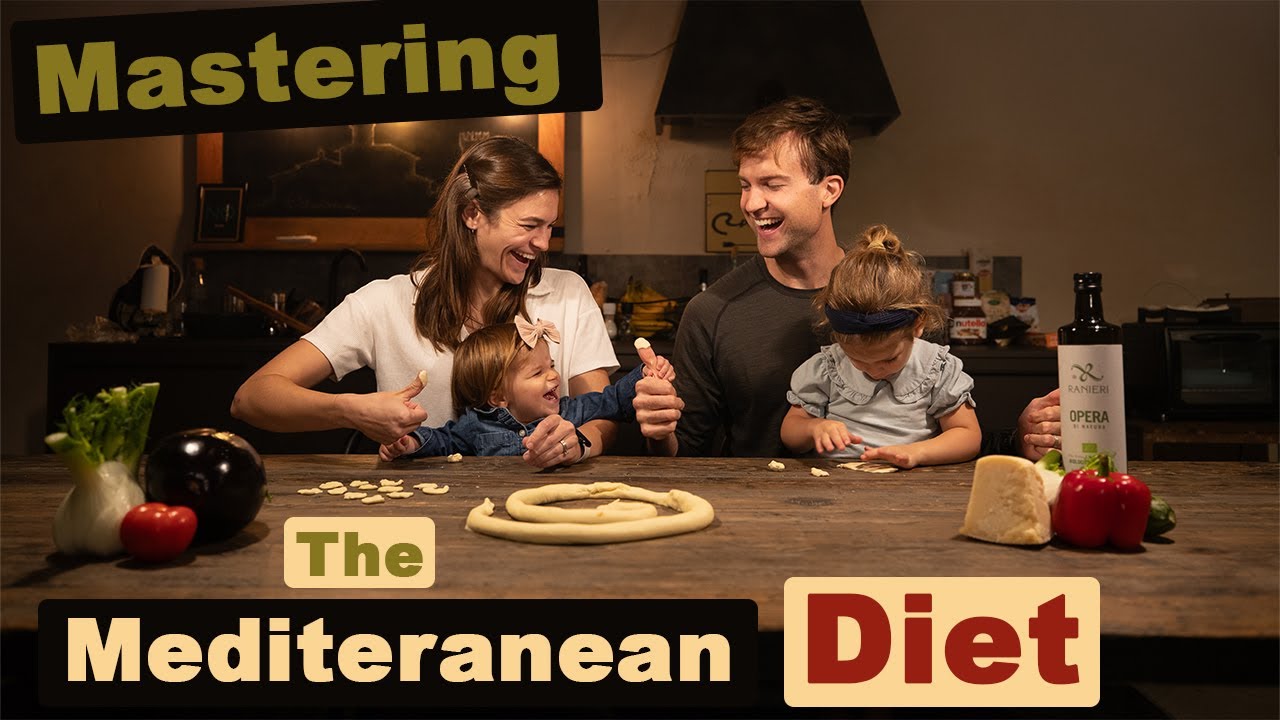
Did you vow to get healthier in 2024? Everyone’s favorite resolution may be a lot easier than it seems, all thanks to the buzzy Mediterranean diet. We’d heard endless reports of the Mediterranean diet’s health benefits, but wondered: is it really all it’s cracked up to be?
We spent a week in Tuscany to learn how Italians integrate the Mediterranean diet into their lifestyles. Join us as we source, prep, cook, and enjoy 8 dishes from 5 regions across Italy.
—
00:00 What is the Mediterranean diet?
01:36 How is olive oil made?
04:00 Ingredient prep
05:07 Cooking 5 Mediterranean dishes
08:30 Benefits to cooking as family
10:08 Secret ingredient to the Mediterranean diet
—
An enormous thank-you to Frantoio Del Pasqua for their unbelievable hospitality! Marta and her family opened their doors to us without asking for a thing in return. A kinder family we could not have met, and we are immensely grateful for their generosity. The family’s passion for sharing quality oil with the world is evident – we simply can’t recommend their farm, production facility and show-stopping “Il Magnifico” oil enough!
Also, a tremendous thanks to Tommaso Piccardi for sharing his wealth of knowledge with us. Tommaso kindly demonstrated the production process for us without any prior notice; it was a serendipitous treat to meet him!
For more info (and the best olive oil we’ve ever had): https://delpasqua.com
—
Want to cook like an Italian? Try our favorites from this week, below:
Fagioli Bianchi: https://recipekeeperonline.com/recipe/5hqxHTUm4E2s68Ja9lwYiQ
Farinata: https://recipekeeperonline.com/recipe/OPGkhvtI6kyjK6DGkfm6VA
Orecchiette with Cime di Rapa: https://recipekeeperonline.com/recipe/5zZaJKx2KUu7Krbf-5heyA
Roasted Fennel with Parmesan Cheese: https://recipekeeperonline.com/recipe/zyMtzWY_90CjHp_54LcnSA
Eggplant Caponata: https://recipekeeperonline.com/recipe/YgfI-MjpCkKPnLs3qyFvXQ
Fish al Cartoccio: https://recipekeeperonline.com/recipe/YdttARPcvUieTxFAeMEMEQ
Original recipe inspiration from Serious Eats, Family-Style Food, The Mediterranean Dish & La Cucina Italiana.
Over the past 5 weeks, our family has traveled through parts of Turkey as well as coastal and mountainous regions of Italy, trying all different kinds foods along the way. This area of the world is home to the what is widely considered the healthiest diet on the planet.
So many Americans hear the term “diet” and conjure up images of someone stepping onto a scale or measuring their waist, yearning to lose 10, 20, 50, 100 pounds. But the Mediterranean diet isn’t a hack, a fad or a quick fix to obesity or health problems;
Rather it’s what the definition of a diet is — the foods that we eat — and it’s been proven to be a sustainable long-term lifestyle with myriad health benefits. The diet, primarily the product of Italians, Spaniards and Greeks, is rooted in the consumption of large amounts of legumes, whole grains,
Fruits, vegetables and olive oil with minimal consumption of meat and moderate amounts of dairy and eggs. Having 2 young girls, we are deeply committed to instilling in them a healthy connection with food so that they never struggle with weight control or yo-yo dieting, like
So many Americans do. We wanted to take a week here in Tuscany to explore this heralded diet. We’re exploring foods from 5 different regions of Italy, pushing our culinary knowledge to new heights and gaining new skills we’ve always wanted to try. Our primarily objective, though,
Is to have our girls fall in love with food from an early age: how it’s sourced, how it’s made and how it nourishes our bodies to keep us living a long and healthy life. We have already been cooking for weeks, mostly following the tenants of the Mediterranean diet,
Having already trounced 2 giant bottles of olive oil in only 5 weeks. We actually just picked up our 3rd. Olive oil is a strangely complicated topic. Generally, extra virgin olive oil is a label that implies the lack of processing the olives with heat and pressure to obtain oil,
And rather, cold-pressing the olives to obtain the oil that they naturally produce. Many people think that provided you buy EVOO, you’re getting high quality, nutrient-rich olive oil to begin preparing your Mediterranean dishes. Unfortunately, that rich, olive-y taste
Varies wildly between EVOOs and we think that the EVOO we have always bought in the US significantly lacks the olive flavor and therefore most likely many of its nutritional benefits. To learn more, we reached out to Frantoio Del Pasqua, a family olive oil producer here in Tuscany, the Mecca of olive oil production.
We were lucky to visit their farm and production facility to better understand what makes a good olive oil. Olives are harvested off their branches with all of their leaves. The first step of the process sorts them apart from their leaves, rinses them, then crushes them, with their pits, which contain oil themselves.
That paste is separated into solid and liquids; it’s filtered, and then it’s ready to eat. The remaining solids, which still contain about 10% of an olive’s oil, are bought by other companies that can apply heat and/or chemicals to the byproduct to make non-extra virgin olive oils.
What we learned is that EVOO is just a process for obtaining the oil from olives, achieved through owning the right machines. But the nutrients of olive oil, and that coveted flavor, is achieved in the roots of the olive trees on farms across Italy and the world. Only quality and nutrient-rich olives can
Produce quality and nutrient-rich olive oils. It seems so simple a concept, yet most of us buy olive oil off the supermarket shelf, with no earthly clue where the product comes from. Finding single-source olive oils from farms like Frantoio Del Pasqua provides a clarity to the nutrition that we’re buying.
We can see the product in the ground, taste the olives at their source and trust that we’re getting the nutritional powerhouse that we were promised. Thank you to Marta, for her unbelievable hospitality and openness to sharing her family’s operation with us, and to Tommaso,
Her machining expert for kindly showing us how the entire process works, from branch to oil. We walked a mile south of our Arezzo apartment to a biweekly farmer’s market to get all of our produce. The apartment we’re staying in is in the historical center of Arezzo, which is a walled city.
It’s actually really interesting here. It seems like the local government has banned big-name supermarkets from coming into the city center, so it’s allowed a local grocer scene to really flourish. And so, on every corner, there are these little Italian specialty shops that sell
Pasta and cheese and meats and a little bit of produce. They all seem to be one-off shops. We have veggies, lots of veggies. For protein, we have chickpea flour, beans, chicken and seafood. Then we have olive oil, polenta, semolina flour and cheese. The crux of the Mediterranean diet is simplicity:
Whole food ingredients, each with their own nutritional benefits. Vinegars help regulate glycemic indexes, fruits and vegetables have anti-inflammatory antioxidants and EVOO has properties that are conducive to healthy brains and hearts. Finally, we had all of our ingredients together. 5 days of cooking 8 different dishes from 5 different regions.
First up, fagioli bianchi and farinata from the adjacent regions of Fagioli is a delightfully satisfying dish, made primarily with beans, herbs, kale, shallots and broth. It’s no surprise that our first cooking act was to measure out a couple of tablespoons of olive oil to get our shallots cooking. Olive
Oil is in all 8 dishes that we cooked, so it’s truly indispensable to this cuisine. Farinata is a unique dish, made from chickpea flour. It comes out like an in between of a quiche and a pizza crust. It’s really its own thing, but it’s high in protein and we weren’t shy
About adding parmesan and olive oil to the top of our slices. We snacked on this while cooking throughout the next few days. Day 2 was all about fulfilling a bucket-list item for us: cooking pasta from scratch in Italy. We had no instructor, just a bag of semolina flour, some water,
A pinch of salt and a prayer. We’d always failed to make pasta at home in Texas, but it turns out, with the right flour, it’s kind of easy… So easy, in fact… a baby can do it! We made an orecchiette recipe.
Orecchiette is one of our favorite pastas, and it’s an easy one to shape by hand because you just pull off a small piece and press it onto your thumb. We all 4 sat together for about 45 minutes and shaped our couple
Hundred orecchiette before splashing them into the salted water for just 3 minutes. The dish was topped off with an olive oil and anchovy sauce, turnip greens, some toasted, parmesan-crusted bread pieces, and a few dollops of ricotta. We were honestly blown away by the taste and texture.
We loved it so much, we made it again a couple of days after, then a third time in Milan a couple weeks later. Store-bought, dried pasta and handmade pasta bear no resemblance at all — consider us converted. Day 3 we went a little rogue and made a family favorite recipe for chicken-veggie meatballs.
Beyond their generous use of vegetables, they aren’t particularly “Mediterranean,” but we needed a protein to complement our highlight side dish: roasted parmesan fennel. This recipe highlights the simplicity of the Mediterranean diet. It doesn’t have to be complicated to be delicious and nutritious.
Fennel is bountifully available in Italy, and we were all about it because it’s expensive at home. Day 4 we made This clam dish looks beautiful, but it was a complete flop, because we bought dry pasta for it at the beginning of the week…
And after tasting the sweet glory of handmade pasta, we felt like traitors. Frankly, our white wine sauce was bland as well, so we’ll leave this one to the Naples natives. However, a drizzle of olive oil and some parmesan cheese saved the day! Our final day, we made fish al cartoccio and eggplant caponata.
This method of wrapping the fish in paper with vegetables and aromatics really kept the protein tender and moist. The caponata was something we’d never tried. It’s a wonderful side dish chock-full of vegetables, though surprisingly rich in flavor. Prepping ingredients to be cooked as a family is so rewarding because it has so
Many different benefits — and the first is that our children learn what is actually in their food. When they grocery shop and prepare ingredients with us, they know exactly what they’re eating and how to tell us what they’re enjoying. Second, it’s a physical task that keeps their minds and hands busy
And even works on motor-skill development. Our eldest daughter started 2 different cooking tasks with us when she was about 18 months old — pulling kale and peeling boiled eggs — and it really set off in her a passion for the kitchen. She’s taken ownership over things like that,
And thinks of them as her tasks — her contributions — to what we make. The third major benefit of cooking together is that kids can develop an appreciation for the time that goes into making a dish. A lot of dishes take 1-2 hours
To complete — sometimes much longer — and if kids just show up to the table ready to eat, then they’re not going to savor the food quite as much as if they saw it go from raw to plated, and better still, if they helped contribute to that process.
The shop, the prep, the cook — they’re all fun. But nothing is more rewarding than when you finally sit down after working together to see how everything turned out. We are amateurs at plating, and have spent very little time developing this skill;
But as our girls have gotten older and have started to develop something resembling patience, it’s really fun to slow down at the end of a cook and make sure that all of the plates look nice and that all of the final touches have been made. This week was delicious and fun,
No doubt. But through our research and our experience we learned that there is a secret ingredient to the Mediterranean diet that has nothing to do with food. People from these regions — most boasting do exactly what we did this week, but as a lifestyle.
They take the time to source quality, whole ingredients and they stand on their feet for hours a day preparing their meals and when they do finally sit down to eat, they’re sitting down with their families and their communities, sharing the meal over a long period of time, savoring the food.
This connection between what we eat and creating positive memories and experiences around food is so integral to the success of the Mediterranean diet. So, slow down, grab yourself a bottle of olive oil and go have some fun with your family.
1 Comment
I am from Argentina and your videos make me very happy, they are the healthiest content on this platform I love them