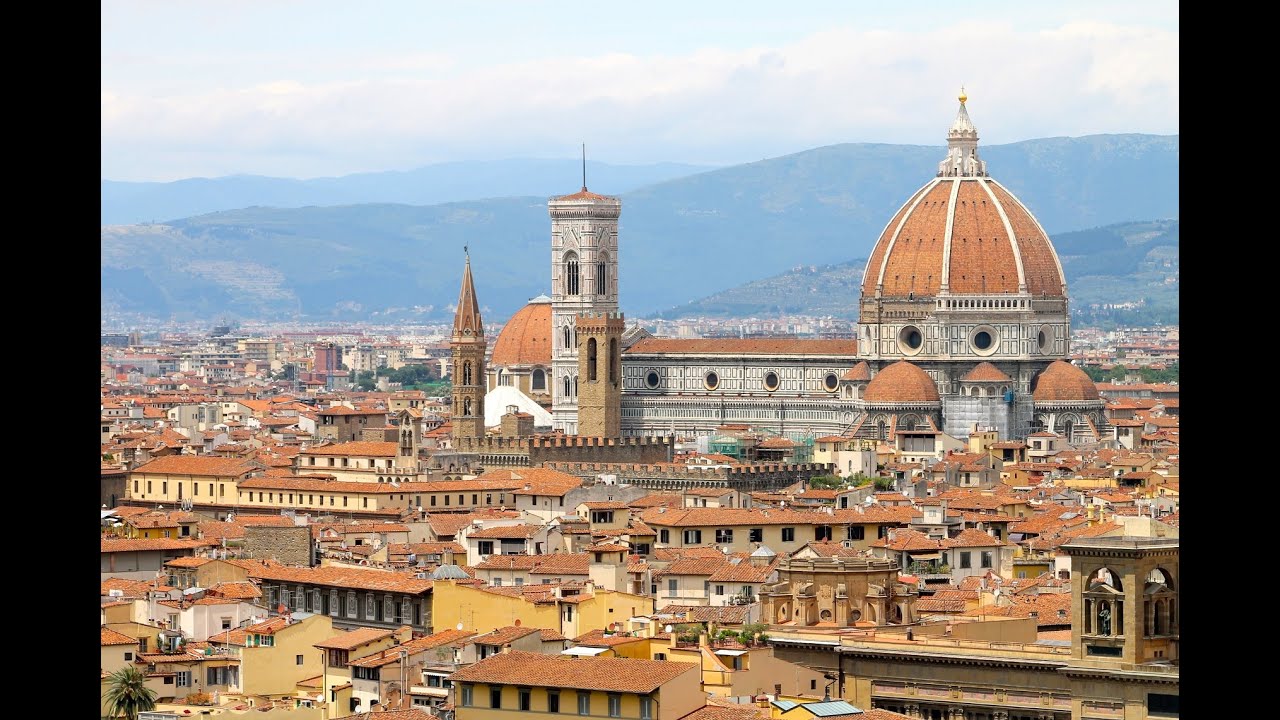
Florence, is the capital city of the Italian region of Tuscany and of the province of Florence. It is the most populous city in Tuscany, with approximately 370,000 inhabitants, expanding to over 1.5 million in the metropolitan area. Florence is famous for its history. A centre of medieval European trade and finance and one of the wealthiest cities of the time, Florence is considered the birthplace of the Renaissance, and has been called “the Athens of the Middle Ages”. A turbulent political history includes periods of rule by the powerful Medici family, and numerous religious and republican revolutions. From 1865 to 1871 the city was also the capital of the recently established Kingdom of Italy. The historic centre of Florence attracts millions of tourists each year, and Euromonitor International ranked the city as the world’s 72nd most visited in 2009, with 1,685,000 visitors. It was declared a World Heritage Site by UNESCO in 1982. Due to Florence’s artistic and architectural heritage, it has been ranked by Forbes as one of the most beautiful cities in the world, and the city is noted for its history, culture, Renaissance art and architecture and monuments. The city also contains numerous museums and art galleries, such as the Uffizi Gallery and the Pitti Palace, amongst others, and still exerts an influence in the fields of art, culture and politics. Florence is also an important city in Italian fashion, being ranked within the top fifty fashion capitals of the world; furthermore, it is also a major national economic centre, being a tourist and industrial hub. In 2008, the city had the 17th highest average income in Italy. Florence lies in a basin formed by the hills of Careggi, Fiesole, Settignano, Arcetri, Poggio Imperiale and Bellosguardo (Florence). The Arno river and three other minor rivers flow through it. Tourism is the most significant industry in central Florence. From April to October, tourists outnumber local population. Tickets to the Uffizi and Accademia museums are regularly sold out and large groups regularly fill the basilicas of Santa Croce and Santa Maria Novella, both of which charge for entry. In 2010, readers of Travel + Leisure magazine ranked the city as their third favourite tourist destination. Studies by Euromonitor International have concluded that cultural and history-oriented tourism is generating significantly increased spending throughout Europe. Florence is believed to have the greatest concentration of art (in proportion to its size) in the world. Thus, cultural tourism is particularly strong, with world-renowned museums such as the Uffizi selling over 1.6 million tickets a year. The city’s convention centre facilities were restructured during the 1990s and host exhibitions, conferences, meetings, social forums, concerts and other events all year. Florence has approximately 35,000 hotel beds and 23,000 other accommodation facilities (campsites, guesthouses, youth hostels and farmhouses), giving potential for overall stays to exceed 10 million visitor/nights a year. Visitors also include thousands of day-trippers brought in by cruise ships (to Livorno) and by road and rail. In 2007, the city ranked as the world’s 59th most visited city, with over 1.729 million arrivals for the year. It has been estimated that just under one-third of tourists are Italians, the remainder comprising Americans (20%), Germans (13%), Japanese (8%), Britons (7.8%), French (5.7%) and Spaniards (5%). Florence has a legendary artistic heritage. Cimabue and Giotto, the fathers of Italian painting, lived in Florence as well as Arnolfo and Andrea Pisano, renewers of architecture and sculpture; Brunelleschi, Donatello and Masaccio, forefathers of the Renaissance, Ghiberti and the Della Robbias, Filippo Lippi and Angelico; Botticelli, Paolo Uccello and the universal genius of Leonardo da Vinci and Michelangelo. Their works, together with those of many other generations of artists, are gathered in the several museums of the town: the Uffizi Gallery, the Palatina gallery with the paintings of the “Golden Ages”, the Bargello with the sculptures of the Renaissance, the museum of San Marco with Fra Angelico’s works, the Academy, the chapels of the Medicis Buonarroti’s house with the sculptures of Michelangelo, the following museums: Bardini, Horne, Stibbert, Romano, Corsini, The Gallery of Modern Art, the Museo dell’Opera del Duomo, the museum of Silverware and the museum of Precious Stones.