
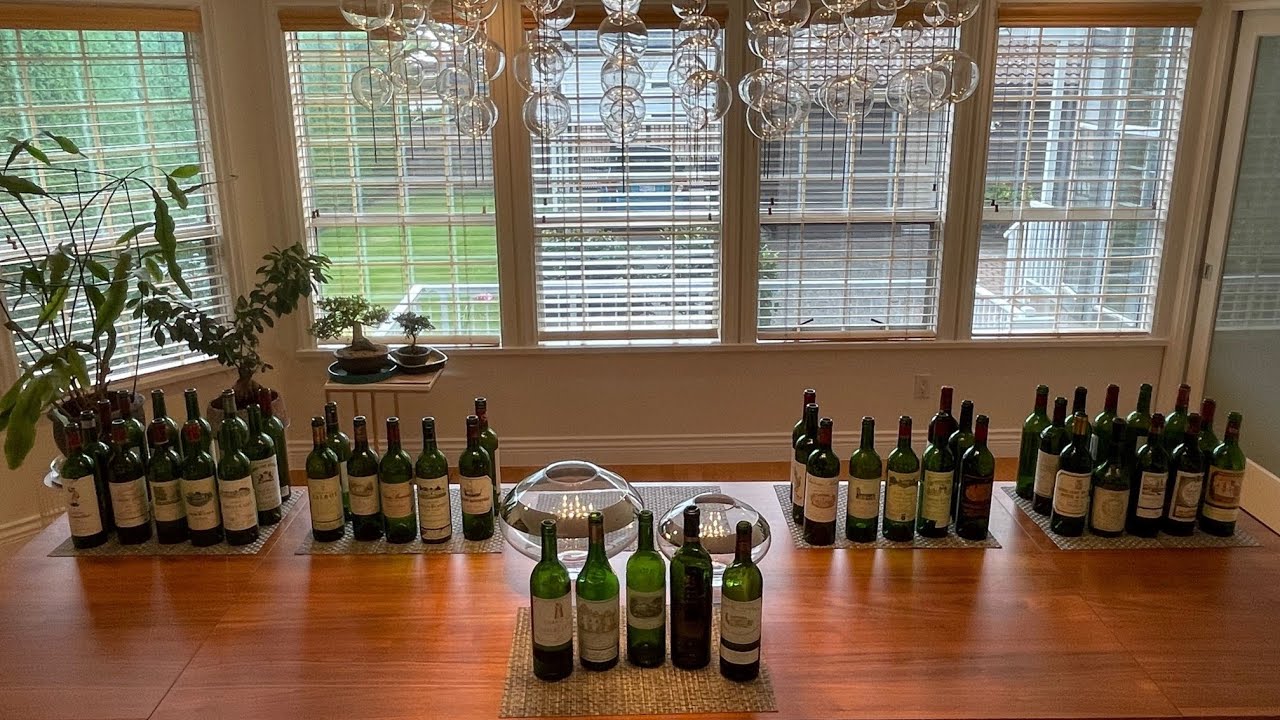
This is the last in my series talking about the 1855 Classification System.
The 1855 Classification System is a ranking of each wine based on the price per barrel. Given that, any reclassification of Growth wines should not be based on (subjective) opinions of quality but on (objective) price per bottle.
So my methodology is to take the prices, where available, for each wine for the last 6 years. I will reclassify again every 3 years going forward. Some wines are not available in B.C. and not each wine is available each year so I have to estimate their price per bottle based on what I can find in the internet.
In my reclassification, I have included 2nd wines of the 1st growths (which did not exist in 1855) and wines in the Pessac Leognan region, which were overlooked because they were not known to the judges, who mostly concentrated on Left Bank wines except for Haut Brion, which had notoriety because of export to England. Based on my methodology, I have come up with 5 growth levels where I see some separation between one level of pricing and another. I am not as sure about the 5th growth wines as many wines in that group are at a price point where their price is very similar to many other (non growth) wines. So here is my reclassification of Growth wines in 2022. (brackets show their growth level in the 1855 Classification System. As with the 1855 Classification System, I have listed the wines based on price per bottle within each level, noting that for some wines, I do not have full price information. But as I continue to reclassify over the years, trends will be more apparent and it will highlight how tough it is to keep a level for 10, let alone 100 years.
One wine I did leave out was Les Forts de Latour – again very hard to get pricing or estimate since they don’t release en primeur but my guess is that it would be somewhere in the 2nd growth category. If I can figure it out, I might make an addition (just like Cantemerle in the 1855 Classification System) but I will wait for others comments before I make any more changes.
1st Growths
Chateau Lafite – Pauillac (1)
Chateau Latour – Pauillac (1)
Chateau Margaux – Margaux (1)
Chateau Haut Brion – Pessac Leognan (1)
Chateau Mouton Rothschold – Pauillac (1)
2nd Growths
Chateau La Mission Haut Brion – Pessac Leognan (NR)
Chateau Palmer – Margaux (3)
Chateau Leoville Las Cases – St. Julien (2)
Carruades de Lafite – Pauillac (NR) – 2nd wine of Chateau Lafite
Chateau Cos D’Estournel – St. Estephe (2)
Chateau Ducru Beaucaillou – St. Julien (2)
Le Petit Mouton -Pauillac (NR)) – 2nd wine of Mouton Rothschild
Pavillon Rouge Margaux – Margaux – 2nd wine of Chateau Margaux
3rd Growths
Chateau Pichon Baron – Pauillac (2)
Chateau Pichon Lalande – Pauillac (2)
Chateau Montrose – St. Estephe (2)
Le Clarence de Haut Brion – Pessac Leognan (NR) – 2nd wine of Haut Brion
Chateau Pontet Canet – Pauillac (5)
Chateau Lynch Bages – Pauillac (5)
Chateau Pape Clement – Pessac Leognan (NR)
Chateau Haut Bailly – Pessac Leognan (NR)
Chateau Smith Haut Lafitte – Pessac Leognan (NR)
4th Growths
Chateau Calon Segur – St. Estephe (3)
Chateau Leoville Poyferre – St. Julien (2)
Alter Ego de Palmer – Margaux (NR) – 2nd wine of Palmer
Chateau Rauzan Segla – Margaux (2)
Chateau Leoville Barton – St. Julien (2)
Chateau Beychevelle – St. Julien (4)
Chateau Lascombes – Margaux (3)
Chateau Grand Puy Lacoste – Pauillac (5)
Chateau Les Carmes Haut Brion – Pessac Leognan (NR)
Chateau Duhart Milon – Pauillac (4)
Chateau Gruaud Larose – St. Julien (2)
Chapelle La Mission Haut Brion – Pessac Leognan (NR) – 2nd wine of La Mission Haut Brion
Chateau Brane Cantenac – Margaux (2)
Chateau Clerc Milon – Pauillac (5)
5th Growths
Chateau Dufort Vivens – Margaux (2)
Chateau Domaine de Chevalier – Pessac Leognan (NR)
Chateau D’Issan – Margaux (3)
Chateau Talbot – St. Julien (4)
Chateau Giscours – Margaux (3)
Chateau Malescot St. Exupery – Margaux (3)
Chateau Haut Batailley – Pauillac (5)
Chateau St. Pierre – St. Julien (4)
I am sure I will get a lot of comments but please note, I am not looking at the quality of the wine. I am doing a calculation of their average price per bottle over the last 6 years, which is the same methodology used to classify wines in 1855. So unless I am forgetting a wine or you have some additional price information, I think this is a pretty accurate reflection of the market. I do understand there is variation in price in each market but by and large, this should be close.