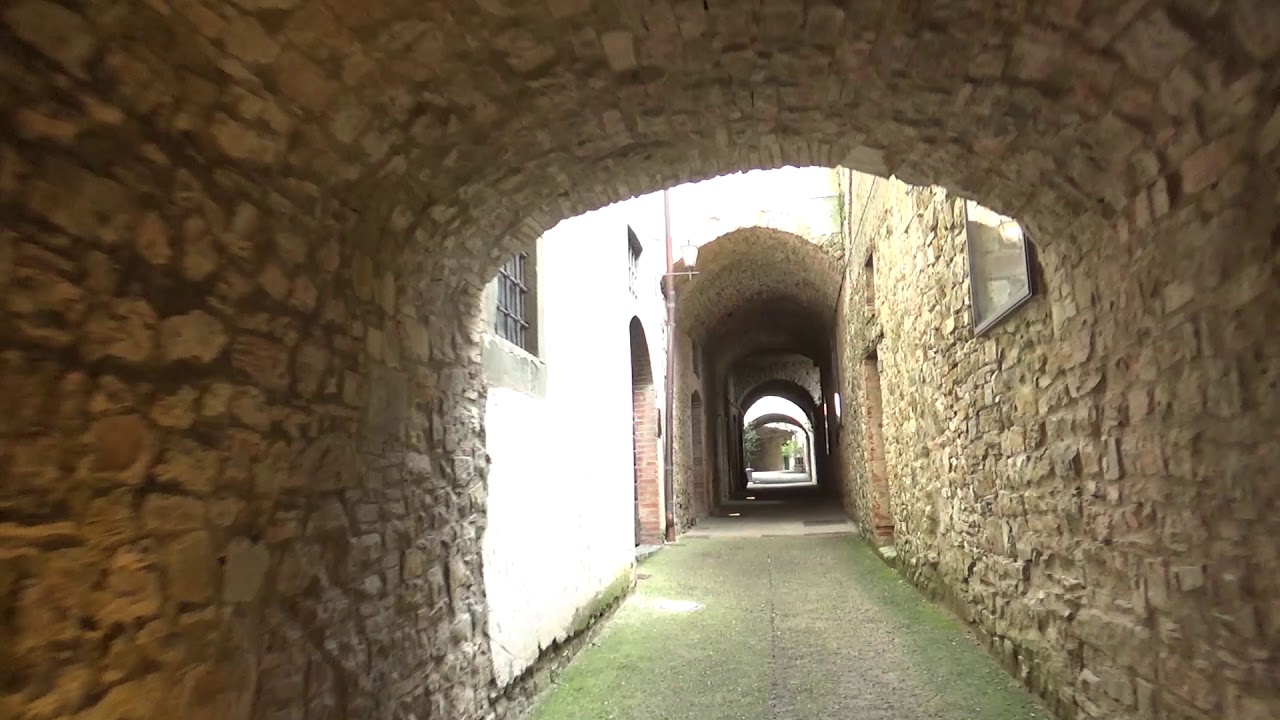
Castellina in Chianti is an Italian town in the province of Siena in Tuscany. The mound of Montecalvario, an Etruscan tomb located near the town and dated 7th-6th century BC. and the Necropoli del Poggino, located near Fonterutoli, attest to the presence of the Etruscans in the area. According to the excavation campaigns carried out from the eighties in the Castellina area, the presence of a large town was certain; inhabited center which was to be located in Salinvolpe, a few hundred meters from today’s Castellina. There are more testimonies from the medieval era. The first certain documents date back to the 11th century when the area was a fief of the nobles of the Castello del Trebbio, a family related to the Counts Guidi. In the twelfth century Castellina came under the influence of Florence and in 1193 an agreement was signed between the lords of Trebbio and Florence in which the Florentines were allowed to militarily preside over the castles of Trebbio and Castiglione (now Castellina). After the Lodo di Poggibonsi of 1203, an act in which the Chianti borders between Florence and Siena were sanctioned, Castellina found itself to be one of the most important Florentine outposts since it was located on the most direct road that put the two rival cities in communication. In the 14th century Castellina became one of the cornerstones of the Lega del Chianti, so much so that it was the head of one of the third parties in which it was divided. The Terziere di Castellina administered the part of the Chianti that slopes down towards the Valdelsa. In 1397 it was sacked and completely burnt by the troops of the Duke of Milan Gian Galeazzo Visconti commanded by Alberico da Barbiano. The works, however, had to proceed slowly so that in 1430 the workers of the Opera del Duomo were commissioned to fortify Castellina together with Staggia Senese and Rèncine; Filippo Brunelleschi was sent to establish the type of necessary interventions and to estimate the costs. In 1452 the walls of Castellina suffered the assault of the Aragonese troops but resisted. Very differently things went in 1478 during the second Aragonese invasion of Chianti when Castellina was conquered by the Sienese and Neapolitan troops. On that occasion the defense of Castellina was personally directed by Giuliano da Sangallo while Francesco di Giorgio Martini commanded the besiegers. The Sienese occupation lasted until 1483 when it was resumed by the Florentines. In 1774 with the administrative reform of the Grand Duke Pietro Leopoldo, Castellina became the seat of the Community from which the current municipality will derive.