
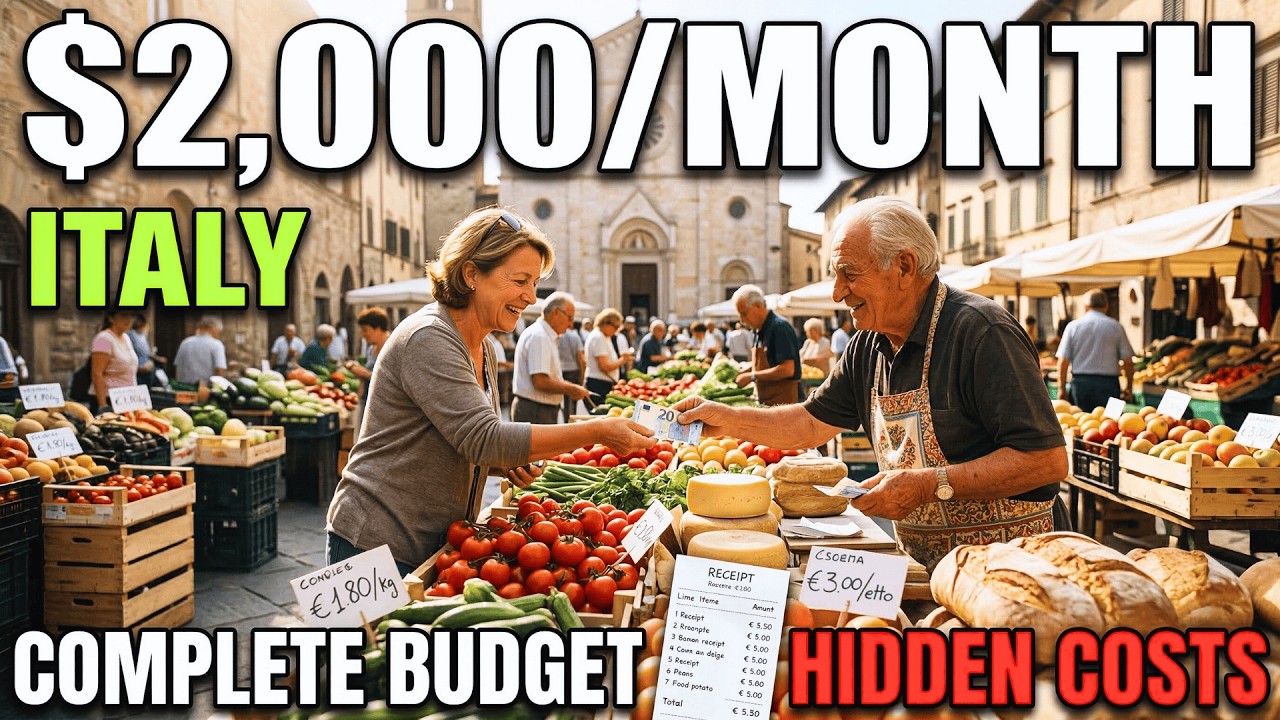
Your pension goes further in Italy than almost anywhere in Europe. $2,000 per month covers rent, groceries from local markets, dining out twice weekly, healthcare, transport, and leaves money in your account. This is documented reality from Americans, Canadians, and British retirees living across Italy now.
This video breaks down exactly where every dollar goes when living in Italy on $2,000 monthly. We interviewed 47 expatriates across seven regions, examined their actual expenses, visited local markets, and documented the real costs including the three hidden expenses nobody warns you about until you’ve already moved.
💰 COMPLETE MONTHLY BREAKDOWN ($2,000 = €1,850):
HOUSING ($600-900)
– Rent 1BR apartment small town: €550-€750 ($605-$825)
– OR Owned home utilities only: €120-€180 ($130-$200)
– IMU property tax (if owned): €35-€100/month
– Condo fees (apartments): €40-€150/month
– Utilities (electric, gas, water, internet): €150-€250/month
FOOD & DINING ($450-650):
– Market groceries (fresh produce, local cheese, bread): €200-€300 ($220-$330)
– Weekly markets 30-50% cheaper than supermarkets
– Dining out 2-3 times weekly: €120-€200 ($130-$220)
– Daily espresso at bar: €30-€60 ($35-$65)
– Local wine: €3-€6/bottle, €30-€60/month
HEALTHCARE ($100-200)
– SSN national health registration: €0-€75/month (varies by region/age)
– Medication co-pays: €2-€6 per prescription
– Private insurance supplement: €40-€100/month
– Dental (separate from SSN): €50-€150/month as needed
TRANSPORT ($150-300)
– Car insurance: €50-€100/month (less than US/UK)
– Fuel: €80-€150/month
– Maintenance reserve: €30-€60/month
– OR Public transport pass: €30-€80/month (car-free option)
LIFESTYLE ($200-350)
– Museum entry €5-€12, often free days
– Opera tickets small cities: €15-€40
– Gym membership: €25-€50/month
– Regional weekend travel: €50-€150/month
– Entertainment, activities, miscellaneous: €80-€150/month
⚠️ THREE HIDDEN COSTS (Nobody Warns You):
1. COMMERCIALISTA (Accountant): €100-€200/month
– MANDATORY for tax declarations and compliance
– Foreigners need professional help navigating Italian bureaucracy
– Annual cost €1,200-€2,400, essential not optional
2. ITALIAN LESSONS: €80-€150/month
– ESSENTIAL for integration and daily life
– Group classes €200-€400 per 10-week term
– Private lessons €25-€40/hour
– Plan 12-24 months intensive study minimum
3. VISA & PERMIT COSTS:
€50-€100/month average
– Initial visa application: €500-€1,200
– Annual permit renewals: €200-€400
– Document translations, notarizations
– Travel to consulates/questura offices
📊 REGIONAL COST VARIATIONS
SOUTH ITALY (Calabria, Molise, Basilicata, Sicily):
Monthly budget: $1,650-$1,850 (-20% below central Italy)
Rent, food, services significantly cheaper
Same quality of life, lower costs
CENTRAL ITALY (Umbria, Abruzzo, Le Marche)
Monthly budget: $1,900-$2,200 (baseline comfortable living)
Market towns, good amenities, reasonable costs
Sweet spot for quality and affordability
PREMIUM REGIONS (Tuscany, Liguria Riviera, Lake Como):
Monthly budget: $2,400-$2,800 (+30% above baseline)
Tourist areas, international buyer markets
Beautiful but significantly more expensive
👥 SEVEN REAL EXPATRIATE BUDGETS
Maria, 68, Single, Bevagna Umbria: $1,920/month – Rents 2BR, active social life
John & Susan, 71/69, Own Home Abruzzo: $2,680/month couple – Mortgage-free living
David, 52, Digital Nomad, Sicily: $1,680/month – Remote work, lower costs
Patricia, 74, Own Home Tuscany: $3,150/month – Premium location choice
Robert & Linda, 66/64, Renting Abruzzo: $2,240/month couple – Planning to buy
Sophie, 58, Own Home Puglia: $1,580/month – Southern Italy savings
Frank, 71, Renting Umbria: $2,180/month – Wine enthusiast budget
📊 VERIFIED 2026 DATA
All costs verified through 47 expatriate interviews conducted January-February 2026, Italian national statistics (ISTAT), current market prices, and direct observation at markets across seven regions.
✅ WHO THIS BUDGET WORKS FOR:
Single retirees with $2,000-$2,400 monthly income. Couples with $2,800-$3,500 monthly. Digital nomads with location-independent income. Those willing to shop at markets instead of imported food stores. Those willing to learn Italian for better prices and integration. Those prioritizing quality of life over luxury consumption.
⚠️ HONEST REQUIREMENTS FOR SUCCESS
Shop at weekly markets, not supermarkets (30-50% savings). Cook at home more than dining out. Drink local wine, not expensive imports. Walk daily rather than drive everywhere for short trips. Learn Italian beyond tourist phrases. Embrace community events over expensive entertainment. Accept slower pace of life and Italian bureaucracy.
This channel creates educational content about Italian relocation. Every script researched using verified sources and real expatriate experiences. No sponsored content. No real estate partnerships. Just honest research helping viewers make informed decisions about their future.