
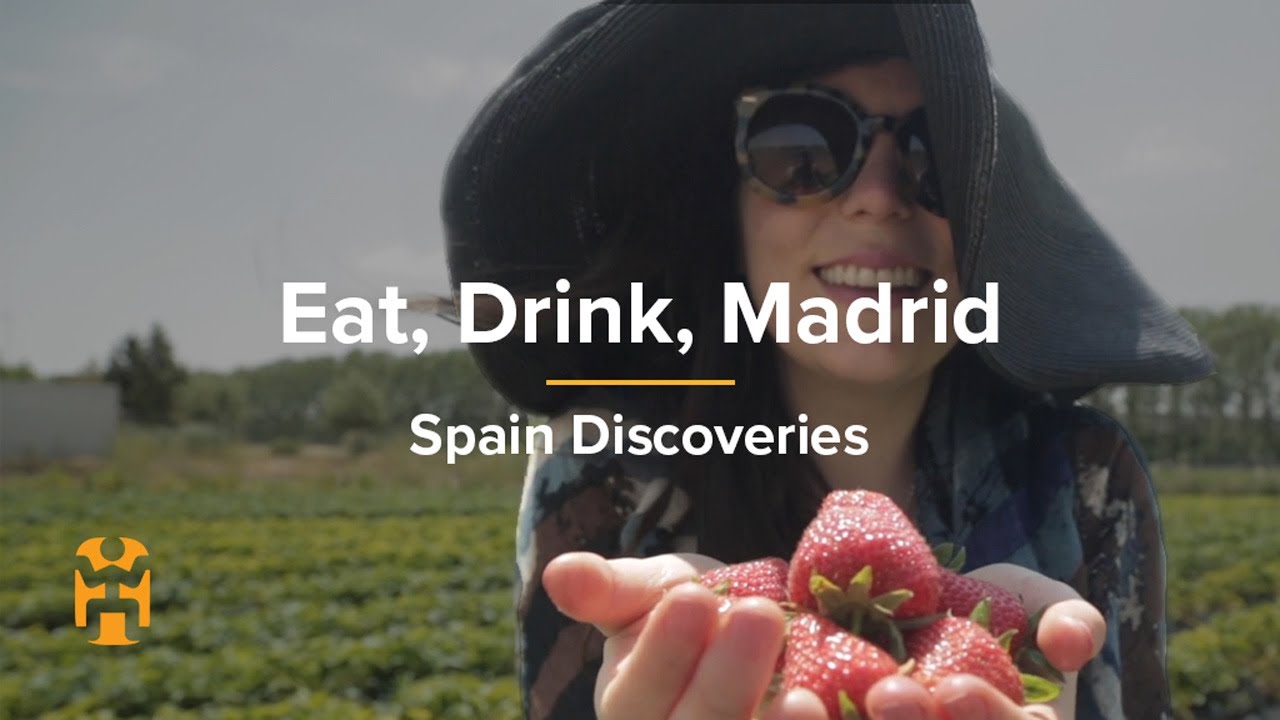
Travel to Madrid with World Nomads’ Nicola Moores as she discovers the local produce of Spain. Join Nicola as she discovers how to bring ciders to life, and how to distinguish between six different types of strawberries. Nicola also visits the second largest fish market in the world – Mercado de San Miguel – where she tests gooseneck barnacles – a unique, and almost phallic in appearance, local delicacy.
For more visit:
——
Transcript
Speaker 2 (00:16):
So here I am in Madrid and they kind of ethnic neighborhood of Lavapiés. Yes, strolling the streets under the sun. Um, my week is coming to an end, this is my second to last day and this video for me is all about capturing my top foodie moments that I’m going to take home with me to New Zealand.
Speaker 3 (00:38):
Nicholas, the larger than life Cider Maestro, he served me up some cider but as opposed to using the machine in most places. He pours it from a great height into the glass splat as it everywhere. But apparently this kind of brings the cider alive and unleashes its aromas and you have to scull it all, if you don’t scull it, just kind of decorate the pavement with the rest. Cherry serenade, walking on the street. Local dude’s breaks out an opera and three languages serenades me and gives me cherries.
Speaker 3 (01:38):
Here I am in Madrid and I find out that it has a second largest fish market in the world, which is just crazy cause when you think of fish markets you think of busy port cities like Singapore, Tokyo, Sydney, and not like landlocked Madrid. So of course I have to try some of the seafood that’s on off that. And the craziest thing I try are these [inaudible], which are like gooseneck, barnacles. Most hideous thing I’ve ever come across, I’ve almost phallic in appearance and they taste like you’ve swallowed the ocean and yet they go for like hundreds of euros a plate because they’re so dangerous to harvest. It’s very salty and it’s the shear taste of the sea in your mouth, and it’s gone, and that’s it…and it costs a fortune.
Speaker 2 (02:30):
So music, the oldest cocktail bar in Madrid. I was amazed by this. Skillful hands of Jose’s the mixologist, you know, spinning, shaking, swirling, sliding a cocktail after cocktail. He’s at the Tom cruise of Madrid.
Speaker 3 (02:56):
We took the El Tren de la Fresa or the strawberry train on the second oldest railway in Spain out to the local town of aranjuez, the home of the Royal palace. And we ate these strawberries in the field with a local third-generation Grella Fernanda and explained the difference between frezas the little strawberries and frezones and got us to kind of distinguish between six different varieties and what eating these strawberries in the field under the sunshine. They just bursting with flavor.
Speaker 3 (03:36):
We’re saying the oldest restaurant in the world founded in 1725 you really do feel like you’re back in the middle ages. We met with Carlos, the third generation owner and he showed us a house special like suckling pig, the Cocini LA sourdough, which has only lived for three weeks and in his coat for three hours and that original wood five and four from 1725 was a low light. That becomes a highlight. The most confused lunch ever. Six courses paired with sickly white wines. We started off good traditional Spanish cuisine. They in somehow moved to Italy, then Japan with dumplings and tempura over to France with this kind of rich truffle soup with raw egg.
Speaker 2 (04:24):
and next I don’t know, and like my life, I don’t know where I’m going so cheers to like being a nomad. He was trained by the Royal family. Some of the, it used to be a lawyer. I left that job behind, and now he’s been working here for over 10 years.
Speaker 3 (04:55):
Off the bell restaurant. The Rena Sophia, beautiful gardens, classy atmosphere, top chefs, and I’m served pulmans food. You know, I’m served [inaudible], I’m served by data’s [inaudible] and I realized that this is all just country kind of poor man’s food. There’s been glorified favorites now, and that is what Spanish food is. It’s one about using local and seasonal ingredients and making do with what you have. And these dishes have become the symbols of Spanish food today.