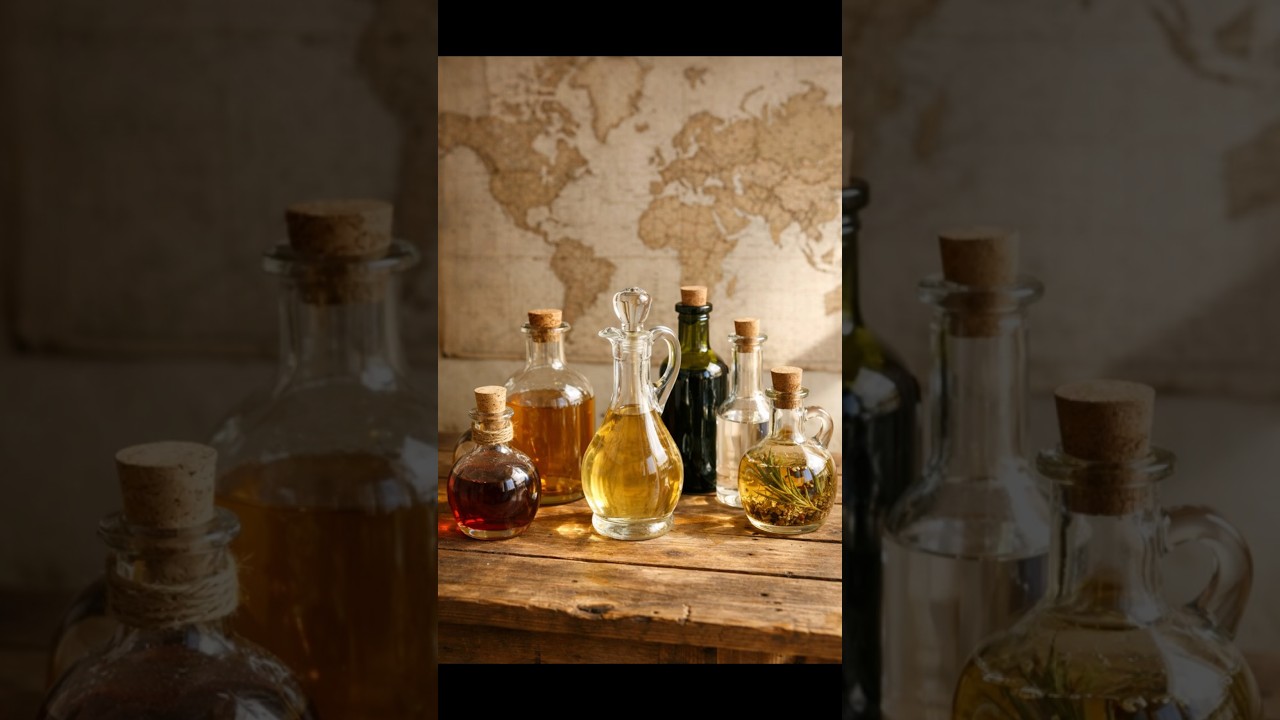
Vinegar is one of the oldest fermented products used by humans. It forms naturally when alcohol is exposed to oxygen and converted by acetic acid bacteria. Because of this process, vinegar was most likely not invented deliberately but discovered by accident during the early production of fermented drinks such as wine and beer.
Some of the earliest written references to sour fermented liquids appear in Babylon about five thousand years ago. Ancient Babylonian sources describe acidic liquids produced from fermented fruits and beer, suggesting that people were already familiar with the transformation of alcohol into sour liquids.
Archaeology shows that fermented beverages were produced even earlier. At Hajji Firuz Tepe in present-day Iran, chemical analysis of pottery jars revealed wine residues dating to about seven thousand years ago. In Armenia, the Areni-1 cave revealed a winery complex dating to roughly six thousand years ago, including fermentation vessels, grape seeds, and pressing installations. These discoveries show that fermentation technologies were already well developed in the ancient Near East.
In ancient Egypt, hundreds of wine jars discovered at Abydos demonstrate that fermented drinks were produced and stored on a large scale. By the Roman period, vinegar had become a common part of everyday life. Roman authors such as Cato, Columella, and Dioscorides wrote about its uses both in cooking and in medicine. Vinegar was used in sauces, food preservation, and medical preparations.
In East Asia, vinegar developed along a different path. In China, rice fermentation produced rice vinegar that became an important ingredient in both cuisine and traditional medicine. The agricultural text Qimin Yaoshu, written in the sixth century, records several methods for producing rice vinegar and preserving foods with fermented liquids.
During the Middle Ages, vinegar production expanded throughout Europe. Wine vinegar became especially common in France, and the English word vinegar ultimately derives from the French vinaigre, meaning “sour wine.” In Italy, a unique tradition developed in the region of Modena, where grape must was slowly aged in wooden barrels to produce what is now known as balsamic vinegar.
In the nineteenth century, Louis Pasteur demonstrated scientifically that vinegar forms through the action of acetic acid bacteria converting alcohol into acetic acid. His work helped explain fermentation processes and allowed vinegar production to be better controlled.
Today vinegar continues to be produced worldwide from many fermented ingredients including grapes, apples, rice, and grains. Although it began as an accidental result of fermentation thousands of years ago, it remains an essential ingredient in cuisines and food preservation traditions around the world.
Sources
• Cato the Elder. De Agri Cultura. 2nd century BC.
• Columella. De Re Rustica. 1st century AD.
• Dioscorides. De Materia Medica. 1st century AD.
• Jia Sixie. Qimin Yaoshu. 6th century.
• McGovern, Patrick E. Ancient Wine: The Search for the Origins of Viniculture. Princeton University Press.
• McGee, Harold. On Food and Cooking: The Science and Lore of the Kitchen. Scribner.
• Barnard, Hans et al. “Chemical Evidence for Wine Production Around 4000 BCE in the Late Chalcolithic Near Eastern Highlands.” Journal of Archaeological Science, 2011.
• McGovern, Patrick E. et al. “Neolithic Resinated Wine.” Nature, 1996.
• Archaeological discoveries:
o Hajji Firuz Tepe wine residues (Iran)
o Areni-1 winery (Armenia)
o Roman wine amphorae and storage finds from Pompeii (Italy)