
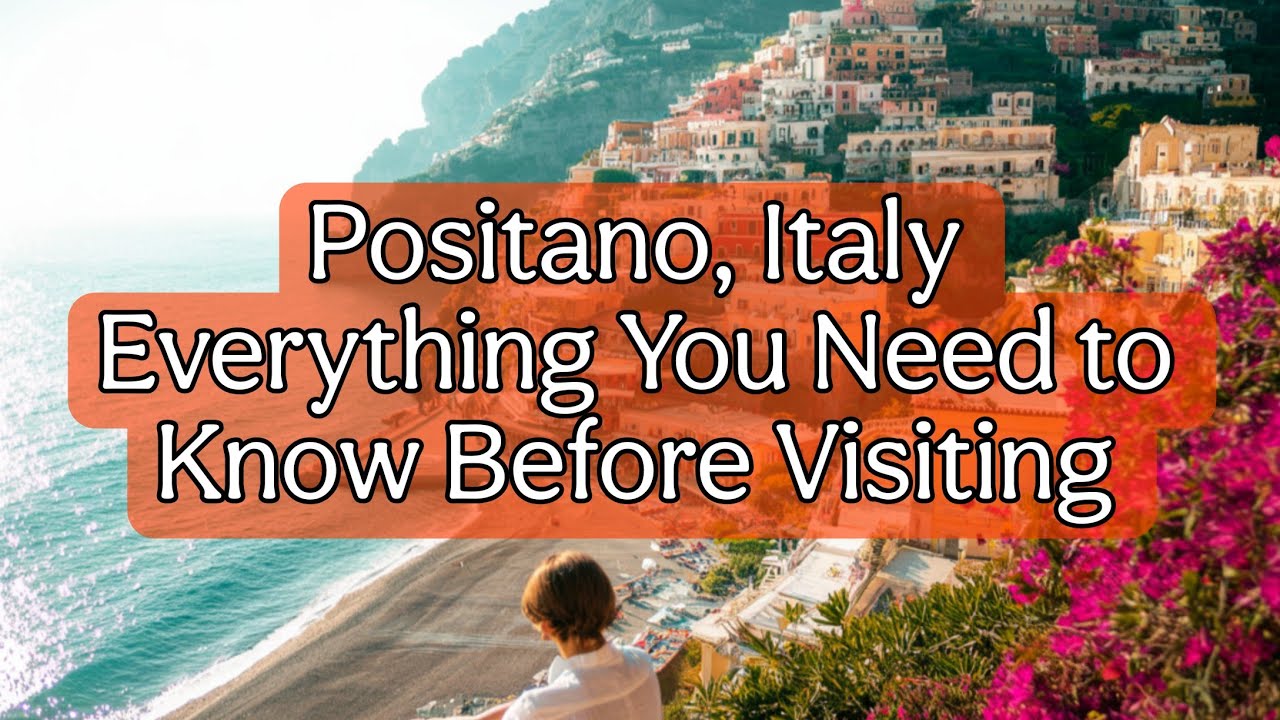
Positano is a stunning seaside town on Italy’s Amalfi Coast in Campania, rising in steep terraces down to the Tyrrhenian Sea. It has about 3,600–4,000 residentsyear-round.
History & Founding
The town has ancient roots and has been a holiday destination since the time of the Roman Empire, with Roman villa ruins found in the bay.
• Local legend says the name Positano comes from the nymph Pasitea, whom the god Poseidon loved and for whom he founded the town.
• During the Middle Ages it was a port of the maritime Republic of Amalfi and later became a quiet fishing village before tourism boomed in the mid-20th century.
Main Streets & Best Views
Via dei Mulini is one of Positano’s oldest and most charming streets — lined with shops, cafés, and bougainvillea, it leads down toward the sea through picturesque alleys.
The main pedestrian street that winds from the upper road down to the beach is ideal for soaking up the town’s atmosphere.
Best Views:
• Scenic overlooks along the road above town
• Over the rooftops toward Spiaggia Grande
• Sunset viewpoints on higher terraces many staircases above Positano
Church of Santa Maria Assunta
At the heart of Positano is this iconic church with a majolica-tiled dome and an ancient Black Madonna icon. Local legend says the icon was rescued from a pirate ship and called out “Posa, posa” (“put me down here”), inspiring the town’s name.
Famous Restaurants & Local Eats
• La Tagliata — renowned for traditional Italian dishes and unforgettable panoramic views high above town.
• Le Tre Sorelle— beachfront dining with fresh seafood and classic favorites.
• Lo Guarracino — pizza with cliffside views on the Fornillo trail.
Hotels & Accommodation
Positano has around 104 hotels, ranging from boutique and luxury to charming guesthouses — and it leads the Amalfi Coast in hotel numbers.
One legendary luxury property is Il San Pietro di Positano, opened in 1970 by Carlo Cinque and famous for its Michelin-level dining and cliffside setting.
Climate & Temperature
Positano enjoys a Mediterranean climate: mild winters rarely below ~6°C (43°F) and long, warm, sunny summers with cooling sea breezes — ideal weather almost year-round.
Visitors, Busiest & Slowest Times
• In peak season, especially June–August, tens of thousands of tourists pack the town daily — averages of around 12,000 visitors per day between Easter and October have been reported.
• June often sees the highest visitor numbers, while February and early spring are quieter.
Best time to visit:
• Shoulder seasons— April–May & September–October— for pleasant weather, fewer crowds, and lower prices.
Dolphins & Sea Life
Dolphin sightings are possible from boat tours around Positano, especially near the Li Galli Islands and between Positano and Capri, where pods are often spotted swimming and playing around boats.
Safety & Crime
Positano is considered very safe for travelers, with low crime typical of small Italian towns. Most safety concerns relate to busy summer crowds and narrow stairways rather than violent crime.
Hospital & Schools
• Positano itself doesn’t have a large hospital; for major medical care residents and visitors typically go to nearby towns such as Sorrento or Salerno.
• The town has a few local schools serving residents, but being a small municipality, educational options are limited compared to larger cities.
Distancei from Rome
Positano is about 275 km (≈171 miles) from Rome. Driving usually takes around 3.5–4 hours depending on traffic and route.
You lso take trains to nearby Naples or Salerno and then buses or ferries to Positano.
Economy & Income
Tourism is the main economic driver for Positano — from hotels and restaurants to shops, tours, and seasonal rentals. The town’s economy largely depends on visitors and services created around tourism.
Living in Positano
While only a few thousand residents live there year-round, the population swells in summer with seasonal workers and visitors. Many locals are involved directly or indirectly in tourism and hospitality, as well as artisanal businesses. #travel