
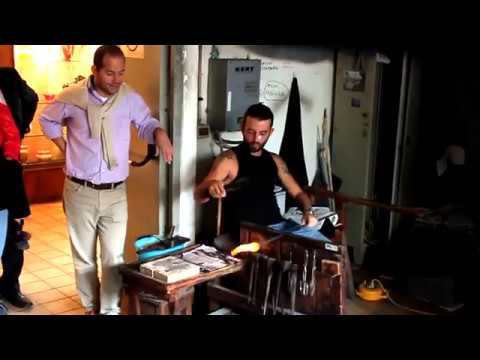
Murano’s reputation as a center for glassmaking was born when the Venetian Republic, fearing fire and the destruction of the city’s mostly wooden buildings, ordered glassmakers to move their furnaces to Murano in 1291. Murano glass is still associated with Venetian glass.
Murano’s glassmakers were soon numbered among the island’s most prominent citizens. By the fourteenth century, glassmakers were allowed to wear swords, enjoyed immunity from prosecution by the Venetian state and found their daughters married into Venice’s most affluent families. While benefiting from certain statutory privileges, glassmakers were forbidden to leave the Republic. However, many of them took the risks associated with migration and established glass furnaces in surrounding cities and farther afield — sometimes in England and the Netherlands.
Murano’s glassmakers held a monopoly on high-quality glassmaking for centuries, developing or refining many technologies including optically clear glass, enamelled glass (smalto), glass with threads of gold (aventurine), multicolored glass (millefiori), milk glass (lattimo), and imitation gemstones made of glass. Today, the artisans of Murano still employ these centuries-old techniques, crafting everything from contemporary art glass and glass jewellery to Murano glass chandeliers and wine stoppers.
Venice kept protecting the secret of the production of glass and of crystal but, notwithstanding it, the Republic partially lost its monopoly at the end of the sixteenth century, because of some glass makers who let the secret be known in many European countries.
Today, Murano is home to the Museo del Vetro or Murano Glass Museum in the Palazzo Giustinian, which holds displays on the history of glassmaking as well as glass samples ranging from Egyptian times through the present day