
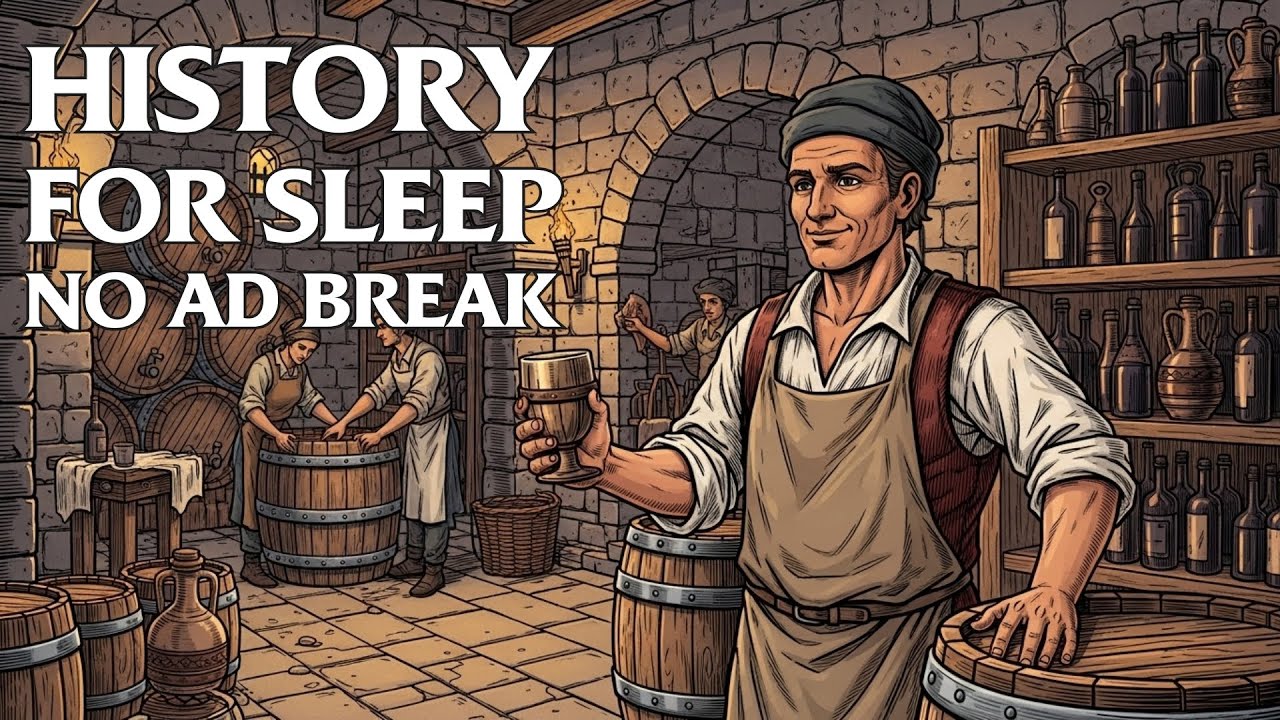
For over a thousand years, medieval monks discovered something that modern wine makers are only now rediscovering: caves aren’t just storage spaces—they’re perfect fermentation chambers. But why did they bury wine in darkness for months? What made these underground spaces so special?
Tonight, we explore how medieval monks transformed simple limestone caves into sophisticated fermentation systems that produced wines still considered exceptional today. From the Loire Valley to Burgundy, from Spain to Italy, these caves became the foundation of regional wine identities that persist centuries later.
What You’ll Learn:
How constant cave temperatures created better fermentation
Why monks became the first scientific wine makers (without knowing it)
The knowledge keepers who spent lifetimes mastering cave fermentation
How one failed batch taught generations what not to do
This isn’t just about wine. It’s about how humans observe, learn, and build traditions that outlast empires. Medieval monks didn’t have thermometers or chemistry textbooks, but they understood something fundamental: patience and attention to detail create quality that lasts.
Sources Referenced:
Roy MacLeod – “The Library of Alexandria: Centre of Learning in the Ancient World”
Mostafa El-Abbadi – “The Life and Fate of the Ancient Library of Alexandria”
Ancient History Encyclopedia – Medieval Wine Production
University of Burgundy Archives – Historical Fermentation Records