
“One of the ways you can see the Roman Empire is it’s the worldwide web of its day.”
Subscribe to Big Think on YouTube ► https://www.youtube.com/channel/UCvQECJukTDE2i6aCoMnS-Vg?sub_confirmation=1
Up next, The biggest lies about good sex and how to have it, debunked ► https://www.youtube.com/watch?v=qnHvFKoThP8
What did it really mean to live in Ancient Rome? Not as an emperor, but as an ordinary person navigating daily life? Classicist Mary Beard says that the truth would surprise us, challenging our myths about the empire.
Ancient Rome emerges as a complex, uneven, often uncomfortable prototype of globalization. Roads were designed for conquest more than convenience. Sex, trade, and culture operated under systems of inequality. And yet, across the Ancient Roman empire, ideas and identities moved faster than we might think.
00:12 How did ancient Rome connect continents?
03:06 What kind of ideas traveled along Roman roads?
06:10 Anchovy-stuffed mice or stone-stuffed bread?
11:05 What was sex like in ancient Rome? Is it as wild as the movies?
15:11 What were the Romans doing in terms of money and trade?
20:23 What about war and the military?
26:37 What can we learn from ancient Rome?
31:13 What drew you to study this particular period in history?
34:37 In the age of information, how should we record history?
Read the video transcript ► https://bigthink.com/series/full-interview/the-roman-empire/?utm_source=youtube&utm_medium=video&utm_campaign=youtube_description
———————————————————————————-
Go Deeper with Big Think:
►Become a Big Think Member
Get exclusive content, early, ad-free access to new releases, and more. https://www.youtube.com/@bigthink/membership/
►Subscribe to Big Think on Substack
Explore content that enlightens, inspires, and transforms.
https://bigthinkmedia.substack.com/subscribe/
►Get Big Think+ for Business
Engage learners like never before with high-impact video microlearning from the biggest thinkers in the world. https://bigthink.com/plus/?utm_source=youtube&utm_medium=video&utm_campaign=youtube_description
———————————————————————————-
About Mary Beard:
Winifred Mary Beard, OBE, FBA, FSA is an English Classical scholar. She is Professor of Classics at the University of Cambridge, a fellow of Newnham College, and Royal Academy of Arts professor of ancient literature. She is also the classics editor of The Times Literary Supplement, and author of the blog, “A Don’s Life,” which appears in The Times as a regular column. Her frequent media appearances and sometimes controversial public statements have led to her being described as “Britain’s best-known classicist.”
48 Comments
My answer is a definitive no.
I think that, in the future, an illegally imported immigrant should be used instead of Mary Beard for these woke propaganda purposes
The ancient Romans did not build roads and bridges 'for us', they did it for themselves, to facilitate military occupation, colonial administration, taxation, the networking of the cities they imposed on the landscape, and money making through trade. There were clearly benefits for the local aristocracy and upwardly mobile, but these were incidental rather than purposeful. Screw the brutal greedy Romans! Lol.
The Romans… ha! They've bled us white, the bastards. They've taken everything we had, and not just from us, from our fathers, and from our fathers' fathers.
One doesn't eat sea urchin spins which are part of the exoskeleton. Typically, the innards, especially roe is focused on. Likely, the exoskeletons were simply garbage that ended up pitched away.
Spines not "spins". Sorry
The Roman Empire wasn't particularly more brutal than any other empires. You seem to undervalue the values of stability, commerce and culture for the Romans to build streets and infrastructures.
FALSE! The Roman Empire did have monetary policies, though they were quite different from modern central banking systems. The Roman authorities controlled coinage by regulating the production and metal content of coins, which influenced inflation and economic stability. For example, emperors often debased the currency, reducing the silver content in coins, to finance military campaigns or public spending, which sometimes led to inflation. Additionally, the state managed taxation and spending to support the empire’s economic needs. So, while not a formalized monetary policy like today’s, the Romans exercised control over money supply and fiscal matters to influence their economy.
And no, the Roman economy was not totally unregulated. While it lacked the complex, formal institutions of modern economies like central banks or comprehensive financial markets it still had various regulations and state interventions. The government controlled coin minting and currency standards, imposed taxes, regulated prices and wages at times (especially during crises), and managed trade policies, tariffs, and public contracts. There were laws governing contracts, property rights, and commercial transactions. So, despite its differences from today’s economic systems, the Roman economy featured significant regulation and state involvement.
I am sad to realize that this professor is spreading disinformation about the Roman Empire. Too often inaccurate and misleading.
Recognize a serious professor from a bullshitter.
1) Overly broad generalizations and simplifications
The professor's explanation uses broad generalizations about "ordinary Romans" and "everyday life." This risks oversimplifying the immense diversity across a vast empire, where practices and conditions varied drastically between social classes and geographic regions. For example, the claim that "war was the norm and peace the exception" at [00:20:29] overgeneralizes, ignoring the long periods of internal stability like the Pax Romana.
2) Lack of deeper context
For example, the video touches on Roman social norms, the double standard for men and women, and the existence of brothels starting at [00:12:37]. However, it presents these topics without fully exploring the brutality and oppression inherent in the Roman patriarchal and slave-based system. This approach may inadvertently downplay the harsh realities experienced by the majority of the population.
3) Anachronistic parallels to modernity
The use of modern analogies, such as comparing the Roman road system to a "worldwide web" at [00:03:07] and discussing the Empire's approach to "illegal migrants" at [00:27:26], is anachronistic. These concepts are products of the modern nation-state and technology, and their application to ancient Rome can obscure the fundamental differences between ancient and contemporary societies.
Delightful.
I'm calling BS on the Messalina story. Rumors spread by people who hated her or were the political opposition
I've missed Mary. Please have her back.
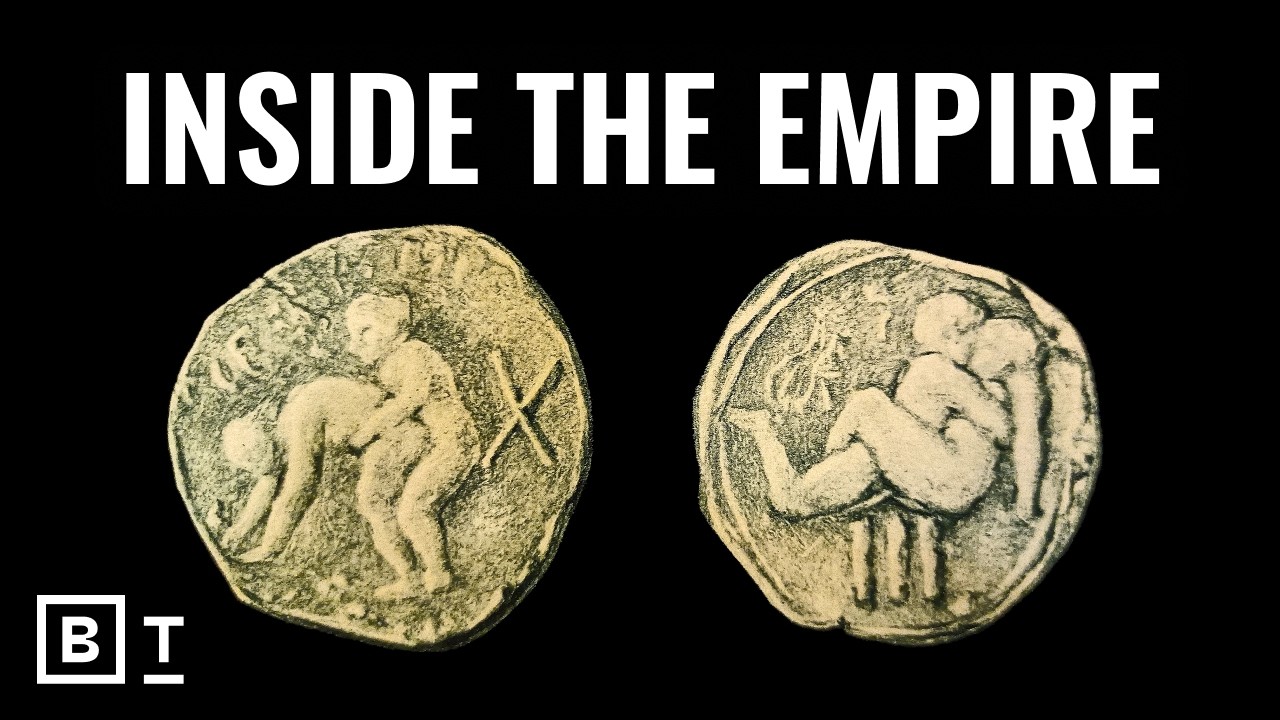
I think the US mints need to commission some new coins like these. Anyway, I, as a male, think about the Roman Empire daily.
trump is augustus
Considering the thumbnail, I could survive that for a week. But I would'nt last a week!
"Would you survive a week in Ancient Rome?"
I would either shit myself to death because of a lack of immunities and no medications to really get a grip on that or of constipation not wanting to share collective toilettes and brushes to wipe my *ss. Maybe in the wilderness, but the city jungle back then for person from modern times might be more deadly than a real jungle at any time.
This woman is a liar. I call bs on her immigration narrative
I failed Latin 1. So no.
Click Bait
This gave me chills… in the best way
So the Romans ate sandy bread, mice, and sea urchin spikes, and shat communally and lived above foul smelling cesspools? No wonder they were always going off and fighting wars.
I don’t know anyone laughing about the Romans. The Life of Brian joke about “what have the Romans done for us” was meant to highlight how much Rome did provide.
Not bc of Romans. Like there weren't roads and paths around for 1000s yrs already… from other travelers, wars, animal migration… it's batty to think no roads before Romans! 😂
What people tend to forget is that "Rome" didn't collapse at 410 or thereabouts. Western Rome did. At that time, though, the city of Rome had long ceased to be the (exclusive) Roman capital. The new or Eastern Rome where Greek instead of Latin was spoken and which had Constantinople as its capital lasted until 1453 – a thousand years longer than West Rome, e.g. "ancient" Rome endured through medieval times in their entirety up to the threshold of the modern era. If you look at these +1000 years, you'll find that it was an up and down which somehow proves that an empire CAN come back – because East Rome did so several times.
Well, i'm vaccinated, well fed, way taller than romans and literate. I think i have a good shot at it.
a better question to ask is: would ancient Rome SURVIVE ME, lol.
❤❤❤
The last 60 years of american presidents seem quite like the self centered egoic madness of roman emperor.
Yes but the Roman government was not "liberal" like ours…They kept everyone in line with a brutal grip…also distances were much harder to cross back then so not as many travellers would have been flooding in like now. and in general the whole world was less populated than it is now.
what kind of nonsense is this granny talking about?))
Rome is a fake civilization – they didn't come up with anything good – roads, bridges and, supposedly, jurisprudence, which they themselves neglected? – is that all?)) – in exchange for this they were engaged in the destruction of local unique cultures…
and what did we get in return? – roads and cities, which the modernist architect Le Corbusier called the invention of lazy, loaded donkeys looking for shade!))
more than 60-70 percent of what is attributed to Rome was actually invented after the 14th century, namely in the 18th-19th centuries, when intensive excavations were carried out and "great artifacts were found")) made by anonymous artists of the 19th century.))
the process of inventing the past has been going on every day without interruption since the moment when people invented language, writing and fine art..
history is like a tree – the older it is, the thicker its trunk and the deeper and more branched its roots)).. (and from the point of view of inventing something that did not exist – this is logical)
I could listen to Mary Beard read a phone book. This video's so great.
Her gushing speech and grey teeth are a huge distraction. Quit halfway through..! Dislike.
ROMA AETERNA..!!!!!!
In the end, it's not the years in your life that count. It's the life in your years… – Abraham Lincoln
0:39 Not once ever have I encountered that.
Romans made England slaves, and the Danish vikings from Mainland Jutland, beat the romans, and made Englishmen taxslaves and brought back the females to the old viking capital of Aros(Nowadays metropol of Aarhus)
Feminist woke perspective
As a secondary teacher with 36 years experience I did not ever come across a student who dreamed of becoming president or prime minister. No one had ambitions of becoming a fireman or a train driver. Financier, footballer, doctor or pilot were the favoured occupations.
28:05 “no such thing as a illegal migrant” !?! According the Mary: Attila King of the Huns only entered the Western Roman Empire as a ‘peaceful migrants seeking the progressive sanctuary city ROME’ 😂 Mary is misappropriating 2025 open border policies to Roman history – please explain what Hadrian's Wall was used for Mary!
Pure gold ��✨
The last 3 or 4 minutes are at the core of the study of history itself. Very elegantly and accurately stated by Mrs. Beard. Being conscious of the questions we ask is very much part of the answers we seek. Γνῶθι σεαυτόν.
"Excuse me, I wondering where the bathroom i-"
"Geh…GERMANI—- EEEEEEEEEEEHOI- BARBARVS INTRAVIT INTERFICITE EVM IGNI 🔥OCCIDITE 🔥OCCIDITE 🔥OCCIDITE"
And then I die. howwibwy howwibwy.
unless I'm showing up right at the end of the Western, then they'd be "Deus meus! Iterum Gothus… futue me!"
😂😂😂😂 the white entertainment is amazing 😂😂😂😂😂😂😂😂😂😂😂everything you spoke about every civilization has done it for centuries before the Romans😂😂😂😂😂
I’ve read several books on Ancient Rome and Mary Beard’s book was by far one of the best.
would have liked some visuals.
Mary Beard is the very best. She continues to amaze and astound, such a great treasure.
Always so lovely to hear Mary Beard speak her craft.