
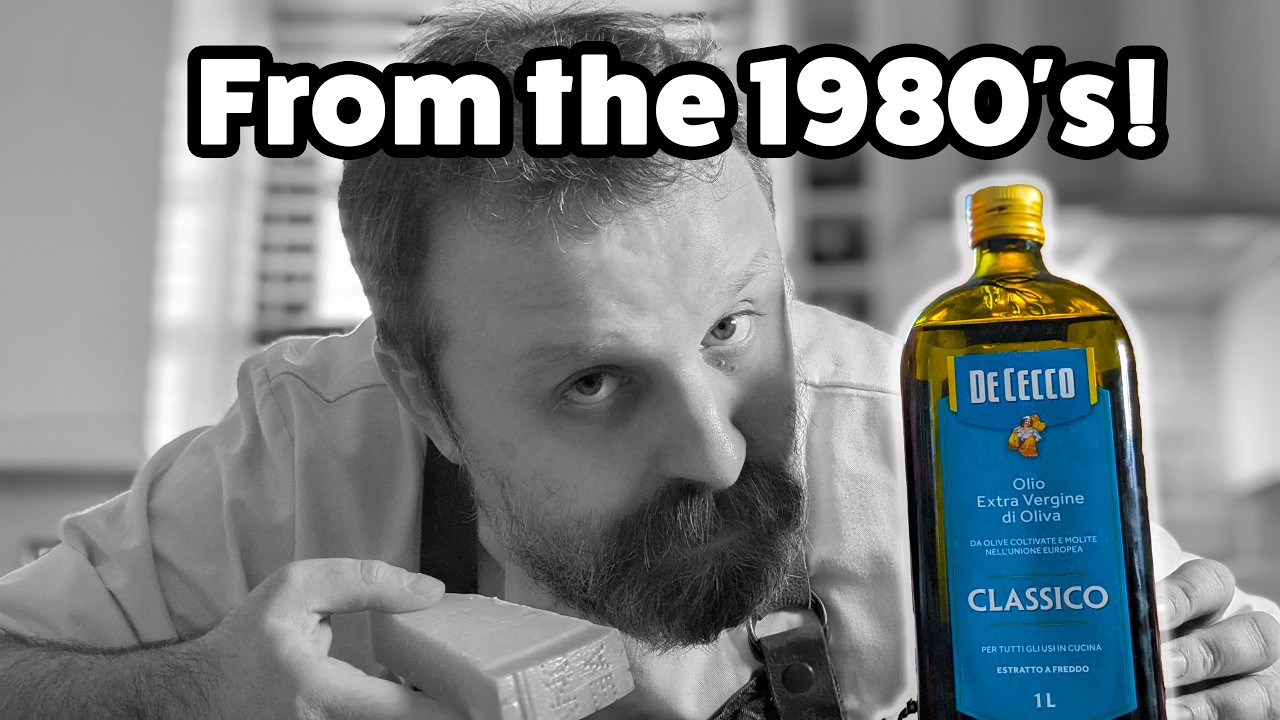
Did you know some “traditional” Italian foods might not be so authentic after all? Historian Alberto Grandi sparks debate by suggesting a lot of “classics” have surprisingly recent origins. Join us as we dive into these claims and explore the real history behind your favourite Italian dishes.
Website: www.intaberna.co.uk
Bluesky: @intaberna.bsky.social
Instagram: instagram.com/in.taberna.qs/
Twitter: https://twitter.com/in_taberna (not really using this anymore)
Interviews with Grandi
https://www.derstandard.at/story/3000000232054/historiker-die-italienische-kueche-ist-nichts-anderes-als-marketing
https://www.ft.com/content/6ac009d5-dbfd-4a86-839e-28bb44b2b64c
Italia Squisita videos
https://www.youtube.com/@UCETyhmgxupv93Ix4VnIiQJQ
Literature and sources relied upon within:
Cesari, Luca. A Brief History of Pasta: The Italian Food that Shaped the World. London: Profile Books, 2022.
Scappi, Bartolomeo. The Opera of Bartolomeo Scappi (1570): L’arte et prudenza d’un maestro cuoco (The Art and Craft of a Master Cook). Translated by Terence Scully. Toronto: University of Toronto Press, 2008. (Lorenzo Da Ponte Italian Library)
https://www.theguardian.com/world/2016/nov/24/italian-or-british-writer-solves-riddle-of-spaghetti-bolognese
The origin of tiramisu, the most famous Italian dessert in the world
https://www.lacucinaitaliana.com/italian-food/italian-dishes/the-true-story-of-pizza-margherita-a-food-fit-for-a-queen?refresh_ce=
https://www.theguardian.com/world/2023/mar/27/italian-academic-cooks-up-controversy-with-claim-carbonara-is-us-dish
https://www.bbc.co.uk/travel/article/20230331-carbonara-the-iconic-pasta-causing-a-dispute
Other sources are cited in different videos on this channel.
Chapters:
00:00 – Intro
00:45 – Who is saying all this!
01:38 – Tiramissu
03:10 – Carbonara
13:37 – Parmesan
15:40 – Olive oil
16:30 – Where next?
#foodhistory #comedy #cooking #italianfood #History #Italy #FoodFacts #AlbertoGrandi #culinaryhistory
50 Comments
This guy (the book author) seems like a Dan Brown of Italian Cuisine: getting hype by cherry picking stories 😀
The next claim will be: Fiat 124 is also not Italian it is a copy of the Soviet Invention Lada 2101, or Mortadella is not Italian, it is a copy of the Soviet Lyubitelskaya kolbasa 😀
What he was telling about the Parmigiano is that it's ancestor is the Lodigiano…which has a black croust and the old one was creamier. It's the first Grana in the area dating further back. Parmigiano Reggiano is just a section of the Grana style cheese. They introduced a consotium restricting the area with specific cows and food. Grana Padano is a wider definition…as it covers all the historical area where the Grana style cheese was produced. So "Parmigiano Reggiano" as a brand is relatively recent, but the Grana Cheese (where the Parmigiano Reggiano is part of) is a very old one.
I am cooking Italian for two years now, my only shock was that from the cooking videos I watched, I learned that tomatoes and peppers came from America, that was indeed a shock for me, I thought just potatoes appeared from there, but no
No garlik or onion in carbonara!
Italian here and we all know that carbonara is a recent invention made for American soldiers. But still made with fresh and well balanced ingridients!
The "dry carbonara" is what I got in 1970 in Rome.
It took me years to get over it and try Carbonara again.
Looking forward to the sequel now. What secrets does the pizza hide??
I know what Tiramisu is now, but I've never actually had it. For years I just assumed that it ws a Japanese dessert, because it sounds Japanese.
In my opinion, the real shame of the success of the "Top 10 Italian dishes" is that it is overshadowing the diverse "cuisines" of the many regions and territories that later became Italy. As if people from Venice, Siena or Catania never had eaten anything but pasta and pizza.
I have so much to say after watching your video. First of all, it's important to point out that most Italians don't actually think of "Italian cuisine" as a single entity. Each region has its own distinct dishes, and we're often quite chauvinistic about our local traditions. For instance, my great-grandparents from Veneto would cook with fat rather than olive oil, eat a lot of polenta, and occasionally face the risk of starvation. Going out to eat at a pizzeria was simply not part of their reality.
It's also true that our diets changed significantly after the economic boom and the arrival of supermarkets. Internal migration and economic development helped regional cuisines spread beyond their traditional borders. Interestingly, while other countries were opening up to foreign cuisines, Italy was just beginning to see local dishes cross regional borders. This might explain why Italians are still somewhat reluctant to embrace foreign cuisines —we're still in the process of broadening our culinary horizons.
As for Grandi, he is an arrogant person who like to make sensationalistic claims and push them to the limit of lying. He has been dismissed by many of his peers because academics do not communicate their research just to be on headlines. You should never trust a researcher telling you "everything you know about topic X is a lie!!!". It’s disappointing that your video didn’t include perspectives from other historians, as that would have provided a more balanced view. Unfortunately, some foreign newspapers have poorly translated the debate around Grandi’s statements, leading to misconceptions—like the absurd claim that Italians only eat pizza because of Americans.
Foreigners also often struggle to understand that we have food trends in Italy, and with social media, some of these trends have been amplified internationally. Take burrata, pistachio, and mortadella—while they are traditional ingredients, they have recently become incredibly trendy. In fact, many Italians are starting to get tired of them. Another recent internet-driven trend? Carbonara.
I’m not entirely sure about the origins of carbonara, but I remain skeptical of Grandi’s version. After all, what about gricia, cacio e pepe, or cacio e uova? These are all traditional Roman pasta dishes similar to carbonara, and they predate World War II.
As for tiramisù, it is actually a relatively recent recipe. It likely originated from a common practice of giving children a mixture of beaten egg yolks and sugar to give them energy (a way to "pick them up"). Venetian grandmothers would sometimes add beaten egg whites—because nothing goes to waste—along with coffee or biscuits. Variations of these simple creams or custards exist all over Italy. The addition of mascarpone might have been the innovation of a pastry chef, as it wasn’t a common ingredient in traditional Venetian cuisine.
Sorry for the long text, but I often feel that foreigners can be a bit superficial when researching Italian history.
Wait a moment: in which part of the book did Grandi write that olive oil wasn't used in italian cousine before the Eighties?
Cream is used for carbonara in almost every restaurant to keep the batch of sauce consistent through an entire service, unless they make a new sauce for every order, which is uncommon, time consuming and expensive
4:50 Anyone else catch the "Asterix & Obelix" reference?
SPQR ("Sono Pazzi Questi Romani"/these Romans are crazy!)
70% of Italy lived on polenta and beans until the Marshall Plan
It’s like how us Irish-Americans actually got our “traditional” corned beef from Jews in NY and Boston. if we were eating beef in the old country we wouldn’t have left!
I live in Chile, and getting to the point of olive oil in food (as living in a Mediterranean country and having a predominantly spanish and italian ancestry in our culture), I recall what you mentioned about popularity of olive oil, as I've heard numerous times of how hard to get and expensive olive oil was in the past (even considering that olives are an important ingredient for our country and we produce a lot), the production of olive oil was very limited and labour intensive, and the result product was almost inedible on how strong the flavour was (really spicy). As a consequence olive oil was very rarely used and more tied to catholic rituals, and as such the preferred (and really traditional if I may say) fat for cooking and everyday use was lard.
There WERE refrigerators in Imperial Rome. They were special shafts dug into the ground, lined with bricks or concrete, and filled with glacier ice, snow, and straw, used to preserve food.
They were large, and not readily accessible to the common kitchen. They were apparently not in common use after the Empire fell into different pieces.
The thing about pizza? I find myself saying BULLSHIT out loud. Flatbreads with toppings have existed for a very long time.
Is "hambonara" a popular dish in Great Britain? I only know of it from that video with the Italian chef berating the Brits "you know if this had ham in it it's closer to a British carbonara"
My grandmother was an italian woman who spent the second world war in Italy and brought her recipes back from Italy. Carbonara for her was a mix of pasta cheese, milk, bacon and eggs and then put into an oven. Which I just realized sounds a lot like macaroni and cheese.
lol, tiramisu, a dessert that involves both coffee and chocolate, and requires refrigeration, was invented when?
bacon and eggs, spaghetti breakfast? makes perfect sense. yep, it does seem that the 'traditional roman' carbonara is less than a century old…
Parmigiano reggiano is full of stories that are likely totally false, like the one about wheels of Parmigiano that for some reason fail to pass the grade being then downgraded and sold as mere grana padano… except of course grana is its own cheese and I don't think parmigiano could even make the conditions to be classified as grana.
ok, so grandi was wrong about parmesan, and seriously, olive oil being of recent use as a food product is so ludicrous that uh, maybe he ought to seek psychiatric help, because that's beyond the border of conspiracy theory.
Virtually all European and Chinese high cuisine as we know it comes from no earlier than the late 19th century. The whole idea of national haute cuisine itself is a bourgeois concept that did not and could not exist before the rise of the bourgeoisie as the new ruling class.
No fridges but they did use ice boxes and cool cellars… Problem is the midern recipe is the standard now and other older variations are given no credit. Cold dishes using ice are historically recorded.
I always use garlic & Parmesan in my Carbonara.
The Parmesan cheese thing is BS. And they weren’t exactly small. During the great fire of London , Samuel Pepys buried his Parmesan wheels in his backyard because they were too huge and cumbersome to carry on his cart , along with his possessions.
One old chestnut after another. And those bold claims are so obviously true and false at the same time
The "refrigerate" part is bullshit. They had ice boxes; there even have been a huge trade with ice and people enjoyed iced drinks for way longer than we have modern fridges and even way longer than we can "produce" ice. Ancient greeks and romand wrote about eating fruits with ice; they had infrastructure for safe transportation without melting and storing it. Later in late medieval/early modern times they brought it on ships. The italian aristocracy loved ice, iced drinks and fruits with ice.
at the end of 1700 in some cookbooks there was a recipe that had as ingredients pasta, pepper, lard (pork fat) and cheese,
pasta alla gricia of ancient Roman tradition contains pasta, pepper, bacon, pecorino,
moreover if carbonara was of American origin why was bacon and parmesan never used???
last thing, during the 2nd world war in Italy you could find eggs and bacon
This means that video of the Italian chef on British TV, the British woman was right! lol
The problem here is that he is confusing the interpretation of ltalian cuisine by the English speaking world and ltalian food as prepared in Italy. This is biased very much towatrd the latter.
Pizza is American. Tomato comes from Mexico. So Italians have no right to cry about pineapple on pizza
europeans in europe or the americas didn't even know what tomatoes, potatoes, maize, chocolate, chili peppers, peanut butter, strawberries, vanilla, tobacco, or most things Indigenous to the Americas were before a couple hundred years ago. so i never trust them about any of those things.
Not like in the UK. We’ve been eating Roast dinners, fish and chips etc since they were invented in 1066
as an Italian I can tell you with pretty much certainty that I know what my grandparents and also my great-grandparents ate and I can tell you that they are the same things we eat in Italy today maybe a little less tasty and much smaller portions. this video is a scoop (obviously in wartime they had almost nothing to eat).
In the 30s and later fried pizza was common street food. Check Sofia Loren and Pizza Fritta in the movie L'oro di Napoli. Sofia acts hilariously.
Refrigators indeed didn't exist, but ice houses/cellars/caves did. Storing Ice for food preservation was known in ancient Persia at least 1100 years BCE. The question is whether Medicci did have something like that arranged somewhere.
Salve , la pasta alla carbonara ha degli illustri antenati nella cucina italiana , la "Pasta cacio e ova " tipica del territorio napoletano e le "Fettuccine alla papalina" piatto creato per Papa Pio XII da un oste romano.
La ricetta originale della carbonara è un adattamento di piatti già presenti nella cucina italiana alle ristrettezze della guerra , invece di prodotti freschi i prodotti di contrabbando delle razioni militari soprattutto americane quindi uova liofilizzate , bacon precotto e crema di latte con pasta secca molto facilmente reperibile non pasta all'uovo.
Un po' di panna aiuta i cuochi meno esperti a non trasformare la crema di uovo in un gigantesco frittatone , ogni famiglia romana ha la sua ricetta aggiungendo o togliendo qualche ingrediente , nella vita reale non esistono dogmi .
Ps Non sprechi tempo a commentare Alberto Grandi che di storia culinaria italiana ne conosce molto poca.
Saluti cordiali
16:40 I'll say this right off the bat: The AVPN, an the Italian organization that supposedly protects the tradition of pizza created in 1984, claimed pizza was always made with 00 flour…try finding that in Napoli or anywhere on Earth in 1783.
That claim flies in the face of basic flour history. No one on Earth had flour anywhere close to as refined as modern 00 flour until after steel roller milling and the middling purifier were invented and widely available. Before that, for centuries and millennia, most folks didn't have or could only afford relatively unrefined flours. Same for 1700-1800s Naples.
These refinement technologies got invented mid 19th century. And it took a while for them to spread worldwide. Plus the spec for what counts as 00 flour has changed too. It used to be a low gluten, highly refined cake flour and changed to a medium gluten content then added more gluten content as time went on.
They also say pizza must be ~32cm/12". One of the oldest pizzerias in Napoli, Da Michele, makes them larger than that, bigger than your plate.
But really the biggest issue is how accounts of pizza from the 19th century in Napoli can contradict what modern pizza napoletana is like. A London newspaper accounts say pizza is baked to an "orthodox crispiness" and "for 5 minutes". A magazine account says "8 minutes". Completely the opposite of what the AVPN says has always been orthodoxy—60-90 second—to soft, pillowy, melt in your mouth texture.
Frankly, that bake time and crispy texture is more in alignment with what Italian Americans, make, like and expect from pizza. And it’s at least plausible earlier Napoletan American pizza is more like 19th century pizza napoletana than what they sell in Naples today.
It's hard to imagine what point this author made against the consumption of olive oli. That it wasn't food grade before the 80s is just so very illogical and observable wrong(there are old mills to visit and special tools that get still used to skim the good stuff) , that i feel makes one question everything else this guy wrote.
This channel is going places.
The passion for cooking on display in this video is excellent! I hope you reach more viewers sir!
I have made myself quite unwelcome with some family friends in America who insist Italian food is much older than it actually is 😂
The biggest thing I know about Italian food is that if you do even a single thing differently than some 3rd generation Italian-American's great grandmother did when making anything even vaguely Italian you will need a restraining order to get them to leave you alone about it.
The issue with carbonara is that it's most likely a pre-tomatoes recipe (tomatoes in pasta are recent, 19th century at the earliest) that's very specific to a certain social class and a certain place. That kind of stuff goes easily ignored by people who write recipes for people who can actually read them which were fewer in Italy than in Protestant countries. There is even a version without eggs called gricia which AFAIK is documented. Edit Also the carbonara is very specifically a Roman and surroundings dish, cream was mostly used elsewhere. I know because I am Sicilian but I had enough relatives from Rome I didn't eat Carbonara with cream (and other stuff) until I went to university. Regarding guanciale the thing is that it's not really what would be considered a prime cut of pork so for a while pancetta was more common and easier to find. I remember in the mid 90s when my family brought me to one of the few restaurants in Rome that actually still used it was a big deal. The internet just gave a megaphone to what was already there when it comes to food hipsterism.
Tutto cambia e si evolve e la cucina italiana non fa eccezione. I contatti con altre culture portano novità e cambiamenti, anche nelle ricette . Quello che conta davvero e' la filosofia culinaria che prevale nella nuova ricetta. Quanto al libro, un titolo bomba e' sempre un buon marketing!
Ok I promised myself not to talk about Alberto Grandi anymore but I'm forced to do it. First of all he was wrong about everything, no one says that tiramisu is a centuries-old recipe.If someone said that it was, this does not mean that all Italians think that it is a centuries-old recipe, it is also quite well known that Le beccherie is the place where tiramisu was born, at least the modern version, still active today. The paternity is disputed between the Veneto region and the Friuli Venezia Giulia region. However, tiramisu derives from zabaglione, which is a much older recipe. Grandi just blather about it, it's the same old strawman technique, his lies have been easily exposed.
Secondly, it was not Grandi who said that carbonara was born in the fifties or forties, thanks to the Americans, but it's a much older theory that preceded the charlatans of Grandi. So first of all, he didnt put anything new on the table. In addiction to this, carbonara comes from the mix of cheese and egg which is a much older custom in the region Abruzzo, where still nowadays there is the pasta cacio e ovo (cheese and egg) and the pallotte cacio e ovo ("meatball" meat free with cheese and egg and bread). If a random soldier put some meat, whatever meat, in a renown pasta, it doesnt make it american or wtf you may think about it.
He also claimed a crazy huge bullshit about pizza but he's already been dismantled and he's no more pushing on this button. He had some clout during the pandemic but fame is temporary, nobody cares about him now, it's a clear evidence he claimed that for money and business. I personally fought in the Instagram commentary section with him, and I'm a chef and culinary lecturer. He made me laugh a lot when exposed to my knowledge.
I feel like it's not the ingredients that are the issue, it's what you call the dish. If you work off the base ingredients, the add to it, you add "e ingredient" to the name and everyone is happy.
2.54 tiramisu a little bit soft. Jewel!