
Check out Cellar Class to take your wine knowledge to the next level: https://www.cellarclass.com/
Learn from a Master of Wine at your pace, wherever you are with Cellar Class!
Are Second Wines worth it?
Follow me on …:
https://www.instagram.com/konstantinbaum_mw/
https://www.threads.net/@konstantinbaum_mw
@konstantinbaum_mw
Check out my website:
https://www.cellarclass.com/
https://www.konstantinbaum.com/
https://baumselection.com/
I use this wine key: Forge de Laguiole Ebony
I have used the following glass in this video: Spiegelau Definition Universal Glass
I have tasted the following wines in this Video:
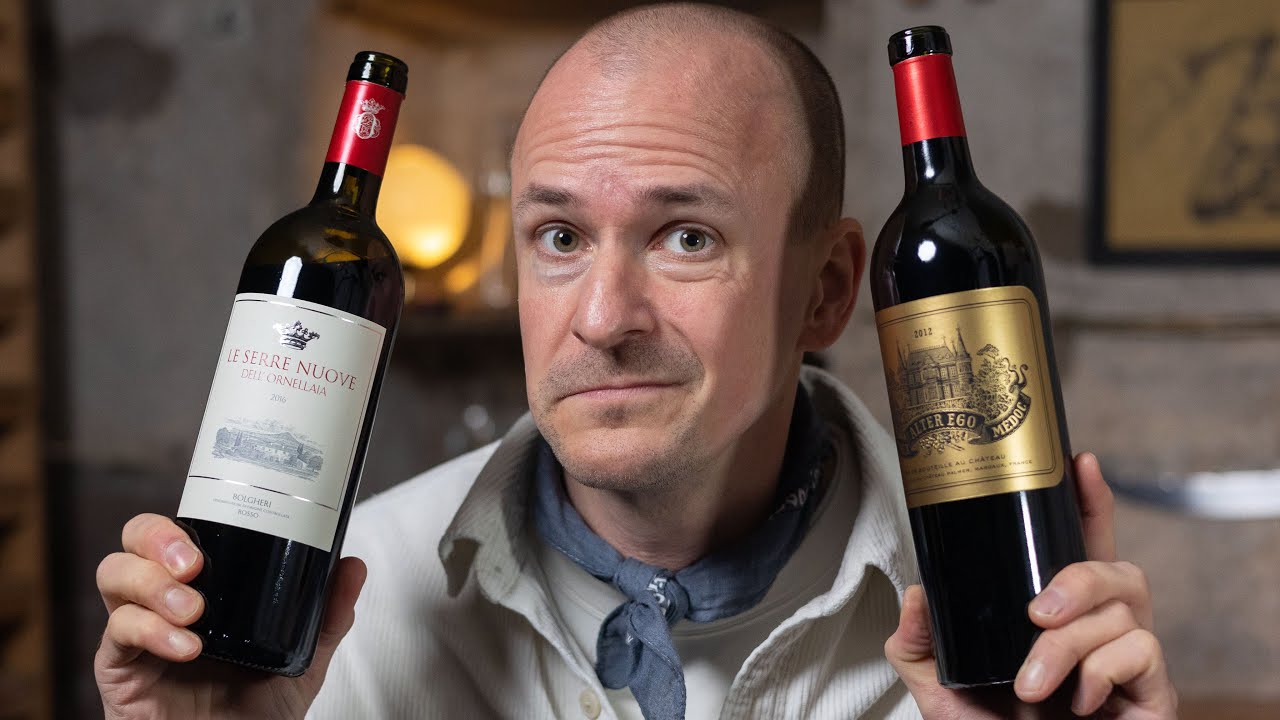
2012 Chateau Palmer Alter Ego de Palmer, Margaux, France
https://www.wine-searcher.com/find/palmer+alter+ego+de+margaux+medoc+bordeaux+france/2012/germany?referring_site=KSB
2016 Ornellaia ‘Le Serre Nuove dell’Ornellaia’ Bolgheri Rosso, Tuscany
https://www.wine-searcher.com/find/ornellaia+le+serre+nuove+dell+rosso+bolgheri+tuscany+italy/2016?referring_site=KSB
2022 Chateau Pichon Longueville Comtesse de Lalande ‘Pichon Comtesse Reserve’, Pauillac, France
https://www.wine-searcher.com/find/pichon+longueville+comtesse+de+lalande+rsrv+pauillac+medoc+bordeaux+france/2022?referring_site=KSB
2018 Dominio de Pingus ‘Flor de Pingus’, Ribera del Duero, Spain
https://www.wine-searcher.com/find/dom+de+pingus+flor+ribera+duero+castilla+y+leon+spain/2018/germany?referring_site=KSB
Opus One Overture, Napa Valley, USA
https://www.wine-searcher.com/find/opus+one+overture+napa+valley+county+north+coast+california+usa?referring_site=KSB
2017 Chateau Rieussec ‘Les Carmes de Rieussec’, Sauternes, France
https://www.wine-searcher.com/find/rieussec+les+carmes+de+sauternes+bordeaux+france/2017?rreferring_site=KSB
The 100 Point Scoring System (from www.robertparker.com):
96-100: An extraordinary wine of profound and complex character displaying all the attributes expected of a classic wine of its variety. Wines of this caliber are worth a special effort to find, purchase and consume.
90 – 95: An outstanding wine of exceptional complexity and character. In short, these are terrific wines.
80 – 89: A barely above average to very good wine displaying various degrees of finesse and flavor as well as character with no noticeable flaws.
70 – 79: An average wine with little distinction except that it is soundly made. In essence, a straightforward, innocuous wine.
60 – 69: A below-average wine containing noticeable deficiencies, such as excessive acidity and/or tannin, an absence of flavor or possibly dirty aromas or flavors.
50 – 59: A wine deemed to be unacceptable.
Second wines are made from batches of wine or parcels of vines considered not good enough for the principal product. That is how the Oxford companion defines Second wines, and saying the definition out loud makes those wines sound bad … kinda like second-class wines.
The thing is, though, that the standards for first-class wines have risen over the years, and second-class wines have significantly improved in quality over the same period. So today I want to answer the question of whether Second Wines are a smart alternative or not!
Second wines are an insurance policy for the winery. Vintage variations can be balanced off by using some of the lower-quality fruit in the second wine, and you can also use wine from younger vines or less tasty barrels in your second wine to boost the quality of the first wine. The region most associated with the production of second wines is Bordeaux, where the first records of second wine production go back to the 18th century.
The tradition was revitalized in the 20th century, particularly by the first growth, which boosted the quality of the premier wine, but less expressive wines into the deuxième wine. The brand Mouton Cadet, which is now sold by the millions, started its life as the second wine of Mouton Rothschild.
Today Mouton produces Le Petit Mouton, Latour has Le Forts de Latour and even a 5th Growth like Chateau Cantemerle produces the Les Allées de Cantemerle as a second wine. Wine producers around the globe have adopted that strategy as it does not only boost the quality of the first wine but also allows them to produce another wine that costs less to produce but often still sells at a far higher price than most wines from a given region. So let’s taste six second wines from four different countries to find out whether they are worth it.
46 Comments
I’ve always liked, but never really loved, Sauternes – German BA gives me much more of what interests me. Still, I buy them because, well I do enjoy them.but more importantly, perhaps, I’d hate to see the style disappear. So I buy some each year, delusional in my hopes that my purchases will help
Great topic to address!! For me a second wine is worth only at less than half the price of the first, no matter what its approach and style is. Personally I found the third wine of Ornellaia (Le Volte) to be better and way cheaper than the second (Le Serre Nuove). A recent exciting second wine that I tasted was the second wine of Chateau Musar.
I've had the Ornellaia 'Le Serre Nuove, Overture, and Pichon Comtesse Reserve. The Pichon Comtesse is my favorite – excellent wine and reasonably priced – I own several bottles. le Seere Nouve is very good, but not a great value at $70 – there are other super Tuscans I like better around that price. Overture is good, but not worth the price. I think ur 90 rating for Pichon Comtesse Reserve is low – I've had it several times and think it's more if a 93-94
Agree with your comment re Opus versus Overture. Not a fan of the latter.
Excellent video. I've bought a couple of vintages of PSI de Pingus for £24 a bottle, and it is delicious. I presume that is their third wine. I have a case of 2014 Alter Ego by Palmer and that is one of my favourite wines. I also have 2009 Reserve de la Comtesse, which is fabulous. I wonder if your 2019 will improve with age. I definitely buy and enjoy second wines. Although it is no longer considered a second wine, Clos Du Marquis from Leoville Las Cases is one of the wines I have bought most regularly over the last 30 years.
I buy second wines exclusively, but not by choice
Pavilion Rouge/Margeaux is really good but can be pricy.
Italian Bordeuax 🙂
I think italian have something similar. I tried to love barolo but barbaresco is much better for me.
Man, you consistently struggle to remove the foil from the bottle. Let me help you out, don’t try to cut around the bottle just below the lip, instead, cut the foil from bottom to top straight up. It will come off much easier. With all the good advice you have given me over the years, I feel I owe you this one little tip
Nice that we poor people can approximate the big boys. Eh.
I love Sauternes too bad for the philistines. Had d'Yquem once WOW.
Thanks Konstantin, great presentation, full of useful things – and the same applies to the well-informed comments that had me jotting down notes for buying.
I wasn’t a big fan of Overture or the Reserva de la Comtesse so I’m glad you shared the same sentiments
Awesome tasting! You answered so many questions I had before. My sentiment was generally similar – much better to seek out less known but quality producers instead of paying for these big names. Overture was a tasty wine but I always questioned the $180 price tag. Same for the second Ornellia. Never tried the second Pingus but I guess I will pass and stick to their third wine (PSI) which actually wasn’t bad in my experience.
I steered away from second wines in the past because they were the same price as something like Lynch bages or ponet cadet, but this past year I started buying some including the first growth second wines because I can’t afford the top wines. A couple of my favs that I have tasted are alter ego and Sassicaia’s second wine guidalberto
Hi Konstantin, I’m glad to hear that you seemed to really liked the 2012 Chateau Palmer’s Alter Ego bottle. I actually have a few bottles of the 2019 vintage that I planned to tuck away in my cellar for another 4 years or so before digging in.
I only know the second wines of the big Bordeaux Chateaux. Complete nonsense. Why should I pay 230€ for a second wine (e. g. Pavillon Rouge Chateau Margaux) if I can get a 100 Parker Point wine (e. g. Chateau Canon) of another Chateaux for the same price!? You can get very good Bordeaux wines for about 100-150€ (Pontet Canet and others), why should I pay much more money for any second label!!!?????
I’m passionate about natural wines but I truly enjoyed the Flor de Pingus 2006 last year.
Very good and interesting episode ! Thanks.
At 50 € there are a ton of 90+ wines in Bordeaux. Right now I am drinking a Ch. Brondelle 2015. 92 pts. in my book.
I have never bought a second wine but I will take a look into the Alter Ego de Ch. Palmer after your review.
Hey Konstantin, 2021 would be the newesr vintage from the Pinugs winery 😉 just so you know 🙂
I’ve got 6 of the 12 Alter Ego waiting for right time to drink. Excited now
Just bought Alter Ego ‘20 and ‘21, excited for these!
I buy a lot of seconds, after tasting one bottle. Sometimes there are gems. I look for terrible years for Barolo and Rioja and I know I can buy some ridiculous bargains.
Very enjoyable video as always. The trouble is, as you acknowledge, the price/quality. I think that's more to do with this selection though. There are a number of Spanish producers that make excellent second wines at very good prices and they're often just as good as their more expensive counterparts. Pleased you had a Sauternes in the mix. I still love it.
I think people fake the second wine because consumers are less suspicious of the second wine being faked.
Really interesting video, great concept. It would be interesting to do a side-by-side with the firsts from the same vintage. Logistically complex… Other than Alter Ego (US$ 90+) and the Rieussec, seemed like a lot of "meh" for the 2nds. I have a couple bottles of 2020 Reserve de la Comtesse–was hoping for some excitement on your review of the 2019…oh well! But, I totally agree with you on the opacity of some wineries on the details of their wines. Detailed tech sheets don't seem like a lot of effort to produce, and the fact that they are not available from even some credible winemakers bugs me. Thanks as always for you content.
Great content. There should be more reviews on 2nd labels from all over the world.
Second Vs prime wine blind battle please! 🙂
LOVE the Alter Ego; better than most BDX estate first wines!
I had the third or fourth wine of Ornellaia, and it's a very nice, very affordable Merlot-based blend. My favorite second wine is Meandro do Vale Meão from the Douro, which costs five times less than the first wine, and it's always good. I don't know how you view Rosso di Montalcino, Langhe Nebbiolo/Nebbiolo d'Alba, Reservas and Crianzas from Rioja and Ribera or the whole mess in Southern Rhone, with all the Villages with different price points, but I tend to shop a lot of wines with those denominations.
In the case of Douro, I tend to start from the bottom and go up and up in price until I find the range I like the most…sometimes the range I like the most is the cheaper one…that happens a lot to me with Rioja and Ribera del Duero as well…in other situations, like Montalcino, Piemonte and Bordeaux, I love to drink the cheaper wine to see if I want to buy the premium one.
I love Merlot, specially from Bordeaux and Tuscany, so those second and third wines really do it for me. I hope they release Sideways 2, and that the movie consists of only famous actors talking down Merlot. It's really fun loving something that is underappreciated.
Hi Konstantine,
first YouTube comment ever. Flor de pingus is not a second wine. The grapes for flor is bought up around the region from the best quality Peter can get his hands on and produced in the same manor as Pingus. Whereas the grapes for the actual Pingus, comes from dominio de pingus, the old plot of vines from 1929. Love your channel, keep up the great work.
Enjoyable as always, thank you.
Surprised you didn’t mention PSI, also Sisseck. A third wine really after Pingus and Flor de Pingus, lovely wine and best value of the lot.
I was once sold Flor de Pingus by gifted saleslady Lisa Perrotti when she worked at Corney and Barrow in London. Now with expanded name, Lisa Perrottii Brown is a superstar wine writer at the Wine Advocate. Touched by greatness!
Lodovico Antinori Tenuta di Biserno Il Pino di Biserno 2021
Best second wine I have tasted
PINGUS !!!!, brutal !!!!!
Try Sauternes with smoked ham and scalloped potatoes. A great pairing.
Regarding your question about why fake second wines instead of the first wines, the most counterfeited Euro bills are 20€ and 50€. Why not 500€? Well, there’s more eyes on those and a much smaller market. You’re better off by selling more of a cheaper one than fewer of a more expensive wine
Never had Yquem, but have had their 2nd wine (forget the name). Twas the best Sauternes I've ever had, but not by a big margin. Wonder what I'd think of the big Y itself… :-}
Probably no one cares but the Ch. Palmer label is actually very dark blue (not black) and gold. I have a 20 vintage vertical plus come Alter Egos as well. I've been a long time collector so I know this for a fact 🙂
Had the Serre Nuove. Costs under 40 Euros here. Didnt like it at all for the reasons you mentioned.
Thank you Konstantin! Great video and a lot of good information for all wine lovers. Always a pleasure to watch your reviews on wines.
I like second labels. But I also agree that quality and QPR can be difficult. Bordeaux & California both seem to depend heavily on the producer in my experience. I've found solid second label wines from some producers:
Pavillon Rouge (Chateaux Margaux)
Les Forts de Latour (Chateau Latour)
Alter Ego (Chateau Palmer)
Les Pagodes de Cos (Cos d'Estournel)
Clos du Marquis (Leoville Las Cases)
But other producers left me wanting:
Le Carillon d'Angelus (Chateau Angelus)
Le Petit Cheval (Cheval Blanc)
Croix de Beaucaillou (Ducru Beaucaillou)
Pauillac (3rd label of Latour)
La Reserve de Leoville Barton (Leoville Barton)
In Calilfornia, I really don't understand the idea of making a second label. Why not just label it as a single vineyard instead? Or a different label altogether? That said, it seems you still run into the same issue of solid second labels:
The Maiden (Harlan)
Altagracia (Araujo)
Collina (Dalla Valle)
and unimpressive:
Bettina (Bryant Family)
M. Etain (Scarecrow)
This was a very interesting tasting. I noticed that the classed growth Chateau have bought most of the acreage in Pauillac so it is difficult to find non-classed wine from Pauillac. How about a tasting of six or so top bottles from any remaining producers who are not classed? I know you can't get away from the concept of value, and that makes you well worth listening to in my book. (It is an expression, I'm not writing a book.)
Hey Konstantin! For the average drinker, the second wine is the closest they can get to the first wine. Thank you for tasting these. Would you consider doing a series based on country of origin? I would be interested in Hungary for example and I know that South Africa is a weak spot for you. I loved this video as I have spent a considerable amount of money on 2nd labels and your video has really helped me to discern what is worth the money. Cheers!