
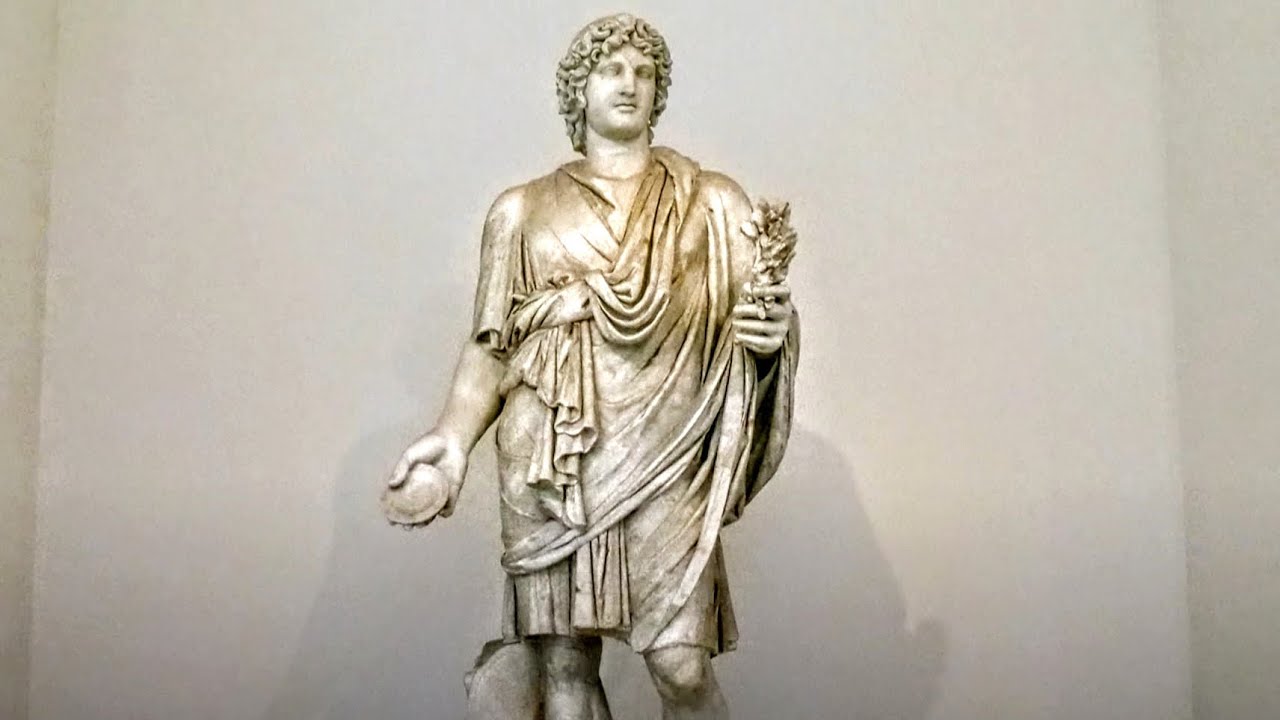
Discover the wonders of the National Archaeological Museum of Naples, home to one of the world’s finest collections of Greco-Roman antiquities.
Step into a journey through history, from monumental sculptures like the Farnese Hercules to exquisite mosaics from Pompeii and Herculaneum, preserved after the eruption of Vesuvius in 79 AD. Explore treasures like the Farnese Bull, ancient frescoes, and artifacts that reveal the daily lives, beliefs, and artistic mastery of the Romans and Greeks.
Each gallery unveils timeless stories and stunning craftsmanship, making this museum an essential visit to experience the grandeur of ancient civilizations.
Director : Jacques VICHET
9 Comments
Do advise how or where one can obtain the original non-pixelated version. Thanks.
Exploring the Treasures of Naples' National Archaeological Museum
* 0:00:46 Museum's Origins: The museum is housed in a 15th-century palace, initially built for the University of Naples, and was repurposed as a museum in the late 18th century, opening in 1816.
* 0:01:16 Diverse Collections: The museum features collections from various sources, most notably the Farnese collection inherited by the royal family of Naples, and artifacts from Herculaneum, Pompeii, and nearby villas.
* 0:01:34 Farnese Collection: This collection includes numerous sculptures from ancient Rome, offering a comprehensive look at Roman sculpture during the Imperial period (1st-3rd century AD).
* 0:01:52 Pompeii and Herculaneum Artifacts: The museum houses objects and artworks, including mosaics and paintings detached from walls and floors, providing an essential complement to visiting the archaeological sites.
* 0:02:45 Layout: The museum's layout includes a large central hall leading to a staircase, from which various departments can be accessed.
* 0:03:00 Notable Sculptures: The museum features statues of Atlas, Emperor Augustus, Emperor Claudius, and the god Oceanus, among others.
* 0:04:52 The Farnese Collection: Named after a powerful Roman family, this section includes portraits of Greek philosophers, intellectuals, and various Roman copies of Greek sculptures, such as those of Aphrodite.
* 0:08:29 Antinous Statues: Several statues depict Antinous, a young man favored by Emperor Hadrian, who was often portrayed as a god after his mysterious death.
* 0:09:09 Roman Copies of Greek Art: The Romans frequently copied Greek artworks, particularly those of deities. These copies provide invaluable insights into Greek art, as most originals are lost.
* 0:10:16 Farnese Bull: This colossal sculpture group, found in the Baths of Caracalla, depicts the mythological torture of Dirce and is crafted from a single marble block.
* 0:12:37 Farnese Hercules: This sculpture is a copy of a Greek work by the sculptor Lysippus, showcasing Hercules in a melancholic pose despite his strength.
* 0:13:48 Apollo and the Muses: The museum displays depictions of Apollo, the god of arts, and the Muses, including Urania, the Muse of astronomy.
* 0:15:04 Pan and Daphnis: This sculpture group, restored from fragments, portrays the god Pan teaching the young Daphnis to play the flute.
* 0:16:13 Ephesian Artemis: This statue, a copy of the famous Ephesian Artemis, depicts the goddess wrapped in a narrow dress adorned with emblems of fertility and zodiac signs.
* 0:17:01 Hermes: This type of statue was commonly used by Greeks and Romans to mark boundaries. The museum's example depicts Hercules.
* 0:17:35 Urania Statue: This large statue, found in Rome and restored, is debated to be either Urania or Erato, the Muse of love poetry.
* 0:18:34 Restored Artemis: This statue, originally depicting Artemis, was restored as one of the nine Muses, showcasing the common practice of restoring damaged works with potential misinterpretations.
* 0:19:11 Aphrodite (Venus): The goddess of love and beauty is depicted in various forms, including the Capitoline Aphrodite, known for her voluptuous anatomy and modest pose.
* 0:20:20 Tyrannicides: This sculpture group copies a famous work honoring Harmodius and Aristogeiton, who killed the Athenian tyrant Hipparchus.
* 0:21:09 Dionysus and Satyrs: Sculptures and reliefs often depict Dionysus (Bacchus) with satyrs and maenads, reflecting his association with wine and revelry.
* 0:22:19 Roman Copies of Classical Art: During Hadrian's reign, Romans frequently copied Greek statues, particularly those from the Classical period, such as the head of Artemis (Minerva for the Romans).
* 0:22:49 Isis: This statue, found in Rome, portrays the goddess Isis, whose cult spread throughout the Mediterranean and was prominent in Rome.
* 0:23:17 Hera (Juno): The goddess of home and family, often depicted in an imposing pose with a crown, reflecting her status as Jupiter's wife.
* 0:23:51 Farnese Collection Provenance: Most works in the Farnese collection were discovered in Rome between the 15th and 17th centuries, serving as decorations and testaments to the city's history.
* 0:25:47 Imperial Portraits: The museum features a series of imperial portraits tracing the history of the Roman Empire, from Augustus to the 3rd century, including Vespasian, Tiberius, and Marcus Aurelius.
* 0:29:31 Other Portraits: The museum also displays portraits of philosophers, Greek statesmen, and other figures, often designed by Greek sculptors and copied by the Romans.
* 0:30:45 Seneca Bust: A bust previously thought to be of Seneca was later identified as a pseudo-Seneca after a more accurate bust was discovered.
* 0:31:09 Hadrian's Temple Reliefs: These reliefs, from the pedestal of Hadrian's Temple, depict figures from the provinces of the Roman Empire and decorative military trophies.
* 0:32:41 Upper Levels: The upper levels include the Hall of the Sundial and rooms dedicated to artifacts from the Villa of the Papyri near Herculaneum, which contained numerous statues and a library of papyrus scrolls.
* 0:33:49 Mythological and Historical Battles: Four statues in the Villa of the Papyri evoke mythological and historical battles, including a naked giant, an Amazon, and two Galatians.
* 0:34:30 Dionysus (Bacchus) in Mosaics: Similar to sculptures, mosaics often depict Dionysus with satyrs and maenads, reflecting his popularity in Roman society.
* 0:35:02 Mosaics from Pompeii and Herculaneum: The museum houses numerous mosaic floors from these cities, showcasing various techniques and themes, including mythological scenes, landscapes, and depictions of gods like Poseidon and Dionysus.
* 0:36:40 Chained Lion Mosaic: This large mosaic from the House of the Centaur in Pompeii depicts a lion chained by Cupids under the supervision of Dionysus and Ariadne.
* 0:37:00 Theseus and the Minotaur Mosaic: This emblema, made with a rougher technique, depicts the popular legend of Theseus fighting the Minotaur.
* 0:37:34 Philosophers Mosaic: This mosaic, dating back to the 2nd century BC, shows a group of philosophers conversing under a tree, each with a symbol of his specialty.
* 0:38:18 Poseidon and Amphitrite Mosaic: This emblema depicts the triumphant chariot of Poseidon and Amphitrite, pulled by sea centaurs and surrounded by Cupids.
* 0:39:47 Nilotic Landscape Mosaic: Found in the House of the Faun, this mosaic depicts Oriental animals evoking Egypt, possibly as a compliment to the struggle between Alexander and Darius.
* 0:40:59 Battle of Issus Mosaic: This renowned mosaic from the House of the Faun depicts the battle between Alexander the Great and Darius, showcasing exceptional detail and expressiveness.
* 0:42:12 Paintings from Pompeii and Herculaneum: The museum has an extensive collection of paintings detached from the walls of houses in these cities, depicting mythological stories, heroes' adventures, and everyday life.
* 0:43:57 House of Jason Frescoes: These frescoes, dating around 10 AD, feature mythological themes and a softer, more impressionistic technique.
* 0:44:35 Erotic Art and the Secret Cabinet: The museum houses a collection of erotic art, long considered indecent and restricted, gathered in the so-called Secret Cabinet, which was fully opened to the public only in 2000.
* 0:45:32 Depictions of Priapus: Many private individuals possessed representations of the fertility god Priapus, often depicted with an enormous erect phallus, as a form of protection for the house.
* 0:46:15 Erotic Paintings in Private Homes: Wealthy individuals might have erotic paintings in their private rooms or baths, possibly to inspire the master of the house.
* 0:46:44 Roman Attitudes toward Sex: The Romans had fewer taboos about sex than later civilizations, and erotic art was common in both private homes and places of prostitution.
* 0:47:04 Erotic Art in Brothels: Many examples of erotic art have been found in Pompeii's brothels (lupanar), often with inscriptions indicating the prostitute's name or a naughty commentary. These paintings might have served as signs indicating the specialties of the prostitutes.
* 0:47:45 Artistic Style of Erotic Art: The same artists who created mythological paintings also made erotic ones, resulting in similar styles and settings.
* 0:48:06 Conclusion: The National Archaeological Museum of Naples offers a comprehensive look at Roman civilization, showcasing the Farnese collection, artifacts from Pompeii and Herculaneum, and a wide range of artworks that bring to life the Romans of 2,000 years ago.
I used gemini-1.5-pro-exp-0827 on rocketrecap dot com to summarize the transcript.
Cost (if I didn't use the free tier): $0.04
Input tokens: 21150
Output tokens: 2172
🎉❤
Background music is incredibly annoying. 👎🏻
My heart goes out to translator Patrick Dahn and particularly to English language narrator Molly Keane for the absolute ordeal that they obviously went through dealing with subject matter with which they were totally unfamiliar. The translation of this French production was peppered with inaccuracies but poor old Molly, struggling to pronounce Italian, Roman and Greek names filled me with pity. I can forgive her "Hoolio – Cladian dynasty" (Julio – Claudian) – they were Roman btw, not Mexican. However the wear on my teeth every time Molly said "Ark-o-logical", was intolerable. It's 'Archeological,' Molly – six syllables.
Loved it!!!! A shame you couldn't share the erotic pics. Christianity really gas lighted the mind…..sadly. Thanks. James
✓✓ ΠΩΣ ΞΕΧΩΡΙΖΑΝ ΤΑ ΕΛΛΗΝΙΚΑ ΚΑΛΑΙΣΘΗΤΑ ΑΓΑΛΜΑΤΑ, ΑΠΟ ΤΑ ΜΕΓΑΛΑ ΚΑΙ ΚΑΚΕΚΤΥΠΑ ΡΩΜΑ'Ι'ΚΑ…. ΜΑΣ ΤΑ ΚΛΕΨΑΤΕ, ΟΠΩΣ ΟΛΟΙ ΟΣΟΙ ΠΕΡΑΣΑΝ ΑΠΟ ΤΗΝ ΕΛΛΑΔΑΝ ΜΑΣ, Α Λ Λ Α' ΑΠΑΙΤΟΥΜΕ ΤΗΝ ΕΠΙΣΤΡΟΦΗΝ ΑΠΑ'ΝΤΩΝ ΚΑΙ ΝΑ ΠΑΤΕ ΝΑ ΔΙΔΑΧΘΕΙΤΕ ""ΚΑΛΕΣ ΤΕΧΝΕΣ""',
"ΑΘΛΙΟΙ ΕΥΡΩΠΑΙΟΙ…
✓✓ ΠΑΝΤΑ ΚΑΙ ΠΑΝΤΟΥ ΘΑ ΕΙΜΕΘΑ ΠΡΩΤΟΙ ΚΑΙ ΠΡΩΤΑΓΩΝΙΣΤΕΣ ΚΑΙ ΘΑ ΜΑΣ ΦΘΟΝΕΙΤΕ ΕΣΑΕΙ', Α Λ Λ Α' ΔΕΝ ΘΑ ΜΑΣ ΦΘΑΣΕΤΕ Π Ο Τ Ε'
— ΚΑΚΟΜΟΙΡΗΔΕΣ….
ΠΕ.2/1/2025 1.51πμ
А в музее Неаполя есть каменная эпитафия , на которой перечислены города погибшие от извержения вулкана Везувий в 1631 году , и среди них есть Помпея и Геркуланум. Так когда именно их засыпало , в 1 веке нашей эры , или всё-таки в 1631 году ???
Love how the ancient Romans were not afraid to display raw stark naked masculine beauty dongs and all!😊