
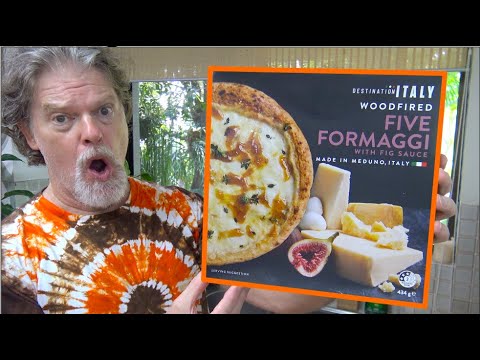
Today I try the Destination Italy Five Formaggi Pizza Review
Join this channel to get access to perks:
https://www.youtube.com/channel/UCGXHiIMcPZ9IQNwmJOv12dQ/join
Help me pay for the videos I make
buymeacoffee.com/Greg0
Send a SUPER THANKS!
Tip me on PayPal paypal.me/GregHadley
Become a Patreon https://www.patreon.com/GregsKitchen
₿ Help Support the Channel by Donating Crypto ₿
BTC address 3EaX4gS4Tmr7P967pLt3AVYLnLqWEQshVe
CHECK OUT MY MERCH
https://www.redbubble.com/people/gregskitchen/shop?asc=u&ref=account-nav-dropdown
Want to send me something?
Greg Hadley
Parcel Locker 10152 29029
Pacific Fair Sc 2 Hooker Boulevard
BROADBEACH WATERS QLD 4218
Join me on Rumble: https://rumble.com/c/c-2446082
Instagram : greg.eats
#DestinationItaly #FiveFormaggi #PizzaReview #frozenpizza
44 Comments
"For-ma-je" and it's Italian for "cheeses".
Undercooked, I see Grego doing this time and time again.
Morning bro
Greggo's fingers are like asbestos after all the burns.
😆
That actually didn’t look too bad. I agree there should have been more stringy cheese as it gave an impression of being old and crappy. Overall I would give that a good rating myself
bang on 434 grams
Gorgonzola is the blue cheese like flavor cheese
Yes I think I will have a pizza for tea
Cheers Greg
🤣
still love ya grego
eyes after seeing that stoner t-shirt 😶🌫😶🌫😵😵😵👹👹🤣🤣
You never bake pizzas long enough!
You want stretch? Put both hands on yer junk and pull! 😂
You want stretch? Put both hands on yer junk and pull! 😂
"french for cheese" legend
What a tee shirt Grego!!! Where did you get it? Bong on!
have you ever cut a pizza in 6 pieces because you cant eat 8 pieces .
Perfect gramage. So random
Doesn't look cooked greggles
Good afternoon Greggo! Well, 7:30 am where I am
Interesting French spelling for cheese. Over here, it’s “fromage” I think
Love the shirt Shaggy
The blue cheese flavour is the gorgonzola cheese. Bloody delicious on a beef steak.
Need to try festival pizza
🍕🇮🇹🤔😉👍🏻FROM ANCIENT ROME TO NAPLES, THE TRUE HISTORY OF PIZZA (google translate)
The origins of this dish, which represents a monument of Neapolitan cuisine in the world, are truly ancient and do not exactly begin in Naples.
We are in ancient Rome where the farmers, after having learned to cross the different types of spelled known to give life to flour (its name derives from "far", which in Latin means spelled), knead the flour of wheat grains ground with water, aromatic herbs and salt to give life to a sort of round focaccia which they cook on the hearth, in the heat of the ashes. Thus was born only an idea of what the pizza we know today will be: a lot of ingredients are missing, many of which will arrive only after the discovery of America.
The first written sources that refer to the word "pizza" are official documents. The oldest reference dates back to the vulgar Latin of the port city of Gaeta in 997, as compensation for a rental contract for a mill located in the territory of the current Municipality of Castelforte. The word "pizza" then returns in another contract dated 1195 and drawn up in Penne, Abruzzo, then again in a lease dated January 31, 1201 in Sulmona and later in that of other Italian cities such as Rome and L ‘Aquila. It still recurs in the documents of the Roman Curia of 1300, where we speak of "pizis" and "pissas" referring to some typical bakery products, of that period, in the center-south of the peninsula, especially in Abruzzo and Molise. Naples to a crushed bread was given the name of pizza which derives from the distortion of the word "pitta". In 1535, finally, in his Description of the ancient places of Naples, the poet and essayist Benedetto Di Falco says that "focaccia, in Neapolitan is called pizza". So it becomes official: even in Campania, pizza has undergone a long process of transformation. During the 16th century, olive oil gradually began to take the place of lard, cheese was added and aromatic herbs were used. And so a recipe characterized by the use of green and fragrant basil makes its appearance, the pizza "alla Mastunicola" (in dialect, by the master Nicola).
In 1600 we can say that we are in the midst of the modern history of pizza. Bread dough cooked in wood-fired ovens, seasoned with garlic, lard and coarse salt, or, in the “richer” version, with caciocavallo and basil. With the discovery of America, then, the tomato also arrives in Italy and everything changes taste. The tomato was first used in the kitchen as a sauce cooked with a little salt and basil, while later someone had the intuition to use it raw – or maybe they just forgot to cook the sauce first, who knows? – inventing, unwittingly, the pizza as we know it today. Even without mozzarella, which instead enriches this story with flavor only in the nineteenth century. The same century in which, by now, pizza is widespread among the populace, but not only. Even the nobles eat it with great pleasure: barons, princes and rulers, so much so that it ends up on the tables during the receptions of the Bourbons, while Ferdinand IV cooks it in the Capodimonte ovens. A not marginal aspect of the history of pizza is precisely this: its function as a glue between high and low people, a gastronomic culture that for the first time levels social distinctions. A great novelty if we consider that food had always been one of the distinctive elements of the powerful with their sumptuous banquets compared to the misery of the tables of the last.
The first pizza recipe as we know it today is reported in a treatise printed in Naples in 1858, which describes the way in which the "real Neapolitan pizza" was prepared in those years. When the city was still the capital of the Kingdom of the Two Sicilies, Francesco De Bourcard in Uses and customs of Naples described and depicted contours even goes so far as to mention a sort of pizza Margherita ante litteram, with mozzarella and basil. The tomato, then, is still something optional, while for the condiments, it says, you can use "whatever comes into your head". Yet towards the end of the nineteenth century pizza with tomato and mozzarella even reached America thanks to the Italians who emigrated to New York where in Little Italy it is made exactly like in Naples, after Neapolitan pizza makers had given birth to various types of pizza among the population, it reached its official approval in 1889, on the occasion of the visit to Naples of the King of Italy Umberto I and the queen consort Margherita. And this is really a topical moment: during the walk in the city, the rulers were greeted by Raffaele Esposito, the best pizza maker of the time, owner of the historic Brandi pizzeria (founded in 1780), who made three classic pizzas for them: “pizza alla Mastunicola” (made with lard, cheese, basil), “pizza alla Marinara” (tomato, garlic, oil, oregano) and tomato and mozzarella pizza (tomato, oil, mozzarella, oregano), made in honor of Queen Margherita and whose colors deliberately recalled the Italian tricolor. The sovereign appreciated the latter so much that she thanked and praised the pizza chef who had made it in writing. Thus was born the Pizza Margherita. In the twentieth century, pizza entered fully into people's lives and over time variations of any kind have been added, for all tastes.
Its disruptive passage in the tables of the whole of Italy follows the Second World War. Pizza leaves the borders of Southern Italy to land in the North where, with the industrial boom in the Milan, Turin and Genoa triangle, thousands of emigrants move with their families with their ways, uses and customs (and with their typical dishes). Its popularity is also undisputed in the North. In the 1960s, then, pizzerias arrived practically all over the country. And within a few years, all over the world.
In 2017 "The traditional art of the Neapolitan pizza maker" was recognized as part of the cultural heritage of humanity, transmitted from generation to generation and continuously recreated, able to provide the community with a sense of identity and continuity and to promote respect for cultural diversity and human creativity, according to the criteria established by the 2003 Unesco Convention. This art represents the eighth Italian recognition in the UNESCO Intangible Heritage list and is the third national inscription in the food and wine tradition, (after the "Mediterranean Diet", a transnational asset registered in 2013, and "The sapling vine of Pantelleria" registered in 2014).
From China to the Middle East, from Eastern Europe to South America. Everyone no longer knows how to do without it. Luckily!
Parmagiano Greggiano~
Italian wonder if eating this pizza made you feel like you milan on your feet?!
Lovin' the shirt Greggo. Your channel is awesome!!!
As an Italian Australian, the first 30 seconds of this video triggered me big time! Love you Greggo!
Fruit doesn't belong on a Pizza!
It looks great for frozen. Figs n cheese are awesome.
Thanks for the Entertainment
good on ya Greggoc
let me put my special sauce on it daddy Gregg
Grego it looks better end wot the other pizzas are in the supper market thay are getting better 👍
It's the best frozen pizza at the supermarket, in my opinion. Shame. I can't seem to find it anymore at my local Wollies or Coles anymore. 😞
How can something taste good but have no flavour?
Oh Hail No! Yuck!🤮
Just get a pizza from the local pizza shop dont struggle with this crap haha
That bleu cheese taste is definitely the gorgonzola! A drizzle of honey over a multi cheese pizza is always delicious
Stone the crows Grego that is winner winner pizza dinner better then a nuked Dominos. I have ideas to increase the 434grams by byo additions like olives, sundried tomatoes and the crust looks great.
What you've got there is a big slab of crap. No doubt about it