
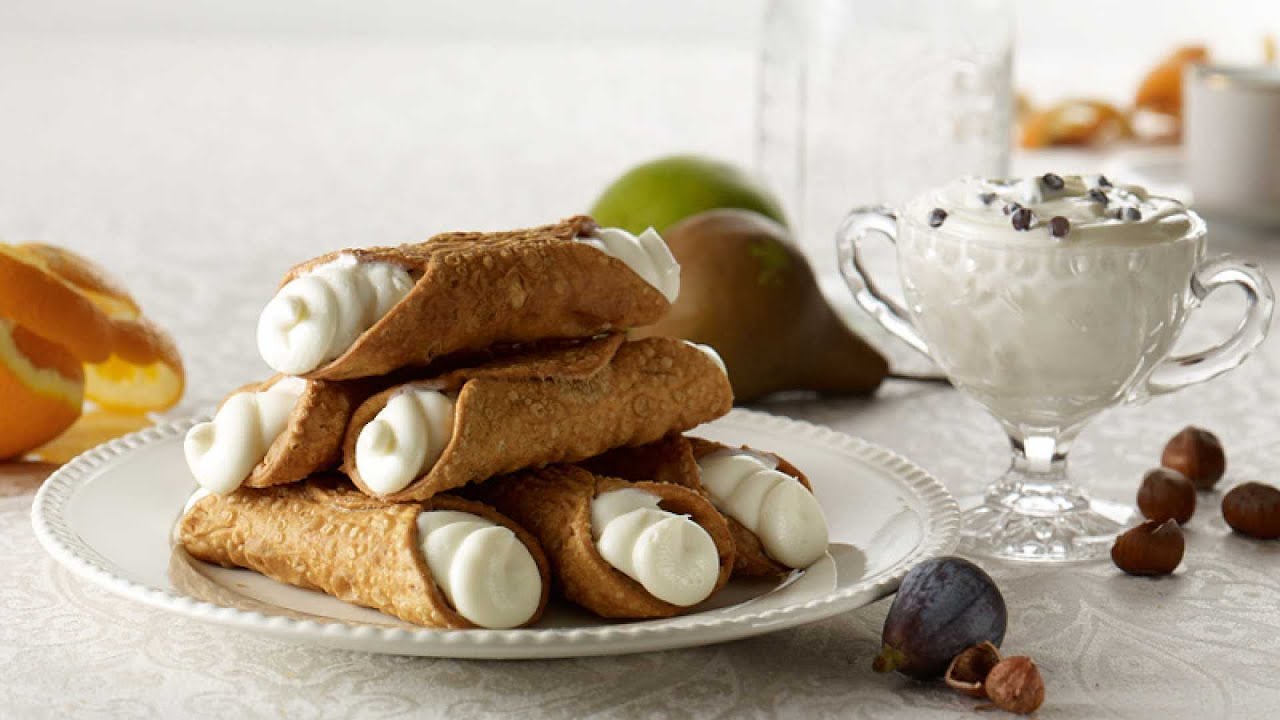
We’ve talked about tiramisù and gelato, so let’s talk about another very popular Italian dessert, cannoli! These are incredible pastries that originated in Sicily. What is their history? What are their ingredients? How are they made? Let’s find out!
Script by Patrizia Farina, Professor of Italian at Western Connecticut State University and Purchase College.
Watch the whole Italian playlist: http://bit.ly/ProfDaveItalian
American History Tutorials: http://bit.ly/ProfDaveAmericanHistory
Classical Physics Tutorials: http://bit.ly/ProfDavePhysics1
Modern Physics Tutorials: http://bit.ly/ProfDavePhysics2
General Chemistry Tutorials: http://bit.ly/ProfDaveGenChem
Organic Chemistry Tutorials: http://bit.ly/ProfDaveOrgChem
Biochemistry Tutorials: http://bit.ly/ProfDaveBiochem
Biology Tutorials: http://bit.ly/ProfDaveBio
EMAIL► ProfessorDaveExplains@gmail.com
PATREON► http://patreon.com/ProfessorDaveExplains
Check out “Is This Wi-Fi Organic?”, my book on disarming pseudoscience!
Amazon: https://amzn.to/2HtNpVH
Bookshop: https://bit.ly/39cKADM
Barnes and Noble: https://bit.ly/3pUjmrn
Book Depository: http://bit.ly/3aOVDlT
In this series we have already discussed one of the staples of the Italian dessert menu, the delicious tiramisù. So now let’s talk about another very popular one. Cannoli are Italian pastries that are very well known in the Unites States, as well as all over the world. These pastries are part of the list of Prodotti Agroalimentari Tradizionali, which is the official approval list for the most typical Italian edible products. This list is for food what the UNESCO list is for protected geographical sites. The first thing that must be made clear is that the word cannoli is a plural word. So, asking for one cannoli is a contradiction in terms. This is just the same as when people ask for a biscotti, as this is also a plural word that means cookies, the singular being biscotto. So we would not ask for a cannoli any more than we would ask for a cookies. In fact, the singular word is cannolo, so you should be using this word when ordering only one of these pastries. With that understood, let’s learn about cannoli, their history, features, and preparation. Cannoli may be very well known, but their history is not. Nothing is absolutely certain, so we have to look to legends and suppositions. We do know that this particular dessert is very old, although it went through variations that probably looked a little different from what we know today. The name comes from the Latin canna which refers to a reed from the river. These pastries look like little pieces of reed, and reeds were also used to roll the dough which constitutes the outer shell of this pastry. The very first relevant historical reference is attributed to the Latin writer Marcus Tullius Cicero, who during a trip to Sicily in the year 70 BCE was captivated by a “tubus farinarius dulcissimō eduliō ex lacte fartus”, meaning a tube made with flour filled with very sweet stuffing made with milk. This already sounds pretty close, but it’s not exactly what we picture today. The Sicilian origin seems certain, though. Many believe that in order to get something like the current dessert, we need to consider the Arab conquest of this very desirable island. This brings us to the 9th century, the times when the ancient city of Caltanissetta fell under the Saracens, and was called Qal’at al Nissa, which means “castle of women”. One legend says that the concubines of the Emir, who were spending much of their free time in the kitchen cooking new recipes for him, came up with this recipe utilizing items that were common in their culture. If you are skeptical of this legend, perhaps we can consider the other legend, which says that it was probably the nuns of the city’s monastery who were responsible. After all, pastry making was common in monasteries. Goodies were made for the poor, or to raise money to feed the poor. The pastries were originally created to be eaten at Carnevala, right before Mardi Gras and Lent, but now they can be enjoyed all year long. Now let’s talk about the dessert itself. This pastry has two components. First there is the outer shell. This is called scorza, which in Italian means bark. It’s a crunchy outer shell made with flour, sugar, a touch of Marsala wine, and cinnamon, in order to give it the well-known dark color. The pastry has to be kneaded well, and when done properly it will result in small bubbles in the shell when the pastries get fried. The dough will be rolled thin with the help of a rolling pin, small circles will be cut out, and they will be rolled around tubes. Originally the tubes were natural reeds, though in modern times these were replaced by wood dowels or stainless steel cylinders. These will be deep fried, and then comes the tricky part. The shell must be removed from the tube, with great care to prevent the shell from breaking. In fact, this is precisely the reason why cannoli are not readily available everywhere in Italy. Bakers outside of Sicily consider this procedure too tedious and complicated. Now let’s talk about the other component, the filling. This must be made only with ricotta and no other cheese. There can be no substitutions whatsoever. In Sicily they use sheep’s milk, which is sweeter and more digestible. It contains more vitamin C, it has more folic acid, and because it’s fatter than cow’s milk, it’s also more flavorful. The ricotta is drained well overnight, sweetened with a small amount of sugar, and mixed with small pieces of chocolate and candied fruit. In Sicily they have special candied orange strips called capelli d’angelo, which means angel hair, also used in cassata alla siciliana. The filling is piped into the shell. For better appearance, the two ends will be dipped in pistachios, which are not only among the healthiest nuts but in Sicily, but are also outstanding. Remember never to ask for a cannolo already filled. Sicilians will always ask for one to be filled in front of them. They are very picky about the crunchiness of the shell. These days, cannoli can be found in many different countries, sometimes exhibiting interesting innovations. But after learning about the history of this dessert, we will likely have more appreciation for the original. Be sure to try a few the next time you’re in Italy!
35 Comments
U making me hungry
looks so yummy
Biscotto comes from the Latin biscoctus, or twice cooked. Only such twice baked cookies like biscotto are accurately named, single baked cookies are not, strictly speaking, biscotti.
Alright I’m almost certain you’re choosing topics out of a raffle bowl.
I like how he's speaking with a totally normal American accent, then he just pops a perfect 🇮🇹cannoli🇮🇹
Well shit, now I need some cannoli.
I had a blueberry one last month!
Dave, I'm disappointed about the faux progressiveness, while being ethically/ logically inconsistent, when it comes to animal abuse. By contributing to history's largest holokauston (90 billion land animals, and trillions of marine life annually for the momentary pleasure of the tongue). Violating the well-being of innocent sentient beings against their will to live without suffering. It is not a personal choice, as there is a victim, in which you would be begging for mercy in, if you were in their position. "Humane slaughter" is an oxymoron. You are ethically/ logically inconsistent, appealing to cognitive dissonance, and the ostrich effect due to societal conditioning. Dairy entails; slavery, r***, orphaning, exploitation, torture, and killing.
"And it's not just the money. It's a pride thing. All our food: pizza, calzone, buffalo moozarell', olive oil. These f***s had nothin'. They ate pootsie before we gave them the gift of our cuisine. But this, this is the worst. This expresso sh*t" – Paulie "Walnuts" Gualtieri (Sopranos) ©
———-
😅😂
my sister's boyfriend is half Italian and half african
i'm going to ask him about this next time i see him
Love em, fun topic, cheers!
Let's see if a delicious Cannolo can get more views that Mr Tour lol
Pistachios are just nuts.
Gotta take a leak now
Has subboor contacted you?
Oh nooo, why cinnamon?? I would really like to taste cannoli, but I can't stand cinnamon.
Dave I love you
Ottima pronuncia! Come italiano approvo questo messaggio. Canna also means joint 🙂
Excellent video. Also, someone needs to make sure the boys at Distractible see this.
Weird suggestions but it would be cool to see you react to the animation vs science(math,phys, geometry atm) videos from alen becker and explaining whats going on in some of those videos.
Education Dave vs Debunk Dave are so wildly different its hard for me to believe they're the same person!
I just now realized that "farina" is "flour" in Italian.
Dave doesn’t have a Lambo.
take the value of cannolo and add with itself, take the resulting cannolli and conjugate it with the leftmost frequency to the croissant of one and you will have your answer
Dave covered so much science in his tutoriels that he got bored and decided to upload videos about italian food 🔥
You know what's really annoying? When someone is just speaking normal english for 3 sentences and then hits you with the è𝓮é𝓮𝓶𝓸ḫ-𝔃ê𝓱-𝓻éé𝓱𝓱ḩ𝓱𝓵
Yeah, i get it, you're cosmopolitan, yada yada respecting cultures blah blah just fucking speak English
Dave, Daily Dose of Wisdom may be your next one.
It*lian "culture" 😂😂😂😂😂
I love how we go from science lessons and debunking pseudoscience to food
I only knew this channel from the debates. I was pleasantly surprised to see so many cool videos like this one. Very fun and informative!
Do more flat earth videos, professor flat earth. These videos are dogshit and get no views :'(
Is this guy by chance a Jew?
hey mr salad
The Platonic Solids are the conjugations in Cannolis.
RE: Cicero (@ 1:59). Interesting that "fartus" is Latin for "sandwich"–as I check Google translate. Hmmmmm.