
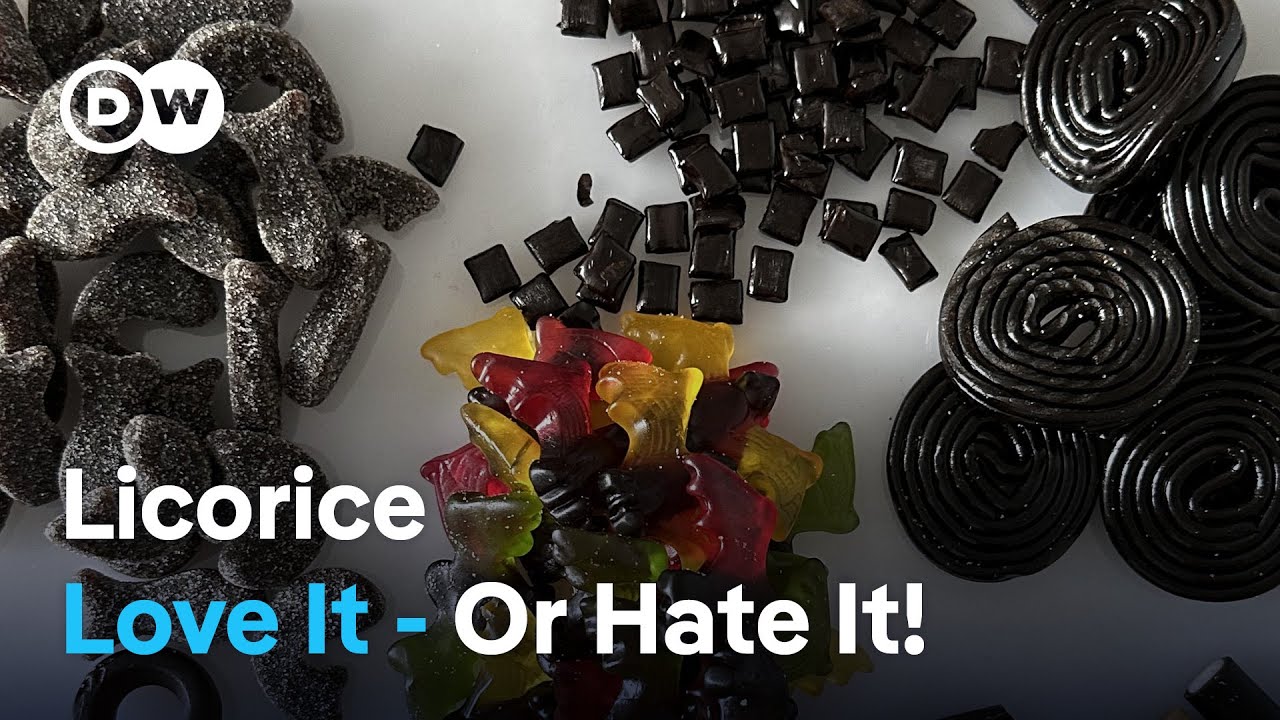
Licorice divides opinions. Some love the sweet, others hate it. What surprises many is that the oldest licorice factory in the world is located in Calabria, in the south of Italy. The “Amarelli Fabbrica di Liquirizia” has been producing licorice since 1731. The region is considered the most important growing area for licorice, the root of which is used to make licorice. Northern Europeans are generally considered to be licorice lovers, while southern Europeans tend to be licorice haters. The Dutch are world champions: per capita, they consume 2 kilograms of the “black gold” per year.
CHAPTERS:
0:00 The Tasting
0:47 Introducing Licorice
1:04 The Licorice Plant in Calabria
1:40 How to use the roots of the plant
2:22 Licorice Production
3:02 How Licorice has changed over the years
4:04 How Licorice divides opinions
CREDITS:
Report: Gönna Ketels
Camera: Andreas Haas, Marco Borowski
Edit: Andreas Hyronimus
Supervising Editor: Ruben Kalus
#sweets #licorice #food
————————————————————————————
Subscribe to DW Food:
https://bit.ly/DWFood_Sub
DW Food brings you the perfect blend of culinary trends, easy DIY recipes, exciting food secrets & a look behind the scenes of Europe’s culinary culture.
This one seems good. Either you love it, or you hate it. There’s not much in between with licorice and how it actually tastes. Almost like earthy and tangy at the same time. Coca-Cola. We can agree: it’s generally dark brown to black. It can be sweet or savory or have a bite, and it triggers strong opinions. Licorice comes in many kinds. We’ll go over what this mysterious tidbit actually is and where it comes from. It all begins with the inconspicuous little licorice plant, native to western Asia and the Mediterranean region. The region in Europe best known for it is in southern Italy. Rossano, in the Calabria Region, is home to Europe’s oldest licorice makers. The Amarelli family has been making licorice by the same unchanging recipe since the 18th century, using only one ingredient: dried licorice root. They only use the sweet part of the stem. In the factory’s kettle hall, the juice extracted from the shredded licorice root chips is boiled down to a thick syrup. This is where it naturally acquires its dark coloration. Heating dissolves the activated carbon in the root. As soon as the paste is thick enough, it’ll be cut into strips to cool and harden even more. Rolling out and portioning step by step produces the typical lozenge form. The Amarelli family began selling licorice around 1500 and opened their factory for block licorice in 1731. At the time, it wasn’t considered a food. But even as candy, licorice really should be enjoyed in moderation. It can raise blood pressure. The Amarelli’s licorice museum next to the factory traces the evolution of licorice from a medication to a treat, the grown-up kind and the sweet candy. Today, the company produces soft gummies and blends with chocolate. But the bestseller is still the original: lozenges made of pure licorice. I think it’s: either you like it, or you don’t like it, it’s nowhere in between, I think. I enjoy a licorice presence in small quantities. Personally, I don’t really like licorice. It’s the best candy I know. It’s different sweets for different peoples. Salty licorice is popular in Scandinavia; sweet licorice is preferred in southern Europe. But the Dutch consume an average of two kilos per person per year. And what do you think of licorice?
23 Comments
Dutch licorice is the best Munde drops
I'm currently in hospital, and liquorice is my saviour!
Absolutely love it. As a kid I used to chew on the root. I like all kinds but I have a soft spot for the the ones with honey.
I like good quality licorice, but the cheaper quality ones (usually artificially flavored) are horrid!
We Americans hate Black Licorice
Liquorice liquor from Calabria in Italy is also very well know! To drink in a shot glass with 1 ice-cube.
I prefer salted liquorice from Finland, the ammoniac salt is a very specific taste.
Dille & Kamille and Sostrene Grene have a great choice of liquorice.
It's made from dead rats
Star anise is the flavor of black licorice
Though you can make it with other flavors like strawberry or fruits
Lakritz ist meine absolute Lieblingssüssigkeit! Ich liebe deutsches Lakritz und auch niederländisches aber auf keinen Fall das spanische, weil es zu sehr nach Anis schmeckt. Getrocknete Lakritzwurzeln lutschen ist ein absoluter Genuss!
I adore licorice and used to eat tons of it until I discovered it was probably making my heart condition worse. For people like me who are/were unaware … licorice can damage your heart, cause arrhythmia and even heart attack IF you have heart conditions, high blood pressure etc. I was told 8 years ago to stop eating it. Makes me sad but I thank the creators of this video for making mention @3:36 of the blood pressure issue.
I just love it, from the long snaky strips to the Allsorts 😋😋❤❤❤
You should try a saffron risotto with a sprinkle of powdered liquorice on top!
Schnecken
My favorite for decades
Love it!!😅
love it ! But I am Dutch…
I love it but there are very different tastes, the bitter version as children we called horse-blood – it was bitter and not really to a child's liking. I cannot recall if what we called horse-blood was Scandinavian or Dutch or even German – I like the sweeter variations. This was most interesting. Thank you.
Like it
For me chewing the root, bonbons, or any other form, sweet or savory, licorice it’s the best
Anise licorice anise schnapps, nine.
Love it especially double salted. Just bought 2 bags today.
Licorice is the king of candy!!!
ich liebe Amarelli Lakritz!
Loved licorice even as a small child. At 80 now, I still do. Learned a lot here. Thanks for the video.