
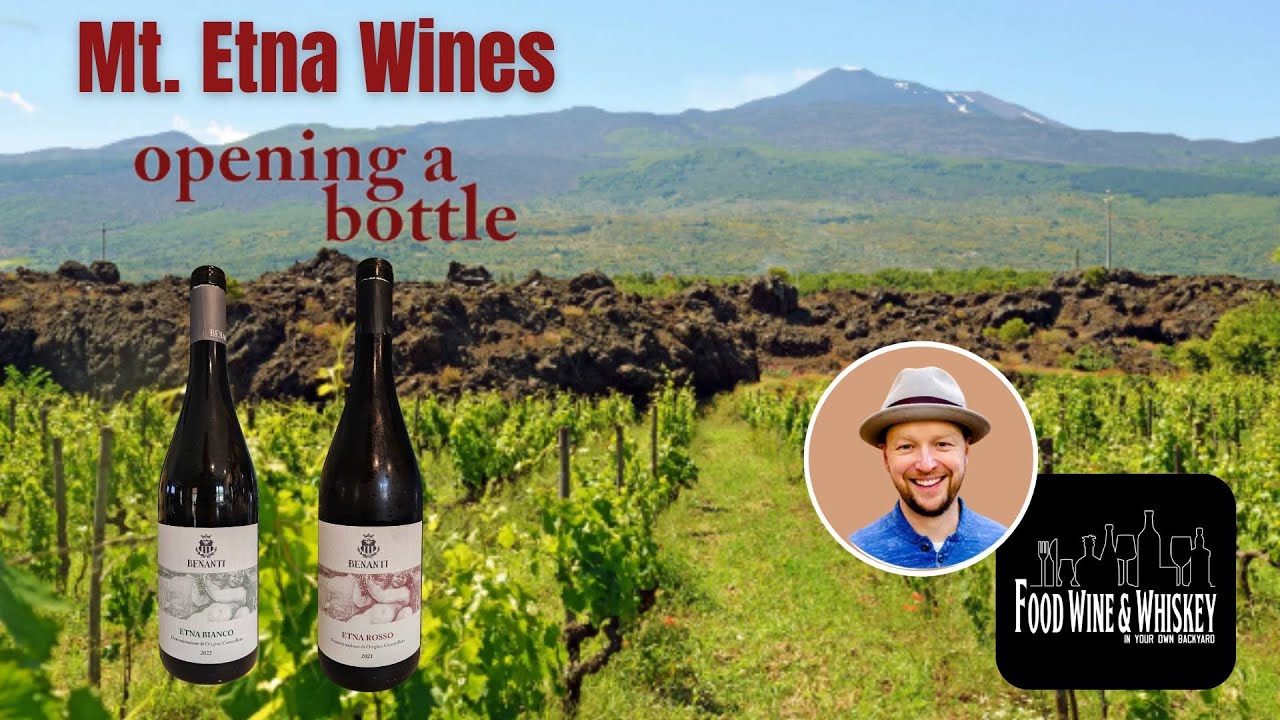
Kevin Day editor-in-chief of Opening A Bottle Magazine is back on the show and we discuss the wines of Mt. Etna. Etna Bianco and Etna Rosso are the two outstanding wines that we discuss. We also talk about the geography of Sicily and Mt. Etna, its location, the terroir and climate. If you haven’t had a Etna Rosso or Etna Bianco you need to, these are two wines that are on even footing with the wines from Barolo and Brunello.
Openingabottle.com is a great resource for French and Italian wines. Kevin has been generous and will give a discount code FWWP30 for the listeners. The annual cost is $50, which is already very reasonable, but with the 30% off you pay $35 for your first year. Go to Openingabottle.com and subscribe and at checkout enter the code for the savings.
Here is a link for some fantastic photos of Mt. Etna from Kevin Day
https://photos.openingabottle.com/index/G0000IbYfsMT_438
You can contact or follow Kevin / Opening A Bottle as follows:
openingabottle.com
IG – @openingabottle
Contact or Follow Rob:
www.foodwinewhiskey.com
rob@foodwinewhiskey.com
@foodwhiskey on X
@food_wine_whiskey on IG
Join the Food, Wine, and Whiskey FB Group
https://www.facebook.com/groups/533352930766813
hey everyone welcome back to another episode thank you so much for stopping in for this episode going to be a fun conversation as you can see by the title uh talking about an area in Italy with some fantastic wines and if you don’t know about this area I I would say it might be the best kept secret in Italy right now but words getting out it’s starting to spread because they’re doing some great things over there um so talking about the wines of Etna today and I have a great guest on he’s been on before this is going to be the editorinchief of Wine magazine opening a bottle and he’s also a Colorado based wine educator Kevin day back on the program how are you Kevin great Rob how are you good I’m doing well man I got wine in the glass I’m doing real well you got you got bante in the glass I do I do as we say that I’ll let you give them a big thank you you kind of coordinated this to get us a couple whites a white and a red a couple of bottles to have while we’re talking about the wines of siisy yeah well you know when you reached out to you know talk about you know where we wanted to talk about next which which area the of uh you know of my expertise which is in France and Italy um you know Etna first came to my mind um partly because I went there in September partly because ET is always on my mind I mean it I don’t I try not to get bogged down in hyperbole too often but it there are few places in the world that are more compelling for wine than this place um and and I mean that not just in terms of what the wines are in the glass but what this volcano is like where these wines are grown it is unusual to say the least so I was really excited to talk about it and you know it’s always nice that we’re drinking the same thing when we do this absolutely and so I I reached out to uh my friends at Wilson Daniels who are an importer of of Fine Wines they bring in some of the nicest wines into America they represent a winery called ban um I’ve known Antonio ban for a few years now uh he’s one of two brothers who oversees this great uh Winery on the slope of Etna and I’ll talk about them in a second but they’re largely credited with the the Renaissance that has happened in Etna they played a very key role in bringing it back from kind of a state of Abandonment in the 1980s and 90s and into the 2000s and so um you know when I I thought of aneta Roso and an Etna biano that could speak volumes about what this place is like you know the kind of typical signatures of ET and a ban came to the to the top of my mind and and I asked and they were they were kind enough to send us each a bottle of their entry level at n Roo and at na biano so thank you to them for for helping us make this podcast possible and this tasting possible yeah I know we’ll get into it in a little bit but I will say I I’ve snuck a couple sips and uh yeah good stuff we’re going to have today it is yeah this is definitely burgundy stemware territory that we’re talking about yeah absolutely well let’s start with you know sisy Mount Etna specifically where are we you know in relation to Italy everybody hears Italy and they think about those those regions that get them there for wine whether it’s Tuscany or pamon or those are the two biggest regions obviously up and down Italy there’s some great regions for wine and Sicily is one of them where is this for those who don’t know yeah so the way I look at Sicily uh I kind of go back and forth I think of Sicily as being on equal footing with pedmont and Tuscany for one um as a wine lover of Italian wines Sicily continues to come to the table with just the most Stellar Wine um of consistency of of quench ability of Versatility at the table and they’re they’re not super expensive and I’m talking about the Sicily in general all of Sicily um and so so that’s one thing that to to know is that Sicily really deserves the kind of respect that we often reserve for pedmont and for Tuscany it’s right there in that conversation I mean people who don’t know that are perking up in their chairs or or whatever they’re doing right now going wait what really yeah they ought do they absolutely I I’ve had enough Sicilian wine at this point that I feel comfortable saying that it’s really and I’ve been there twice in in recent years and every time I go I’m like okay when am I coming back because this place is really fantastic so that’s one attribute to know about Sicily um and really the place that is pulling Sicily you know blazing speed into the future of fine wine is Mount Etna um and so Mount Etna is located in the uh Northeastern corner of Sicily sic is kind of like a triangle shape it’s the largest island in the Mediterranean so it’s pretty enormous it’s also the largest region in Italy so geographically it’s got more square mileage than than Tuscany or Piedmont so it’s enormous um and this volcano is about on Tenth of the island so it takes up an enormous amount of land it’s a it’s a shield volcano so it’s it rises up fairly gradually it’s a strata volcano but it’s unist aable and it rises to 11,000 ft in elevation yet it’s only a few miles away from The Straits of missina so already you’re hearing kind of how crazy this place is right you’ve got an island that is uh basically at the same latitude as parts of North Africa uh you have 11,000 feet in elevation on an active volcano the most active volcano in all of Europe nonetheless one of the most dangerous volcanoes in all of Europe uh and surrounding it on on the Northern slope the Eastern Slope the Southeastern and Southwestern slope is a band of Vineyards forming kind of if you look on a map it’s like a backwards shaped sea that wraps around Mount Etna and this is prime area for white wines red wines but as well as as Rosado so Rosé wines and Spumante which is the sparkling wines of the area the Spumante wines are a little few and far between they’re hard to find on the American Market but they do make Spumante wines there with these grapes um so you may be wondering why not the western slope of Mount Etna the climate is much more conducive for pistachios on that side of Mount at really yeah and and Sicily has the best nuts I’ve ever tasted the almonds but especially the pistachios uh it’s pistachio de Bronte was the is the dop protected designated of origin pistachio and these are like radiant green purple pistachios they have a sweetness to them a delicacy to them and and they have the volcano to thank for that so yeah that see I get to learn something new all the time every time you visit that I did not know that that’s awesome well and and the Sicilians are dessert crazy like dessert can sometimes be a three or four course meal in its own right the end of a three or four course meal and and pistachios they they feature prominently in a lot of the desserts it’s one of my favorite things there is to get a gelato of pistacho De Bronte dop this pistachio ice cream it is it just is killer so wow so Mount Eton is very generous with what it gives to us in terms of Agriculture um and so on those slopes that are more conducive to to Vineyards and to Wine growing um you have obviously volcanic soil at play and volcanic soil is super important because of uh for one it seems to convey an energy to wines universally whenever you go to a place that has volcanic Terre the wines have a different kind of energy to them and it’s one of those mysterious things that is hard to explain scientifically yet if you taste enough volcanic wines and compare them from place to place you tend to notice that this is the case and Mount Etna has that in Spades is energy to these wines I want to ask you you know when we when we talk about Mount Etna being you know it’s active and so every once in a while you you’ll see some billowing of smoke or I’m assuming you still get some lava that that can creep down a little bit oh yeah and so when we hear you know there’s a lot of places around the globe that might mention that they have volcanic soil but this being active and some of those being dormant for a while what are the differences that we might see there or are they are they going to be similar there are differences I think you’re not going to necessarily I hesitate to say you’re going to taste those differences okay as as an wine consumer yet it is very important the differences in terms of how it shapes and molds the terrain for wine making on Etna versus an area where it’s dormant yeah so uh and I’m glad you’re bring this up because I think one of the key attributes of tar that’s so utterly fascinating about Etna and which makes it so complicated to understand and which to me makes it feel like it’s a life mission to understand this place because I’m always going to be learning something about it is the age of the la lava flows that are coming down Mount Etna so if you’re familiar with kilaa as a volcano and how kilaa erupts on the big island of Hawaii there are some similarities between that and Mount Etna Mount Etna will on occasion crack open halfway down the slope and ooze lava all over the place wow um and that’s a real problem if you live there that’s a real problem if you’re basing a business off of you know plants growing on the side of this volcano um it hasn’t happened very recently um I think it’s been a few decades since they’ve had that type of an eruption but what you see when you look on a satellite image of of Etna is all these different black gray pale colored streams of rock emanating from the epicenter of the crater um at various places along the north the East the southeast Southwest slopes um so it it also tends to erupt with with Ash that’s a lot more frequent you have Ash covering the ground fertilizing the soil that way on occasion um it even I mean recently just this year like two months ago Etna had a new feral form on the top of the mountain and it started pumping out smoke rings like it was smoking a cigar I mean these absolute perfect rings of vapor were being emitted at regular intervals out of the volcano and it’s I mean it it really makes the mountain seem like it’s a living being like it’s this little playful child that has a you know a you know a bubble wand or something he’s just pumping out you know smoke rings into the sky and so that kind of lit up you know Instagram and was trending for a time because it was just so compelling and and different so there’s a lot of personality to this wine but when you go back to those lava flows that AR uh that are kind of arrayed at various it’s like spokes on a wheel they all they all kind of come down at different places and they’re different ages the age of those lava flows is going to give you a different Terre from one Vineyard to the next so in the research I’ve done and and interviews I’ve done asking about this phenomenon when you have a lava flow you have Solid Rock obviously but over time it’s going to break down and it breaks down from what’s known as Pioneer plants so these are natural wild native plants that will get their roots and they’ll work their way into the cracks and as they grow they break the Rock apart and break it down very very long ancient process at play but when we’re talking about grape Vines grape Vines of all the agricultural plants that are out there they can handle this sort of thing so they can be Pioneer plants in their own right when they’re planted in a lava flow that is a few centuries old uh so you you can find some Vineyards in fact one of the most famous Vineyards on Mount Etna pH or Marina which is from bante that’s their signature Etna biano wne it’s not a very old lava flow that these Vines are planted in and that’s part of what makes that terar unique you go over you know a a half mile there’s no Lava Flow there that’s have you know that’s been in that vicinity for Millennia and so the soil’s different the terar is different the properties of the microclimate are different and so because of all this potential where you have multiple craters erupting across a large vast volcano you end up having just this incredible tapestry of soil that right now even the wine makers are just figuring out you know they’re they’re still mapping this sort of thing they’re still understanding it but what it leads then the upshot is is the native grapes of Mount Etna the ones that have adapted to these conditions that thrive on that mountain give us a wine that comes from a volcanic soil because you know despite the age all across the mountain it’s uniformally volcanic there are some deposits of clay here and there some other geology types but it’s predominantly volcanic and the wines as a result have just this incredible energy they just kind of Rise it across your pallet they end up being very very versatile with Cuisine um because they have just high acidity um and so part of what’s exciting for me as a wine writer and as a wine educator and why I feel compelled to go back to Mount Etna which I will do later this year I hope is to go and better understand all these different traits and attributes from the different slopes the different Vineyards all of those kinds of things you you left out wine lover I mean you’re you’re a writer and an educator but you you’re also a wine lover well I I am and and like honestly like I I’m a nature lover first and foremost and in wine in wine of all the products that you know humans make for for uh consumption yeah well and the other thing I would say really tells a story about nature in an interesting way that I find interesting one of the things I’ll mention to people who Maybe haven’t listened to an episode you’ve been on before and if they have they’ll know this uh you’re you have a passion for photography and I got to imagine that some of the photos that you can get on Mount ETA have to be just stunning just just absolutely gorgeous yeah they they have been I I should send you uh maybe we could put a link in the bottom of the YouTube or with the podcast yeah I have a gallery of images from there that that people can scroll through and check out because it’s yeah it’s the so a few few stories few little kind of anecdotes from my time there um you know I went to one Vineyard uh One Winery called fuo Cavalieri which is on the south west slope of the volcano and this is a former Monastery and the vines there are very very old they have a few fine Zer that even 300 years old that’s another really unique attribute of Mount Etna is the fact that you have Vineyards that have they date predate phoera they they go back 100 150 years in some cases so they give this very ancient fruit this very concentrated fruit this place was one of those spots and so for me to go and and walk amidst vines that were I mean this was not like any Vineyard I’d ever seen before in my life it was chaos I mean I don’t know how these wine makers make sense of a landscape where you have grapes basically growing off of bushes off of little trees uh they’re on the they’re almost on the ground they’re just you know The Vines have just gone every which way there’s been a a real feral kind of nature to this place and to the some of the Vineyards that at every turn you you know it’s a challenge as a photographer to make sense of it with the eye because sometimes it doesn’t seem like the vineyard has a focal point you know you don’t have these nice orderly rows that you’re walking through you know the vines are not trained uh in the guo fashion for the most part they’re trained um as as little trees but these are trees that for you know decades throughout the 20th century were not went untended so they went every which way that way you know um so that was a really special visit that that Vineyard um and you had a perfect view of of the summit of Mount Etna um the other thing that’s kind of interesting you know as a as a wine lover on Mount Etna is kind of parsing the differences of those slopes so I’ve I’ve referenced that a few times I’m just going to quickly kind of explain it before I go any further and and start talking over my head or talking talking too far down the road before I’ve explained a key concept here but um if you think of that backward shaped sea where The Vineyards are uh the North Slope is where you get a lot of the red wine production um and the North Slope has a lot of its own kind of microclimate conditions that make it unique the East slope is only about four to five miles away from the straight of MSA so it’s it’s in this elevation Zone All The Vineyards are between uh you know roughly 1, and 3,600 feet in elevation on the on the mountain that’s the little Bank where these Vineyards are so you’re at that elevation but you’re only four miles away from the the sea and so this is where most of the white wins are planted is in this area around this town called Milo so you may see Etna bianos etab biano Superior on a label that’s only allowed for wines from this Zone um because this is the best conditions for the white grapes and then you go to the southeast and Southwest slopes and they’re different because of one faces the sunrise and one faces the sunset so the Southwest slope tends to have a very bold character to it because it gets that late day sun it gets the sun all the way until it sets under the Horizon whereas the North Slope is in the shadow of the volcano when the sun sets uh often times so you just kind of have all these different variables at play so yeah you got the lava flows you’ve got the proximity to the straight of mesina you got you know the elevation at play and then you’ve got which which slope are you angled yeah you know obviously it’s it’s like uh it’s like talking about burgundy but with uh you know on steroids in a way in terms of all the variables that are well that that’s a great kind of overview of of the location and the geography of where these wines are made what what about the history of this place I mean you know for those of us who who do know Sis’s uh been a very important part of history when we think about trade and things like that going through that area um but we really don’t think about wine there but you would have to assume just because of that part of the world they’ve been making wine just like other parts of of that part of the world for a very long time so what’s the history with wine and what’s the history of Sicily this place well the the I think the first thing to say is the wines we’re drinking today are are likely very different than the wines that have ever been drunk on Mount Edna just because of the modern infusion of capital and resources and scientific understanding about making fine wine um that that didn’t exist before this 1980s 1990s really 2000s time period so it’s really interesting you’re tasting a wine here that is at once ancient but also very modern if that makes sense yeah the landscape is very ancient the um the cultural history behind the wines and behind tending to the vines is very ancient the grapes are very ancient and the vines are very old but the wines that they’re making today are are in a very clean style um they’re not rustic they’re not uh you know so there’s not those hardess to them yeah yes exactly so that’s kind of an interesting thing to know but if you go all the way back to when you know the first archaeological records of of viticulture are on Mount Etna it predates the Greeks oh wow the Greeks the Greeks landed on Sicily I think it was around like 1,800 BC that they that they landed there and and started kind of promoting their own viticultural ways and you know so there’s there’s evidence that these wild vines and Etna have been together for a very very long time so so was was it uh you know when we talk about prior to let’s just say 1980s 1990s was it just kind of table wines they were just making wines and then at some point somebody said hold on a second we’ve got some really good indigenous grapes and you know if we just kind of put a little effort and think about this a little bit we could really make something special here is that kind of how that evolved yeah that’s a that’s pretty that’s a pretty good description of it you know I think it so the The Vineyards are predominantly terrorist so they were never really in a position to provide huge amounts and quantities of grapes for bulk wine production like you might find elsewhere in Sicily um however they did produce grapes that were sold for those purposes um there was also some localized uh efforts to make wines on a local level either you know through uh you know casks through you know occasional estate bottling um you know but that again that was this was you got to remember after World War II sisily saw a lot of people leave the island uh there just there just wasn’t a whole uh lot of opportunity uh to to stay in Sicily and make a living there and so that kind of you know for lack of a better term brainin um you know affected the agricultural landscape across the island and and and Mount Etna being a high elevation volcano um was kind of one of those last places to feel you know the the hands of modern 20th century uh you know Enterprise uh just because of its you know of its of its terrain uh and and given what was already there so you mentioned you know at a certain point there was a Tipping Point you know that there was there was somebody who said hey we could do better here um and uh by many accounts that was jeppi benan uh who was a pharmacist um local uh who you know had gone up on the mountain a few times tasted the wines and was just like I know wine and this could be so much better like what what’s going on here so he established his Winery uh in the late 1980s um and began getting down to work like hired an olist uh started working with a very talented young man named Salvo fi who is kind of uh you know one of the you know essential wine makers of of Mount ETA uh his his estate now is ITI which is a you know kind of a benchmark for for top etno wines but they you know they experimented they brought in people from uh you know outside Sicily who had you know fine wine expertise um so that was one driving force there’s another Winery called Baron D vill Grande and they’ve been in business for over a century and have really pushed the fold as well when it comes to Etna biano wines and etar Roso wines um so they deserve some credit too in this whole thing it’s not just one single person who kickstarted all this but jeppi bonan played a pretty big role and he was also very business savvy you know he was he took this stuff to Vin Italy got people’s attention he promoted it internationally um and then soon other people followed um Paso piaro is a very well-known estate that was established in the early 2000s um from uh the franki fan Andrea franki established that he’s a um you know had been doing some great work in Tuscany so then you get somebody coming from Tuscany down to Sicily um you have Frank cornelis who’s kind of uh revered in natural wine circles he came from Belgium um and and kind of made his mark on the mountain with his wines uh you know so bit by bit you had a few people showing up who started doing some things that really turned some heads and and then really in the late 2000s you know 2008 2009 2010 2011 then you started seeing an explosion of interest in these wines then you started seeing you know the the Sicilian kind of um you know the Giants of of Sicilian wine like Dona fugata the tasa family um planeta you know then they’re getting involved in Mount Etna and slowly but surely you know momentum built around this doc there’s been some Growing Pains there’s been some kind of you know hey do we want to a docg do we want to refine what it is that we’re putting in the bottle in terms of you know the restrictions the parameters um it’s still a moving Target you know I think they’re they’re they’re right now looking um at trying to advance from Doc to docg level which if you’re an Italian uh neoy that you know they’ve got two different levels of protected origin uh docg is often considered a a higher standard I think it just means it’s more regulated um so they’re looking to do that so there’s there’s some there’s some Evolution still to happen on Mount Etna but I think what’s happened in the last 10 years is you’re seeing this kind of nent wine industry that has had people come from all sorts of places with various different kinds of intentions um they’re now starting to coales around an ideal on what they should be and then we’re benefiting from it I mean the wines are are are just there’s when I did the T the grand tasting at EA days I mean it was there were too many great wines to count you know sign that’s that’s why we’re doing this this episode for sure is to to get word out about how great these W wines are and it’s funny sometimes on some some wine groups that I’m in on uh Facebook and other things uh if I post a wine from a producer from Etna uh a lot of people will be like hey hey stop doing that you know we we don’t need the word to get out because then prices go up this such a great Gem of a place for for Point earlier Great Value I I think there’s enough people who are enthusiasts on this place that that you and I can’t stop that tide no no not at all I don’t want to I I you know look we need to share the these wines and and the people of sicy need to to they and mount ET and you know they deserve uh having the world know how how great their wines are so absolutely yeah and I think for me what my what I feel like my job is in all this is just making sure people understand it and you know get the story right on what this place is like and what intenal is and and also how it fits into to the greater Galaxy of Italian wines and the greater Galaxy of world fine wine you know so um you should we start with the yetna biano and talk about that specifically yeah let’s let’s start with that and the grapes that make it up but also about the toir because I did want to ask you you know we started talking about you know around the globe I think people who are a little bit nerdy about wine understand kind of what Clay is and what limestone is or gravel or sand but when they hear you know volcanic soil they go well what do what does that mean what is it how dense is it how light is it what is you know how does it work yeah I think the thing to think about with all soils is water retention um because I think beyond that we start splitting hairs to a degree that it becomes very caseby casee scenario and um I I think as a wine lover you know the thing to think about with volcanic soil versus clay soil which would be kind of the the on the other end of the spectrum really is when it rains and you have precipitation uh to feed the plants um does that water go deep underground or does it kind of get soaked up like a sponge and just sit there clay has this absorbent property to it that it really holds on to water pretty well that’s why you see clay typically on flatter LAN um or or slightly you know more gradual slopes uh is where you might see that um and Clay is oftentimes formed from deposits right so gravity pulling things down so it naturally makes sense when you’re on a volcanic slope uh and a true slope as as The atna Vineyards are and not only that but oftentimes terorist where you know humans have come in they’ve made the land flat for their Vines they’ve put up walls um when it rains on there um you know it will go deep underground and so the roots go deep underground and so the roots end up having just a very different um kind of exposure to the nutrients that are in the ground to the organic materials that are in the ground the uptake of what’s in there is different and you also have to think volcanic soil is going to foster a very different biome of of subterranean life microbes of of of insects of worms of you know all those other things it’s just it’s like a the difference between a rainforest and you know the tundra right like sure Clay is going to have a very different biome for those kinds of of microbes and and everything so it’s super complicated and I and I don’t want to get too hung up on yeah oh because it’s volcanic and its exposure to this much amount of potassium or whatever that might be I I think from from a wine standpoint that whenever you have that formula where water goes deep under ground and The Roots have to really Chase it you end up having a plant that seems to work in a little bit more of a an efficient manner and that efficiency usually shows up with grapes that have a little bit more raciness to them a little bit more zip and this is really when we start getting into this space called minerality right which is a word that is kind of controversial because it’s not really a word well let’s be honest we’ve used it enough now we could call the Oxford English Dictionary and say minerality is a word now yeah minerality to me is a sensation and it’s every bit as much of a of an emotional feeling in a wine as it is a technical feeling so it’s basically the kind of thing that would conjure a sense of stoniness of uh of kind of like a atmospheric conditions of salt when you kind of experience those things in a wine and when you really pay attention to a wine and get them it’s it’s just kind of a it’s an interesting space that’s really hard to pin down um seg way into this biano yeah and and that’s Etna biano is absolutely known for minerality I mean if you wanted to ask you know 10 you know Master Somas you know what two wines what three W Wines in the world best demonstrate Min minerality they would probably say shab and nnab biano yeah um because of how regularly these two wines showcase this attribute now shab shab is in a form of limestone but it’s a similar kind of action that’s happening there the water is going really really deep into that Limestone those Chardonnay Vines are really really chasing the water so here on Etna I haven’t even gotten to the grape that we’re talking about yeah let’s do that the chief grape is kante local grape so kante means to carry and the reason it’s known as to carry is because it gives a lot of yield so you know normally we think a lot of yield that doesn’t really mean a fine wine but when you have older finds of ker ke growing in these conditions the yield balance is just right and uh ker ke is complemented often times by karado it’s complemented by uh manella there’s a few other local Sicilian varieties that we don’t really need to get too hung up on um in fact I would say another key thing that’s important to know about eta’s wines is that many of these are field Blends so the exact percentages of what grapes we’re drinking are not often times defined for us on a tech sheet in the industry so so just for explanation when you say field blend these are just kind of growing together and then they just go in and harvest them together they’re they’re mixed in and intertwined exactly exactly I mean on and some of the Vineyards I was in with the wine maker hey what’s this what’s this is this catado uh it could be catado it’s not it’s not Kar ke you know yeah they don’t know they don’t know because they’re so old and this is how you know this is the the old way of doing agriculture was you you did you diversity was a good thing you wanted a lot of variety of plants um in a small space so that you could have a lot of variety so that you could have you know resistance against you know maladies and you know climate conditions so so a lot of the older Vineyards on Etna are not fully understood in terms of which grapes they’re producing um with confidence with a high degree of confidence most of them are going to be kante on the white side of things nurella mascalese on the red side of things um and they are they are it is known that that is those are the majority of grapes but in an etab biano it’s not uncommon that 10% of it is a mix of some sort of Malo of of local Sicilian white varieties catado being the most common of those so when we when we dive into this Bianca and we know the grape now what what should we I mean you you mentioned burgundy earlier and uh and you mentioned shbl and I’ll tell you when I NOS this the first time it scream sh to me that’s that’s the first thing I thought of but I did love that the minerality to me on the nose on this was upfront you know it wasn’t fruit it was the minerality that struck me first which I really enjoy on on all wines but specifically white wines yeah yeah and a biano is going to be really giving you a sense of stupidity so like you know you just want to you want to have another sip you want to you want to you want to you just want to consume something else with it right there’s this so that to me that’s the that’s the momentum that atna biano builds so well shab does that very well as as well there are a few aromatic signatures a little bit different I kind of feel often times like atna biano is a little bit uh stonier sometimes it can convey a little bit more of like a Briny kind of smell like a an oceanic smell um that again what’s causing that I I hesitate to even guess because I’m I’m not a scientist right but um you know you do wonder if on that East slope given the closeness to the straight of mesina the fog conditions that come off of that um that straight if that has some something to do with it um you know typically these wines are going to lead with some of those stonier elements first and then you’ll notice the fruit a little bit later and I’ve even noticed with some of these ATN o wines that they can really they move in a dynamic way and this is something I think is very different than shab is from one minute to the next it’s a different wine it’s always a compelling wine but you come back to it you go that that wasn’t like the last sip you know or you pour yourself a second glass an hour after you open the bottle and you’re like whoa this has changed you know now it’s now it’s really fruity or now I’m really getting a sense for flowers or gosh that that sip was really salty right like there’s not actually salt in the wine but it has that sensation to it that sort of thing so I’ve even had um you know one of Banes wines um their contrin NATO which is a larger uh parcel with p bian p Marina in the middle of it which is their most famous wine that wine one time I opened it and it didn’t smell like anything there was just it was like I was like oh God is there something wrong with the wine and and I was like I’ve never had that before where a white wine was so closed uh that it just was like there was just kind of this like pause right and then it like the volcano it just oh here it is you know and it was just the most incredible wine because it was so filled with Aromas there was so many moving parts to it that were just really Dynamic and interesting um and I think that kind of element makes this such a an exciting place to be I like being in spots where I don’t know what’s going on I mean I I maybe I’m unique as a wine expert in that regard that I I don’t have every answer but but is one of those places that continuously tells you hey there’s a lot going on here that you you’re too small to understand well and I was going to mention you brought it up but the floral notes that that’s kind of what I get as a secondary I I don’t get as much of that fruit I I do get it back there a little bit of that stone fruit but I get this kind of perfumey kind of white flour kind of note that I’m getting on it the other thing I would say is it’s got a little weight to it it’s it’s not as crisp it’s it’s got I like the weight on this the the kind of the mouth fill yeah yeah it’s not a you know it’s not at all like vermentino or you know some of these other white wines that we know and and have you know uh explored certainly it’s nothing like savinon Blanc yeah I mean it it’s but it’s also it’s it’s not like chardonay and the reason why is because chardonay is such a blank canvas and it allows the wine maker to make so many different decisions you know whether they Oak it you know those kinds of things and certainly there’s a there’s a whole variety of techniques being employed by these wine makers whether it’s Oak whether it’s the use of Acacia whether it’s concrete stainless Andora you know they’re they’re experimenting with it all on Etna but there’s a character here that overrides that if so to speak um that I think that I think shines with that in a Bianco in a way that’s really in intri uh intriguing yeah delicious wine I mean very very good the acidity the balance in this wine I mean a really stunning and I don’t know what this costs but I’m guessing $30 range $35 range is that somewhere where we I think it might even be a little bit less than that yeah yeah let’s look it up right now because we’re we’re on a podcast we got to get this right I should have looked up beforehand um real quick the retail price on it is I’m seeing it being sold for $29 so yeah it’s around 30 bucks 30 bucks yeah that’s a steal yeah a great value for what you get um you know the atar Roso is even a little bit less than that it’s around 2728 in that range which we’ll get to in a second so you know a couple other things on on Etna biano I think that that really make it so unique is the persistence after so the finish uh it just it just keeps carrying and going on and going on uh that makes it very intriguing but I’ve also and I wrote about this recently on opening a bottle uh the the Aging probab possibilities with that and a Bianco are really intriguing so um I’ve kind of come around to the idea that what’s exciting for me as a personal wine collector is is white wines that are really thrilling after five years um you know not looking at things like oh what can I lay down that I’ll enjoy 40 years from now like I’m already 45 I want I want some results now right and um and and this is really where Etna biano has a leg up on a lot of other white wines is is what it does in that fiveyear even 10year time frame is really really intriguing um I had some examples on at at in the days that were 10 years old and this is a wine that’s got incredible aging potential I wouldn’t be surprised even if you know 20 years from now people are talking about 30-year-old Etna bianos as being really really compelling so it’s not that it only lasts for five years but you’re actually going to really see some noticeable changes in it in five years so that to me is a fun thing to manage is you know a rack of four different Etna Bianco that I just keep for five years and roll them out and if I forget about them after five years I try them seven years they’re still going to deliver some results to me they’re still going to be more you know complex and nuanced and and intriguing um after that window so something to can’t keep in mind is is as a if you know you got any collectors listening in that it’s a it’s a real interesting wine for that no I think that’s great to know because you know so many times we hear with white wines you know 3 to five years drink of uh you know as a general rule not not this you know doesn’t apply to every wine but it’s good to know that this wine you know you would say after five years to that 10year Mark is just a fun window to really kind of you know maybe buy three or four of these and open one at five and seven and nine and you know right just see what it’s like but a lot of times too ones we talk about aging they require aging right like oh it’s released you don’t want to open it yet and and these wines aren’t like that these wines you can open right at release yeah save them for three years you can save them for six years you can save them for 10 I mean go for it you know that the all the properties are there for a really solid age-worthy wine um especially from some of the top producers on the island which we can talk about a little bit later yeah I need to put them uh in the back of the seller because they’re so good if I if they’re in front of me and I see the label I’m probably going to pull it want to drink it so I I probably need to hide them a little bit yeah not a bad idea yeah you want to go over to this Roso and talk about that let’s talk about n Roo so I mentioned earlier the key grape here is nurel mascalese um that’s the Black Grape of uh of muscali which is a town in Sicily um nurella mascalese is fairly similar to Sano vasay genetically so they’re trying to figure out what its origin story was was it from originally Calabria which is like the toe of Italy that kind of points at Sicily um you know they’re still trying to figure out genetically how this ties into it but it has a lot of similarities to Sano um one would be a tendency for herbaceousness and the grapes right the the flavor tones that are kind of herbal uh it can have a really the the citric acidity to it is really reminiscent of kind of oranges like there’s kind of this similar kind of kinship there a sensation that might remind you of citrus um it’s got a similar tannin profile as San say but because it’s coming from this Southern latitude in a volcanic Terre um at elevation it ends up having a leaner profile that often makes it compared to P Noir um and it’s compared to P Noir in the best way right it’s it it certainly has its own character it’s not GNA you know if you were to blind taste somebody on P Noir nurella mascal they’re not going to think that they’re identical by any means but I think it has that kind of that angle towards refinement um the ability to age uh beautifully in the bottle for a period of time the mid pallette is kind of similar to P Noir and it also has this ability to express terar very distinctly you know where you can have you know multiple Vineyards next to each other on the North Slope that will give you very different wines um some of that is nurella mascalese talking about its soil story and the microclimate some of it could also be what we’re talking about with field Blends where you know you have an older Vineyard and you might have some other grapes blended into that you know the main one that you hear about is nurella capucho which is another indigenous variety um that that is often co- planted with murella mascala it’s a little bit more difficult to deal with it it’s a little bit more affected by certain maladies uh in the vineyard but nonetheless you know you can have some of that as a variable that gets in there but I’m guessing that that that percentage of that grape is probably 20% or less typically oh much less yeah usually less than 10 yeah less than 10 okay less than 10 yeah this a beautiful yeah this one’s this one’s really showing beautifully right now um you know and again I’m going to check in on these wines tonight I’m GNA save some for tomorrow because that’s you know this is the kind of this is the kind of wine you can stretch out right and I think as a fellow wine lover we appreciate that is when you have a bottle at you know it’s 750 milliliters I don’t have to drink it all the night in fact I don’t want to yeah I mean if you look in our fridge usually there’s there’s two or three bottles in our fridge over the course of a week that you know need to be finished up over five or six days because we let them let them go a little bit um you know you you mentioned this being similar to or or sometimes compared to P Noir and it’s not hard to see that at all I mean there’s this this power with finesse I mean this wine is complex and it has I mean the acidity on the pallet is just really really good the tannins are there but they’re not overpowering um and you know to me this this had alcohol I think at 14% but it’s just so well Incorporated I mean it’s just really well balanced wine yeah yeah and it’s I think that that if there’s a difference that I’m noticing it would be this the fruit is a little bit edgier than the fruit you’d get from Pina Noir and that’s not to say it’s less refined it’s just it’s it’s got a little bit of attitude to it there’s a little bit of a snarl to the fruit character on nurella mascalese that I like I mean Italian red wines are like that you know Italian red wines they have a little bit of kind of yeah when you think Italian anyway you think a little more rustic than you do french you think a little more finesse or at least I do yeah yeah or another way of of putting it is is you know softness versus you know you know the fruit is a little softer with French wines yes I would agree yeah um but nonetheless like still very refined tannins very polished um very drinkable even on its own um but also very versatile at the table I mean you could do this with this would be great with you know uh you know a more protein Rich fish like a tuna it’d be great with a roasted chicken I mean you could have it with with beef you could have it with bison you could have it all sorts of different ways um it’s that versatility is something that I really respect because um you know sometimes with a wine that’s maybe only pairs with certain things it just sits there waiting for that moment for too long so well and you know there you mentioned $27 for this wine you talk about value for something like this my goodness there’s wines that you can just and drink and you don’t really have to think about they’re not meant to be thought that much about yeah but this at $27 you can’t help but want to keep sticking your nose back in there I mean it’s just really really a beautiful nose yeah yeah it’s great stuff and you know benante is you know one of the top wineries in all of Italy uh because of the fact that they are on on Mount Etna yes because they have this history of triggering the Renaissance on Mount Etna in large part yes but also they make really good red wine white wine Rosado and Spoon um and that’s that’s rare to find is is a producer who can who can juggle those four disciplines in in in equal amounts of Grace um so that’s a good thing to know about this particular Winery and it’s also you know go ahead go ahead well I was just going to note that it’s you know those other wines are you know worth talking about too are the Spumante and the rato wines particularly the Rosado wines you know they tend to be a little bit more um if you’re comparing it to like a provance rosé style they’re going to have more body to them they’re gonna have you know in the middle of a tel and a and a provant kind of in the middle no if on the other side of TL really yeah like they’re gonna they’re gonna they’re they’re but not quite as far as like cherisa de Bruto if you’re familiar with that wine from a Bruto which is almost like a light red wine uh you know the Rosado wines from Etna are GNA just they’re they’re pretty flavor packed which I like you know I think a lot of times roses’s kind of come up short in the flavor Department you know there’s maybe two things going on in there these will have four or five different things you know the acidity will be citric the the cherry fruit Sensations will be there there’ll be a little bit of that herbal note um to kind of carry you through there’ll be some of that stoniness from the terroir um so it’s certainly a wine that’s worth watching and worth keeping in mind sounds like another versatile food wine too yeah very much so very much so one last thing to wrap up on etar Roso and also with the Etna biano and I didn’t mention earlier if you’re shopping for Etna wines and you see the word contrada on the label that’s an important thing to know that’s almost like a village level designation so they have um they’ve broken down and I apologize my office line phone is ringing yeah you’re fine they’ve broken down the different uh villages uh across at into uh they’re known as contrada locally and so it’s almost like a single Vineyard wine in fact usually if it comes from a winery and it’s a contrada that’s their one Vineyard that they have in that town so it kind of is a single Vineyard wine technically um those are going to be a little bit more terar specific they’re going to be smaller in production size so there’s be fewer of those bottles they’re going to be more expensive um and oftentimes they are the best wines on the mountain are the ones that are coming from the individual contrada so that’s just another level of exploration that people could kind of pursue with e wines if they get to kind of that that level 2011 of drinking with these would be to to explore the contrada that way yeah and and I want to bring up that you mentioned uh when we started the conversation that uh this region in your opinion uh is right up there with the Fine Wines of Italy and the Fine Wines from around the world especially you know when you talk about I’ll let you say when when you make that comment especially the other regions the bigname regions in Italy how do how do you compare how do you rank or where do you put uh etar rosos and Etna bianos on that on that chart equal footing equal footing I mean that’s for me right this is my individual opinion and the reason for that is um I’ve come to kind of expect more from fine wine regions like I I I really it’s pretty imperative that you know you have a white wine mix two you know um and and I love the fact that Etna of those big names you know Bara barbaresco keti Classico brenell dealino even valella they’re all red wine regions and Etna does white wines really well as well as red wines really well um and you’re talking if you’re talking about complexity I’ve had etor Roo wines that are every bit as complex as Bola wines brella wines kianti Classico wines now you can make comparisons from one estate to the next right does Etna have the equivalent of Baro mascarello does Etna have the equivalent of Beyond Santi I don’t that’s a different discussion so that’s not what we’re talking about here right we’re talking about greatness right like what what can a wine region provide that is greatness and for me I mean ataz on it’s at that level it’s it’s that top eper Echelon in Italian wines uh for for what it provides and that’s not to say that it’s exceeds bolo Brello or Kean Classico um but to me it’s unequal footing because of the potential for excitement the enthusiasm it generates um and you know the frequency with which my mind is blown right yeah as a wine lover that’s the thing right you know it when you see it when you have a wine that just whoa what is this you know I cannot I cannot fathom everything that’s coming out of this glass right now it’s so much information and I’ve had that with all of those wine regions so why not you know why why say it’s any lesser right I mean it’s tremendous and the other thing I I would say is you know when you get to Fine Wine regions uh you expect right fine wine you expect that the price might be a little bit more when you think about pamon or Bello’s keti still has some great great value there but uh here I mean one of my favorite things to do in in in the exploration of wine is to find those bottles that punch up that you know you you drink blind and you go I’d pay $70 for this and you get told you’re you’re only paying $27 for this and you’re like holy cow and I I always say it’s it’s a wine that takes you to a region and then once you’re there go explore because you can find all kinds of things so my point is there’s Great Value in this region but Kevin you know like any all wines made there’s highend wines what are we looking at in this region with edar Roos are we entry level are we at 25 $27 like this one and we get up to a $100 bottle $120 bottles yeah the so the the most expensive wine from metna would be this one I’ve mentioned three or four times already which is p Marina so kind of unique that that you know one of the most expensive wines is the white wine but P Marina and it might even be the most expensive in Italy um at this point um you know a quick search on P Marina I believe it’s like 150 145 kind of in that range um per bottle so that’s a collector’s wine it’s from a very small but very special Vineyard in Milo um you know on the red wine side of things you know you oftentimes get a few wines that kind of you know it depends on you know producer um producer stature right I mean so many of these wines uh you know a lot of it kind of comes from the fact that it’s you know from one of the higher end you know more prestigious wineries they can kind of trend up to kind of like the above $100 for some at in a row win so I’m thinking like you know tanut Deere like their top level wines would be kind of in that space um but by and large you can do really really well at that 35 to 5060 range with a whole host of different producers so um and it’s not just all the you know the big names that are making great wines I mean we’ve talked about banti tariner is um the work of Mark de graia he was one of the people who came in the 2000s he’s an American importer he established a winery that really charted a course on the North Slope for red wines his wines are incredible um so very well regarded uh Salvo fi who I mentioned earlier ieri another great producer uh pH ad doce grai those are some of the bigger names Frank cornelis um those wines are are pretty well known by enthusiasts by Somas by the industry and they’re coveted and sought after they’re kind of in that Upper price range but there’s like kind of this whole other you know range of of producers that I’m learning about some of them are even very new and nent uh in their operations uh when I was there in September I met a young couple who started a winery called Monte Leon and Monte Leon makes excellent whites and reds from the North Slope um it’s a very young couple uh he’s an analist at tanut defina this is like his side project they’re doing great things you see these things popping up frequently uh there’s a somier from Milan um who’s started a winery called feder gosani and um he makes Incredible wines uh one of which uh was not part of the yet in a docc but he found one of these old Vineyards that had GT strer planted in it so oh wow so that was folded into his field blend you know and um and then you also find some of these other producers I mentioned Barona Dilla Grande their white Wine’s excellent but it’s it’s they use AAA wood so it’s got a very different profile to it um probably one of my absolute favorites is uh as a greeka beyi so beyi is now in the Southeast slope which is a part of the mountain I haven’t really talked a whole lot about if you check out their website they’ve got a video of their Vineyard and this will give you a sense for how extreme these Vineyards and Etna can get it just goes straight up the side of a of a crater um and it’s just layer upon layer of Vineyards just like a wall going up they have a drone shot that goes over it their wines are some of the most unpredictable um most uh complex most aromatic most dazzling wines I’ve ever had I love Beyond’s wines and nobody’s talking about them right so yeah another one of those moments of like you know uh you mentioned earlier someone’s like don’t cover Etna you know keep that themselves I’m letting you know a little secret I mean Beyond wines are fantastic so I love going back there and just reconnecting with this community discovering new things checking in on the familiar wines seeing what that’s all about and then writing about it on opening a box model you know and conveying it to my readers so you know staying on top of those Trends is something that’s I think you know of all the regions in Italy that’s again to go back to that question it’s Etna it’s County Classico it’s Brello it’s bolo barbaresco those are the regions that you know I want to stay on top of every year because of how many exciting things are happening there well I want to close out with with two things um let’s first talk about traveling and visiting Sicily you know when people go to Italy everybody’s one I think everybody wants to go to Rome right that’s where everybody’s drawn to and other than that it might be the Amalfi Coast it might be Tuscany as a big draw uh but where where would you put we know where you put their WIS where do you put sicy as a place to visit I mean sic’s its own thing I yeah you know I recently interviewed uh Valeria Agosto costanzo from palmento costanzo another great etno wiy um she makes some fantastic Etna biano in particular and she repeated something at said before which is that Etna is an island within the island right so yeah Etna is its own isolated elevated uh portion of Sicily on an island that is way out in the middle of the Mediterranean Sea which is completely distinct from Italy it uh Sicily oftentimes feels like another country um it has just a very different look to it a little different feel it can be a little rough around the edges when you’re driving around the island um you can come around a bend and there’s a giant greek temple on a hillside um you know the the landscape can be very Aid um it can be very um you know very enchanting the coastline of Sicily is incredible I gotta think that the uh the influence on food has to be pretty good well the food is very different there as well I mean that’s another you know by product of its isolation so Sicily you know was you know has had this this history that includes the byzantines and you know it includes the Spanish and includes the Arabs and it includes all sorts of people who’ve crossed its P the Greeks uh they’ve all left their mark on the cuisine and uh you know when you’re surrounded by by the ocean you get some great Seafood but you also have a lot of these local ingredients that are special to them I talked about the nuts um you know the tomatoes that are there uh the eggplant you know caponata is a very popular kind of accompaniment to a lot of meals um you know it’s uh you know also the rice balls the are in cheny you know the little Street snacks um so it’s a really intriguing place to explore culinary wise because it’s just so vastly different than the rest of ity that’s awesome and the cities are really quite lovely uh I’ve been to katania I’ve been to uh poo poo is really interesting I mean it’s just talk about a place that that that marches to its own beat you know it’s it’s got a real Rhythm to it and and some really interesting sort of spooky architecture you know like there’s some there’s some darker corners of the you know The Monuments there where you’re just like man that what’s what’s influencing that you can go into a chapel there and it’s completely covered in Gold mosaics on the inside I mean poo is wild it’s a really wild place to visit highly recommend it cool well Kevin let’s let’s finish up with letting everybody know where they can find you where they can follow you where they can get your information sure absolutely yeah uh again I’m a opening a bottle.com is my publication uh I just celebrated my 10th year writing about wine um you know as you can probably notice about how I talk about wine I’m a little bit of a different in the wine industry I don’t uh do kind of a lot of you know reports that are just like Consumer Reports focused on wines I really love telling the story I love getting to the Crux of why these things matter you know that’s really there’s a lot of times in opening a bottle I’ll start writing a story about something and I’ll ask myself does this really matter do I need to be writing about this and I don’t so the content that’s on there is is I’m really proud of because I think it’s really the heart of the matter on Italian wines French wines Austrian wines I just wrote a piece on on a particular grape that grows in Georgia um so I’m just really interested in kind of these ancient places where wine grows and what the story is behind them but also staying on top of who the right producers are who we should be drinking uh those kinds of things so it’s opening a bottle.com I do have paid subscribers they can join me for wine classes they can unlock the pay wall that is in front of the wine reviews um and they can also you know uh enjoy some discounts to certain events around the country that I’m working on right now so looking at brokering some deals for my subscribers um and I came up with a code uh just for your for this podcast that they can use if they want to visit and subscribe they can save 30% off it’s only $49 a year I mean I’m not making a great deal of money doing this nobody does publishing about wine uh but for $49 a year you get whole access to the site but with the promo code you save 30% and the promo code is all caps fww P30 so food wine whiskey podcast 30 um and they can save money if they want to join me on opening a bottle and that’s I was going to mention that that’s very nice of you to offer that and extend that to the listeners and and I will say I’m a subscriber to to uh opening a bottle so uh definitely huge value there I mean all the things that you uh you have access to but not only that all the the live tastings that you get to do and you know it’s one thing to just drink wine and assess it yourself and give your thoughts it’s really uh educational and more formative and you really learn a lot when you can drink a glass with you and other folks who are on the online and and really get a perspective or some thoughts from people that you get you know these trigger words and things that you go I didn’t get that but when you said it now I get it and it it’s just so beneficial so you do some great things on there but that’s one of my favorites is the online classes thank you yeah and I again the online classes are filled with my photos so I mean I really really want to take people there like and that’s something I’m working on too in the future just you know behind the scenes is is how to you know lead a Travel Group over to some of these places uh to kind of lead a tour that’s that’s something I’d like to really work towards in the coming years is is that kind of a thing because this is the kind of connections that you make with wine Wine’s a great facilitator for getting to understand other cultures and meet other people and I feel like since I started this journey I now have friends on the other side of the world that I didn’t have before it’s really kind of cool you know really kind of cool yeah that’s that’s actually awesome that’s that’s very cool Kevin thanks so much for coming on again hopefully we can uh have more conversations in the future I absolutely enjoy these when we get this opportunity and I hope the listeners got as much out of this as I did because I always learn so much when I have you on and get to visit with you well thank you yeah it’s a pleasure and hopefully uh I’ll be checking in on you later about these wines and see how how they’re doing for you absolutely over the next couple days yeah enjoy them yeah enjoy them thank you so much and we we’ll chat soon thanks everybody for listening to this episode of food wine and whiskey and until our next episode enjoy your next po