
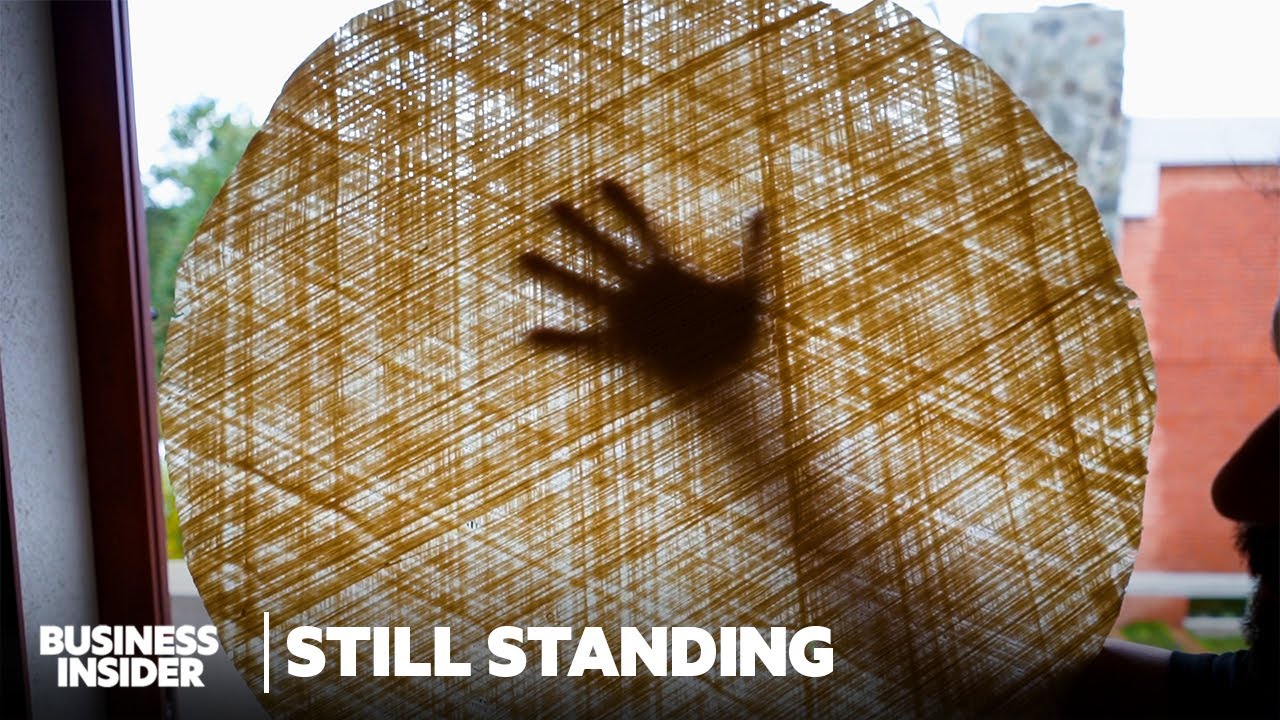
Su filindeu, or “threads of God,” is the rarest pasta in the world. For a century, it was made by a single family in the Sardinian city of Nuoro for religious celebrations. Today, there are fewer than 10 people there who know the secret to making the pasta as thin as a strand of hair. Secrecy nearly led to the dish’s disappearance, but now, the pasta is finding new customers abroad. We went to Italy to see how the process of making su filindeu is Still Standing.
MORE STILL STANDING VIDEOS:
How This 300-Year-Old Pastel Stick Maker Creates Nearly 2,000 Colors — More Than Its Competitors
How 1,200-Year-Old Keris Daggers Tradition Is Fighting To Survive | Still Standing
12 Fascinating Jobs Done By Women Around The World | Still Standing | Business Insider Marathon
——————————————————
#pasta #stillstanding #businessinsider
Business Insider tells you all you need to know about business, finance, tech, retail, and more.
Visit our homepage for the top stories of the day: https://www.businessinsider.com
Business Insider on Facebook: https://www.facebook.com/businessinsider Business Insider on Instagram: https://www.instagram.com/insiderbusiness Business Insider on Twitter: https://www.twitter.com/businessinsider
Business Insider on Snapchat: https://www.snapchat.com/discover/Business_Insider/5319643143
Business Insider on TikTok: https://www.tiktok.com/@businessinsider
How The World’s Rarest Pasta Came Back From Near Extinction | Still Standing | Business Insider
Narrator: This is the rarest pasta in the world. The key to making su filindeu, or "threads of God," is stretching and folding dough over and over and over again until it turns into 256 even strands. For a century, the techniques were practiced by a single family in the Sardinian town of Nuoro who made the dish solely for religious celebrations. Now, Luca Floris is one of only seven locals making it here. Narrator: This secrecy nearly led to the pasta’s disappearance, but now it’s finding new producers and customers abroad. This new audience could save the rare pasta from extinction. But will this expansion also strip away the cultural and religious significance of the dish? We went to Italy to see how the tradition of making "threads of God" is still standing. Although making su filindeu is complex, the ingredients are simple: semolina flour, water, and salt. Luca mixes them together to form a dough. Narrator: Getting the dough completely smooth can take up to 20 minutes. Narrator: He alternates between adding drops of salt brine and fresh water as he needs. Narrator: Stretching is the key to su filindeu’s thin strands. In one swift motion, Luca folds the dough in half to make two pieces, then four, then eight. He continues until he forms 256 perfectly even threads of pasta. Each one is as thin as a strand of hair. Narrator: Luca has to be careful not to break any of the strands as he places them on a traditional wicker base called a fundu. It’s made of asphodel, a plant that grows throughout the region. Narrator: Layering is the key to su filndeu’s mesh-like design. It’s also the trickiest step of the process for Luca. The strands cannot be moved once they’re on the fundu, so he has to be precise. He removes any excess dough from the edges before working on the next section. Narrator: Luca only has 20 minutes to finish all three layers. Narrator: For the people of Nuoro, su filindeu is sacred. Traditionally, the dish was prepared only twice a year during celebrations to honor St. Francis. Pilgrims from Nuoro would travel 20 miles to his shrine. Women from a local family would gather and prepare bowls of su filindeu for those who completed the trek. Narrator: This hasn’t changed since at least the 19th century. Narrator: But generations of secrecy have left only a handful of people in Nuoro with the knowledge and interest to make the dish. In 2021, a su filindeu maker from the family divulged the recipe to other women in the community in an effort to keep the dish from disappearing. Other Nuoro residents like Luca stepped in to keep the tradition alive. But for him, finding a teacher was impossible. Narrator: Luca decided to take matters into his own hands. Narrator: Slowly, Luca started getting inquiries from chefs in Canada, England, China, Germany, and beyond. Narrator: Over 6,000 miles away, outside of Los Angeles, one of Luca’s students is bringing new life to su filindeu. Chef Rob Gentile has spent over 20 years bringing the flavors of his Italian background to fine dining restaurants in Canada and the US. It was always this, like, holy grail of pasta, and I always wanted to learn how to make it. It’s just one of those things. It’s like, before I die, I want to know how to make su filindeu. Narrator: For years, Rob struggled to find a teacher. But when the masters in Nuoro finally began sharing their knowledge, he jumped at the opportunity. Rob: It started to become, like, how do we keep this tradition alive? How do we encourage the people who are excited about it to foster this amazing product? And this is where I met Luca. Narrator: Rob spent hours watching and learning how to knead and stretch the dough in Luca’s home. Rob: I was like, I can do this. It’s not that difficult. Because Luca made it look so easy. It was a very memorable moment in my entire life. I was like, couldn’t even believe this. Narrator: Now, Rob is featuring su filindeu on the menu at his restaurant, Stella West Hollywood. I just felt like it was something special that people needed to try. And every time I’ve introduced someone to it, it’s a magical thing to eat. Narrator: As su filindeu expands to restaurants outside of Sardinia, awareness of the dish’s cultural and religious significance could fade over time. But Luca and Rob believe that shouldn’t stop people from sharing how to make it. Rob: I think that it can be appreciated as a technique in a pasta, and we could do things like zuppa di pesce with it and have fun with it. But it can also be celebrated as the religious tradition that it is. It’s an exciting time for su filindeu, because it’s never really been anywhere else outside of Sardinia, and now it is. Narrator: And though the pasta is finding new homes, the tradition is still under threat in its birthplace. That’s because to make the pasta the authentic way, you need a fundu, and there are not that many people left making them. Narrator: Giovanna Porchi has been weaving since she was a small child. Narrator: She starts by cutting the asphodel into thin strips. This tool is made from cow bone. Giovanna uses it to weave the plant into a round base. In Sardinia, women have passed down asphodel weaving for generations. It was a source of income for people like Giovanna’s mother. Narrator: But today, the trade has virtually disappeared, with only a few weavers remaining. Narrator: Giovanna says young people haven’t shown any interest in learning the craft. She’s tried to teach women in her community, but she says it hasn’t caught on. Narrator: Like weaving, the art of making su filindeu in Nuoro is anything but widespread. Narrator: This limited production has also made the pasta expensive. One kilo can cost 26 to 30 euros, around 15 times the average price of pasta in Italy. But Luca doesn’t believe selling it is the key to keeping this tradition alive. Narrator: Instead, his focus is teaching it to others. And he’s putting his faith in people like Rob to bring the dish worldwide. Rob: They’re part of culture, they’re part of the cuisine. It’s just something that should be taught. It should be carried on. It should move forward. Narrator: While Luca doesn’t know what the future holds, he’s proud of the work he’s doing to keep "threads of God" alive.
39 Comments
This would be perfect for Santa Fe, New Mexico. We have the Basilica to Saint Francis and there are weaving traditions here from the local Pueblos Indians(yes, that is how they call themselves, please no snark) and historic Spanish traditions. Hope someone brings it here.
A boiling pot big enough to put that wheel in without breaking it.
How does it taste?
The japanese do this all the time.
Looks gross
I feel weird about this one. I clocked that while the women are the traditional creators of this dish, none of them appeared in the video. So clearly there is some disagreement about giving up the secrecy of their craft. Yet this man (who they didn't even want to teach in the first place) felt he had the right to give the secrets of their tradition away to outsiders who don't understand or respect its cultural and religious significance. This female led tradition being taken and commodified by a man just feels really skeevy to me, especially if none of the women agree with the choice. It feels disrespectful.
My grandmother make same thing at home in India it's not rare
It's just hand pulled noodles……………
– I hope the tradition of weaving && pasta making continues. 🙏🏽 ❤
sheep broth 🤢🤮
this is just chinese mee sua
That guy just keeps breaking pasta, it was hard to watch. Somebody alert Davie504. lol
f capitalism, homogenizing everything to the point we lose our traditions.
Can inanimate objects go extinct? Pretty sure the term refers to living organisms.
I thought it was only for religious celebrations? Looks like its to sell and make money.
There’s Angel Hair and then there’s Threads of God…
Wow
I'll make some for my dinner tonight. Let me know if you want to hear about the result!
5:24 Why should only women do it⁉️💯🔝
Wonder if they discovered it themselves or they just learned it from china and gave it another name like how they named Pasta …
As thin as a strand of hair? That's some thick-ass hair
And you have to make sure that you have to be careful of making Filindeu, as it is ultra thin. This type of thin pasta can break at any moment.
Pasti pasti pasti everdia fickin pasti!
flour and water! it all tasted the same
Smooth like velvet? Aren’t those the opposite of each other? 2:16
LA chef broke a strand
I don't see anything special, unique or worth making such a sensational and misleading title. This is just some family recipe for noodles. Wow. Flabbergasting!
I love how this was all one ball of dough at the start. Then through dexterity, bro makes hundreds of not thousands of strands. It is very gratifying to behold the delicate strands
6:00 when you begin a kitchen or cooking job, does the employer have to pay for the tattoos or do you have to file your full-sleave insurance beforehand?
Religion is a poison on society.
Almost seems identical to the same method. I’m making dragons beard distraction, pull each stretch and overlap times it so you get tons of pasta with this method
I saw this pasta originally on the Pasta Grannies – a couple of British women traveling Italy and documenting rare pastas. I hope to get to try it someday.
Oh wow, a pasta I could care less about.
"…perfectly even threads of dough…"
Video CLEARLY shows they're not all even, some are broken, some are thicker, etc. Such bullshit.
This is the saddest part about modernization where traditional practices slowly fade away.
I believe this is some of the best content on the internet !! Educational, inspiring, culturally rich and diverse; is just incredibly well done and fascinating as well ! Thank you for the incredible work. 👏
isnt' this the same as the chinese pulled noodles?
So simple
I tried a similar rice noodle before where they did something extremely similar. It was incredibly fine. Idk how it didn't crumble