
Painters have long had the ability to transform overlooked subjects into sources of profound beauty and contemplation. This transformation often changes how these subjects are perceived by the public, revealing layers of beauty that were previously unrecognized. The process is not merely about depicting reality but about interpreting and presenting it in a way that resonates emotionally and aesthetically with viewers.
In the Scottish Highlands, the transformation was even more profound. Initially seen as barren and desolate, these landscapes were often stigmatized as harsh and unwelcoming. However, during the Romantic era, artists began to depict the Highlands as sublime landscapes, full of majestic beauty and dramatic contrasts.
Another example is Monet’s series on haystacks. To the local farmers, these stacks were nothing more than practical, everyday storage for their crops. However, Monet saw something different in these structures. Through his impressionistic lens, he captured the subtle variations of light and color over different times of the day and seasons. These paintings do not just depict haystacks; they celebrate the fleeting nuances of light, shadow, and color. Now people will travel to Giverny specifically to see the haystacks.
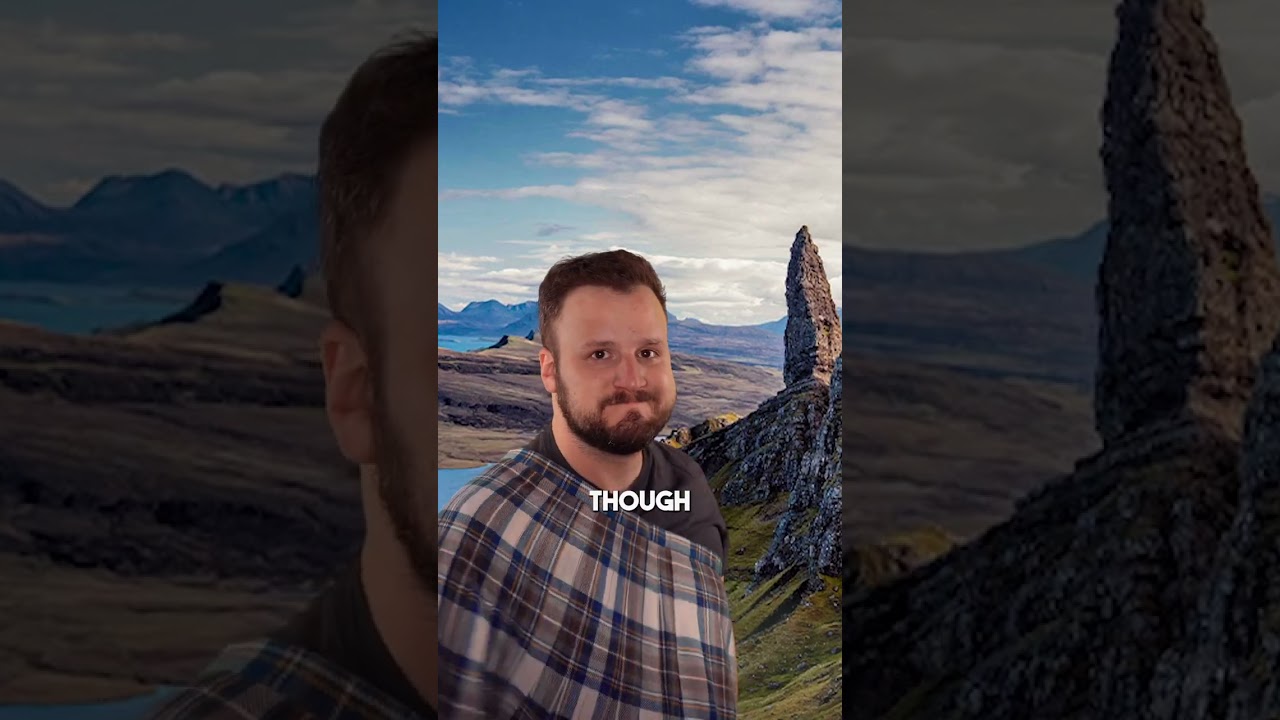
would you believe that people used to think Scotland was ugly today it might be on your bucket list to visit a castle in the highlands or a Distillery on an island but people weren’t always so impressed with Scotland like in the 1700s the author Daniel Defoe visited some of the locks and called it frightful Samuel Johnson came back from the highlands and described it as a wide extent of hopeless sterility and even though England was right next door to some of the most magnificent Countryside on the planet rather than vacationing there they would travel across all of Continental Europe to vacation in the countryside of Italy but in the 1800s once painters started capturing the Scottish landscape it seems like more people were able to see the Beauty and the romance of it and tourism really started to pick up now it gets millions of visitors per year of course there’s other factors like the railroads expanding but I do think it’s true that sometimes we can’t find the beauty in an ordinary Farm until it gets mythologized in a painting
44 Comments
Scottish person here (who also works in the tourism industry and studied history/archaeology), the romantic movement in the arts had a huge impact on changing the perception of Scotland (particularly the Highlands) as a cultural backwater. Not just in paintings but all the arts. I'd argue that literature was probably the most influencial of those with writers like Walter Scott promoting the romanticised notions of the Scottish landscape and past to those outside the country.
The forward thinking scientist and up and coming wealthy middle classes in places like Edinburgh capitalised on this which is one of the reasons we see a boom of Scottish inventors from this period (although this is a bit of a circle rather than a straight line).
And a fun fact: this is when the idea of specific tartans being associate with specific clan and family names begins as the ban on tartan after the Jacobite rebellions was lifted and people began to capitalise on the romantic notions early tourists were getting from the paintings and books (and also Queen Victoria who was a Scotland fanatic). Historically before this era, clans would have ended up wearing similar tartans amongst themselves but that was because they came from the same local areas, getting their kilts from the same weavers and dyers who had access to the same plants to use as dyes which would vary by region and thus clan 🙂
I shed a tmmanly tear on the northern aspen plains but most white girls want a nothing shot
Aum Namah Shivaaya
Scotland is beautiful when the weather is nice. If it's grey and dreary and keeps raining then it doesn't look as good.
Thats the monty python castle
I still think Scotland is ugly from up close.
I always thought the same. Like a desert, it looks nice until you need to exit the car and live in it.
reminder to never trust some old white dude's opinion on terrain. the rainforest slander throughout 20th century media is appalling
It's probably worth pointing out that most of rural Britain was pretty grim pre industrialisation and even as far up to the second world war.
You look at old photos of Cornwall and whilst the landscape was still beautiful just about every other aspect of it looked like a charles dickins novel come to life.
In comparison I suspect the rural areas of Italy, whilst equally poor, were much cleaner and , of course, warmer. With less mud and soot.
A bit too loud and memey for me
SCOTLAND FOREVER
When you actually live here and see the horrible weather that persists for months. Its as the guy said "sterile" when the weathers good its a different story but for alot of the year its extremely grey and depressing.
its partly because of the mass deforestation that occured, and now has been forgotten about, although there are organisations trying to bring native treees back
because it was pretty harsh before electricity, plumbing, and other infrastructure. all people saw was an easy place to die.
It IS ugly – it IS a ghastly suicide inducing windswept bleak wide extent of hopeless sterility – I've been there and NEVER want to to back!! Love from England…
Because modern world luxury change that.
The Romans have the same view to mountainous areas because of how inhospitable it is to humans
As a Nova Scotian I think of Scotland as a sort of motherland. It probably looks quite similar to where I live but perhaps with a bit more historic beauty to it.
Fun fact: I've never liked the idea of New Orleans. By all means it sounds like a fantastic place to visit, both culturally and to party. But I just can't come down on the side of actually wanting to go. I think it's the ambiance of the place, the swamps and the crocodiles. I should go, because as this video shows what you think is hideous just might be gorgeous.
He was eaten by six crocodiles two months later
Cheery music over end credits
Is that Ron?
The lack of trees may be a turn off for some, but it sure opens up a wonderful vista of a rugged landscape.
Im sure politics had a lot to do with it
It was racial and genocidal, not just an aesthetic assessment. England began to refer to itself as an "isle" more and more in an attempt to erase Scotland from popular geographic imagination.
Its down to the comfort and safety of modern life.
When you depend on farming and agriculture to survive , and famine and starvation are a part of life, the "wilderness" holds little attraction.
Rich, lowland farmland that will feed you and your family is a thing of beauty.
And the bloody midges. They devour you
This was a stupid concept
Scotland weather is ugly
I can't speak for the other guy, but Daniel Defoe had a bit of motivated reasoning in trashing Scotland's counrtyside.
Reason why English people didn’t vacation right next door to Scotland, wales or even Ireland that much is because…it’s looks almost identical lol. Not the most shocking information I know but the visual imagery in parts of England are very much similar to the rest, other places in Europe however were very different
So the painters are to blame for all these sassenach holiday homes
He's such a lil' history weeb and I love it.
The same was said about my country, Iceland. Foreigners basically called it a poor shithole. Jokes on them Iceland is now considered one of the most beautiful countries on the planet.
Scotland is ugly said British huh its jealousy nothing els 😂
One thing to factor in is that much os scottish countryside would have been covered by farms ehich reeked of shit and had crap tons of dirt kicked up and thrown about.
This reminds me of my beautiful prairies in in the midwest.. folks think we're boring and easy to ignore.. They don't know the majesty of our expanse, the power of our storms, or the gentle comfort of our calm winds on a quiet still fall evening at sunset; that sunset ever present, seeming to last for an eternity.
I personally prefer Wales, but Scotland is nice. The Scottish people are interesting in both the best and worst ways.
The fringe is heavy carrying that number
I mean scottish landscape is pretty boring.
Sure try having a vacation in 1700s Scotland, living conditions were harsh think of it like visiting the sahara, right now it still somewhat uncommon and back then it was very rare because you don't have the conditions to be safe in that situation
Honestly, the english,scotish, welsh etc. countryside is nice but not comparable to balkans where communism hasn't done it's magic to it.
Highlander put Scotland on the map lets be honest
It wasn’t just non Scots that considered the Highlands harsh and forbidding. Perhaps the best known Scot of all, Robert Burns (a Lowlander like me) said of it “There’s naethin’ there but Heilan pride, and Heilan cauld and hunger”. For centuries the Highlanders flocked to Scotland’s towns and cities, because you can’t eat scenery.
To be fair, from the photos in the video, scotland is look likes shit
Scotland has a rugged beauty thats atmospheric. If you see it you see it 🗻
Scotsman here, this is not unconnected to the anti-scot pre-romantic sentiment, left over from the clearances and rising, that was still very much a highland vs lowland issue. Clans still controlled through fair and glens that made it near impossible to travel anywhere above loch lomond.. also.. Samuel Johnson was dafty.
As an Englishman, Scotland is a barren wasteland to this day