
Our books
“Early Italian Recipes. Cereals, Bread, Pasta, and Pies”
English https://www.amazon.com/dp/B0CMKBXSV1
Italiano https://www.amazon.it/dp/B0CMKM4H5D
“Early Italian Recipes. Vegetables, fruit, herbs, and flowers”
English https://www.amazon.com/dp/B0B4T8VPFQ
Italiano https://www.amazon.it/dp/B0B4V32FHR
“Ancient Roman Cooking”
English https://www.amazon.com/dp/B08LHG6RR5
Italiano https://www.amazon.it/dp/B08LHF72ZR
“Libro de la Cocina. Medieval Tuscan Recipes”
English https://www.amazon.com/dp/B0BMQQ6SFY
Italiano https://www.amazon.it/dp/B0BNG5J9MF
“Registrum Coquine. A Medieval Cookbook”
English https://www.amazon.com/dp/B0953XLBS3
Italiano https://www.amazon.it/dp/B0953YCJSJ
“De Observatione Ciborum. Early-medieval recipes at the court of the Franks”
English https://www.amazon.com/dp/B09K83NMXJ
Italiano https://www.amazon.it/dp/B09K821LYC
Check out our Patreon page
https://www.patreon.com/historicalitaliancooking
or just buy us a beer
https://www.buymeacoffee.com/historyandfood
Check out our merchandise
https://teespring.com/stores/historical-italian-cooking
Today we prepare medieval torta de faxoli, a pie with beans and pork belly, as described in Anonimo Veneziano’s Libro di Cucina, written in the 14th century.
Ingredients:
flour
pork belly
beans
cheese
spices (black pepper, cloves, nutmeg)
salt
Medieval meat ravioli https://youtu.be/KLfb97WOS30
Medieval fried tortelli https://youtu.be/Vfyv9x6T1co
Medieval beef pie – Pastillum https://youtu.be/oMNPc0WdiGg
For more info about this recipe check out our blog: https://historicalitaliancooking.home.blog/english/recipes/medieval-torta-de-faxoli-pie-with-beans-and-pork-belly
If you liked the music on this video check our music and art channel: https://www.youtube.com/user/LiliumAeris
__
Music by Lilium Aeris
Andrea Tuffanelli – lute
Serena Fiandro – gemshorn
Reis glorios – Giraut de Bornelh (c. 1138 – 1215)
#medievalfood #medievalrecipe #middleages #ancienthistory
Welcome to our kitchen. Today we prepare medieval torta de faxoli, a pie with beans and pork belly, as described in Anonimo Veneziano’s Libro di Cucina, written in the 14th century.
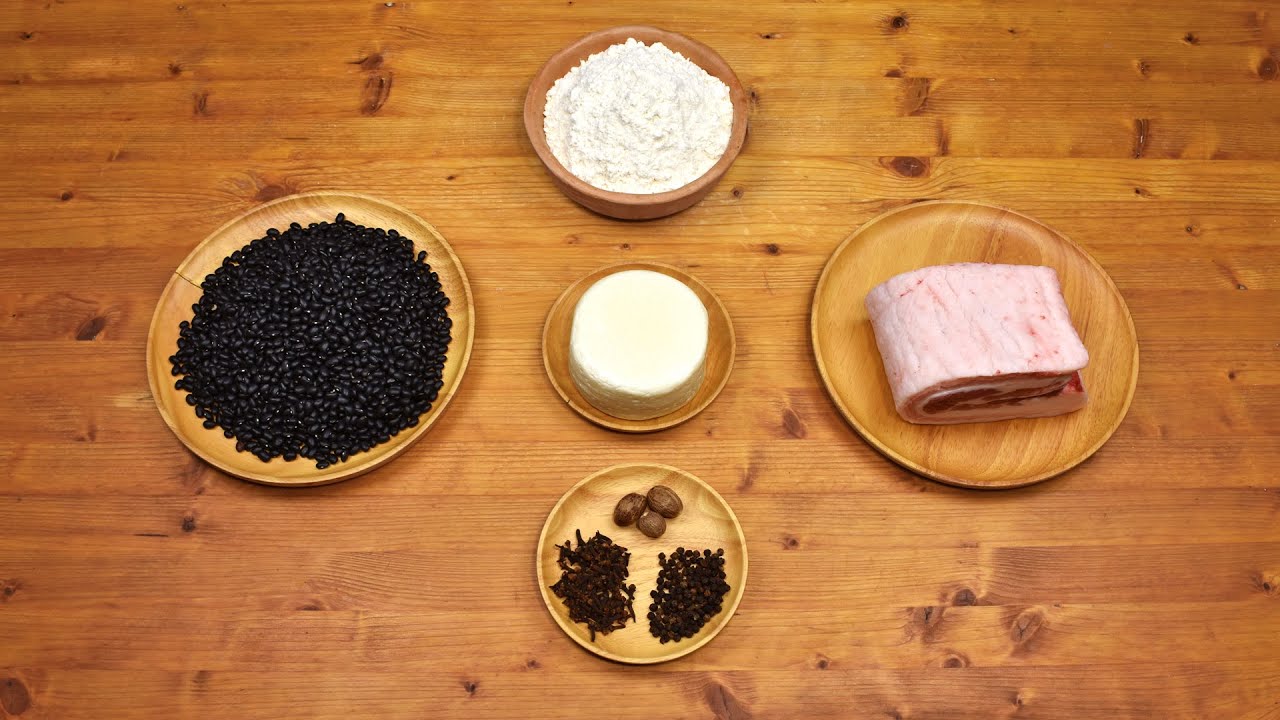
We start with the ingredients. We need flour, pork belly, beans, cheese, and spices: black pepper, cloves, and nutmeg.
We boil the pork belly with the beans. Both should be well done. The cooking time depends on the size of the meat and the variety of beans.
In medieval sources, the word faxoli or faseoli refers to beans of the genus Vigna, the only ones available before the discovery of the New World.
You can use black or red varieties, as well as black-eyed peas according to your taste.
The recipe is for fresh beans, but we used them dried. Depending on the variety you use, they may need to be soaked in water before cooking.
Meanwhile, we knead the flour with two pinches of salt and warm water, then we let the dough rest for half an hour.
This recipe is for a torta, which is a specific type of pie with a thin crust, more like lasagna than a pastry.
We prepared a simple dough because the filling is already very savory, but there are other possibilities mentioned by Anonimo Veneziano.
The dough can be yellow, which means colored with saffron, or also prepared with spices, or colored with herb juice. Renaissance recipes also include ingredients such as rose water or sugar.
When the pork belly and beans are cooked through, we let them cool,
then we mince the pork belly, pound the beans in the mortar, mince the cheese, grind the spices, and mix all these ingredients with two pinches of salt.
The original recipe also calls for cured pork fatback, but we omitted this ingredient because the pork belly we used was fatty enough.
The crust must be thin because there are no fats such as lard, oil, or butter.
As we have already mentioned, the aim is to make a dish similar to lasagna or a very large tortello that will be baked.
The reference to tortelli is not accidental, since tortello is the diminutive form of torta. Other types of torta are made with two or more layers.
A completely different type of pie is pastello, whose crusts are made with fats and sometimes with eggs and other ingredients.
For a video of a pastello we recently made, see the description below.
Fillings for torte are very similar to those for tortelli and ravioli: we find cheese, vegetables, legumes, cereals, meat, fish, and eggs.
For some examples of stuffed pasta, check out the description below.
We divide the dough in two, we roll a sheet of pasta and lay it on a baking pan greased with lard,
then we place the filling, roll another sheet of pasta, lay it on the filling, cut off the excess crust, and close the pie.
To learn more about pies in Italian medieval cuisine, check out our new book “Early Italian Recipes. Cereals, bread, pasta, and pies”,
including recipes from the Antiquity to the Renaissance and an introduction to the historical uses of cereals, basic preparations, and ingredients.
This book is the second in the series Early Italian Recipes, the first of which is dedicated to vegetables, fruit, herbs, and flowers in historical cooking, and there you’ll find more recipes with legumes.
The full translation of Anonimo Veneziano’s Libro di Cucina is available on Patreon, along with other translations of historical sources and articles on ancient and medieval food.
To learn more about late-medieval cooking, you can also read our translations of Anonimo Toscano’s Libro de la Cocina and Johannes Bockenheim’s Registrum Coquine, available on Amazon.
In the description below, you will find a list of our books on historical cuisine with links to buy us a beer and purchase our merchandise.
We cook the pie in the oven for about 25 minutes. The ingredients of the filling are already cooked, so the cooking time depends on the thickness of the crust.
This torta was very good, fatty with pork belly and cheese and full of flavor, balanced by the spices and the sweet taste of the beans,
which are perfect to fill a pie, and make a delicious dish to experience the richness of flavors that characterizes medieval Italian cuisine.
Another version worth trying, which is meant for the lean days, is found in a 15th-century cookbook collected in the Wellcome Library,
in which the author substitutes ground almonds for pork belly and cheese and brushes the top crust with oil and saffron.
If you’re interested in ancient foods and flavors, subscribe our channel and consider supporting us on Patreon.
4 Comments
nice sharing
your channel is mad underrated
You really outdid yourself on this one brother
Thank you for your work. This one is interesting, nice to see how different people interpret differently the medieval recipes. I feel like Italian cookbook have more variety in recipes than the French or English one.