
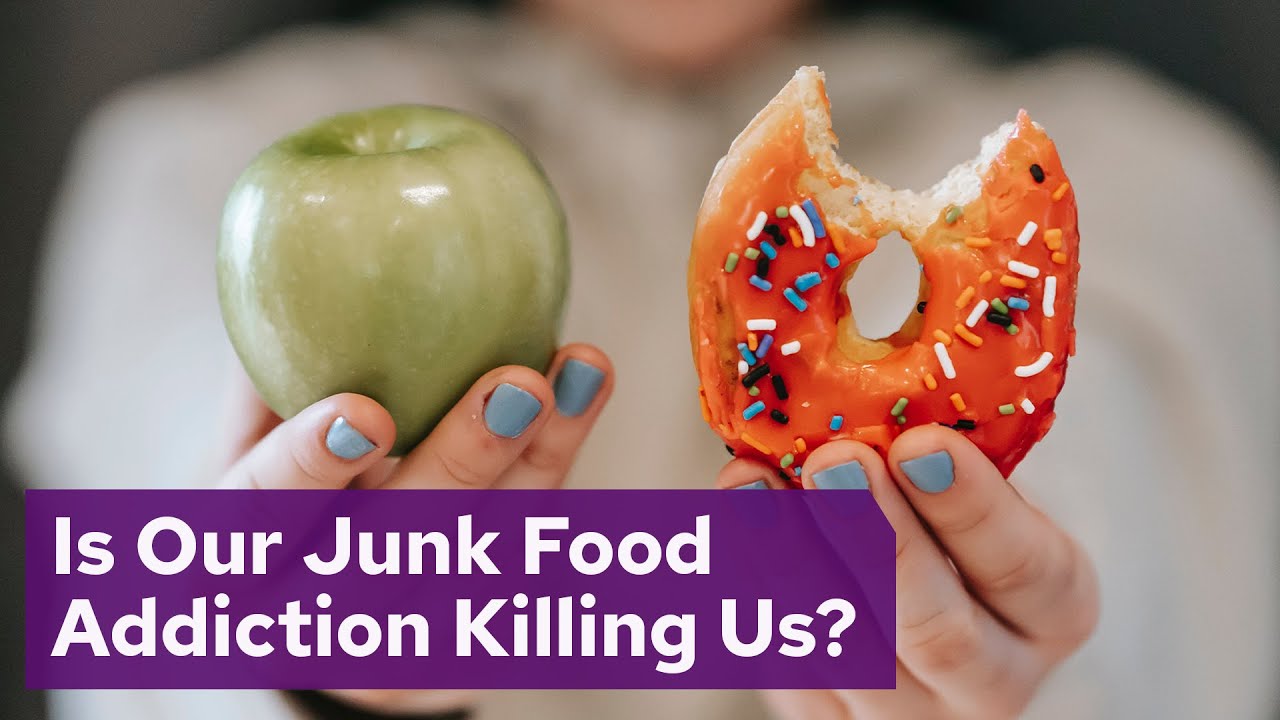
Cambridge Forum digs into the underbelly of the typical American diet, an astounding 60% of which is made up of ultraprocessed foods – like cereals, breads, yoghurts and frozen dinners plus sweets and soda. There is mounting scientific evidence that UPFs are not just potentially addictive but also linked to our rocketing rates of obesity, Type 2 diabetes, heart disease and cancer. We know that food can be either medicine or toxin; so how do we recognize “junk” food and make better eating choices?
We examine the links between diet and disease, zoning in on the addictive alchemy of certain combinations that make up HPF (hyper-palatable foods) which are irresistible to our taste buds. We ask three experts in the field for their advice. Jerry Mande, CEO of Nourish Science and Adjunct Professor of Nutrition at the Harvard Chan School of Public Health, Tera Fazzino, Assistant Professor or Psychology and Associate Director of the Cofrin Logan Center for Addiction Research and Treatment at the University of Kansas, and Larissa Zimberoff, freelance journalist who covers the intersection of food, technology and business, and also the author of “Technically Food: Inside Silicon Valley’s Mission to Change What We Eat”.
Join the discussion about who is responsible for the food environment we find ourselves in and whether the FDA should do more to regulate the labelling of highly addictive foodstuffs with health warnings.
0:00:25 – Introduction
0:04:33 – US Obesity Chart
0:06:15 – Discussion and Q&A
1:01:41 – Closing Remarks
Discover more from our Partner Here:
GBH Forum Network ~ Free online lectures: Explore a world of ideas
Like us:https://www.facebook.com/gbhforumnetwork/
Tweet with us: https://twitter.com/GBHForumNetwork
See our complete archive here: http://forum-network.org
In the US. Two of our biggest industries are the food industry and the medical industry called the sick care industry, and they’re both multilateral dollar industries and we’ve ended up with a food industry that makes people sick and then a sick hair in the street. Who takes care of that? Hello
And welcome back to Cambridge Forum, coming to you live via Zoom. I’m Mary Stark, the executive director. Today we are digging into the underbelly of the typical American diet and the pervasive allure of ultra processed foods, which now make up an astounding 60% of the American diet.
This group covers packaged cereals, breads, yogurts, frozen dinners, plus, of course, sweets and soda. And there’s mounting scientific evidence that the ups are not only potentially addictive, but are also linked to our rocketing rates of obesity, type two diabetes, heart disease and cancer. We all know that food can be
Medicinal or potentially toxic. So how do we recognize these junk foods and make better eating choices? There are strong links between diet and disease, and we now understand that the alchemy of certain food combinations make up H, p FS, hyper palatable foods which are designed to be irresistible to your taste buds.
So to help us make sense of some of these eating enigmas, we’ve gifted ourselves with, the presence of three knowledgeable guests today. We have Jerry Mande, who is CEO of Nourish Science and an adjunct professor of nutrition at Harvard’s Chan School of Public Health.
He has a wealth of experience in national, public health and food policy, having served in the White House and senior policy making positions for three presidents in the USDA, the FDA and OSHA. He helped lead landmark public health initiatives. And in 1992, under Bush, Mandl
Led the graphic design of the iconic Nutrition Facts label at FDA, for which he received the Presidential Design Award. We have Tera Fazzino. She’s associate director of the Cofrin Logan Center for Addiction Research and Treatment at the University of Kansas. She’s an experimental psychologist who studies processes
Involved in addiction, obesity and eating disorders. And Larissa Zimberoff is an investigative journalist who covers how the foods we eat are being changed by technology. She’s author of the book Technically Food Inside Silicon Valley’s Mission to Change What We Eat. So welcome to you all.
Thanks for making the time to share your knowledge with us today. So first, let’s start with what we know about the American diet, increased disease rates and declining life expectancy. Jerry, how do we stack up against the rest of the developed world and why are we doing so badly?
Well, thank you, Mary, and I’m delighted to join you today. We don’t stack up. Well, one common metric, really, if you’re a nation, one of the maybe the most fundamental is your life expectancy. How long do you live? And for many, many years, the US was with Take the Top 20 developed countries.
We were sort of in the middle of the pack and that started to change in the 1980s. We started to drop lower and lower among those 20. And then pre-COVID actually for the first time. Many people expect life expectancies to increase from generation to generation.
But for three years in a row, it had decreased. That was pre-COVID. And then, of course, there was COVID. But even since COVID, where other nations have recovered in some of their life expectancy, we’ve continued to drop. Gaining a little. But when you look at those 20 developed countries now, the U.S.
Is far and away the worst off. And so we’re very sick. Very sick. Okay. And I think we’ve got some charts here, Jerry, that you just sent us, showing our changing obesity rates, which are pretty appalling now over the last 30 years. So perhaps we could pull up those graphics.
These are produced by our Centers for Disease Control Prevention, and it’s based on studies they do, and it’s a map of obesity rates across the nation. As you can see here, this is our maps. They started producing in the 1980s, and by 1990, they had data on almost every state.
And as you can see here, there isn’t a single state in the country that has a 15% obesity rate. So there was some obesity. Some obesity is caused by metabolic conditions, illnesses not related to our food. And I think what you see here in the 1990 map
Is a nation that is largely well regarded. It’s food. And then you fast forward to today the map on the right. It’s from the latest study data from 2022. And it’s just dramatic and they’ll get on the one on the left. Not a single state reaches 15% here.
Now, 30 years later, there isn’t a single state at 50%. In fact, there isn’t a single state with less than 25%. And as you can see here, that’s just a few. Most states are over 30 and almost half are over 35% obese.
And the problem with that is how sick it makes us all the diseases. Obesity itself is a disease, but the heart disease, the cancer, the diabetes that come with it, And even during COVID, we now know that two thirds of severe COVID cases, hospitalizations were due to these underlying dietary conditions
And indeed maybe as many as 800,000 deaths. So we know we’re doing badly. We don’t seem to be changing our ways. And it’s not all our fault. So let’s try and understand the groups of foods are the chief culprits here. So these ultra processed foods, we’re looking at a chart
Which was devised by Carlos Monteiro at the University of Sao Paulo in Brazil, and he decided to look at foods differently, not necessarily because of the facts and the way that we look at foods traditionally was to analyze them by the food types.
So he started to look at what we did to food. So the first group is the unprocessed foods that are the things we know that pretty much are unadulterated fruits, vegetables, poultry, eggs. The second group of things that we probably would add to food,
We don’t eat them per say, but they’re sugar, salt, honey. We flavor our food, preserve our food with them. So then we come to the third group, which is the processed food, which is largely made up of adding group one and group two together canned beans, cured meats, fresh breads, cheeses and preserves.
And then we come to this awful group, the ultra processed group, and this is where we’re getting 60% of our foods now. So packaged snacks, frozen dinners, pastries, baked goods, soft drinks. So first of all, and this I’m going to open up to Gerry and then to everybody.
Why do Americans eat so much junk food? I can’t just all be about comfort. This great word we keep hearing about comfort foods. So, no, it’s not. You’re right. It’s because of three things taste, cost and convenience. And so food companies that design these processed foods are trying to meet
With the public says it wants for the taste of delicious food cost is cheaper, affordable is possible and convenient. Doesn’t take much time to cook or prepare. But the key thing is that the law already requires that food keep us healthier, that it’s safe. It doesn’t make a sick, certainly.
And that’s the problem here, is that companies are producing food that for taste cost and convenient and they’re ignoring the part of the law that says that people need to be able to eat these foods every day and not get sick. And it’s also the government’s fault, particularly the Food and Drug
Administration, also the Department of Agriculture, that enforces the laws. They’re letting companies do this. They know these foods are making us sick as so set we saw earlier, and yet they’re not acting on it. And so I think companies start off meeting at wanting to meet a consumer demand
And taste cost and convenience. But they can’t get there by creating foods that make us sick. And in this case, in a country with such high obesity rates, designing a food to be over eaten, which is what they’re doing, they’re creating and using that chemistry, the science that
Tomorrow we’ll be able to tell you about better than I can now. But they’re using it to manipulate those parts of our brains that result in us craving certain foods that will keep eating them even when it makes us sick. Okay, Tara, over to you. What do you think is ahead?
Yeah, thanks for having me, by the way. So I think there’s there’s several aspects to this, but we know that a really critical piece of eating behavior and dietary habits comes from our food environment, like what is around us, what is available to us and at what cost.
As Jerry was mentioning, and we know from a lot from some epidemiological work now that actually assessed the food system and not just people’s eating behavior. We know that our food system is largely comprised of ultra processed foods that are, you know, hyper palatable, difficult to stop eating.
And so when we are surrounded by these types of foods and the grocery store and the convenience store everywhere we go, that is a major factor in, you know, people’s behavior. We eat what is available to us, what is often least expensive, and that is largely the food supply.
And so I think the availability and the environment largely here is what people consume. So I, I think that contextualizes it quite a bit. And then of course, the foods, you know, as Jerry was was alluding to already, the types of foods that are available that do have a lot of
Combined palatability nutrients that can provide a really kind of exaggerated, rewarding experience when we consume them that are different from kind of naturally occurring foods. Yeah, they can have some real consequences for our eating behavior here in terms of, you know, over time
We can become sensitive, highly sensitive to cues in our environment. So advertisements, sales of these products in various convenience stores are kind of everywhere we look and we can seek out and consume these foods and become hypersensitive to them in the environment to try to seek out to consume them over these
Healthy or minimally processed non hyper palatable like fresh whole foods. Okay, Kind of, Femi. But thank you. Can we jump over to Larissa here? So you’ve spent an awful lot of time researching the food and the technology industry. And even you are surprised by things like cauliflower pizza crust,
Which you mentioned, which everyone thinks, that’s healthy. Maybe not. Yeah, well, you know, back to the question of why Americans eat so much junk food quickly, I think it’s two things. We’re too busy. We’re working several jobs. We’re working all the time.
We’ve got our phone that has us plugged in all the time and our habits have changed. We no longer it’s no longer normal to go and buy five whole ingredients and cook dinner. We now just reach for the crinkly packaged foods because they’re tasty and convenient and cheap.
And like Tara said, they’re everywhere. You can’t avoid them. So we actually haven’t made our food system easy to navigate for anybody that most people don’t know what we know collectively here as a group. So that’s those are the problems were too busy.
Our habits have changed and this cheap, convenient, tasty food is just everywhere. It’s proliferating around the country and then around the world about foods that we think are healthy, like cauliflower pizza. You know, we put that ingredient first as the hero, but then you look at the ingredients
And there are starches, tapioca starch, rice, starch. I was just eating almonds today. I’m so sorry, blue diamond. But there’s a core maltodextrin, which is a sugar type of preservative, and there’s hydrolyzed corn and soy protein. Now, I know it needs flavor, right? I wanted to have that smoky flavor,
But I don’t know why it has to have these proteins. So my research is look at the ingredients and then go from there. Very important. I think that’s the starting point. If people can just read the label and there’s a whole bunch of stuff, it probably isn’t the best.
And actually Gerri had a great example of this where he says, you know, there’s so much processing done if you buy bread, you know, that’s been molded or extruded or processed. He said it probably if it’s in a plastic bag, is like a very sophisticated, emulsified foam.
And when you hear that if that was on the actual package, you probably wouldn’t buy it. Yeah, I mean, to that point, I know that, you know, you brought Jerry in, but but steps of processing, you know, how many people touched the ingredients,
How many steps of processing has led something to your plate? As someone with diabetes, I think about carbohydrates and 15 grams from a piece of fruit in carbs is not the same as 15 grams of carbs from puffed popcorn or, you know, chips. That’s interesting.
So you actually had to learn this firsthand, being diabetic from quite a young age. So if you if you were wanting something right now from the government or the food industry, hard, maybe more than one thing. But if you could just ask for one big thing as a
As a consumer today, what would you be asking for? I my my idea is that there are guardrails. So Kraft Hines or Nestlé or General Mills, they’re allowed to have, I don’t know, 10% of their of their assortment of products can fall into subpar and everything else has to be out of that.
That’s my current idea. You know, I’m not a regulator. I’m not in government. I don’t have Jerri’s background at the FDA and I don’t have Tara’s, you know, Ph.D. But I think that we need to make it easier for consumers to buy food that’s good for them.
And right now, we’re not there. We’re very far from that. So when we do all this stuff to food, we break it down, we build it back up, we enhance it with flavors, we preserve it, we put additives in it,
What do we do to the integrity of food and is it harmful to us? Well, let me give you one example. You know, humans, Homo sapiens have 150,000 years of evolution that we’ve been through that been designed to survive on a certain food environment. And part of that is something called the microbiome.
Many of your listeners may have heard of that. It may be hard to know what that is, but absolutely, the bacterial cells that are predominant in our debt digestive tract that are common in our bodies that we know were there for a long time, we knew they were there.
They’re actually more bacterial cells in your body than human cells. But we thought they were just sort of going along for the ride and provided certain functions. Well, now we know that those cells communicate with human cells and and and tell us certain things. So let me give you one example.
When bakers bake bread out of a fermentation product, as it once was first created and gave that to people, they didn’t really destroy the cell wall of the ingredients, the wheat and other things. That was some knowing that took place. But when you add that the more refined part of the carbon
Hydrate went into your intestine and was absorbed as as energy for your body, but the cell wall part of it that would continue down your digestive tract, which the microbiome and that’s what fed it, that’s where it got its calories. Now, today, those emulsified foam, as I was talking about there
In these cellophane bags, they’ve destroyed all of the cell wall and the government’s not doing its job. It said that, well, you know, as long as you have the same proportion of bran and the sperm and fiber, you can call it 100% whole grain bread. Well, that’s just not true.
When you manipulate the particle size of what’s in that bread, when ends up happening is when you eat it. There’s nothing left to go down to the microbiome. It’s all absorbed earlier in the digestive tract and no energy gets down to the microbiome because all of that cell wall material
That was once and products we ate have been pulverized by the kinds of extreme processing, ultra processed foods go through. The result of that, as we think now, the science is still evolving is that the microbiome sends a signal and where we’re not we’re not getting any calories down here.
Human hosts somehow are down here. And so it’s triggering your hormones to get you to eat more, because as far as it’s concerned, you’re not getting these calories because it doesn’t know if that’s being absorbed upwards. So, you know, 150,000 years, our body was designed to encounter foods
As they occurred, you know, alongside people in nature. And we just haven’t got up to that radical transformation that companies are making to our food. And most importantly, the government hasn’t insisted that when they make these transformations, they demonstrate they’re safe for people to eat. They’re not.
It’s a very important point that you raise. We all know how many people are now suffering from allergies. I mean, they’re through the roof. People never used to be allergic. Certainly when I was growing up, I think there was one person
I remember in the whole time growing up there was allergic to milk. Nobody had peanut allergies or anything else. I have plenty of friends. I’m sure you do. Who, when they’re in Europe, can eat bread, but they can’t eat bread. When they come to America, they get really ill
And they always say, I’m gluten intolerance and gluten intolerance. But then they go back to Italy or somewhere and they they can eat bread, which strikes me that something is happening, as you say, to the integrity of that food, stuff that is harmful beyond our even our understanding.
And I’m sure Tara might be able to talk about some of the other issues that food is causing, like apart from allergies, asthma and and even depression amongst people. So I think that there I mean, there are many potential effects of these foods that, you know, as you mentioned,
We’re starting to be able to understand now, but we have quite a bit of work and kind of a lot of catch up to do really in terms of the foods themselves, because they are often designed in a manner that can keep us eating, which ultimately results for companies
Like us purchasing more of their food. But by that same design, you know, we’re often in a state where we are consuming foods that are difficult within the eating occasion to stop eating that can you know, we’ve clearly talked about metabolic disease and obesity, things like that.
And our hypothesis is that these foods may also lead to among a vulnerable subset of individuals, addictive, like eating behavior, binge eating as well. And, you know, because these foods, you know, if we eat, a lot of them are sometimes it makes people feel bad and they sort of attribute that to themselves.
But I think a broader point is that, no, they’re designed to do that. That’s in the design and that’s the intent. So I think that, you know, there’s there’s a lot of kind of research into like, what is this doing to other types of eating behaviors, eating disorders,
You know, related to mood and anxiety and depression. There’s actually also some maybe Laura Jerry could speak more to the mechanism here, but there has been some evidence that has come out to suggest that something in the process of saying all of the foods may be interacting
With the gut microbiome in a way that increases levels of depression and, you know, issues with mood regulation and so on. The effects are quite pronounced and quite widespread. Yeah. Does anyone want to hop in on that? Well, I think that, you know, and this is like armchair thoughts,
Which is that if, if like, you know, Kevin Hall were to do a study into 20 depressed people and fed them ultra processed food diet and then a Whole Foods diet, and then we see what changes, you know, and that’s unfortunately
Big food isn’t doing anything until, you know, we have studies that make them that kind of hold their feet to the fire and make them make change. They started to reformulate with COVID app through COVID. They started to reformulate to make foods healthier because people were starting
To think more about that now that were, you know, mostly out of COVID. I don’t know that their attention is still there. They may have moved on. Right. And now I know they’re focused on those epic type drugs, the Semaglutide. Right. And the concern and the fear that people are going to die
And less of the junk food because they’re no longer interested. Right. And all the headlines are speaking to that right now. So, you know, they’re they’re smarter and they have more dollars to spend and they’re going to stay ahead of us.
And so really it’s like, how do we get ahead of big food? And without the government on our side, you know, I’m not sure how we get ahead of them. Well, I’ll add to that, You know, I mean, big food companies, unfortunately, have undue influence over the government because of their large investments.
And who gets elected to Congress, who gets appointed to the court system. And they’re you know, they’re not interested in abortion or other issues. They’re really trying to make sure they have no or minimal regulation. And the result of that is they’re able to pursue products without the kind of proper oversight.
And I’ll give you one example. What’s really driving this, I think, with companies is that company big food companies have tied their increasing profits. The growth that Wall Street demands to them to really just selling more calories. And so the way that they make more money and grow as a company
And are deemed successful is they need to sell more calories. And we’re stuck with that. But they don’t stop there. They also use their influence then to affect other government policies and probably might be the one of the most important is that preventing investment in nutrition research by our National Institutes of Health,
They lobby the Congress to make sure that that’s not funded. And as a result, less than 5% of the NIH budget helps us answer some of these questions we’re talking about. Think about it. It’s just remarkable. We have institutes of diabetes, heart disease, cancer, whatever.
All those are large multibillion dollar institutes that consume almost all of NIH as money trying to find treatments for those diseases. But what do they all have in common? They’re mostly caused by our food. We’re not doing any investment in the research to help us solve that. Then companies could benefit that.
If we knew the answers of why the food is causing these impacts, then the government could help set regulations or say, Well, you need to change how you design it. We now know this. We now have a microbiome test. Now someday we’ll have that test where that we can force companies
When designing a food to put it into a model and it mimics the microbiome and it says, Well, look the result. You can’t make a food that does that to the microbiome. We just don’t have those tests yet. And the reason we don’t have those tests are companies have kept the government
Investing in the nutrition science to provide them. Well, yes, you said it very well. The foxes minding the chickens, sadly, in terms of looking out for the public interest. So what we do know, you alluded to a study, Larissa, and I think you’re all familiar with this 2019 NIH study
Where they had two groups of people. One consumed a diet high in soups and the other had an unprocessed diet, and they each could eat as much as they wanted for two weeks. And then immediately following, they swapped the diet. The group that ate the Super eight 500 calories more a day
And gained fat and weight while the unprocessed food group lost weight. This happened in 30 days. So this is a dramatic study. And instead of people hopping on and saying, God, we need to know more about this, there hasn’t been a similar study. Isn’t that correct, Kevin? Jerry There was Kevin study. Yes.
Kevin Half of the research I mentioned before was the author of that study. And first it was hard for him to do. You know, he was from that camp of nutrition is from that same brotherhood or sisterhood where we thought it was the nutrients. That’s what we learned decades ago
When we were dealing with that global starvation. If we thought of food not as food, but if we thought of it as calories, protein, vitamins, minerals, that became the framework that helped us prevent malnutrition and health harms related to that. And we really solved that problem, particularly in the U.S.
But what’s replaced it is these chronic diseases. And increasingly, when we try to apply that paradigm of nutrients to what’s causing the chronic diseases, it hasn’t came out that way. Now, Kevin is was of that belief. And so he actually did his study to prove that right.
He matched them for nutrients, something you didn’t mention. So the diets, the minimally processed, the ultra processed were identical in terms of those nutrients. Same amount of sugar, fat, salt, caloric density. And he thought the result would be that once you do that, this
This characterizing food about the level of processing would would wouldn’t matter because we know it’s not that ultra processed food is ultra processed. It’s that it has more salt, sugar and fat. Well, when he corrected for that, he expected to find no difference.
Instead, he found that, as you describe, a 500 calorie a day difference. Now, here’s another problem with that, because it took them a long time to do that study because NIH is only given enough facility to throw a few people at a time. So you say 20. That’s not very many.
But he could even bring them all in at once and do a study. He had to bring in a couple of at a time, do a couple of a time that just because of how poorly they’re investing the study
And in any other area of biomedical research, if you got a result like this so astonishing, they would repeat that study right away, certainly within the year with more people over more time. So it could answer the question. Yet they’ve done nothing to do that.
In fact, they threatened to shut down his lab, not because of his work, just because they heard more from members of Congress wanting to do more research on Alzheimer’s disease or other things. And they hear about food. So they just were trying to meet that need. But but, you know,
We’re not getting the answers that we need to help to protect the public so that America can have higher life expectancy, not lower life expectancy. And we need to change that. And that study needs to be repeated as soon as possible. And I can
Add to that as well, because so shortly after having published this study, he and I collaborated together to analyze this study and another inpatient feeding trial that he had conducted to look at what might be some of the mechanisms, given that we know that these diets
That he used in the various conditions were matched for overall caloric content, overall fat, carbohydrates, that type of thing. And so what we found was that in the secondary analysis that the two kind of most potent factors in the degree to which people within their meal consumed more calories was the extent
To which the meal was comprised of foods that had higher energy density. So calories per bite, that was one. And then another feature was the degree to which the foods, the meal was hyper palatable. So had combinations of nutrients at specific thresholds that can or highly sorry. Or additives, not just nutrients.
Yeah, so we looked at nutrients, but there were likely other things as well that we could characterize. But so as far as I’m aware right now, Kevin is repeating this trial and also categorizing based on hyper palatability and energy density to see if he can get a bit more at these mechanisms.
But, you know, we can stay tuned. And I’m not aware of any other type of work that’s going on in that space but is desperately needed. But look, you know, we had COVID, we needed an answer quickly. We did the research.
We had a vaccine in record breaking time in less than a year to help people here. You know, 14, 15, 1600 Americans die every day, a comparable mass to COVID. And at its high point every day because of the food. And yet we haven’t repeated this study yet to come up with answers.
And why is that? It’s because the food industry exerts its pressure on the budgets of the government agencies who could help here because they’re putting profits ahead of people. And one thing I’ll point out in particular is just how sick our children are. It’s something that’s often lost.
I had that privilege when I was at FDA to work on tobacco regulation. That was the leading cause of death. Then it was 25, 30% of high school students smoke. Today it’s less than two. We succeeded in regulating that, but children became addicted, but they weren’t get sick.
Those diseases from smoking came later. What I think is extraordinary here is that the food is not only making adults sick, but we have children with type two diabetes. Many of your listeners may recall when it was adult onset because it just didn’t occur in kids,
But we had to change the name because it’s become so common. Fatty liver disease is a disease that’s again associated with older people. Alcoholics now is in children. In fact, in the last decade, the most rapid growing area of fatty liver diseases in our children.
And then bariatric surgery, one of the few successful treatments Toby’s group once we had a very extreme procedure that affects you for a life that takes out a large part of your stomach. We were doing that on teenagers and then now these new GLP
One drugs, which we as far as we know, you need to stay on for life. We’re trying to figure out how to give them to our children to help them. And so, you know, it’s just extraordinary. I mean, again, shorter of life spans. That’s awful. We need to do that.
But just even thinking about any parent, anyone with children, to know that one of the greatest risks your child faces is getting sick by just feeding them the food that’s being sold in the stores. It’s a very good point. And so why have we not got health regulations?
I mean, you’ve got restrictions on, you know, tobacco products now carry health. You know, this may endanger your health. Why have we not got this food, may endanger your health or limit Don’t have more than four Oreos a day. I mean, I think. Okay, go ahead.
I’m so mad about this because, again, we’re putting the consumer in risk. They’re responsible for stopping their responsible for buying the right things. And they’re not doing it now. They’re not buying the right things and they’re not stopping. How is a warning on the front of the package
Going to change their minds or change what’s happening? I was in Mexico and I was buying, you know, spicy nuts. Clearly, you can tell I like nuts. And there were warnings on the package that said it was high in sodium and fat,
But I didn’t even notice the warning until the next day when I saw it. So to me, that’s again, putting the consumer as the responsible party in a sea of junk food. And, you know, it’s a sea of junk food that has to change. Now, the risk is absolutely right. You know,
I think that there’s a role for consumers to play and certainly people have a responsibility. But for as she was describing so articulately earlier, about how people have are required to often work more than one job and work long hours, and the convenience and cost of food
Is extremely important to most Americans in terms of what they eat. And they’re not being provided those options. You know, you can tell someone while you teach, scratch, cook and go to your local farmers market. I mean, that is a very privileged way to be able to eat.
And it’s great for people who can do that, but we should encourage it. But we need to recognize for most people, I’m just trying to even when they get to this one anecdote, you know, you listen to people I meet with, people who’ve been diagnosed with a chronic disease,
And their doctors told them that they’re going to die much earlier if they don’t try to change that. And so the first thing they encounter is they have to go to the store and try to find these foods that are lower in sodium,
That don’t have some of these ingredients that could make them sick. And it’s hard to do. And they find that they really can’t get the prepared frozen meals. There’s some out there at the at the Whole Foods store, something that you can’t afford.
But in their local grocery stores, the kinds of ready to heat and eat meals are aren’t good for you. They’ll make them sick according to their doctor. So they stop buying those foods. They try to eat better. Here’s the most heartwarming thing to me when you talk to them and saying they know
That’s not even the hardest part, they go the hardest part is that I try to eat healthier and my friends get mad at me. And and they what are we doing? And because it challenges everyone’s sense of their normalcy and how the world should work. And it’s because the companies in their marketing
And everything, you know, people should expect that whatever that’s being sold in the store, they can eat that and not get sick. That is the absolutely the right way for consumers to behave and to believe. And they shouldn’t have to look out for themselves and say, well,
Now we’re going to just flood the market with foods advertising all around that if you just ate those all the time, you’re going to end up with diabetes, heart disease and cancer. And in fact, not just cures the grown ups, the children will have these diseases. Your child may not get an amputation.
That’s happened frequently because of diabetes and children that that just shouldn’t happen and companies should not be allowed to get away with that. And we’re letting them. Yes. And I think it like it also plays directly into the industry’s playbook about individual responsibility. This isn’t a food issue.
This is an individual person’s problem. So like, we’re not creating the food that we’re creating is not the problem when in fact it absolutely is and has saturated the market. You know, to put it back on primarily on the individual plays right in it’s the similar you know,
The it’s the industry playbook from, you know, the tobacco. Same thing for years and years and years. You know, smoking is an individual responsibility, You know, So this this has been used before and, you know, I think there’s a there’s a salience to,
You know, some to being able to say, well, you know, you can just, you know, the for example, the labels on the vending machines like choose responsibly like you know, from the companies, I’m like, watch or but it all plays in and it diverts the attention
And it diverts the real the the ability to identify and directly actually address the driver, which is the foods in the food environment. You’re right. Sorry. One quick thing, which is that I was at a food conference and someone from Big Soda company, one of the two said,
We’re just creating products that consumers want. We’re giving them what they want, where they are. So it’s that rise in snacking, it’s that rise in different beverages. And they’re saying that we are determining what we want, but we are not right. We are where we are because of what they have done
Over the last many, many decades. It’s a good very good point. I I wrote to JetBlue after the last flight I was on. What could we do better? I said, why do you throw pretzels, goldfish, sweet cookies and nachos around the cabin like we’re all a bunch of, you know,
Chimps in cages and they just throw them out. Why not have one decent give someone an apple or a banana or even a bag of nuts if they’re not allergic? I said, Why it that this is all we can hope for and it’s unlimited. Eat as much as you like.
I just think it’s pervasive. The how that whole mentality. Well, you’re right. And I think. That. I think a key thing, though, is that and I actually flew at JetBlue a lot. I used to commute from D.C. to Boston every week, and that was the same thing I put on.
Every questionnaire I filled out from them is what you said. But here’s the thing. Yes, they should be able to make those fruits and vegetables possibly available as well. They’re harder to to maintain. But here’s the thing. There’s no reason that the processed foods, it shouldn’t make you sick.
It is already the law companies have to go back and redesign it and say that, you know, taste, cost and convenience are three of the four requirements when you design a food. And the fourth is that people should be ought to eat it every day
If that’s what the food is designed for and not get sick. And they need to put invest the money and the research and development to come up with products that do that. And when they see that, it’s, you know, if they sell this product and a kid
Eats it every day, they’re going to end up with type two diabetes. I can’t sell that. I have to dial that back. And as you mentioned, and maybe you can sell some of those that can be part of your product line. It can’t become your whole product line. And it’s not,
You know, consumers to say that the consumers are asking for these things. The consumers are not asking for their children to be sick. They’re not asking for them to be that sick. And that’s what they’re giving them. They’re they’re they’re hiding behind the fact well, they’re asking for these other things.
They’re not necessarily connected. You can provide taste, cost and convenience and food said don’t make people sick if someone forces you to do that. And we’re not doing that. To subtract that. There’s no compulsion, a food that, you know, at times, she said. Food companies use science, marketing and political influence
To get customers hooked on their products, which I thought was a perfect explanation of the whole thing. So what chance to the poor and disadvantaged have to resist this when they make bad food so cheap and so available? What chance do they have? I mean, I mean, the
Data says that the higher intake rates have been observed in low income populations of these ultra processed foods. SNAP benefits, if they have them lead to greater and greater percentage of their diet being ups. We are asking low income people who have more than two jobs. Right. And no time and no money
To buy Whole Foods and to cook. And, you know, Dollar General Store just announced that it had produce in 5000 stores. But that’s just less than a third of their whole 19,000 stores that they have in the U.S. So they were cheering it on. Right. But it’s still not enough.
And I don’t have the data on what people were buying and how much of it was in their cart. But the lower and disadvantaged people are are the more most susceptible, even though UPS is in everybody’s diet, you know, and their food insecurity is over 60% of the population.
So and UPS is over 60% of our diet. It’s just not a recipe for success. I mean, I think to add to that. So I think part of the the issue here is that like basically as far as I see it, like anybody in the US who’s exposed
Our food environment on the regular is not going to look like these foods like, you know, unless you live a very privileged kind lifestyle where you can purchase and focus on and spend the time or get somebody to do it for you. Like we’re not able to avoid these foods.
But then if you talk about the existing inequities that we have in the US where people from minoritized racial and ethnic communities, people with low income, you know, people with with the least access to high quality foods, are, you know, even more susceptible to being to having to purchase ultra processed
Foods, like out of pure necessity. You know, that’s it’s an and it’s an inequity that actually asks even more of people in these communities where there is food insecurity and limited access to high quality foods. It affects even more of them than it asks of,
You know, the general population, which is just is so unfair. Yeah, And here’s that. When I work at the primary, here’s a shocking statistic. We did a study I was surprised by. We looked at what people are purchasing, particularly with a SNAP or food
Stamp program, by far the government’s largest program, most important program. It’s the one that assures that people have enough to eat, but it’s different. You know, the other USDA key programs are with women infant children. That helps new moms with food, something that half the infants United States, are on school meal programs
That help all kids in America, though those have nutrition standards to make sure that the food kids get well will not make them sick. But the food industry has fought hard to make sure that by far the biggest program, which is, you know, many times
The size of those other programs, does not have standards. So we did a study what was the number one purchased food for the snap population. It was soft drinks, soda. And when you do the math, it was something you know, it came up to close to $10 billion a year.
Taxpayers are paying to provide soda. Now. It’s not that low income people have a desire, so it’s just that cheapest beverage. It actually costs less than water. And you can say, well, why can’t they just get water out of the tap because their pipes have wet and makes their kids sick.
And so all we give them then to drink is soda, the cheapest choice. And that shouldn’t be the case. And the government should leverage its SNAP program. It’s something that I tried to do when I was there, and I think that the current Secretary of Agriculture would like to do more on.
But he’s kept from doing it by the Congress is paid for by these big food companies that say don’t you dare affect our soda revenue. It’s amazing. I remember when the New York Mayor Bloomberg, tried to cut down on the consumption of soda in New York and what a lambasting he took.
Do you remember he tried to stop people having those great big containers of soda in the interests of public health, And that didn’t last long at all. So why have got such a stranglehold on it? I mean, they should be answerable. They’re meant to be protecting the health of the American people.
You know, I asked Gerry this a while back because I was impressed when the flavor jewels, the vape pens were really hit hard by legislation. And, you know, I think I think their they really did a great job of coming down against it.
They saw kids really buying all those flavors and then they did something about it. But food should be the same. It should be identical. And so, you know, Gerry, maybe you can elaborate a little bit on why tobacco is in such a stronger place than food. Yeah, you know,
It’s a time for folks to it as well. It is a great model that we should look to more for a path forward to solve this problem. Because when I was at the Food and Drug Administration and we began working on this, people felt the tobacco industry was too powerful to ever regulate.
They had succeeded in keeping from being regulated. And nevertheless, it was clear that that was the most leading preventable cause of death. The country was paying an unbelievable toll because of it. And so we set out to do that and succeeded. And ultimately Congress did pass a law.
First we tried to regulate under our existing authority. If the court said we couldn’t, then Congress knew that the job was up to them. They passed law and we were able, as I said, to bring down particularly youth smoking from 25, 35% down to less than two.
And that’s going to be extraordinary as generation age is now. And we get, you know, all those kids who once had would get cancer and heart disease wall and you will see those numbers drop because of it. But unfortunately, it’s being replaced by the food that companies are selling instead.
And I think, again, it’s unfortunate, but, you know, it’s just how politically powerful they are and more so that in the age of tobacco, the courts have changed the way that our elections are able to be funded. So tobacco industry, frankly, didn’t have that.
They had the money, They weren’t able to translate into the political power that food companies are able today, because essentially all of our elected officials from the day they get elected start raising money for their next election. And that’s overall, you know, who wins as who’s our best funded and
Not in every case, but in most cases. And so it just provides them an unbelievable amount of power to affect policy. And we’re seeing the result. And I think if we can add something to that, to the premise that, you know, this is like a kind of a nice kind of model path,
How tobacco led legislation was finally enacted. You know, there are lots of parallels with the industry, but I think what has kind of also lagged behind is like big the public sentiment. And you mentioned, Mary, that the soda tax. Right. And people got like were so up in arms about it.
I think, you know, some of that plays well to individualism and the US it plays well but I think also there there is kind of, you know, this reticence or just kind of general like, well you know that’s the food environment, that’s what happens with industrialization. What are you going to do?
You know, But I think that it’s important to, you know, like and, you know, some of my work I’ve found that there are actual like there do appear to be direct connections between us tobacco companies and the spread of these hyper palatable foods into our food supply. And so I think that that
Could be a real, you know, it’s a game changer in the sense that that should shift how we conceptualize these foods And like is that, you know, are these foods that were largely, you know, kind of disseminated into our food supply in the eighties from tobacco owned food companies?
Should we conceptualize those similarly as like a fresh whole apple that comes off the tree? Or should we really start to think more about these as like substances and legislate accordingly? And if so, there’s already a cap on that. So very good point. We’ve got some papers that you’ve written about that
In the chat, if people want to follow up on that. So here’s a big question for me as an outsider. You know, I remember seeing Michael Moore’s film where he went to the French school and had lunch with the kids in the dining room and couldn’t convert any of them to drinking coke.
They were just so used to drinking water with their lunch, they didn’t want to have anything to do with it. And there was a real cook making food, real food. That was the normal lunch. So first of all, there’s other parts of the world with templates
Not controlled by big food that do it better and it works. So I think we should look outside of this model as being the panacea and then the other thing is this FDA thing should be split up. I don’t know how possible it would be
So that drugs and food are not in the same house. What an unhealthy cohabitation that is. I mean, now we’ve got the Islamic drugs I was Mpic and all these other obesity drugs. So we created the problem. Hey, now we’ve got something you can take. This is this is the perfect storm.
So we’re never going to address the issue because now you can make a ton of money treating the problem, never actually directly sorting it out and solving it. And it’s a win win, of course, the food industry is probably a little bit concerned because the crave ability factor
Apparently goes down when you eat the when you have these drugs. I don’t know if that’s going to make any big dent. So what’s said, though. Mary, you have to kind of fight, you know what’s going on that that really should alarm everyone
Because in the US, two of our biggest industries are the food industry and the medical industry called the sick care industry. And they’re both multitrillion dollar industries. And we’ve ended up with a food industry that makes people sick and then a sick here in the street. Who takes care of that?
And that has to change. And you’re right, we should be outraged by that. That just is, you know, how horrible a society do you end up with one where we drop off the chart with compared to all of our peers, as you’re mentioning, other countries,
You know, in terms of life expectancy that should you know, that should be a wake up call for everyone. You know, the one most important partner you want from your nation is to make sure that they can maintain a healthy life for people. And we’re not doing that. And we’re not doing it
Because we’ve allowed our food industry to become an industry. That’s primary output is it creates sick people. And then we’ve dealt with it by allowing our health care industry rather than become an industry that prevents disease. They become an industry when they come out of that pipeline
Of getting sick from their food. We’re here to treat you. And while you know absolutely right, was said earlier about GLP one that the food industry is being concerned about it, they’ve been so brazen now and so unafraid of FDA. The risk and that is but when when Wall Street came to them
There was your listeners may not know there was there was a mart so Wal mart people know it right sells food, also sells drugs. And so they could look at their own data and see that high that people who are selling these GLP one drugs
To are buying less of certain foods and they just do the math. They go, Well, now almost half the country is obese. So that would mean that ten years from now half the country is going to be on these drugs. And that means that I’ll be buying less in these foods.
Well, the food industry, rather than responding and saying, you know, That’s right. And we’re you know, we’re we’re going to change what we sell. So there are fewer people need these drugs. Instead, they said, now we’ve been designing food to be over eating for years. We’re already working to figure out
How to get these people on these drugs to overeat, you know, and then they’ll get sick and then they can come up with new drugs and then our profits go up and their profits go up. And that’s that’s the way it is. And I think it’s time for the American people
To demand that, whoa, everything here is based on us being sick. And, you know, we’re not okay with that. We Want that to stop and we want to be able to watch our TV. We’re not being bombarded with ads for drugs because we’re so sad. We need to change that.
And if we can’t get motivated for any other reason, we should because of how sick our kids are, that should be, you know, the final straw. We should not have kids with type two diabetes, fatty liver disease and need these extreme treatments. Now. Yes. To what Jerry says. And we need better education.
The reason I do so well with my diabetes, I have type one that I’ve had since I was 12. And the reason I do so well is because I’ve done the research, because I’ve spent the time. I remember my doctor
When I was in the hospital at 12 years old saying exercise and eat right. And that’s what I’ve done since then. And the only way for us to get to a different places to educate kids, to adults, I mean, it starts it has to start with kids. But I know too many adults
That don’t know how to eat or how to shop or what to be looking for. And the reason I wrote my book was because people were asking me what I thought about, you know, Impossible Burger and Beyond Meat and whether or not
These foods pea protein and whether or not these foods are healthy. I stopped drinking creamer recently because it has a like a gel and an emulsifier. And I there’s some preliminary data that says it’s bad for our gut lining. So I was like, okay, I can’t drink that anymore.
I have to drink something that’s almonds and water, right? So it has to be education. On the one hand, to me, that’s what consumers need more of. They need more education, starting with kids. And on the big food side, we need more guardrails
And they need to be legislated against doing what they’re doing right now. I think also that we need to like within the context of the environment and education and like from the addiction kind of science phase where I operate quite a bit, we know that education alone doesn’t typically change people’s behavior,
Particularly when you’re in ultra processed, hyper palatable food saturated environments. So I think that, you know, that that can certainly be useful in some context. But if we don’t address kind of this bigger main driver of our health consequences that we’re observing, you know, it it circles back to the individual.
So I think that it’s really critical here for us. We actually we wouldn’t we might not necessarily need so much education, arguably, if our food supply was designed to promote health and there were very, very few and hard to access ultra processed and hyper portable foods.
So I think it speaks to, you know, the degree to which our environment is really, really strong influence here. Your points also, I know you said the Mexican food product that had the big warning that you didn’t say.
I still think that that is a really if you had a graphic on a Cheeto bag that said you’ve eaten today’s supply, your total daily percentage of salt, fat, whatever on and don’t eat any more, I’m sure that would have an effect or you know, I.
Think the countries that are using it are seeing success. I just think that in the U.S. you’re just going to see something different. I don’t think you’re going to see that kind of change in the U.S.. Yeah, I think that challenge. But Marissa’s right. You know, warning labels definitely work
And it’s a path we could take that the problem is, is unlike these other countries where they’re using it, ultra processed food makes up a much larger portion of our food supply. And there’s so in their countries, when you went to them, they were on some products.
But there are plenty to choose from where they’re not on them. The problem with the U.S. food supply now is if we implemented those warning labels, people would go into their stores and almost everything there would have these warning labels on it. And in a way, you know,
Is that the society we want, it’s a bit dystopian that consumers go in there. And we’ve even seen that in these countries that, you know, there’s a certain level of consumer burnout soon if it doesn’t shift where they’re just have to live with this.
But we don’t want our consumers to have to live where every penny. But, you know, we shouldn’t let the companies off that easily. They shouldn’t just be able to say, I’m going to put a warning label on my product and then I can keep selling this and I can spend, you know, tens
Or hundreds of billions of dollars marketing it to you. Maybe I can even make them think that the warning label is cool. I mean, that’s sort of what happened in Cigarets. And it wasn’t until we were able to reach kids to a different kind of ad campaign, one
That showed how food, you know, tobacco executives were making fun of them. They were, you know, getting them to make profits and they were laughing at the kids being so silly that they’re not able to recognize how they’re taking advantage of them to profit for that.
And I think that’s what more Americans need to see. And I think education is particularly important with with kids. And the best way to do it is not that they need more knowledge. They should be, as you were saying, Mary, and this is done in countries
Like Italy, elsewhere, where kids get scratch cooked, prepared meals at their schools, where they learn to understand what food is. They love food. And Americans need to revisit our our relationship, our food. I get why we want cheap food. You know, I completely understand that.
But as a nation, we now rely on less than 1% of our population to grow out of our food. That is great for us, but it sort of leaves us a bit detached from farming and how our food is grown. And I think we don’t provide enough respect for that 1%
And all the work they do to prepare food. But then we compound that by saying we want our food to be so cheap. So I’ll give you one anecdote. America produces some of the best seafood in the world.
In fact, it’s coveted all over the world for things like some of the shrimp lobster that thrown off our shores and that people want that. But almost all of it shipped overseas to countries that, you know, were willing to pay more for their food. And where does our shrimp come from?
It comes from Southeast Asia, where they won’t eat the shrimp they’re producing. They want the better shrimp we grow, but we want the shrimp that cost so little. Now, part of that, we don’t have time to get into it, but part of it is that we have
So many people in our country where this matters. Money matters. The amount they spend on food really is a big deal in their life. And so they need to spend less, not because they’re just making a choice that they want to spend the rest on vacations or something.
They just don’t have enough to live. And that’s a big problem We have to address. But for another show. That is, anyone got a last note to end on? Hopefully an optimistic note, but not necessarily Larissa or. Well, I don’t want to. But one optimistic is, as Tara was down before, you know,
We did succeed in tobacco. And so we had a situation similar today, 20, 25% of kids, depending on the population group, are obese. That was a number comparable to who used to smoke and now it’s down to less than 2%.
So I think people can be optimistic is that the other thing is the U.S. Department of Agriculture feeds one in four Americans each year. If it fully used its leverage, particularly in the SNAP program, to make sure people made healthier food choices and the school meal program to make sure that a product
Like Lunchables never finds their way into a school meal. We have the tools to do this, and we’ve done it before. It’s just a matter of political will. And public support. Public support and, you know, help us generate political will. Yes. Tourism on
The rise with COVID online shopping for food really, really picked up. And now we’re some really interesting studies that show that online shopping can be modified so that people buy healthier carts. And so there’s some interesting research into the bout that Instacart is doing
With different schools around the country, medical schools around the country. That I think is really interesting. Well, this was incredibly fascinating, full of interesting things for us all to think about. And please go to the chat box. All of the work of the people that took place took part today,
Our given links in the chat. So if you want to read more about the different kinds of hyper palatable foods or junk foods or new foods that are coming down the pike from where you research. And of course, Jerry’s written a lot of stuff about why
Our food is making us sick, particularly a Washington Post article. So thanks for your time and your input I just want to say Cambridge form is made possible through the generosity of Herbert and Dorothy Vetter Mallow Institute, Mass Cultural Council. And you.
So don’t forget to sign up or go to the website WW Cambridge Forum dawg and an NPR broadcasts will be available of this shortly. The podcasts will be posted to the website. I thank you all for joining us today. Take care.
3 Comments
All animal products are Highly Processed Foods. We shouldn't call them foods, and "junk food" is a false label…it's a food-like product.
Once everyone internalizes this, the problem will go away. In the meantime, simply remove all meat, dairy, egg, seafood, and sugar subsidies, and redirect an equivalent sum to subsidize whole, bulk food commodities (e.g., dry beans, lentils, rice, wheat, fruit, nuts, seeds, root vegetables and potatoes, greens, and more). Sorry in advance…
In the notes above you've misspelled the name of Jerold Mande. I was searching online for Jerry "Manda" and couldn't find him. Excellent program.
The heart of men